
By TrivBits, Staff Writer — Published September 26, 2026
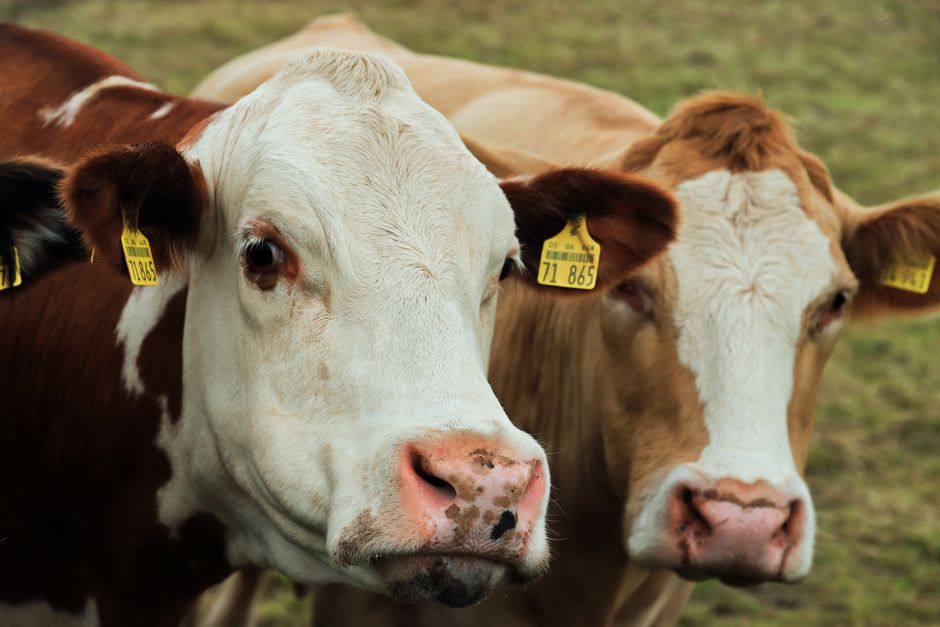
Table of Contents
- Key Takeaways
- The Science Behind Cows Friends Animal Bonds and Social Behavior
- Nine Remarkable Animal Facts That Challenge Our Assumptions
- Why These Animal Facts Matter
- Common Myths About Animal Intelligence
- Frequently Asked Questions
- Sources
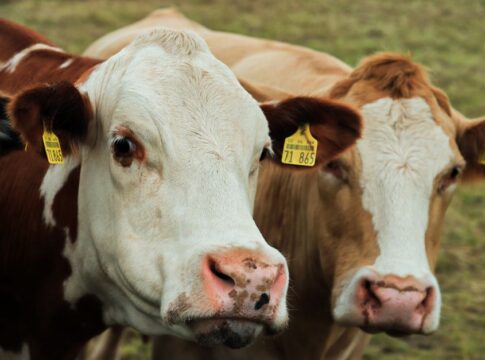
Did you know that cows form close bonds with specific herd members, essentially choosing best friends? This fascinating discovery is just one of many surprising truths about the animal kingdom that challenge what we think we know. The natural world is filled with behaviors and abilities that seem almost too remarkable to be true, yet scientific research continues to reveal just how complex and emotionally rich animal lives really are.
From the social lives of farm animals to the unexpected intelligence of creatures we often overlook, these interesting facts showcase the hidden depths of animal behavior. Let’s explore some of the most surprising animal trivia that separates myths from reality.
Key Takeaways
- Cows demonstrate genuine friendship by forming strong bonds with specific herd members, affecting their stress levels and milk production
- Many animals possess cognitive abilities and emotional complexity far beyond what was previously believed
- Social structures in the animal kingdom often mirror human relationships in unexpected ways
- Physical abilities in certain species defy conventional understanding of biology and physics
- Recent scientific research continues to overturn long-held assumptions about animal intelligence and behavior
The Science Behind Cows Friends Animal Bonds and Social Behavior
Research from the University of Northampton revealed that cows experience measurably lower stress levels when paired with their preferred companions. Scientists monitored heart rates and cortisol levels in cattle, finding that cows separated from their friends showed increased anxiety. When reunited with their chosen companions, their stress markers dropped significantly. This isn’t just anthropomorphization—it’s measurable physiology demonstrating genuine emotional connections.
The implications extend beyond animal welfare. Farmers have noticed that cows with strong social bonds produce more milk and exhibit calmer behavior during milking. Understanding these friendship dynamics has practical applications in livestock management, suggesting that respecting natural social structures benefits both animals and agricultural productivity.
Nine Remarkable Animal Facts That Challenge Our Assumptions
1. Octopuses Have Three Hearts and Blue Blood
The octopus circulatory system operates unlike any mammal’s. Two hearts pump blood to the gills, while a third circulates it to the rest of the body. Their blood contains copper-based hemocyanin instead of iron-based hemoglobin, which makes it blue and more efficient at transporting oxygen in cold, low-oxygen ocean environments. When an octopus swims, the heart supplying the body actually stops beating, which is why these creatures prefer crawling to swimming—it’s less exhausting.
2. Elephants Can Recognize Themselves in Mirrors
Only a handful of species pass the mirror self-recognition test, and elephants are among them. When researchers placed mirrors in front of elephants and marked them with paint, the animals touched the marks on their own bodies, demonstrating they understood the reflection was themselves. This ability indicates a level of self-awareness previously attributed only to great apes, dolphins, and magpies. The discovery reshaped our understanding of consciousness in non-human animals.
3. Pigeons Can Detect Cancer in Medical Imaging
Researchers trained pigeons to identify cancerous tissue in mammogram images with approximately 85 percent accuracy. After being rewarded for correctly pecking at images containing tumors, the birds learned to distinguish malignant from benign tissue. While pigeons won’t replace radiologists, the study revealed their remarkable pattern-recognition abilities and visual discrimination skills. Their success highlights how underestimated bird cognition has been for decades.
4. Sea Otters Hold Hands While Sleeping
Sea otters float on their backs when resting, and to avoid drifting apart from their group, they often hold hands or wrap themselves in kelp. This behavior, called rafting, keeps the group together in ocean currents. Mothers and pups are especially likely to hold hands, ensuring they don’t become separated. The behavior serves a practical survival function but has become one of the most endearing sights in marine biology.
5. Crows Remember Human Faces for Years
Research at the University of Washington demonstrated that crows not only recognize individual human faces but also hold grudges. Scientists who trapped and banded crows found themselves being scolded by those same birds years later. Even more remarkably, crows taught their offspring to recognize and scold the same researchers, passing down knowledge of “dangerous” humans across generations without the younger birds ever having been trapped themselves.
6. Mantis Shrimp Have the Most Complex Eyes in Nature
While humans have three color receptors, mantis shrimp possess sixteen. They can see ultraviolet, visible, and polarized light, perceiving a spectrum of colors we cannot even imagine. Their eyes move independently and contain depth perception within each eye individually. This visual system is so sophisticated that researchers are studying it to develop better imaging technology, including improved cancer detection devices and optical media.
7. Dolphins Have Names for Each Other
Bottlenose dolphins develop signature whistles that function essentially as names. Each dolphin creates its own unique whistle early in life, and other dolphins use that specific whistle when they want to get that individual’s attention. Researchers have recorded dolphins calling out to separated pod members using their signature whistles, and the called dolphin responds. This represents one of the few examples of animals using learned signals to label specific individuals.
8. Wombat Feces Are Cube-Shaped
Wombats are the only animals that produce cube-shaped droppings, and scientists spent years puzzling over why. Recent research revealed that the intestines have varying elasticity, with stiffer regions creating edges and corners as waste moves through. Wombats stack these cubes on rocks and logs to mark territory, and the shape prevents them from rolling away. The unique digestive mechanics have inspired engineers studying how to manufacture cubic shapes without molds.
9. Hummingbirds Are the Only Birds That Can Fly Backward
The hummingbird’s wing structure allows rotation at the shoulder in ways impossible for other birds. They can fly forward, backward, upside down, and hover in place by rotating their wings in a figure-eight pattern. Their wing-beat frequency reaches up to 80 beats per second in some species. This aerial agility requires enormous energy—hummingbirds must consume roughly half their body weight in nectar daily, and their heart rate can exceed 1,200 beats per minute during flight.
Why These Animal Facts Matter
Understanding animal cognition and behavior isn’t just trivia—it reshapes conservation efforts, animal welfare standards, and even technology development. When we recognize that cows form friendships, we reconsider farming practices. When we discover pigeons can detect cancer, we explore new diagnostic tools. Each revelation about animal abilities expands our appreciation for the natural world.
These discoveries also humble us. For centuries, humans assumed we were unique in possessing self-awareness, complex communication, and emotional bonds. Evidence now suggests these traits exist across many species, just expressed differently. The question shifts from “Do animals think and feel?” to “How do different species experience consciousness?”
Common Myths About Animal Intelligence
Many widely believed “facts” about animals turn out to be false. Goldfish do not have three-second memories—they can remember things for months. Bulls are not enraged by the color red; they’re colorblind to it and react to the movement of the cape. Bats are not blind; many species have excellent vision in addition to echolocation. Touching a baby bird will not cause its mother to reject it; most birds have a poor sense of smell.
These myths persist partly because they’re simple and memorable, but they also reveal our historical tendency to underestimate animal capabilities. As research methods improve, we keep discovering that animals are more sophisticated than we imagined. The pattern suggests we should approach animal behavior with less certainty and more curiosity.
Frequently Asked Questions
Do cows really have best friends?
Yes, scientific research confirms that cows form preferential bonds with specific herd members. Studies measuring stress hormones and heart rates show that cows experience lower anxiety when paired with their preferred companions and increased stress when separated from them. These bonds affect their overall well-being and even milk production.
Which animals can recognize themselves in mirrors?
The animals that have passed the mirror self-recognition test include great apes (chimpanzees, bonobos, orangutans, gorillas), elephants, dolphins, orcas, and magpies. This ability indicates a level of self-awareness that was once thought to be uniquely human. Some researchers also report positive results with certain species of fish and pigs, though these findings are more debated.
Are animal friendships similar to human friendships?
While we cannot know exactly what animals experience subjectively, the behavioral and physiological evidence suggests genuine social bonds. Animals show preference for specific individuals, experience stress when separated, and demonstrate cooperation and mutual support. These parallels suggest that friendship-like bonds may be more common across species than previously believed, though they likely manifest differently in different animals.
What is the smartest animal besides humans?
Intelligence is difficult to measure across species because different animals excel at different cognitive tasks. Great apes, dolphins, elephants, corvids (crows and ravens), and octopuses all demonstrate remarkable problem-solving abilities, tool use, self-awareness, and complex communication. Rather than ranking them, scientists increasingly recognize that intelligence takes many forms adapted to each species’ ecological needs.
The animal kingdom continues to surprise us with abilities that seem impossible until proven real. Every discovery reminds us that we share this planet with creatures whose inner lives are richer and more complex than we ever suspected. Perhaps the most important lesson is to approach the natural world with wonder and humility, always ready to be amazed by what we’ll learn next.