
By TrivBits, History Desk — Published September 27, 2026
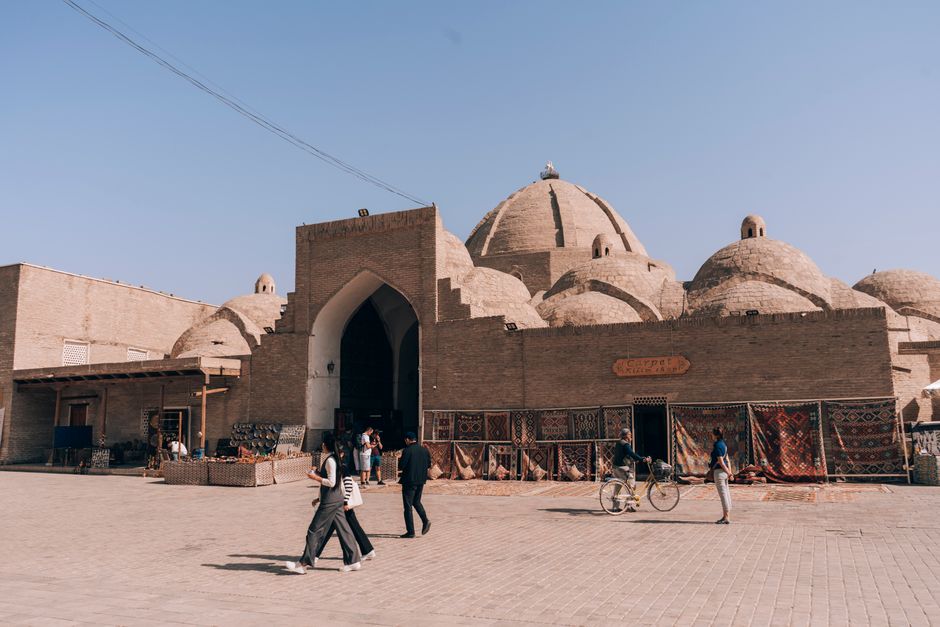
Table of Contents
- Key Takeaways
- What the Silk Road Traded Beyond Precious Fabrics
- The Geography and Timeline of Exchange
- Why the Silk Road Eventually Declined
- Frequently Asked Questions
- Sources
When you hear “Silk Road,” you probably picture caravans laden with shimmering fabric crossing vast deserts. But this ancient network of trade routes connected civilizations in ways far more profound than its name suggests. The silk road traded everything from spices and precious metals to ideas, religions, and diseases that reshaped the course of human history. Spanning roughly 4,000 miles from China to the Mediterranean, this wasn’t a single road but a web of pathways that linked the East and West for over 1,500 years.
The reality is far richer than the legend. While silk was certainly valuable, it was just one thread in an intricate tapestry of exchange that transformed empires and shaped the world we know today.
Key Takeaways
- The Silk Road was a network of multiple routes, not a single path, connecting ancient civilizations across Asia, the Middle East, and Europe.
- Paper, gunpowder, and printing technology traveled westward along these routes, fundamentally changing European society.
- Religious ideas including Buddhism, Islam, and Christianity spread through merchant networks and cultural exchange.
- The routes facilitated disease transmission, including the Black Death that devastated medieval populations.
- Musical instruments, artistic techniques, and culinary traditions crossed continents through these trade networks.
- The Silk Road’s peak occurred during the Mongol Empire era in the 13th and 14th centuries when unified control made travel safer.
What the Silk Road Traded Beyond Precious Fabrics
The historical significance of these ancient trade routes extends far beyond commerce. They were highways of culture, knowledge, and innovation connecting the Roman Empire with Han Dynasty China, and everything in between. Each caravan carried not just goods but ideas that would fundamentally alter civilizations thousands of miles away.
1. Paper Technology Revolutionized Communication
Chinese papermaking secrets traveled westward along the Silk Road around the 8th century, reaching the Islamic world before eventually arriving in Europe. Before paper, Europeans relied on expensive parchment made from animal skins. The introduction of affordable paper democratized knowledge and made the later printing revolution possible. A single sheet of parchment required an entire animal hide, while paper could be mass-produced from plant fibers. This seemingly simple technology transfer changed how civilizations recorded history, conducted business, and spread literacy.
2. Gunpowder Changed Warfare Forever
Invented in China during the 9th century, gunpowder formulas moved westward through Central Asian traders and military encounters. By the 13th century, this explosive knowledge had reached the Middle East and Europe, where it transformed military tactics and castle design. Medieval fortifications became obsolete almost overnight. The technology that began as Chinese fireworks ended feudalism’s military foundation and shifted power dynamics across the European continent for centuries to come.
3. Buddhism Traveled the Merchant Routes
Monks and merchants were often the same people on Silk Road journeys. Buddhism spread from India through Central Asia to China, Korea, and Japan primarily along these trade networks. Monasteries became rest stops for travelers, and spiritual ideas exchanged hands as readily as spices. Cave temples along the routes, like those at Dunhuang, showcase how Buddhist art absorbed Persian, Greek, and Chinese influences. Religion didn’t just tag along with trade—it was an integral part of the cultural exchange that made the Silk Road significant beyond economics.
4. Mathematical Concepts Crossed Continents
The number system we use today—Arabic numerals—actually originated in India and traveled through Islamic scholars to Europe via Silk Road connections. The concept of zero, decimal notation, and algebraic principles moved along these same pathways. Chinese mathematical innovations, including early forms of the abacus, influenced calculation methods across Asia. These abstract ideas proved more valuable than any physical cargo, enabling advances in astronomy, engineering, and commerce throughout the medieval era.
5. Diseases Spread Along Trade Networks
The Black Death that killed roughly one-third of Europe’s population in the 14th century likely traveled from Central Asia along Silk Road routes. Merchants and their goods carried plague-infected fleas on rats aboard ships and in caravans. This devastating pandemic demonstrates how interconnected the ancient world had become. Trade routes that brought prosperity also created pathways for pathogens that had never before encountered certain populations, with catastrophic results that reshaped European society, economy, and culture.
6. Glassmaking Techniques Traveled East
While China exported silk and porcelain westward, Roman and later Islamic glassmaking technology moved eastward. Chinese artisans had not developed sophisticated glass production methods, so imported glass was highly prized. The exchange went both ways—Chinese glazing techniques influenced Islamic pottery, while Roman glass vessels became treasured luxury items in Han Dynasty tombs. This bidirectional flow of craftsmanship enriched artistic traditions across multiple civilizations.
7. Musical Instruments Created New Sounds
The lute family of stringed instruments traveled from Persia and the Middle East into Europe and China, evolving into different forms. The Chinese pipa, European lute, and Middle Eastern oud share common ancestry traced through Silk Road exchanges. Musical scales, performance techniques, and instrument designs crossed cultural boundaries, creating fusion styles that still influence world music today. Sound itself became a traded commodity as musicians traveled with merchant caravans.
8. Culinary Ingredients Transformed Cuisines
Spices like cinnamon, pepper, and cloves drove much of the Silk Road economy, but food exchanges went deeper. Grapes and wine cultivation spread eastward into China. Noodle-making techniques may have traveled in both directions, though the exact origins remain debated. Pistachios, walnuts, and various fruits crossed continents. The medieval European obsession with Eastern spices wasn’t just about flavor—these ingredients were believed to have medicinal properties and symbolized wealth and sophistication.
9. Printing Technology Preceded Gutenberg by Centuries
Woodblock printing developed in China during the Tang Dynasty and spread through East Asia centuries before European movable type. While the technology moved slowly westward, knowledge of printed texts and the very concept of mechanical reproduction traveled faster. When Gutenberg revolutionized European printing in the 15th century, he was building on ideas that had been perfected in the East for generations. The information revolution began not in Renaissance Europe but in medieval China.
10. Precious Metals Flowed in Multiple Directions
Gold, silver, and precious stones weren’t just currency—they were commodities traded for their intrinsic value. Roman gold coins have been found in Chinese archaeological sites, while Chinese silver flowed westward to fund purchases of exotic goods. The movement of precious metals influenced inflation, economic policy, and the rise and fall of empires. When Rome’s gold reserves drained eastward to pay for silk and spices, it contributed to economic instability that weakened the empire.
11. Artistic Techniques Blended Across Cultures
Persian miniature painting influenced Chinese landscape art. Greek sculptural traditions, carried by Alexander the Great’s conquests, merged with Buddhist iconography in Gandhara art. Chinese porcelain techniques inspired Islamic ceramics, which later influenced European pottery. This artistic cross-pollination created hybrid styles that define entire artistic movements. The Silk Road wasn’t just a conduit for finished artworks—it was a laboratory where aesthetic traditions collided, merged, and evolved into something entirely new.
The Geography and Timeline of Exchange
The Silk Road network wasn’t static. Routes shifted with political changes, climate variations, and the rise and fall of empires. The Han Dynasty in China and the Roman Empire in the West bookended the network during its early centuries. The routes reached their peak efficiency under Mongol control in the 13th and 14th centuries, when a single political entity secured safe passage across most of Asia.
| Era | Dominant Power | Key Development | |
|---|---|---|---|
| 2nd century BCE – 2nd century CE | Han Dynasty & Roman Empire | Initial establishment of regular trade | |
| 7th – 10th century | Tang Dynasty & Islamic Caliphates | Cultural and religious exchange peaks | |
| 13th – 14th century | Mongol Empire | Maximum security and volume of trade | |
| 15th century onward | Maritime powers | Decline as sea routes dominate |
Why the Silk Road Eventually Declined
Several factors contributed to the gradual abandonment of overland Silk Road routes. The fragmentation of the Mongol Empire removed the unified political control that made long-distance travel relatively safe. Maritime technology improved, making sea routes faster and more economical for bulk goods. The Ottoman Empire’s control of western termini increased costs for European merchants, spurring the search for alternative routes to Asian markets.
The Age of Exploration—with European ships sailing around Africa to reach Asia—was in many ways a response to Silk Road disruptions. Columbus was literally searching for a new route to the spices and silks of the East when he stumbled upon the Americas. The ancient overland routes didn’t disappear overnight, but they lost their centrality to global trade by the 16th century.
Frequently Asked Questions
How long did it take to travel the entire Silk Road?
A complete journey from China to the Mediterranean typically took about two years, though most merchants didn’t travel the entire distance. Instead, goods passed through multiple intermediaries, with each merchant controlling a specific segment. This relay system meant that a piece of silk might change hands a dozen times before reaching its final destination, with each trader adding their markup along the way.
Who actually controlled the Silk Road?
No single empire ever controlled the entire network. Various powers dominated different sections at different times, including the Han Dynasty, Persian Empire, Byzantine Empire, various Central Asian kingdoms, and eventually the Mongol Empire. Local rulers typically taxed caravans passing through their territory, making control of Silk Road segments economically valuable. The lack of unified control actually created opportunities for intermediary traders who understood multiple cultures and languages.
Was the Silk Road actually called that in ancient times?
No. The term “Silk Road” was coined by German geographer Ferdinand von Richthofen in 1877. Ancient travelers and merchants had various names for different segments of the routes, but no single umbrella term existed. The modern name reflects our tendency to simplify complex historical phenomena into memorable labels, though it does capture the importance of silk in driving early trade connections.
What happened to the cities along the Silk Road?
Many thriving Silk Road cities declined or disappeared when trade routes shifted to maritime pathways. Samarkand, Bukhara, and other Central Asian cities that once bustled with international commerce became regional centers rather than global hubs. Some, like Palmyra, were abandoned entirely. Others adapted to new economic realities. The ruins of these cities now provide archaeological evidence of the vast cultural exchanges that once occurred across continents.
The Silk Road’s legacy lives on in the global interconnectedness we take for granted today. Every time you use paper, enjoy a spice, or benefit from mathematical concepts, you’re experiencing echoes of exchanges that occurred on dusty caravan routes centuries ago. The past truly is a foreign country—but one we’re still importing from.