
By TrivBits, Staff Writer — Published September 24, 2026
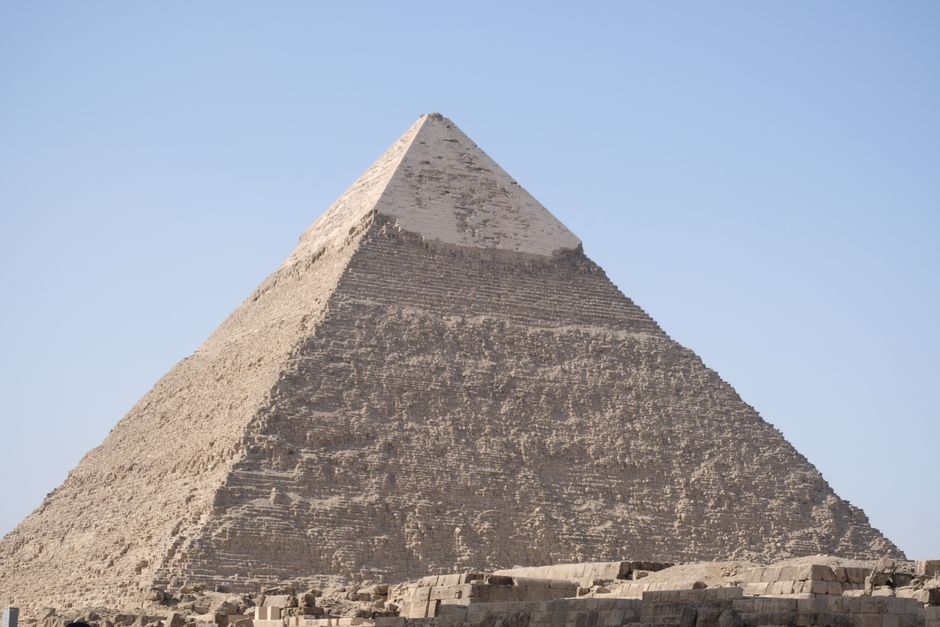
Table of Contents
- Key Takeaways
- 1. The Staggering Timeline: Cleopatra and the Great Pyramid
- 2. The Pyramids Were Already Tourist Attractions
- 3. Egyptian Civilization’s Incredible Longevity
- 4. Cleopatra Wasn’t Egyptian—She Was Greek
- 5. The Technological Gap Between Pyramid Builders and Cleopatra
- 6. How the Pyramids Were Built Remained a Mystery Even Then
- 7. The End of an Era: Rome’s Conquest
- Comparing the Eras
- Frequently Asked Questions
- Sources
When you picture ancient Egypt, you might imagine Cleopatra sailing down the Nile past the Great Pyramids. But here’s something shocking: Cleopatra lived closer to the invention of the iPhone than to the construction of those iconic monuments. This mind-bending fact reveals just how vast Egyptian civilization truly was. The surprising truth about the Cleopatra pyramid timeline challenges everything we think we know about history’s most famous queen and the ancient world she inhabited.
Did you know that the time gap between these two Egyptian icons spans more than two millennia? The myths surrounding ancient Egypt often compress thousands of years into a single mental image, but the reality is far more interesting and complex than most people realize.
Key Takeaways
- Cleopatra lived approximately 2,500 years after the Great Pyramid of Giza was built
- The Great Pyramid was already an ancient monument during Cleopatra’s reign
- Egyptian civilization spanned roughly 3,000 years, longer than many modern nations have existed
- Cleopatra was actually Greek, not ethnically Egyptian, descended from Ptolemaic rulers
- The pyramids were built during the Old Kingdom, while Cleopatra ruled at the end of the Ptolemaic period
- Ancient Egyptians themselves studied and restored the pyramids as historical sites
1. The Staggering Timeline: Cleopatra and the Great Pyramid
More Than Two Thousand Years Apart
The Great Pyramid of Giza was completed around 2560 BCE during the reign of Pharaoh Khufu. Cleopatra VII was born in 69 BCE and died in 30 BCE. Simple math reveals an astonishing gap: roughly 2,500 years separated these two Egyptian icons. To put this in perspective, Cleopatra lived closer to our present day—about 2,050 years ago—than she did to the construction of the pyramids. This fact consistently ranks among the most surprising historical trivia because it shatters our compressed mental timeline of ancient Egypt.
2. The Pyramids Were Already Tourist Attractions
Ancient Egypt Had Its Own Ancient History
By Cleopatra’s time, the pyramids at Giza were already ancient tourist destinations. Greek and Roman travelers visited them, carved graffiti on monuments, and wrote accounts of their journeys. The pyramids had stood for millennia, weathered by time and already mysterious to the people of Cleopatra’s era. Ancient Egyptians during the New Kingdom period had even conducted restoration work on these structures, treating them as precious relics of their distant past. Imagine visiting a monument so old that your own ancestors, fifty generations back, also considered it ancient.
3. Egyptian Civilization’s Incredible Longevity
Three Thousand Years of Continuous Culture
Ancient Egyptian civilization lasted approximately 3,000 years, from around 3100 BCE to 30 BCE. That’s longer than the entire span of Christianity. The United States, by comparison, hasn’t yet reached 250 years old. This extraordinary longevity means that an ancient Egyptian from the Old Kingdom would have found the New Kingdom as foreign and distant as we find the Middle Ages. Language evolved, religious practices shifted, and architectural styles transformed completely across these vast centuries. Yet the culture maintained recognizable threads of continuity that justify calling it a single civilization.
4. Cleopatra Wasn’t Egyptian—She Was Greek
The Ptolemaic Dynasty’s Macedonian Roots
Here’s another surprising truth: Cleopatra was ethnically Greek, not Egyptian. She descended from Ptolemy I Soter, a general who served under Alexander the Great and seized control of Egypt after Alexander’s death in 323 BCE. The Ptolemaic dynasty ruled Egypt for nearly three centuries, but they maintained Greek language, customs, and culture. Cleopatra was actually the first Ptolemaic ruler who bothered to learn the Egyptian language, which won her considerable favor with her subjects. She spoke multiple languages and was highly educated in Greek philosophy and sciences—a far cry from the pyramid builders’ world.
5. The Technological Gap Between Pyramid Builders and Cleopatra
Millennia of Innovation Separated Them
The Old Kingdom Egyptians who built the pyramids used copper tools, wooden sledges, and sheer human labor to move massive limestone blocks. They had no iron, no wheels for transport, and no pulleys. By Cleopatra’s time, Egypt had experienced the Bronze Age, the Iron Age, and countless technological innovations. Her era featured advanced metallurgy, sophisticated sailing vessels, Greek scientific knowledge, and Roman engineering. The technological and cultural distance between these periods was profound, yet we often imagine them as contemporaneous simply because they’re both “ancient Egypt.”
6. How the Pyramids Were Built Remained a Mystery Even Then
Lost Knowledge Across the Millennia
By Cleopatra’s time, Egyptians had already lost much of the specific knowledge about how the pyramids were constructed. Ancient Greek historians like Herodotus, who visited Egypt around 450 BCE, recorded stories and theories about pyramid construction, but even these accounts were written more than 2,000 years after the fact. The precision engineering, organizational systems, and construction techniques of the Old Kingdom had faded into legend. This unknown history fascinated ancient scholars just as it fascinates us today. The pyramids represented achievements that even subsequent Egyptian dynasties couldn’t fully replicate or explain.
7. The End of an Era: Rome’s Conquest
Cleopatra’s Death Marked the Final Chapter
When Cleopatra died in 30 BCE, she didn’t just mark the end of her own dynasty. Her death signaled the end of ancient Egypt as an independent civilization. Egypt became a province of Rome, and the three-thousand-year story of pharaonic Egypt concluded. The irony is striking: the woman most associated with ancient Egypt in popular culture actually presided over its final moments. After her death, the pyramids would stand for another two millennia, outlasting empires and civilizations, silent witnesses to the rise and fall of countless rulers who came after.
Comparing the Eras
| Aspect | Old Kingdom (Pyramid Era) | Ptolemaic Period (Cleopatra’s Era) |
|---|---|---|
| Time Period | Approximately 2686-2181 BCE | 305-30 BCE |
| Language | Old Egyptian | Greek (court), Late Egyptian (people) |
| Capital City | Memphis | Alexandria |
| Major Achievement | Great Pyramids at Giza | Library of Alexandria, cultural fusion |
| Writing System | Hieroglyphs (early form) | Hieroglyphs, Demotic, Greek |
Frequently Asked Questions
Was Cleopatra alive when the pyramids were built?
No, Cleopatra lived approximately 2,500 years after the Great Pyramid of Giza was constructed. The pyramids were already ancient monuments during her lifetime, having stood for more than two millennia before she was born.
Did Cleopatra ever visit the pyramids?
While there’s no specific historical record of Cleopatra visiting the pyramids at Giza, it’s highly likely she saw them. The pyramids were located relatively close to Memphis, and they were already famous tourist attractions in her era. Given her interest in Egyptian culture and her political need to connect with Egypt’s heritage, she probably visited them.
How long did ancient Egyptian civilization actually last?
Ancient Egyptian civilization lasted approximately 3,000 years, from the unification of Upper and Lower Egypt around 3100 BCE until Cleopatra’s death and the Roman conquest in 30 BCE. This makes it one of the longest-lasting civilizations in human history.
Why do we associate Cleopatra so strongly with ancient Egypt if she lived at the very end?
Cleopatra became famous because of her relationships with Julius Caesar and Mark Antony, which placed her at the center of Roman history and literature. Ancient Roman writers documented her life extensively, and her dramatic story has been retold countless times throughout Western history. Her fame overshadows the fact that she represented the end, not the height, of Egyptian civilization.
The next time you think about ancient Egypt, remember that it wasn’t a single moment frozen in time. It was a living, evolving civilization that spanned millennia—longer than the entire history of Christianity or Islam. The shocking truth about Cleopatra and the pyramids reminds us that history is far deeper and more complex than our mental shortcuts suggest.