
By TrivBits, Staff Writer — Published September 22, 2026

Table of Contents
- Key Takeaways
- The First Bizarre Koala Fingerprints Discovery
- Anatomical Similarities That Baffle Scientists
- The Science Behind the Similarity
- Frequently Asked Questions
- Sources
Did you know that koalas possess one of nature’s most surprising evolutionary quirks? These tree-dwelling marsupials have fingerprints so remarkably similar to human ones that they can confuse crime scene investigators. The bizarre koala fingerprints phenomenon stands as one of the most fascinating examples of convergent evolution—where completely unrelated species develop strikingly similar features independently.
While most people associate fingerprints exclusively with humans and our primate cousins, koalas evolved this unique trait through an entirely different evolutionary path. The truths behind this biological mystery reveal just how creative evolution can be when solving similar environmental challenges.
Key Takeaways
- Koala fingerprints are virtually indistinguishable from human fingerprints, even under microscopic examination
- This trait evolved independently in koalas despite being marsupials, not primates
- The fingerprints help koalas grip smooth eucalyptus branches and select the best leaves
- Only koalas and primates have developed such detailed dermal ridges among mammals
- The similarity is so precise it could theoretically contaminate crime scene evidence
- Koala prints feature loops, whorls, and arches just like human fingerprints
The First Bizarre Koala Fingerprints Discovery
1. Crime Scene Investigators Might Actually Confuse Them
Forensic scientists have confirmed that koala fingerprints could genuinely contaminate a crime scene. The ridges, patterns, and minute details are so similar to human prints that standard fingerprint analysis techniques cannot easily distinguish between them. While the scenario of a koala stumbling through a burglary scene seems absurd, the biological reality underscores just how precise the convergence is. Australian researchers have noted that even with close microscopic analysis, the prints share the same general size and ridge patterns that forensic databases categorize.
2. They Evolved Completely Independently From Primates
Here’s where the story gets truly interesting. Koalas are marsupials, meaning they last shared a common ancestor with humans roughly 160 million years ago—long before fingerprints existed in either lineage. Primates developed fingerprints along their evolutionary journey, and koalas did the same, but through entirely separate genetic pathways. This convergent evolution demonstrates that when faced with similar environmental pressures, nature often arrives at remarkably similar solutions through completely different routes.
3. The Prints Help Them Grip Like Rock Climbers
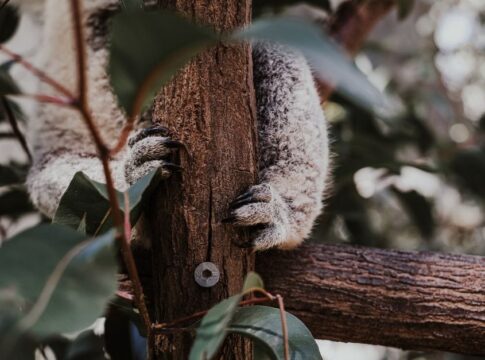
Koalas spend nearly their entire lives in eucalyptus trees, navigating smooth bark and thin branches. Their fingerprints serve the same function as the textured rubber on climbing shoes. The dermal ridges increase friction and provide better grip on slippery surfaces. When you’re an animal that can spend 18 to 22 hours a day sleeping in a tree, secure footing becomes a survival necessity. The prints allow koalas to make subtle adjustments in their grip without expending precious energy.
Anatomical Similarities That Baffle Scientists
4. They Share the Same Pattern Types: Loops, Whorls, and Arches
Fingerprint examiners classify human prints into three basic categories: loops, whorls, and arches. Astonishingly, koala fingerprints display these exact same pattern types. The distribution isn’t identical—koalas show slightly different frequencies of each pattern—but the fundamental architecture matches. This parallel extends down to the microscopic level, where individual ridge characteristics called minutiae appear in both species. The fact that these complex patterns emerged twice, independently, challenges our understanding of how constrained evolutionary solutions might be.
5. Only Koalas Have Them Among All Marsupials
Australia hosts a remarkable diversity of marsupials: kangaroos, wallabies, wombats, possums, and dozens more. Yet among all these pouched mammals, only koalas developed fingerprints. Even the koala’s closest relatives lack this feature. This exclusivity suggests that something specific about the koala’s ecological niche—their specialized eucalyptus diet and arboreal lifestyle—created the precise evolutionary pressure needed. It’s a reminder that evolution doesn’t follow a predictable script; it responds to specific environmental demands.
6. The Prints Help Them Select the Perfect Leaves
Eucalyptus leaves aren’t just food for koalas; they’re a complex chemical challenge. Different eucalyptus species contain varying levels of toxins, and even leaves on the same tree differ in nutritional value and poison content. Researchers believe koala fingerprints enhance their tactile sensitivity, allowing them to feel subtle differences in leaf texture, moisture, and oil content. This sensory feedback helps them select the least toxic, most nutritious leaves—a critical skill when your entire diet consists of plants that would poison most other animals.
The Science Behind the Similarity
7. The Ridges Form During Fetal Development in Strikingly Similar Ways
In both humans and koalas, fingerprints form during fetal development through a complex interaction between the epidermis and the underlying dermis. The ridges emerge as the skin grows at different rates in different layers, creating buckles and folds that become permanent. While the specific genes involved differ between primates and marsupials, the developmental process follows remarkably parallel paths. This suggests that there may be only a limited number of ways to create friction ridges at the cellular level.
8. They’re So Similar That Databases Can’t Always Tell Them Apart
Modern fingerprint identification relies on automated systems that scan for specific ridge characteristics and patterns. When researchers have tested these systems with koala prints, the databases sometimes classify them as human. The algorithms look for the same features—ridge endings, bifurcations, and pattern flows—that appear in both species. This technological confusion isn’t just a curiosity; it highlights how precisely evolution has replicated the same solution in two vastly different animals.
9. Chimpanzees and Gorillas Have Them Too, But Koalas Are the Odd Ones Out
Among primates, fingerprints are common. Chimpanzees, gorillas, and other great apes all possess detailed dermal ridges. This makes evolutionary sense—they share recent common ancestry with humans and similar arboreal lifestyles. Koalas, however, stand alone. No other marsupial, no other non-primate mammal, developed anything comparable. This isolation makes koalas a perfect case study in convergent evolution. When scientists want to understand how similar solutions can arise from different starting points, koala fingerprints provide a textbook example.
| Feature | Human Fingerprints | Koala Fingerprints |
|---|---|---|
| Pattern Types | Loops, whorls, arches | Loops, whorls, arches |
| Ridge Detail | Individual minutiae visible | Individual minutiae visible |
| Primary Function | Grip and tactile sensitivity | Grip and tactile sensitivity |
| Evolutionary Origin | Primate lineage | Marsupial lineage (independent) |
| Time Since Common Ancestor | N/A | ~160 million years |
Frequently Asked Questions
Can koala fingerprints really contaminate crime scenes?
Theoretically, yes. The prints are similar enough that if a koala were present at a crime scene, its prints could be confused with human ones during initial analysis. However, this scenario is extremely unlikely in practice since koalas live in specific Australian habitats and rarely encounter human crime scenes. With detailed examination, experts can identify subtle differences, but the initial similarity is genuine.
Why did koalas evolve fingerprints when other tree-dwelling animals didn’t?
The combination of koalas’ specialized eucalyptus diet and their need to navigate smooth bark appears to be unique. Other arboreal animals use claws, adhesive pads, or prehensile tails. Koalas needed both exceptional grip and sensitive touch to select appropriate leaves from toxic options, creating the specific evolutionary pressure that led to fingerprints.
Do baby koalas have fingerprints?
Yes, koala joeys develop their fingerprints while still in the pouch, similar to how human fetuses develop prints in the womb. The prints form during a specific developmental window and remain unchanged throughout the koala’s life, just as human fingerprints do.
Are there any other animals with fingerprints?
Primates including humans, chimpanzees, and gorillas have true fingerprints. Some tree-dwelling mammals have friction ridges on their paws or tails, but koalas are the only marsupials with prints that rival primate complexity. This makes them exceptionally rare in the animal kingdom.
The next time you press your fingertip to a screen or watch a crime show analyze prints, remember the eucalyptus-munching marsupials halfway around the world. They’re holding onto branches with the same evolutionary solution you use to grip a coffee cup—a solution nature invented twice, separated by 160 million years and an entire ocean.