

By TrivBits, History Desk — Published September 2, 2026
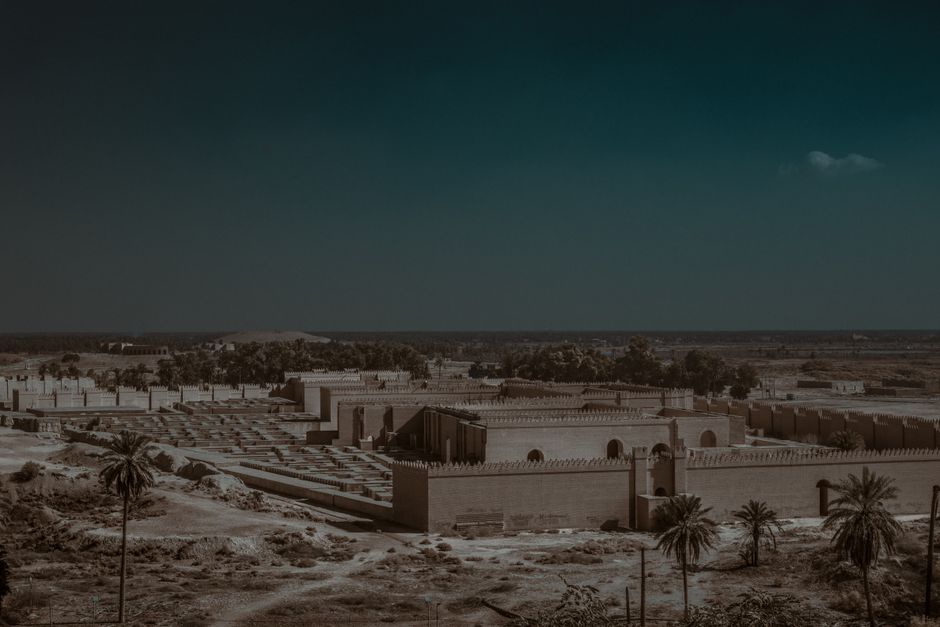
Table of Contents
- Key Takeaways
- Why the Hanging Gardens of Babylon Captured Ancient Imaginations
- The Silence of Babylonian Sources
- The Nineveh Connection: A Case of Mistaken Identity
- How Legends Outlive Reality
- Frequently Asked Questions
- Sources
The hanging gardens of Babylon rank among history’s most celebrated wonders—except there’s a problem. They probably never existed in Babylon at all. This ancient marvel, supposedly built in the heart of Mesopotamia, has captivated imaginations for centuries, yet no archaeological evidence supports its presence in the legendary city. The tale of cascading greenery in the desert has persisted through the ages, but modern scholarship suggests we’ve been looking in the wrong place, or perhaps at the wrong empire entirely.
What makes this revelation fascinating isn’t just that we’ve been wrong. It’s how a phantom garden became one of the most famous structures from the ancient past, outliving actual monuments in our collective memory.
Key Takeaways
- No archaeological evidence of the Hanging Gardens has ever been found in Babylon despite extensive excavations of the ancient city.
- Ancient Babylonian texts make no mention of the gardens, a suspicious absence for such a monumental achievement.
- Greek and Roman writers centuries later popularized the story, but none had actually visited Babylon during its peak era.
- Modern scholars increasingly believe the gardens existed in Nineveh, capital of the Assyrian empire, not Babylon.
- The confusion may stem from conflating different civilizations and their rulers across different centuries.
- This historical mystery reveals how legends can overshadow facts when stories are compelling enough.
Why the Hanging Gardens of Babylon Captured Ancient Imaginations
The traditional story paints an irresistible picture. King Nebuchadnezzar II allegedly built the gardens around 600 BCE for his homesick wife, who missed the green hills of her homeland. Terraced gardens rose in tiers, with exotic plants watered by an ingenious irrigation system that pulled water from the Euphrates River. The greenery supposedly hung from columns and arches, creating an artificial mountain of vegetation in an arid landscape.
Greek writers couldn’t stop talking about it. They described it as one of the Seven Wonders of the Ancient World, alongside the Great Pyramid and the Colossus of Rhodes. But here’s the thing: these writers lived centuries after Babylon’s golden age, during the Hellenistic period and later Roman times. They were repeating stories, not reporting firsthand observations.
The earliest detailed account comes from Berossus, a Babylonian priest writing in Greek around 290 BCE—roughly three centuries after the gardens supposedly existed. Later writers like Strabo and Philo of Byzantium elaborated on the tale, each adding their own flourishes. The story grew more spectacular with each retelling, a historical game of telephone played across generations.
The Silence of Babylonian Sources
Here’s where the mystery deepens. Babylonian kings loved to brag. They commissioned detailed inscriptions documenting their building projects, military conquests, and civic improvements. Nebuchadnezzar II left extensive records of his construction projects throughout Babylon, describing temples, walls, palaces, and processional ways in meticulous detail.
The gardens? Not mentioned once.
This silence is deafening. If Nebuchadnezzar had built one of the ancient world’s most impressive structures, why wouldn’t he boast about it? Cuneiform tablets from the period describe many aspects of Babylonian life and architecture, yet none reference hanging gardens. Archaeological excavations of Babylon, conducted extensively throughout the 19th and 20th centuries, uncovered no physical evidence of such a structure.
The German archaeologist Robert Koldewey excavated Babylon from 1899 to 1917, uncovering the Ishtar Gate, palace complexes, and the city’s famous walls. He found a building with unusual vaulted chambers that might have supported heavy gardens, but even he admitted the evidence was thin. No irrigation system capable of the described feat has been discovered.
The Nineveh Connection: A Case of Mistaken Identity
Dr. Stephanie Dalley, an Oxford researcher, proposed a compelling alternative in the early 21st century. She suggests the gardens existed in Nineveh, capital of the Assyrian empire, built by King Sennacherib around 700 BCE. This theory solves several puzzles at once.
Sennacherib’s own inscriptions describe creating elaborate gardens with exotic plants and sophisticated irrigation systems. He built an aqueduct system to bring water from mountains roughly 50 miles away—an engineering marvel documented in both texts and archaeological remains. His records specifically mention bronze screws for raising water, matching descriptions later attributed to Babylon’s gardens.
Archaeological evidence at Nineveh supports this claim. Reliefs from Sennacherib’s palace show garden scenes with plants arranged on terraces. The technology described in later Greek accounts matches what Assyrian engineers could accomplish, not Babylonian capabilities of that era.
So how did Nineveh’s gardens become Babylon’s? The confusion likely arose from the conflation of Mesopotamian civilizations. To Greek and Roman writers centuries later, these ancient empires blurred together. Babylon was more famous, more mythical in their imagination. The story migrated to the more legendary city, where it took root more firmly than any actual garden ever did.
How Legends Outlive Reality
The persistence of the Babylon gardens myth tells us something important about how historical narratives form. A compelling story with romantic elements—a king’s love for his wife, an impossible garden in the desert—proves more memorable than mundane facts. The tale satisfied something in the human imagination: the triumph of human ingenuity over nature, the power of love to move mountains (or build them).
Greek writers needed wonders for their lists. Seven great monuments from the ancient world made for tidy categorization. The gardens fit perfectly, even if the details were fuzzy. Later writers copied earlier accounts without verification, each generation accepting the previous one’s word.
This wasn’t malicious fabrication. It was the natural process of historical knowledge transmission before modern archaeological methods. Ancient historians relied on travelers’ tales, earlier texts, and oral traditions. They couldn’t excavate ruins or carbon-date artifacts. They worked with the sources available, and sometimes those sources were wrong.
Frequently Asked Questions
Were the Hanging Gardens of Babylon real at all?
The gardens likely existed, but probably in Nineveh rather than Babylon. Evidence suggests the Assyrian king Sennacherib built elaborate gardens with advanced irrigation systems around 700 BCE. The confusion arose from later Greek and Roman writers who attributed these gardens to the more famous city of Babylon. No archaeological evidence supports the gardens’ existence in Babylon itself.
Why are they still called one of the Seven Wonders?
The Seven Wonders list was compiled by ancient Greek writers who based their selections on available accounts and travelers’ stories. Once the list became established in classical literature, it remained fixed in cultural memory. The gardens stayed on the list because the story was well-known and widely repeated, regardless of archaeological accuracy. Historical tradition often outlasts historical correction.
What would the gardens have actually looked like?
Based on Assyrian records and reliefs, the gardens likely featured terraced levels with trees, shrubs, and flowering plants arranged to resemble mountain landscapes. An aqueduct system brought water from distant sources, and screw pumps or similar devices raised water to upper levels. The “hanging” aspect probably referred to plants draped over terraces and walls, creating a cascading effect rather than literally suspended structures.
Could the gardens still be discovered in Babylon?
Unlikely. Babylon has been extensively excavated over more than a century, and no convincing evidence of the gardens has emerged. The site has been thoroughly mapped and studied. If such a massive structure existed there, archaeologists would have found foundation remains, irrigation channels, or contemporary textual references. The absence of all these elements strongly suggests the gardens were never in Babylon to begin with.
The phantom gardens of Babylon remind us that history isn’t always what we think it is. Sometimes the most famous stories turn out to be the least accurate, preserved not by evidence but by their power to enchant. Perhaps that’s the real wonder: not the gardens themselves, but our enduring need to believe in them.