
By TrivBits, History Desk — Published September 1, 2026
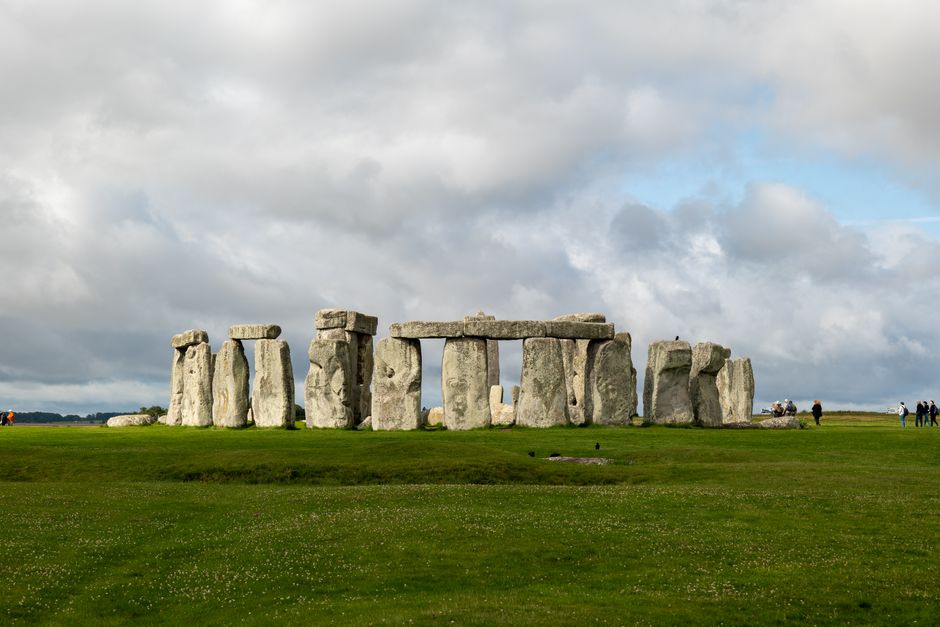
Table of Contents
- Key Takeaways
- The Stonehenge Built Acoustic Discovery: How Scientists Tested Ancient Sound
- Why the Bluestones Matter: A Journey for Sound
- Comparing Stonehenge’s Acoustics to Other Ancient Monuments
- What the Acoustics Tell Us About Neolithic Ceremonies
- Modern Technology Reveals Ancient Intentions
- Frequently Asked Questions
- Sources
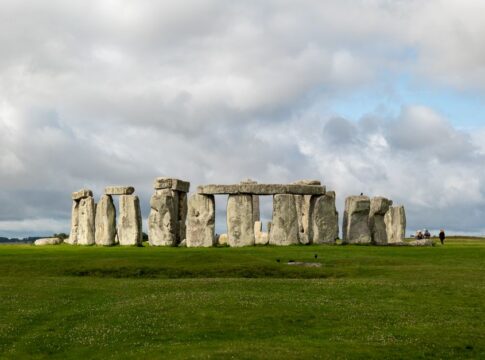
For centuries, Stonehenge has stood as one of ancient history’s most captivating puzzles. The massive stone circle on England’s Salisbury Plain has sparked countless theories about why our ancestors hauled enormous bluestones from distant quarries. Recent research suggests that the reason Stonehenge was built might have an acoustic dimension that’s as fascinating as it is unexpected. Sound itself may have been sacred to these Neolithic builders, and the monument’s design appears deliberately engineered to manipulate it.
The idea that ancient civilizations constructed monuments with acoustics in mind transforms how we understand the past. These weren’t just primitive stone-stackers. They were sophisticated architects who understood how sound behaves in enclosed and semi-enclosed spaces, creating an auditory experience that likely held profound spiritual significance during an era when the spoken word and ritual chanting formed the backbone of cultural transmission.
Key Takeaways
- Stonehenge’s stone arrangement creates unique acoustic properties that amplify and contain sound within the circle
- Acoustic testing reveals the monument would have reflected sound back toward the center, creating an intimate auditory environment
- The bluestones, transported from Wales over 150 miles away, may have been chosen partly for their acoustic qualities
- Similar acoustic properties appear in other Neolithic monuments, suggesting sound played a crucial role in ancient ritual practices
- Modern research using scale models and computer simulations has revealed how complete the stone circle would have affected sound propagation
- The acoustic mystery connects to broader questions about how historical societies used architecture to shape sensory experiences
The Stonehenge Built Acoustic Discovery: How Scientists Tested Ancient Sound
Researchers didn’t just theorize about Stonehenge’s acoustic properties. They tested them. Using a one-twelfth scale model of the monument as it would have appeared roughly 4,000 years ago, scientists measured how sound behaved within the stone circle. The results were remarkable.
The stones acted as acoustic mirrors. Sound generated inside the circle bounced off the massive sarsen stones and reflected back toward the center, rather than dispersing into the surrounding landscape. This created an effect similar to being inside a building, despite the monument being open to the sky. Speech and music would have been amplified for those standing within the circle, while remaining relatively quiet for anyone outside it.
This acoustic containment would have made Stonehenge an ideal venue for ritual gatherings. Imagine a priest or leader speaking from the center, their voice enriched and amplified by the stones themselves. To participants, it might have seemed as though the monument itself was lending power to the words being spoken, a profound effect during an empire of belief systems where the spiritual and physical worlds intertwined.
Why the Bluestones Matter: A Journey for Sound
The smaller bluestones at Stonehenge traveled an extraordinary distance. These distinctive stones came from the Preseli Hills in Wales, a journey of more than 150 miles. For centuries, historians puzzled over why Neolithic people would undertake such a monumental effort when plenty of stone existed closer to the site.
One compelling answer involves sound. Some bluestones, when struck, produce a distinctive ringing tone. This quality, called lithophones, means the stones essentially function as percussion instruments. Several ancient cultures across different civilizations valued ringing rocks for ceremonial purposes, and the bluestones at Stonehenge may have served a similar function.
The acoustic properties of these particular stones could explain the otherwise baffling logistics of their transport. If sound held sacred significance, then sourcing stones with specific acoustic characteristics would justify the enormous effort. The monument wasn’t just built to look impressive. It was built to sound impressive too.
Comparing Stonehenge’s Acoustics to Other Ancient Monuments
| Monument | Location | Acoustic Feature | Era |
|---|---|---|---|
| Stonehenge | England | Sound reflection and containment | Neolithic (3000-2000 BCE) |
| Newgrange | Ireland | Echo chamber effects in passage tomb | Neolithic (3200 BCE) |
| Hypogeum of Ħal-Saflieni | Malta | Resonance at specific frequencies | Neolithic (4000-2500 BCE) |
| Chavín de Huántar | Peru | Sound distortion and roaring effects | Pre-Columbian (1500-300 BCE) |
These monuments suggest that acoustic engineering was not unique to Stonehenge. Across different continents and centuries, ancient builders incorporated sound manipulation into sacred architecture, pointing to a universal human impulse to create spaces where auditory experiences enhanced spiritual practice.
What the Acoustics Tell Us About Neolithic Ceremonies
Understanding Stonehenge’s acoustic properties opens a window into how ceremonies might have unfolded within the circle. The contained sound environment would have created intimacy among participants, binding them together in shared auditory space. Outside the circle, the sounds would have been muted, creating a clear distinction between sacred interior space and the ordinary world beyond.
Chanting, drumming, or rhythmic speech would have reverberated differently inside the stone circle compared to open landscape. These effects weren’t accidental byproducts of construction. Evidence suggests they were intentional design features, carefully planned by people who understood sound’s psychological and spiritual impact.
The acoustic dimension also suggests that Stonehenge gatherings may have been smaller and more exclusive than sometimes imagined. The sound-reflecting properties work best for groups of dozens or perhaps a few hundred people, not massive crowds. This hints at ceremonies that emphasized participation and direct experience rather than observation from a distance.
Modern Technology Reveals Ancient Intentions
Twenty-first century technology has proven essential to understanding this aspect of the past. Computer modeling allows researchers to reconstruct how the complete monument would have sounded, accounting for stones that have fallen or disappeared over millennia. These simulations reveal that when intact, Stonehenge would have created an even more pronounced acoustic effect than the ruins suggest today.
Laser scanning and acoustic analysis have also revealed that the positioning of stones wasn’t random. The gaps between standing stones, their heights, and their arrangement all contribute to the overall acoustic environment. This level of planning demonstrates sophisticated understanding of sound physics, achieved without modern scientific instruments or mathematical notation.
How did Neolithic builders develop this knowledge? Likely through experimentation and accumulated wisdom passed down through generations. Trial and error, careful observation, and cultural memory combined to create architectural achievements that still impress today.
Frequently Asked Questions
Was Stonehenge specifically designed for its acoustic properties?
While we cannot know the builders’ exact intentions, evidence strongly suggests acoustics were a significant consideration. The stone arrangement creates predictable sound-reflecting patterns that would have been noticeable to anyone using the space. Whether acoustics were the primary purpose or one of several design goals remains debated, but the acoustic effects appear too consistent to be coincidental.
Can visitors today experience Stonehenge’s acoustic properties?
Not fully. The monument is incomplete, with many stones missing or fallen, which significantly alters its acoustic behavior. Additionally, public access restrictions mean visitors cannot stand within the inner circle during normal visiting hours. Special access visits do occur, but even then, the degraded state of the monument means the acoustic experience differs substantially from what ancient users would have encountered.
Do other stone circles show similar acoustic features?
Yes, though research is ongoing. Many stone circles throughout Britain and Ireland exhibit acoustic properties that suggest intentional design. However, Stonehenge’s size, complexity, and the specific qualities of its stones make it particularly notable. Each monument likely created a unique acoustic signature based on its specific dimensions and materials.
How did ancient people discover that stones could manipulate sound?
Natural acoustic phenomena probably provided the initial inspiration. Caves, rock formations, and cliff faces create echoes and sound effects that humans have noticed since prehistoric times. Ancient people likely observed these natural effects and experimented with recreating them in constructed spaces, gradually developing expertise in acoustic architecture over many generations.