
By TrivBits, History Desk — Published August 31, 2026
Table of Contents
- Key Takeaways
- When Oxford University Predates an Empire: Understanding the Timeline
- The Brief but Brilliant Aztec Era
- Why This Historical Comparison Matters
- Comparing Historical Timelines
- Other Institutions That Defy Our Timeline Expectations
- Frequently Asked Questions
- Sources
Time has a way of playing tricks on our perception of history. When we think of ancient institutions, universities rarely come to mind before grand empires and civilizations. Yet here’s a fact that stops people in their tracks: Oxford University predates the Aztec Empire by several centuries. This isn’t a trick of semantics or a technicality—it’s a genuine historical reality that reveals just how old some of our educational institutions truly are, and how recent some civilizations we consider “ancient” actually were.
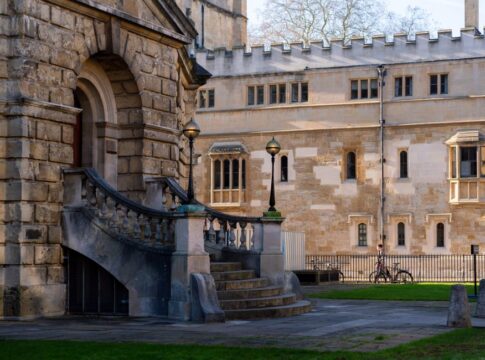
The juxtaposition seems almost impossible at first glance. Oxford, with its Gothic spires and punting on the Cherwell, feels thoroughly medieval European. The Aztecs, with their stepped pyramids and complex pantheon, seem to belong to a much more distant era. But the timeline tells a different story, one that reshapes how we understand both the past and the institutions that have survived into our present century.
Key Takeaways
- Oxford University began teaching students around 1096, with evidence of organized instruction by the late 11th century
- The Aztec Empire was founded in 1428 when three city-states formed the Triple Alliance
- Oxford had been educating students for over 300 years before the Aztec Empire existed as a political entity
- The Aztec civilization existed before their empire, but their imperial period was remarkably brief—less than 100 years
- Oxford is the oldest university in the English-speaking world and has operated continuously for nearly a millennium
- This timeline comparison reveals how our perception of “ancient” varies dramatically across different cultures and continents
When Oxford University Predates an Empire: Understanding the Timeline
Oxford’s origins are somewhat murky, as befits an institution of such age. There’s no founding document or ribbon-cutting ceremony recorded in the historical record. Instead, teaching at Oxford grew organically in the late 11th century. The university evolved from informal gatherings of scholars into a structured institution. By 1167, when Henry II banned English students from attending the University of Paris, Oxford’s student body swelled significantly.
The university received its royal charter in the early 13th century, formalizing what had already been happening for generations. By the time the 1200s arrived, Oxford had established colleges, developed curricula, and created the administrative structures that would carry it through the coming centuries.
Now contrast this with the Aztec timeline. The Mexica people (whom we call the Aztecs) migrated into the Valley of Mexico during the 13th century. They founded their capital city of Tenochtitlan in 1325—already over 200 years after Oxford began teaching students. But the Aztec Empire itself didn’t emerge until 1428, when Tenochtitlan allied with Texcoco and Tlacopan to form the Triple Alliance and begin their imperial expansion.
The Brief but Brilliant Aztec Era
The Aztec Empire’s timeline is surprisingly compressed. From 1428 to 1521, when Spanish conquistadors and their indigenous allies conquered Tenochtitlan, the empire lasted less than a century. That’s roughly the same span as from the end of World War II to today. In that brief window, the Aztecs built one of the most sophisticated civilizations in the Americas, with advanced agriculture, monumental architecture, complex religious practices, and a tribute system that controlled millions of people across Mesoamerica.
The city of Tenochtitlan itself was a marvel. Built on an island in Lake Texcoco, it featured causeways, aqueducts, and chinampas (floating gardens) that impressed even the Spanish who would destroy it. Contemporary accounts describe a city larger and more organized than most European capitals of the era.
Yet while the Aztecs were constructing their empire, Oxford was already an old institution. Students had been studying theology, law, medicine, and the liberal arts at Oxford for centuries. The university had weathered political upheavals, the Black Death, and countless changes in English monarchy.
Why This Historical Comparison Matters
This timeline comparison does more than provide a fun fact for trivia nights. It challenges our assumptions about historical periods and what qualifies as “ancient.” We tend to mentally categorize pre-Columbian American civilizations as belonging to the deep past, while European medieval institutions feel more recent, perhaps because they’ve survived continuously into the present.
The reality is more nuanced. The Aztec Empire rose and fell while Oxford was already a well-established center of learning. When Montezuma II ruled the Aztec Empire, Oxford scholars were debating Aristotelian philosophy and training the clergy who would serve throughout England.
This also highlights the concept of institutional longevity. Empires rise and fall—the Aztec Empire lasted less than a century. But universities, with their focus on knowledge preservation and transmission, can endure for nearly a millennium. Oxford has survived the Wars of the Roses, the English Reformation, the English Civil War, two World Wars, and countless other upheavals.
Comparing Historical Timelines
| Event | Approximate Date | Historical Context |
|---|---|---|
| Oxford teaching begins | 1096 | Late Norman period in England |
| Oxford receives students from Paris | 1167 | Rapid growth period |
| Tenochtitlan founded | 1325 | Oxford already 200+ years old |
| Aztec Empire established | 1428 | Oxford over 300 years old |
| Aztec Empire falls | 1521 | Oxford continues teaching |
Other Institutions That Defy Our Timeline Expectations
Oxford isn’t alone in being surprisingly old. The University of Bologna, founded in 1088, is even older. These institutions were training doctors, lawyers, and theologians before most of the political entities we recognize today existed. The Kingdom of England in 1096 looked nothing like modern Britain. The Holy Roman Empire still dominated Central Europe. The Crusades were just beginning.
Similarly, other civilizations we think of as ancient were actually quite recent. The Inca Empire, another major pre-Columbian civilization, didn’t begin its expansion until the early 15th century—contemporary with the Aztecs and equally young compared to European universities.
This pattern repeats throughout history. Constantinople fell to the Ottomans in 1453—Oxford was already over 350 years old. The printing press was invented around 1440. Oxford predated movable type by more than three centuries, relying instead on painstakingly hand-copied manuscripts for its libraries.
Frequently Asked Questions
When exactly was Oxford University founded?
Oxford doesn’t have a precise founding date because it evolved gradually rather than being established at a single moment. Teaching existed at Oxford by 1096, and the institution grew substantially after 1167 when English students were banned from Paris. The university received formal recognition in the early 1200s, but its origins stretch back to the late 11th century.
How long did the Aztec Empire actually last?
The Aztec Empire existed from 1428, when the Triple Alliance was formed, until 1521, when Spanish forces and their indigenous allies conquered Tenochtitlan. This gives the empire a lifespan of roughly 93 years—less than a century of imperial dominance despite their lasting cultural impact.
What is the oldest continuously operating university in the world?
The University of Bologna in Italy, founded in 1088, is generally recognized as the oldest continuously operating university. Oxford is the second oldest and the oldest in the English-speaking world. Both institutions have been teaching students for over 900 years without interruption.
Were the Aztecs really considered an ancient civilization?
The Aztec Empire was actually quite recent in historical terms, though the broader Mesoamerican civilizations they built upon were much older. The Maya, Olmec, and other cultures preceded the Aztecs by centuries or even millennia. The Aztecs represented the final major empire in a long succession of Mesoamerican civilizations, but their imperial period was remarkably brief.
The next time you see Oxford’s ancient buildings or read about Aztec pyramids, remember that appearances can deceive. History doesn’t always flow in the neat, linear way we imagine. An English university educated students through the entire rise and fall of one of the Americas’ greatest empires—and continues teaching to this day.