
By TrivBits, History Desk — Published August 28, 2026
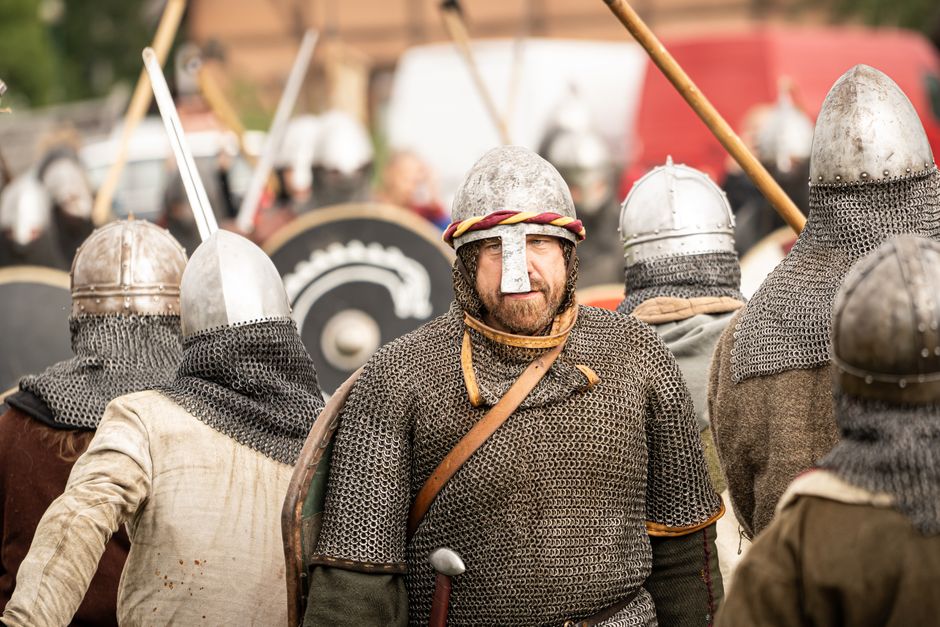
Table of Contents
- Key Takeaways
- The Archaeological Evidence About Viking Helmets
- Where the Horned Helmet Myth Actually Began
- The Bronze Age Connection That Confused History
- How the Myth Became Permanent in Popular Culture
- What Vikings Actually Wore Into Battle
- Frequently Asked Questions
- Sources
Picture a Viking warrior in your mind. Chances are, you’re imagining a burly Scandinavian fighter sporting a helmet adorned with impressive horns. This image has been burned into popular culture through countless movies, cartoons, and history books. But here’s the truth about Viking helmets: they never actually had horns. This historical misconception has persisted for over a century, despite archaeological evidence proving otherwise.
The Vikings—seafaring Norse warriors who terrorized and traded across Europe from roughly the 8th to 11th century—wore practical battle gear. Horned helmets would have been a liability in combat, catching on weapons and branches while offering no tactical advantage. Yet this myth remains one of the most enduring false images from ancient civilizations, right up there with believing all medieval castles had moats.
Key Takeaways
- No authentic Viking helmet with horns has ever been discovered by archaeologists, despite numerous excavations across Scandinavia.
- The horned helmet myth originated in the 19th century, primarily through romanticized artwork and opera costume design.
- Vikings wore simple, practical iron helmets—when they wore helmets at all—designed for actual combat effectiveness.
- Horned ceremonial helmets existed in Bronze Age Scandinavia, over 2,000 years before the Viking era, which may have contributed to confusion.
- The misconception became cemented in popular culture through 20th-century media, advertising, and sports team mascots.
- This historical myth demonstrates how easily inaccurate images can overshadow archaeological evidence in the public imagination.
The Archaeological Evidence About Viking Helmets
Only a handful of genuine Viking-era helmets have survived to modern times. The most complete example, the Gjermundbu helmet discovered in Norway in 1943, features a simple rounded iron cap with a nose guard. No horns. No wings. Just functional protection.
This helmet dates to the 10th century and represents the practical mindset of Norse warriors. Iron was valuable in the Viking Age, and smiths couldn’t waste it on decorative protrusions that would weaken the helmet’s integrity. A horn would create a leverage point for an enemy’s weapon, potentially snapping the wearer’s neck or tearing the helmet off entirely.
Other helmet fragments discovered across Scandinavia and Viking settlement areas tell the same story. Plain, bowl-shaped designs dominated. Many Vikings likely fought without helmets altogether, as the expense of forged iron put such protection beyond the reach of common raiders. Leather caps and padded cloth offered cheaper alternatives for those who couldn’t afford metal.
Where the Horned Helmet Myth Actually Began
The horned Viking image emerged during the 19th-century Romantic movement, when European artists and writers reimagined the past through a lens of dramatic flair rather than historical accuracy. Scandinavian nationalism was rising, and creators sought to portray ancient Norse culture as exotic and powerful.
Swedish artist Gustav Malmström created influential illustrations in the 1820s depicting Vikings with horned helmets. These images appeared in popular editions of ancient sagas, reaching wide audiences across Europe. But the myth truly exploded in 1876 when costume designer Carl Emil Doepler created horned helmets for Richard Wagner’s opera cycle “Der Ring des Nibelungen” (The Ring of the Nibelung).
Wagner’s operas, based loosely on Norse mythology and Germanic legends, became cultural phenomena. The dramatic costumes—complete with wings and horns—created an indelible visual association. Audiences didn’t care that the historical Vikings of the 9th century never wore such impractical gear. The image was too striking to forget.
This era of European history saw similar romantic reimaginings of other ancient civilizations and empires. Accuracy mattered less than creating a compelling narrative about the past. The Vikings became symbols of raw, barbaric power, and horned helmets fit that storytelling need perfectly.
The Bronze Age Connection That Confused History
Interestingly, horned helmets did exist in Scandinavia—just not when the Vikings were raiding. Bronze Age ceremonial helmets from around 1200 BCE, more than 2,000 years before the Viking era, featured elaborate horns and decorations.
These pre-Viking artifacts were discovered in bogs and burial sites across Denmark and northern Germany. They appear to have served ritual or religious purposes rather than combat functions. The Viksø helmets, found in Denmark in 1942, showcase this Bronze Age tradition beautifully with their curved horns and bird motifs.
When 19th-century romantics learned about these ancient horned helmets, they may have conflated different eras of Scandinavian history. The leap from “ancient Scandinavian ceremonial helmet” to “Viking battle helmet” wasn’t based on evidence—it was based on dramatic appeal and a fuzzy understanding of the past’s timeline.
How the Myth Became Permanent in Popular Culture
Once the horned Viking entered popular imagination, there was no turning back. Early 20th-century advertising seized on the image. Political cartoons used horned Vikings as symbols of Scandinavian countries. Sports teams adopted the fierce imagery for mascots and logos.
Hollywood cemented the misconception. Films from the 1950s through the 1980s regularly featured horned helmets, prioritizing visual impact over historical accuracy. Animated shows for children repeated the error, ensuring new generations grew up with the false image. Even educational materials sometimes perpetuated the myth well into the late 20th century.
The Minnesota Vikings football team, founded in 1961, made the horned helmet their iconic logo. Millions of fans now associate the image with Scandinavian heritage, despite its historical inaccuracy. The myth has become more powerful than the truth in shaping public perception of an entire civilization.
What Vikings Actually Wore Into Battle
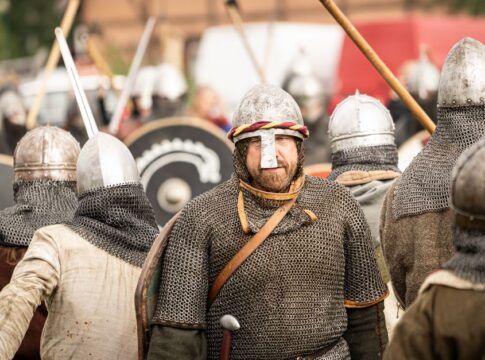
Viking warriors prioritized mobility and practicality. Chain mail shirts, when affordable, offered excellent protection without restricting movement. Most fighters wore thick wool or leather tunics. Shields—round, wooden, and painted—served as the primary defensive tool in Norse combat tactics.
Weapons varied by wealth and status. Swords were prestige items, often passed down through generations and given names. Axes were more common, serving double duty as tools and weapons. Spears were ubiquitous, cheap to produce, and effective in the shield-wall formations Vikings employed.
The reality of Viking appearance was less fantastical than popular culture suggests, but no less fascinating. These were skilled sailors, traders, and warriors whose influence shaped medieval Europe. Their empire stretched from North America to the Byzantine territories, achieved without a single horned helmet.
Frequently Asked Questions
Did any ancient warriors actually wear horned helmets into battle?
Very few cultures wore horned helmets in actual combat, as they’re impractical and dangerous. Some Bronze Age ceremonial helmets featured horns, and certain ancient Mediterranean depictions show horned headgear, but these were likely religious or ceremonial rather than battlefield equipment. The physics of combat make horns a liability—they provide leverage for opponents and add unnecessary weight.
How many real Viking helmets have archaeologists found?
Remarkably few complete Viking helmets survive. The Gjermundbu helmet from Norway is the most intact example, with only fragments of a handful of others discovered across Scandinavia. This scarcity reflects both the rarity of helmets during the Viking Age and the fact that iron corrodes over centuries. Most Vikings likely never owned a metal helmet.
When did historians first debunk the horned helmet myth?
Scholars have known the truth for well over a century, with archaeological evidence clearly contradicting the horned helmet image by the early 20th century. However, the myth proved far more appealing than the reality, persisting in popular culture despite academic corrections. The gap between scholarly knowledge and public perception remains wide even today.
Why don’t movies and TV shows show Vikings accurately?
Entertainment media often prioritizes visual distinctiveness and audience expectations over historical accuracy. Horned helmets instantly signal “Viking” to viewers, even though they’re wrong. Some recent productions have moved toward greater accuracy, but the horned helmet remains deeply embedded in popular iconography. Breaking audience expectations risks confusion about which characters are supposed to be Vikings.