
By TrivBits, Staff Writer — Published September 26, 2026
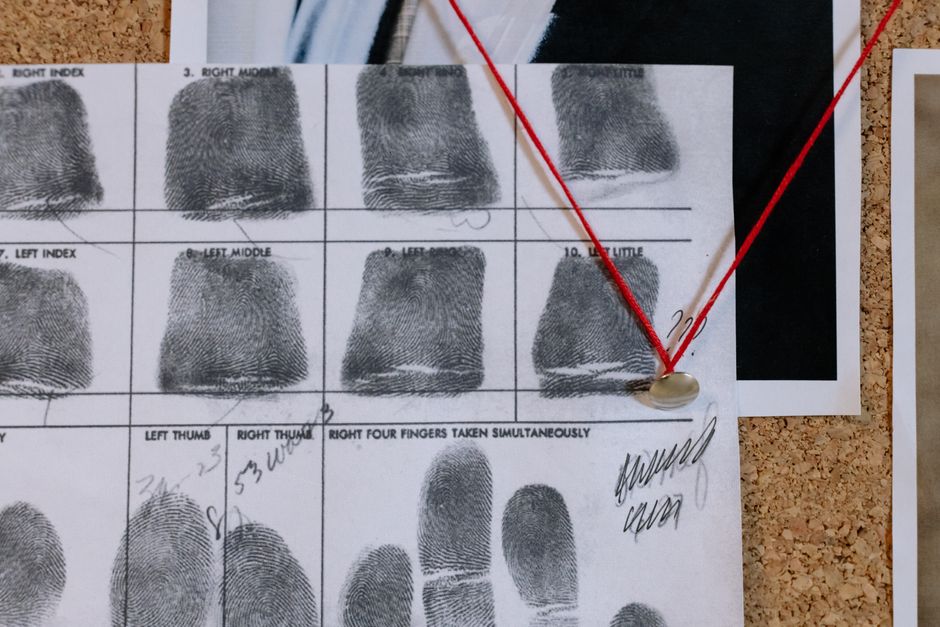
Table of Contents
- Key Takeaways
- The Myth of Absolute Uniqueness
- How Fingerprint Matching Actually Works
- The Troubling Reality of Error Rates
- Famous Cases of Fingerprint Misidentification
- The Nine Forensic Truths About Fingerprints
- The Future of Fingerprint Evidence
- Frequently Asked Questions
- Sources
For over a century, fingerprints have been treated as the gold standard of criminal identification. Courts worldwide have accepted them as infallible proof of identity. But did you know that the bedrock assumption—that fingerprints aren’t unique to individuals—has never been scientifically proven? Surprising, right? This commonly held belief sits on shakier ground than most people realize, and the forensic science community has been quietly wrestling with uncomfortable truths about fingerprint evidence for decades.
The myth of absolute fingerprint uniqueness has shaped countless criminal cases, influenced popular culture, and built an entire industry around pattern matching. Yet recent scientific scrutiny reveals a more complex, sometimes unsettling reality about this forensic technique. These interesting facts challenge what we think we know about criminal justice and scientific certainty.
Key Takeaways
- No scientific study has ever proven that fingerprints are truly unique to each individual
- Fingerprint analysis relies on subjective human judgment rather than objective scientific standards
- Error rates in fingerprint matching are higher than commonly believed by the public
- Partial prints found at crime scenes are far less reliable than complete fingerprints
- Several wrongful convictions have resulted directly from incorrect fingerprint identification
- Modern research suggests fingerprint evidence should be viewed as probabilistic, not absolute
The Myth of Absolute Uniqueness
The foundation of fingerprint evidence rests on two assumptions: that no two people share identical fingerprints, and that fingerprints remain unchanged throughout life. While the second claim holds reasonably well, the first has never been scientifically validated. The problem? You’d need to compare every human fingerprint that has ever existed or will exist—an impossible task.
Researchers have attempted smaller-scale studies comparing thousands or millions of prints, finding no exact matches. But absence of evidence isn’t evidence of absence. With roughly eight billion people alive today and countless billions who came before, the sample sizes remain statistically insignificant. The uniqueness claim is an assumption, not a proven fact, yet it’s presented as certainty in courtrooms every day.
How Fingerprint Matching Actually Works
Unlike DNA analysis with its objective probability calculations, fingerprint matching depends heavily on human interpretation. Examiners look for similarities in ridge patterns, minutiae points where ridges end or split, and overall configurations. But here’s the catch: there’s no universal standard for how many matching points constitute a positive identification.
Different countries and agencies use different thresholds. Some require twelve matching points. Others accept eight. A few leave it entirely to examiner discretion. This lack of standardization reveals an uncomfortable truth: the process contains significant subjective elements dressed up in scientific-sounding language. Two qualified examiners examining the same prints can reach opposite conclusions.
The Troubling Reality of Error Rates
Proficiency tests reveal that fingerprint examiners make mistakes more often than the public realizes. Studies have documented error rates ranging from roughly 0.1% to over 4%, depending on testing conditions and print quality. That might sound low, but consider the volume: millions of fingerprint comparisons occur annually in criminal justice systems worldwide.
Even a 1% error rate translates to thousands of potentially incorrect identifications each year. When someone’s freedom hangs in the balance, these numbers become deeply troubling. The problem intensifies with partial prints—the smudged, incomplete impressions commonly found at crime scenes—where error rates climb substantially higher.
Famous Cases of Fingerprint Misidentification
Brandon Mayfield’s story stands as a stark warning about fingerprint fallibility. In 2004, FBI examiners confidently matched his fingerprint to one found on a bag connected to the Madrid train bombings. The match seemed solid—multiple examiners agreed. Mayfield was arrested and held for two weeks before Spanish authorities identified the actual source: an Algerian national whose print genuinely matched the evidence. The FBI later acknowledged the error and apologized.
Stephen Cowans spent six years in prison for shooting a police officer, convicted partly on fingerprint evidence. DNA testing eventually proved his innocence, and experts reexamined the fingerprint evidence that had seemed so convincing. The match was wrong. These cases aren’t isolated incidents—they represent visible examples of a larger problem lurking within the system.
The Nine Forensic Truths About Fingerprints
1. No Scientific Proof of Universal Uniqueness Exists
Despite over a century of use, no peer-reviewed study has definitively proven that every human possesses truly unique fingerprints. The claim remains a working assumption based on observation, not rigorous scientific validation. Given the astronomical number of humans past and present, proving absolute uniqueness would require comparing an impossible number of prints across all of human history.
2. Identical Twins Have Remarkably Similar Prints
Identical twins share the same DNA, and their fingerprints are often strikingly similar in overall pattern and ridge flow. While experts claim they can still distinguish between twin prints under ideal conditions, the similarities are far greater than between unrelated individuals. This challenges the notion of fingerprints as completely independent biological markers.
3. Partial Prints Are Dramatically Less Reliable
Crime scene prints are rarely perfect. They’re partial, smudged, overlapped, or distorted. The less print available for comparison, the less reliable any match becomes. Yet juries often hear about fingerprint matches without understanding whether examiners worked with a complete, clear impression or a tiny, degraded fragment. The difference in reliability is enormous.
4. Examiner Bias Affects Results
Studies demonstrate that fingerprint examiners can be influenced by contextual information about cases. When told a suspect has confessed, examiners are more likely to declare a match. When examining the same prints on different occasions with different context, examiners have even contradicted their own previous conclusions. This cognitive bias undermines claims of objective analysis.
5. No Standardized Matching Criteria Exist Worldwide
The forensic community has never agreed on universal standards for declaring a fingerprint match. The number of matching minutiae points required varies by jurisdiction, agency, and sometimes individual examiner preference. This lack of standardization reveals the subjective nature of what’s often presented as hard science.
6. Fingerprint Databases Can’t Search for True Matches
Automated fingerprint identification systems don’t actually find matches—they generate candidate lists. Human examiners still make the final determination. These systems use algorithms that can miss potential matches or include false candidates. The technology assists but doesn’t replace subjective human judgment, despite what crime dramas might suggest.
7. Print Quality Varies Enormously by Surface and Conditions
Fingerprints left on smooth glass differ dramatically from those on rough wood or fabric. Environmental factors like humidity, temperature, and the presence of contaminants affect print quality. The same finger can leave vastly different impressions under different circumstances, complicating comparison efforts and increasing the chance of errors.
8. Fingerprint Evidence Lacks Statistical Foundation
Unlike DNA evidence, which comes with probability statistics, fingerprint testimony typically offers binary conclusions: match or no match. Examiners rarely testify about the statistical likelihood of a match or the possibility of coincidental similarity. This absence of probabilistic reasoning denies courts and juries crucial information for weighing evidence properly.
9. Wrongful Convictions Have Resulted from Print Errors
Multiple documented cases exist where incorrect fingerprint identification contributed to wrongful convictions. Innocent people have spent years in prison based on matches that later proved false. These aren’t theoretical concerns—they’re real human tragedies that expose the dangerous gap between fingerprint evidence’s perceived reliability and its actual accuracy.
The Future of Fingerprint Evidence
The forensic science community is gradually acknowledging these limitations. Some jurisdictions now require examiners to use probabilistic language rather than absolute certainty. Research continues into developing more objective, standardized methods for print comparison. Computer algorithms show promise but also introduce new questions about accuracy and transparency.
Professional organizations have begun implementing stricter training requirements and blind testing protocols. The goal isn’t to abandon fingerprint evidence entirely—it remains a valuable investigative tool—but to present it more honestly in court. Context matters. Quality matters. Uncertainty exists, and juries deserve to hear about it.
Frequently Asked Questions
Are fingerprints completely useless as evidence?
No, fingerprints retain significant value as forensic evidence, particularly when prints are clear, complete, and properly analyzed. The issue isn’t that fingerprints have no evidentiary value—it’s that they’ve been oversold as infallible proof. When used appropriately as one piece of evidence among many, fingerprints can be quite useful for identification purposes.
Why did courts accept fingerprints as reliable for so long?
Fingerprint evidence gained acceptance in the early 20th century before modern scientific standards for forensic evidence existed. Once established in legal precedent, it became entrenched. Courts relied on tradition and expert testimony rather than rigorous scientific validation. Only recently has serious scientific scrutiny been applied to fingerprint methodology.
How do fingerprint errors compare to DNA errors?
DNA analysis has much lower error rates and provides statistical probabilities rather than absolute declarations. DNA testing follows standardized protocols with objective measurements. Fingerprint analysis involves more subjective interpretation and lacks the statistical framework that makes DNA evidence more scientifically robust. Both can produce errors, but DNA methodology is generally more reliable.
Can fingerprints still be used to unlock phones safely?
Phone fingerprint sensors work differently than forensic comparison. They’re matching your finger to a stored template on your specific device, not searching through millions of possibilities. The security threshold is also different—phones balance convenience with security, while criminal cases should demand higher certainty. Phone unlocking and forensic identification are separate use cases with different reliability standards.
The revelation that fingerprints aren’t definitively unique shouldn’t destroy faith in forensic science—it should inspire healthier skepticism and demand for rigorous standards. Science advances by questioning assumptions, not by defending them blindly. The next time you press your thumb to a scanner or watch a crime show declare an instant fingerprint match, remember: the reality is far more complex, uncertain, and human than fiction suggests.