
9 Surprising Facts About the Eiffel Tower Being Temporary
By TrivBits, Staff Writer — Published August 15, 2026
Table of Contents
- Key Takeaways
- The Original 20-Year Death Sentence
- Why Parisians Wanted It Gone
- Comparing Temporary Exhibition Structures
- Frequently Asked Questions
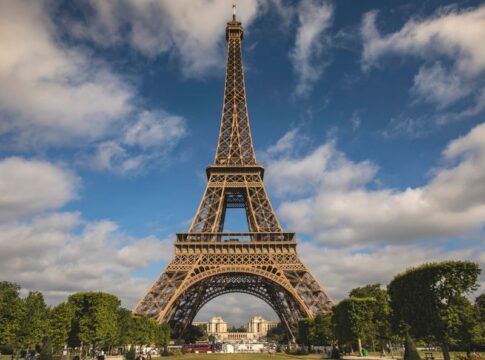
Paris without the Eiffel Tower is almost unimaginable today, yet this iconic iron lattice structure was never meant to stand forever. The Eiffel Tower temporary status was written into its original construction permit, with a scheduled demolition date just two decades after its completion. What began as a controversial exhibition centerpiece destined for the scrapyard became one of the world’s most recognizable landmarks through a combination of technological innovation, public sentiment, and pure luck.
The story of how a temporary structure dodged demolition reveals surprising truths about 19th-century engineering, Parisian politics, and the unpredictable nature of cultural icons. These fascinating facts about the tower’s impermanence show how close the world came to losing one of its greatest architectural treasures.
Key Takeaways
- The Eiffel Tower was granted only a 20-year permit and was scheduled for demolition in 1909
- Gustave Eiffel personally financed much of the construction, knowing it might be torn down
- Radio transmission capabilities saved the tower from its planned destruction
- Many Parisians initially despised the structure and demanded its removal
- The tower’s temporary status influenced its revolutionary lightweight iron design
- Scientific experiments conducted at the tower proved its lasting value beyond aesthetics
The Original 20-Year Death Sentence
When the construction permit was issued in January 1887, it came with an expiration date. The Eiffel Tower temporary permit explicitly stated the structure would stand for only 20 years following the 1889 Exposition Universelle. After that, ownership would revert to the City of Paris, which fully intended to dismantle it. This wasn’t unusual—world’s fair structures were typically temporary, meant to dazzle visitors before disappearing. The tower’s fate seemed sealed from the moment its first rivet was hammered into place.
Gustave Eiffel knew the clock was ticking. He negotiated the permit knowing he had two decades to prove the tower’s worth, or watch his greatest achievement reduced to scrap metal. The temporary nature wasn’t a flaw in planning—it was the entire plan. Exhibition structures weren’t meant to outlive their purpose, and a 300-meter iron tower dominating the Parisian skyline seemed particularly ill-suited for permanence in a city of classical architecture.
Why Parisians Wanted It Gone
The artistic and literary elite of Paris didn’t just dislike the tower—they loathed it. A petition signed by prominent figures including writer Guy de Maupassant and composer Charles Gounod called it a “metal asparagus” and a “gigantic black factory chimney” that would overshadow Notre-Dame and the Louvre. The protest letter, published in Le Temps newspaper, argued the tower would disfigure Paris and represent the triumph of industrial ugliness over French elegance.
This wasn’t mere snobbery. Parisians had legitimate concerns about an experimental iron structure towering over their city. No one had built anything remotely this tall before. Would it collapse in high winds? Would it attract lightning strikes that endangered nearby buildings? The tower’s temporary status actually reassured critics that this “eyesore” wouldn’t permanently mar their beloved cityscape.
1. Gustave Eiffel Funded It Himself, Knowing It Might Be Destroyed
Eiffel took an enormous financial gamble on a structure with a built-in demolition date. While the French government provided some funding for the 1889 Exposition, Eiffel’s engineering company financed roughly three-quarters of the tower’s construction costs—a massive sum he expected to recoup through visitor admission fees during and after the exposition. He was essentially investing millions in a building scheduled for destruction, betting he could either change minds or make enough money in 20 years to justify the expense. The risk was extraordinary, especially since public opinion ran strongly against the project.
2. The Tower Was Designed to Be Easily Dismantled
Because everyone expected the tower to come down in 1909, its engineering reflected this temporary status. The revolutionary use of prefabricated iron pieces held together with rivets—rather than traditional masonry—made the structure theoretically reversible. Each of the approximately 18,000 metal parts could be unbolted and removed in reverse order of assembly. This wasn’t just efficient construction; it was planned deconstruction. The tower’s famous lattice design, which minimized wind resistance, also minimized material costs for what was assumed to be a short-term structure.
3. Radio Transmission Saved It From Demolition
As 1909 approached, Eiffel desperately sought to prove the tower’s practical value beyond tourism. He promoted scientific uses: meteorological observations, aerodynamic experiments, and astronomical measurements. But wireless telegraphy saved the day. The tower’s height made it an ideal antenna for the new radio technology emerging in the early 20th century. Military officials recognized its strategic value for radio communications, and the tower began transmitting radio signals. When World War I began in 1914, the tower’s radio capabilities proved invaluable for intercepting enemy communications. Its usefulness as a transmission tower indefinitely postponed demolition.
4. It Was the World’s Tallest Structure for 41 Years
From its 1889 completion until 1930, when the Chrysler Building surpassed it, the Eiffel Tower held the record as the world’s tallest man-made structure. This record-breaking height—approximately 300 meters including the antenna—was achieved with a structure originally intended to last only two decades. The tower claimed the title from the Washington Monument and demonstrated that iron framework construction could reach heights impossible with traditional stone masonry. The fact that this record-holder was considered temporary shows how dramatically perceptions of the tower shifted over time.
5. The Tower Generated Massive Revenue Despite Its Temporary Status
During the 1889 Exposition Universelle alone, nearly two million people paid to ascend the tower, making it the exposition’s most popular attraction. This commercial success continued after the fair ended, generating substantial revenue that helped Eiffel recoup his investment well before the 1909 deadline. The financial argument for preservation grew stronger as the tower proved itself a perpetual money-maker for Paris. Why demolish a structure that tourists flocked to see and paid handsomely to climb? Economic pragmatism began to override aesthetic objections.
6. Scientific Experiments Gave It Academic Legitimacy
Eiffel transformed the tower into a scientific laboratory to demonstrate its value beyond spectacle. He installed meteorological instruments, conducted aerodynamic experiments by dropping objects from various heights, and even built a wind tunnel at the tower’s base. Physicist Théodore Wulf performed cosmic ray measurements from the top platform in 1910, contributing to important discoveries in atomic physics. These scientific applications gave the tower intellectual credibility and a purpose that justified its continued existence to skeptics who dismissed it as mere showmanship.
7. Public Opinion Shifted Dramatically Within a Decade
The same Parisians who initially despised the tower gradually embraced it as a symbol of their city. By the turn of the 20th century, the structure that once symbolized industrial vulgarity had become an emblem of French engineering prowess and modernity. Artists who once condemned it began featuring it in paintings and photographs. This remarkable reversal in public sentiment made political demolition nearly impossible—tearing down a beloved landmark would have been electoral suicide for any politician who proposed it. The tower’s temporary status became increasingly theoretical as it embedded itself in Parisian identity.
8. World War I Cemented Its Permanent Status
The tower’s military value during World War I definitively ended demolition discussions. Its radio transmission capabilities intercepted German military communications, including the famous message that helped lead to the Allied victory at the First Battle of the Marne in 1914. The tower also jammed German radio communications and was used to dispatch Parisian taxis to the front lines. After proving its strategic importance during wartime, no one seriously suggested tearing it down. National security had transformed a temporary exhibition piece into permanent infrastructure.
9. The Temporary Permit Was Never Officially Revoked
Interestingly, the original 20-year permit was never formally replaced with a permanent authorization. Instead, the tower’s continued existence became a matter of administrative inertia and practical necessity. No one bothered to officially declare it permanent because no one was seriously proposing demolition anymore. The structure simply outlived its expiration date through usefulness rather than legal revision. This bureaucratic quirk means that, technically, one of the world’s most iconic permanent structures still operates under what was originally intended as temporary authorization.
Comparing Temporary Exhibition Structures
| Structure | Exhibition | Year Built | Current Status |
|---|---|---|---|
| Eiffel Tower | Paris Exposition Universelle | 1889 | Still standing |
| Crystal Palace | Great Exhibition, London | 1851 | Destroyed by fire, 1936 |
| Space Needle | Seattle World’s Fair | 1962 | Still standing |
| Atomium | Brussels World’s Fair | 1958 | Still standing |
Frequently Asked Questions
How long was the Eiffel Tower supposed to stand?
The Eiffel Tower was granted a 20-year permit and was scheduled for demolition in 1909, two decades after its completion for the 1889 Exposition Universelle. The permit specified that ownership would revert to the City of Paris, which planned to dismantle it.
What saved the Eiffel Tower from being torn down?
Radio transmission technology saved the tower from demolition. Its height made it ideal for wireless telegraphy, and its military radio communications value—especially during World War I—convinced authorities to preserve it indefinitely.
Did Gustave Eiffel think the tower would be permanent?
Eiffel knew the tower was intended to be temporary but worked to prove its scientific and practical value, hoping to convince authorities to spare it. He promoted meteorological, aerodynamic, and radio transmission uses to demonstrate its worth beyond the exposition.
Why did Parisians initially hate the Eiffel Tower?
Many Parisians considered the iron tower an industrial eyesore that clashed with Paris’s classical architecture. Prominent artists and writers petitioned against it, calling it ugly and warning it would overshadow historic monuments like Notre-Dame.
The Eiffel Tower’s journey from condemned temporary structure to beloved global icon reminds us that today’s eyesore can become tomorrow’s treasure. Sometimes the things we build with expiration dates end up outlasting everything designed to be permanent—a testament to usefulness, adaptability, and the unpredictable ways technology reshapes our world.