
By TrivBits, Staff Writer — Published October 13, 2026
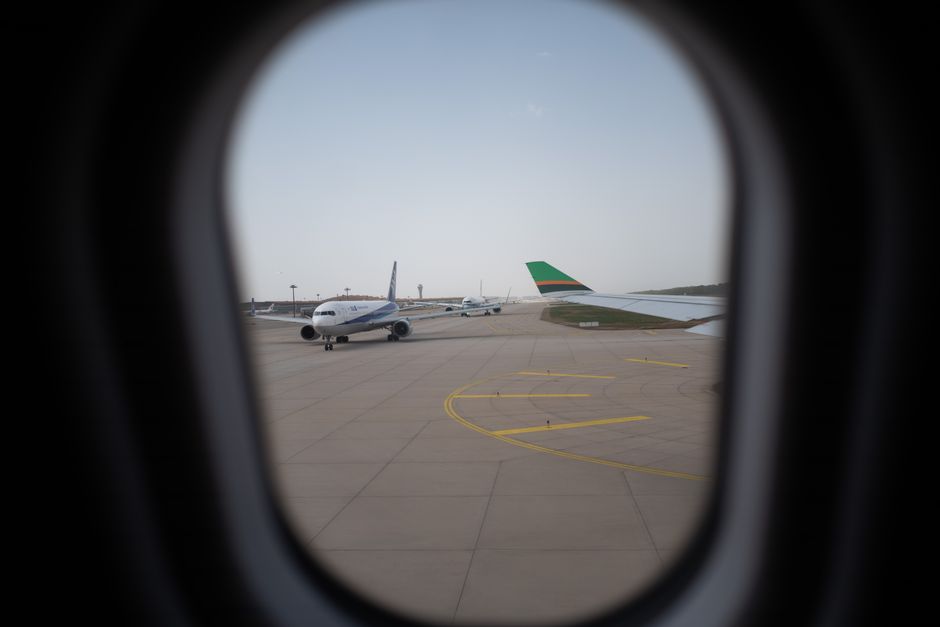
Table of Contents
- Key Takeaways
- The Fatal Flaw of Airplane Windows Round Corners Revealed
- Engineering Myths and Truths About Window Shapes
- How Pressurization Cycles Create Hidden Damage
- Window Design Comparison: Safety Through Shape
- The Legacy of Early Aviation Disasters
- Frequently Asked Questions
- Sources
Did you know that the shape of airplane windows was once a matter of life and death? The rounded windows you see on modern aircraft aren’t just a design preference—they’re the result of one of aviation’s most tragic lessons. In the early days of commercial jet travel, square windows seemed perfectly logical. They were easier to manufacture and looked sleek. But this seemingly minor design choice led to catastrophic failures that changed aviation engineering forever.
The surprising truth about why airplane windows are round today involves metal fatigue, structural stress, and disasters that shocked the world. This interesting piece of aviation trivia reveals how engineers learned—sometimes the hard way—that corners can be deadly at 35,000 feet.
Key Takeaways
- Early commercial jets featured square windows that created dangerous stress concentration points in the aircraft fuselage
- Multiple fatal crashes in the 1950s were directly linked to structural failures originating at window corners
- Round windows distribute pressure evenly across the frame, eliminating weak points where cracks could form
- The pressurization cycle aircraft experience—expanding and contracting thousands of times—makes stress distribution critical
- Modern aviation safety standards mandate rounded window designs based on lessons learned from past tragedies
- The switch to round windows represents one of the most significant safety improvements in commercial aviation history
The Fatal Flaw of Airplane Windows Round Corners Revealed
In the early 1950s, the de Havilland Comet became the world’s first commercial jetliner. Sleek and modern, it featured large square windows that gave passengers unprecedented views. The design seemed perfect. But within months of entering service, Comets began falling from the sky in mysterious circumstances.
The problem wasn’t immediately obvious. These weren’t crashes caused by pilot error or engine failure. The planes simply disintegrated mid-flight. Investigators eventually discovered the shocking truth: the square windows were tearing the aircraft apart.
Here’s why. Aircraft cabins are pressurized to keep passengers comfortable at high altitudes. Every time a plane climbs and descends, the fuselage expands and contracts. This happens thousands of times over an aircraft’s lifetime. Square windows have corners, and corners create stress concentration points—areas where physical forces accumulate rather than distribute evenly.
Think of it like repeatedly bending a paper clip. The bend point weakens faster than the rest of the metal. In aircraft, those corner stress points developed microscopic cracks that grew with each flight cycle until the metal catastrophically failed.
Engineering Myths and Truths About Window Shapes
One common myth suggests that round windows are stronger than square ones. That’s not quite accurate. The truth is more nuanced and more interesting.
Round windows aren’t inherently stronger—they’re smarter. The circular shape distributes stress evenly around the entire perimeter. There are no corners where force can concentrate and amplify. When cabin pressure pushes outward, that force spreads uniformly across the window frame. The metal experiences consistent stress rather than dangerous peaks.
Square windows, by contrast, experience roughly three times the stress at their corners compared to the middle of each edge. This stress multiplication effect turns corners into structural time bombs. Metal fatigue—the weakening of material through repeated stress cycles—accelerates dramatically at these points.
Engineers also discovered that the rivet holes used to attach window frames created additional stress points. Combined with square corners, these created a perfect recipe for structural failure. The unknown danger had been hiding in plain sight.
How Pressurization Cycles Create Hidden Damage
Commercial aircraft experience extreme conditions that most people never consider. A typical flight involves pressurizing the cabin to roughly the equivalent of 8,000 feet elevation while the aircraft cruises at 35,000 feet or higher. This creates a significant pressure differential between inside and outside.
The fuselage essentially becomes a metal balloon, expanding slightly with each pressurization. During descent, it contracts. Modern aircraft can complete 50,000 to 60,000 of these cycles over their service life. Each cycle stresses the metal.
Metal fatigue is cumulative and insidious. Unlike sudden damage, it develops invisibly over time. Microscopic cracks form and propagate through the material’s crystal structure. In areas of stress concentration—like square window corners—this process accelerates. Eventually, a crack reaches critical length and the structure fails suddenly and catastrophically.
Round windows eliminate the stress concentration problem. The smooth curve means no weak points exist where cracks preferentially form. This simple geometric change transformed aviation safety.
Window Design Comparison: Safety Through Shape
| Feature | Square Windows | Round Windows |
|---|---|---|
| Stress Distribution | Concentrated at corners (3x normal) | Even distribution around perimeter |
| Crack Initiation Points | Four high-risk corners per window | No stress concentration points |
| Fatigue Resistance | Low—cracks develop quickly | High—uniform stress delays fatigue |
| Pressurization Cycles | Each cycle weakens corners significantly | Minimal progressive weakening |
| Manufacturing Complexity | Simpler to cut and install | Requires curved frames and careful installation |
The Legacy of Early Aviation Disasters
The lessons learned from early jet aircraft failures fundamentally changed aerospace engineering. Investigators didn’t just identify the problem—they developed entirely new methods for testing and understanding metal fatigue. These advances extended far beyond aviation, influencing bridge design, pressure vessel construction, and countless other applications where cyclic stress matters.
Today’s aircraft undergo rigorous fatigue testing before ever carrying passengers. Engineers subject test airframes to the equivalent of decades of pressurization cycles, monitoring for any signs of weakness. Computer modeling now predicts stress distribution with remarkable accuracy, allowing designers to eliminate problems before they’re built.
The round window design stands as a testament to learning from failure. What seems like a small detail—the curve of a window frame—represents thousands of hours of investigation, testing, and engineering refinement. Every round window on every commercial aircraft tells this story.
Frequently Asked Questions
Could square windows ever be used safely on aircraft?
Theoretically, yes, but it would require extensive reinforcement around each corner to counteract stress concentration. The added weight and complexity make round windows far more practical. Modern materials and engineering could potentially address the issues, but there’s no compelling reason to abandon a proven, safe design that works perfectly.
Are all airplane windows perfectly round?
Most commercial aircraft use rounded rectangles rather than perfect circles—they have curved corners rather than sharp angles. The key is eliminating acute corners where stress concentrates. Some windows appear more oval or have gentler curves, but all modern designs avoid the sharp 90-degree corners that caused historical problems.
Do military aircraft use different window designs?
Military aircraft often have different requirements and may use various window shapes depending on their mission. However, pressurized military aircraft generally follow the same round-corner principles for the same structural reasons. Fighter jets and specialized aircraft may prioritize other factors like visibility or stealth over passenger comfort.
How often are aircraft windows inspected for cracks?
Aircraft undergo regular maintenance inspections that include checking windows and surrounding structures. The frequency depends on the aircraft type and age, but inspections typically occur during routine maintenance checks. Modern non-destructive testing methods can detect microscopic cracks before they become dangerous, and windows are replaced if any concerns arise.