

By TrivBits, Staff Writer — Published November 26, 2026
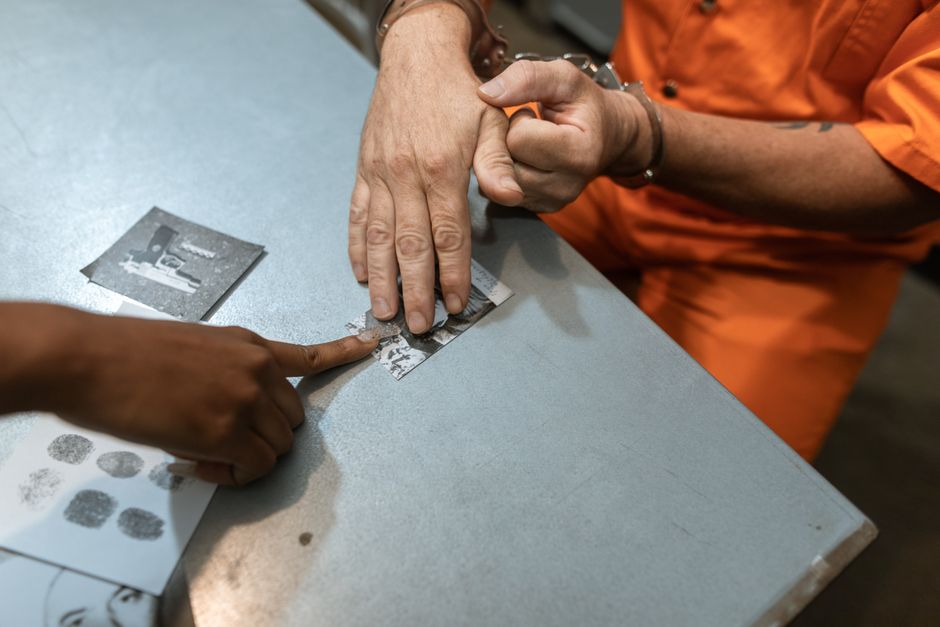
Table of Contents
- Key Takeaways
- When Fingerprints Disappear: Body Facts That Challenge Reality
- The Science Behind These Strange Body Truths
- Why These Facts Matter Beyond Trivia
- Frequently Asked Questions
- Sources
Your body is hiding secrets in plain sight. Some of these biological truths sound so bizarre that you’d swear they belong in science fiction, not in peer-reviewed journals. Did you know that your fingerprints disappear under certain conditions, or that your bones are constantly reshaping themselves? These surprising facts about the human body challenge what we think we know about our own anatomy.
The most interesting trivia often lives at the intersection of the everyday and the utterly strange. These unknown truths about your body aren’t myths—they’re verified phenomena that reveal just how wonderfully weird human biology really is.
Key Takeaways
- Fingerprints can temporarily or permanently disappear due to specific medical conditions, chemotherapy, and certain occupations
- Your skeleton completely regenerates roughly every ten years through continuous bone remodeling
- The human body produces enough heat in 30 minutes to boil half a gallon of water
- Your stomach lining replaces itself every few days to prevent self-digestion
- Humans shed their entire outer layer of skin approximately every 2-4 weeks
- Your brain can generate about 23 watts of power while you’re awake
When Fingerprints Disappear: Body Facts That Challenge Reality
The human body performs countless remarkable feats every single day, most of which go completely unnoticed. While we take our physical form for granted, scientists continue to uncover astonishing details about how our organs, tissues, and cells operate. These nine facts reveal the strange, almost unbelievable reality of human physiology.
1. Your Fingerprints Can Actually Disappear
Fingerprints aren’t as permanent as crime shows suggest. People undergoing chemotherapy sometimes lose their fingerprints entirely, a condition called adermatoglyphia. Certain cancer drugs damage the rapidly dividing cells in fingertips, smoothing out the distinctive ridges. Workers who handle bricks, chemicals, or rough materials for years may also wear down their prints to the point of being unrecognizable. A rare genetic condition causes some people to be born without fingerprints at all, creating occasional problems at border crossings where biometric scanning is mandatory. The ridges can regenerate once the damaging factor is removed, but in cases of deep scarring or genetic absence, they may never return.
2. Your Skeleton Is Constantly Being Demolished and Rebuilt
Right now, specialized cells are tearing apart your bones while other cells rebuild them. This isn’t damage—it’s standard operating procedure. Osteoclasts dissolve old bone tissue, releasing minerals into your bloodstream, while osteoblasts lay down fresh bone matrix. The entire human skeleton replaces itself approximately every decade through this continuous remodeling process. Children and teenagers cycle through bone faster, which is why broken bones heal more quickly in youth. This process explains why astronauts lose bone density in space: without gravity’s constant stress, the body decides it doesn’t need to maintain such robust skeletal architecture.
3. You Generate Enough Body Heat to Boil Water
Your body is a furnace in disguise. An average person at rest produces roughly 100 watts of heat—about the same as a bright incandescent light bulb. During exercise, that number can spike to 500 watts or more. In just 30 minutes, the heat energy your body produces could theoretically bring half a gallon of water to a rolling boil. This is why crowded rooms get warm so quickly and why engineers must account for human heat output when designing building ventilation systems. Your metabolism constantly burns fuel to maintain a core temperature around 98.6°F, making you a walking, talking space heater.
4. Your Stomach Would Digest Itself Without a Protective Barrier
The hydrochloric acid in your stomach is strong enough to dissolve metal. So why doesn’t it burn a hole through your gut? Your stomach secretes a thick layer of mucus that forms a protective barrier between the acid and the stomach lining. Even with this defense, the cells lining your stomach are replaced every three to five days. They’re essentially sacrificial, constantly being shed and renewed to prevent the digestive juices from eating through to the muscle layer beneath. When this mucus barrier breaks down, you get ulcers—literal holes where the stomach begins digesting itself.
5. You Shed Your Skin Like a Snake (Just More Slowly)
You’re not the same person you were a month ago, at least not on the surface. Humans lose approximately 30,000 to 40,000 skin cells every minute, which adds up to roughly nine pounds of dead skin per year. Your entire outer layer of epidermis replaces itself every 2-4 weeks. Much of household dust is actually composed of these shed skin cells. The process accelerates in areas of friction—your feet, hands, and anywhere clothing rubs consistently. Unlike snakes, which shed in one dramatic session, humans slough off skin constantly in microscopic flakes, creating a continuous invisible snowfall around our bodies.
6. Your Brain’s Electrical Output Could Power a Light Bulb
The roughly 86 billion neurons in your brain communicate through electrical signals, generating about 23 watts of power when you’re awake. That’s enough to power a small LED light bulb. These electrical impulses travel at speeds up to 268 miles per hour along nerve pathways, enabling split-second reactions and complex thought. During sleep, your brain doesn’t power down—it reorganizes information and clears out metabolic waste through a newly discovered system called the glymphatic system. The brain uses about 20% of your body’s total energy despite representing only 2% of your body weight, making it the most energy-hungry organ you possess.
7. Your Eyes Have a Separate Immune System
Your eyes are so delicate that your normal immune response would destroy them. The eye maintains what scientists call “immune privilege,” meaning the standard inflammatory immune response is suppressed in ocular tissue. Blood vessels in the retina are specially designed to prevent most immune cells from entering. This protective isolation is necessary because inflammation that would merely be uncomfortable elsewhere in the body could cause blindness if it occurred in the eye. However, this privilege comes with a cost: certain infections in the eye can be particularly dangerous because the full immune system can’t easily access the area to fight them off.
8. Your Liver Can Regenerate From Just 25% of Its Original Mass
The liver possesses regenerative powers that seem almost magical. If three-quarters of a liver is removed, the remaining portion can grow back to its full original size within a few months. This remarkable ability makes living liver donation possible—a donor can give a portion of their liver to save someone’s life, and both the donor’s remaining liver and the recipient’s transplanted portion will grow to functional size. The liver is the only internal organ with this level of regenerative capacity. Ancient Greeks knew something was special about the liver; in their mythology, Prometheus had his liver eaten by an eagle daily, only to have it regrow each night.
9. Your Sense of Smell Is Directly Wired to Memory Centers
Smell is the only sense with a direct neural pathway to the brain’s memory and emotion centers. When you smell something, signals bypass the thalamus (the brain’s relay station) and go straight to the olfactory bulb, which has direct connections to the amygdala and hippocampus. This anatomical quirk explains why certain scents can instantly transport you back to childhood or trigger powerful emotional responses. Your nose can distinguish roughly one trillion different scents, far more than previously estimated. You’re also constantly smelling yourself, but your brain filters out your own scent signature to focus on new or changing odors in your environment.
The Science Behind These Strange Body Truths
These facts aren’t anomalies—they’re features of a biological system optimized by millions of years of evolution. Each strange characteristic serves a purpose, whether it’s protecting vital organs, conserving energy, or enabling rapid healing. The body prioritizes survival and efficiency, sometimes in ways that seem counterintuitive or downright bizarre to our conscious minds.
Medical researchers continue to discover new surprises about human physiology. What seemed impossible a generation ago—like the brain clearing waste during sleep or the gut microbiome influencing mood—is now established science. These discoveries remind us that the human body remains one of the most complex and poorly understood systems we encounter.
Why These Facts Matter Beyond Trivia
Understanding these biological realities has practical implications. Knowing that fingerprints can disappear helps explain why some cancer patients face unexpected difficulties with biometric security. Recognizing the liver’s regenerative capacity has enabled life-saving transplant procedures. Appreciating bone remodeling has improved treatments for osteoporosis and guided exercise recommendations for aging populations.
The connection between smell and memory has applications in treating PTSD and dementia. The body’s heat generation influences everything from building design to hypothermia treatment protocols. These aren’t just cocktail party curiosities—they’re insights that shape medical practice, technology development, and our understanding of what it means to be human.
Frequently Asked Questions
Can fingerprints permanently disappear, or do they always grow back?
It depends on the cause. Fingerprints lost due to chemotherapy or temporary injury typically regenerate once the damaging factor is removed, though this can take weeks or months. However, deep burns, certain genetic conditions, or decades of abrasive work can cause permanent loss. The dermal layer beneath the skin’s surface contains the “blueprint” for fingerprint patterns, so as long as this layer remains intact, prints can potentially return.
How long does it actually take for your entire skeleton to be replaced?
The complete turnover takes approximately 10 years in adults, though this varies by bone type and individual factors. Dense cortical bone in the shafts of long bones renews more slowly, while trabecular bone (the spongy interior tissue) cycles through faster. Children and teenagers replace their skeletons much more quickly due to rapid growth, while the process slows somewhat with age as bone formation doesn’t quite keep pace with bone resorption.
Why doesn’t everyone know about these body facts?
Many of these phenomena were only recently understood or confirmed through modern research technology. Some facts, like bone remodeling and skin shedding, happen too slowly or microscopically for us to notice. Others, like the eye’s immune privilege or the liver’s regeneration, only become apparent in medical contexts. Human biology education often focuses on basic anatomy rather than dynamic processes, leaving these fascinating details for specialized study.
Are there other organs besides the liver that can regenerate?
The liver is unique in its regenerative capacity, but other tissues show limited regrowth. Skin obviously regenerates continuously. The lungs can repair some damage after smoking cessation. Fingertips, including bone and nail, can sometimes regrow in young children if the wound is treated properly. However, most organs—heart, brain, kidneys—have very limited regenerative ability, making the liver’s powers particularly remarkable and medically valuable.