
By TrivBits, Staff Writer — Published September 29, 2026
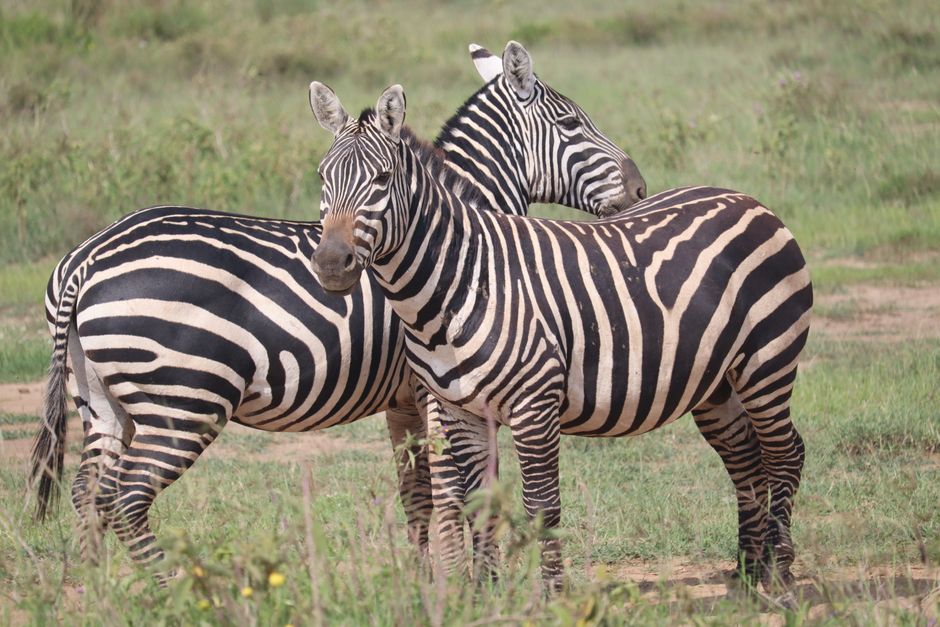
Table of Contents
- Key Takeaways
- How Zebra Stripes Confuse Flies and Other Biting Insects
- Comparing Stripe Effectiveness Across Species
- Frequently Asked Questions
- Sources
Did you know that zebra stripes confuse flies in ways scientists are only beginning to understand? For over a century, researchers have puzzled over why zebras evolved their distinctive black-and-white coats. While theories ranged from camouflage to social signaling, recent evidence points to a surprising truth: those bold patterns are nature’s fly repellent. Bloodsucking insects struggle to land on striped surfaces, and the reasons reveal fascinating facts about vision, motion, and evolution.
The mystery of zebra stripes has captivated naturalists since Darwin’s time. These interesting patterns do more than make zebras photogenic—they interfere with how flies perceive motion and distance, creating a visual barrier that protects these animals from disease-carrying pests.
Key Takeaways
- Zebra stripes create optical illusions that disrupt the landing approach of biting flies
- Horseflies and tsetse flies are significantly less successful at landing on striped patterns compared to solid colors
- The stripe width and contrast ratio play crucial roles in confusing insect vision
- This natural defense mechanism helps zebras avoid deadly diseases transmitted by bloodsucking flies
- Scientists have tested stripe patterns on horses, confirming the fly-deterrent effect works across species
- The discovery challenges long-held myths about zebra stripe evolution
How Zebra Stripes Confuse Flies and Other Biting Insects
The connection between zebra stripes and fly confusion begins with how insects see the world. Flies rely on motion detection to navigate and land on hosts. When a fly approaches a zebra, the alternating stripes create rapid changes in light and dark that overwhelm the insect’s visual processing system. This optical chaos makes it nearly impossible for flies to judge speed and distance accurately. The result? Flies either veer away at the last moment or crash clumsily into the zebra’s coat before flying off without biting.
1. The Motion Dazzle Effect Creates Visual Chaos
Zebra stripes generate what researchers call “motion dazzle”—a phenomenon where high-contrast patterns make it difficult to track moving objects. When a zebra walks or runs, the stripes seem to shimmer and blur together. Flies attempting to land must calculate trajectory, speed, and distance in milliseconds. The stripes scramble these calculations. Think of it like trying to grab a spinning barber pole—your brain can’t quite pin down where the surface actually is. This unknown advantage has protected zebras for millennia.
2. Stripe Width Matters More Than You’d Think
Not all stripes are created equal. Research shows that stripes approximately two to four centimeters wide—about the width found on most zebras—provide optimal fly confusion. Stripes that are too wide or too narrow lose their effectiveness. The sweet spot corresponds to the resolution limit of fly vision at typical approach distances. It’s as if zebras evolved the perfect pattern to exploit a bug in the insect operating system. Different zebra species have slightly different stripe patterns, and those living in areas with more biting flies tend to have narrower, more numerous stripes.
3. Polarized Light Reflection Adds Another Layer
Zebra stripes don’t just differ in color—they reflect light differently at the microscopic level. The black stripes absorb more light while white stripes reflect it, but there’s more to the story. Some studies suggest the stripes may create polarized light patterns that further confuse flies. Many insects use polarized light for navigation, detecting it through specialized photoreceptors. When light bounces off zebra stripes, the polarization pattern becomes irregular and disorienting. This adds a second dimension to the confusion beyond simple contrast.
4. Temperature Regulation Works Alongside Fly Defense
While fly confusion is now considered the primary function, zebra stripes may serve double duty. The black stripes heat up in sunlight while white stripes stay cooler, creating tiny air currents across the zebra’s body. These micro-convection patterns help regulate body temperature in hot African climates. Some researchers propose that these air currents also disturb the air immediately around the zebra, making it harder for flies to maintain stable flight during their final approach. The truth is likely that stripes evolved for multiple benefits, with fly deterrence being the most critical.
5. Experimental Evidence from Dressed-Up Horses
Scientists have confirmed the fly-deterrent effect through clever experiments. Researchers dressed domestic horses in zebra-striped coats and compared fly landing rates to horses wearing solid-colored coats. The results were striking: horses in striped coats experienced significantly fewer successful fly landings—roughly one-quarter as many as horses in plain coats. Flies approached both groups equally, but those targeting striped horses failed to land properly, often aborting at the last second or bouncing off without biting. This experiment proved the effect isn’t about zebra biology—it’s purely about the pattern.
6. Disease Prevention Drives Evolutionary Pressure
The stakes behind this adaptation are life and death. Bloodsucking flies in Africa transmit devastating diseases including trypanosomiasis (sleeping sickness) and African horse sickness. These illnesses can be fatal to equids. Zebras living in regions with high concentrations of disease-carrying flies face intense evolutionary pressure to develop defenses. A pattern that reduces successful fly bites by even twenty or thirty percent could mean the difference between survival and death over a lifetime. This explains why the trait became fixed across all zebra species despite the metabolic cost of producing two different hair pigments.
7. Social Recognition Myths Debunked
For decades, a popular theory held that zebras use their unique stripe patterns to recognize each other, like fingerprints. While individual zebras do have distinctive patterns, research now suggests this wasn’t the driving force behind stripe evolution. Zebras can recognize each other through scent, vocalizations, and behavior just fine. The social recognition hypothesis also fails to explain why all zebras have stripes—if it were primarily for individual identification, we’d expect more variation in whether animals had stripes at all. The fly-deterrent explanation better accounts for the universal presence of stripes across the zebra family tree.
8. Camouflage Theories Don’t Hold Up
Another persistent myth suggests zebra stripes provide camouflage from predators like lions. The idea is that stripes break up the zebra’s outline or create confusion when the herd runs together. This sounds plausible but faces serious problems. Lions hunt primarily at dawn and dusk when they have superior low-light vision—exactly when stripe patterns become less visible. Additionally, lions are successful zebra hunters despite the stripes. Most compelling: if stripes were anti-predator camouflage, we’d expect other prey animals in the same habitats to evolve similar patterns. They haven’t. The evidence points away from predator confusion and toward parasite defense.
9. Human Applications Are Being Developed
The discovery of how zebra stripes confuse flies has sparked practical applications. Researchers are developing striped clothing and livestock coverings to protect against biting insects without chemical repellents. Some companies now sell zebra-striped horse blankets for fly control. There’s even research into using stripe patterns on outdoor structures and vehicles to reduce insect attraction. These biomimetic solutions offer environmentally friendly alternatives to pesticides. The ancient evolutionary innovation of zebra stripes may help modern humans deal with mosquitoes, horseflies, and other pests in a world increasingly concerned about chemical resistance and environmental impact.
Comparing Stripe Effectiveness Across Species
| Animal | Stripe Pattern | Primary Benefit | Fly Landing Reduction |
|---|---|---|---|
| Plains Zebra | Wide vertical stripes | Fly deterrence | Approximately 75% |
| Mountain Zebra | Narrow horizontal stripes on legs | Fly deterrence | Approximately 70% |
| Horses (striped coat) | Artificial zebra pattern | Experimental fly control | Approximately 70% |
| Domestic Cattle | Painted stripes | Experimental fly control | Approximately 50% |
Frequently Asked Questions
Do zebra stripes really keep flies away?
Yes, scientific experiments have confirmed that zebra stripes significantly reduce successful fly landings. While flies still approach zebras, the stripes interfere with their ability to land and bite effectively. The pattern creates visual confusion that disrupts the fly’s motion-detection systems during the critical final approach phase.
Why don’t other animals have stripes if they work so well?
Stripes come with evolutionary trade-offs. Producing two different hair pigments requires extra metabolic resources. Other animals may have evolved different defenses against flies, such as thick skin, tail-swishing behavior, or mud-wallowing habits. Zebras evolved in environments where biting flies posed such a severe disease risk that the benefits of stripes outweighed the costs.
Can humans use zebra stripe patterns for insect control?
Yes, and it’s already happening. Researchers have successfully used striped patterns on horses, cattle, and even human clothing to reduce fly bites. While not one hundred percent effective, striped coverings offer a chemical-free alternative to insect repellents. The technology is still being refined to maximize effectiveness for different applications.
Are all zebra stripes the same?
No, the three zebra species have noticeably different stripe patterns. Plains zebras have broad stripes, Grevy’s zebras have very narrow stripes, and mountain zebras have horizontal stripes on their hindquarters. These variations likely reflect different evolutionary pressures in their respective habitats, including variations in local fly populations and environmental conditions.