
By TrivBits, Staff Writer — Published October 5, 2026
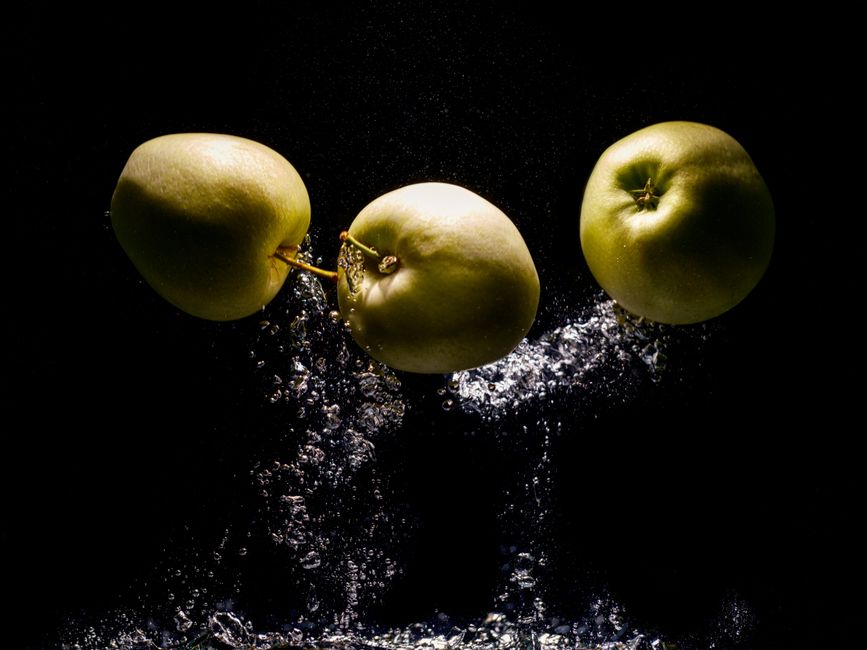
Table of Contents
- Key Takeaways
- The Science Behind Why Apples Float in Water
- Botanical Definitions vs. Culinary Classifications
- 7 Surprising Fruit Facts
- The Chemistry of Fruit Flavor
- Myths and Truths About Fruit Storage
- Frequently Asked Questions
- Sources
Ever watched an apple bob in a bucket of water and wondered why it stays afloat? This simple phenomenon reveals something fascinating about the science of fruit. Apples float in water because they contain roughly 25% air trapped in tiny pockets between their cells, making them less dense than water. This curious fact is just the beginning of a collection of surprising truths about the fruits we eat every day.
The world of fruit hides countless interesting details that most people never consider. From botanical classifications that challenge what we think we know to unexpected chemical reactions, these edible plant parts offer more trivia than you might imagine.
Key Takeaways
- Apples float because internal air pockets make them 25% less dense than water
- Many “vegetables” we eat are technically fruits by botanical definition
- Bananas are berries, but strawberries are not, according to botanical classification
- Fruits continue ripening after harvest through a natural gas called ethylene
- The fear of fruit is a real phobia with its own medical name
- Ancient fruits looked dramatically different from modern cultivated versions
The Science Behind Why Apples Float in Water
Did you know that the ability of apples to float has made them perfect for autumn games for centuries? The science is straightforward yet elegant. Apple cells contain intercellular air spaces that develop as the fruit grows. These microscopic pockets act like tiny life preservers distributed throughout the apple’s flesh. When you calculate the overall density—the mass divided by volume—an apple typically registers between 0.83 and 0.89 grams per cubic centimeter. Water, by comparison, has a density of 1.0 gram per cubic centimeter. Anything less dense than water floats.
This buoyancy varies slightly between apple varieties. Denser apples with less air content sit lower in water, while particularly airy specimens float high. The phenomenon isn’t unique to apples—most pears, many citrus fruits, and even coconuts share this floating ability. The air content serves an important biological function too: it allows oxygen to reach cells deep inside the fruit, supporting cellular respiration as the apple develops on the tree.
Botanical Definitions vs. Culinary Classifications
Prepare to have your understanding of fruits and vegetables turned upside down. Botanically speaking, a fruit is the seed-bearing structure that develops from the ovary of a flowering plant. This means tomatoes, cucumbers, peppers, eggplants, and even pumpkins are all fruits. Vegetables, in botanical terms, refer to other plant parts: roots (carrots), stems (celery), or leaves (lettuce).
The confusion arises because culinary tradition classifies foods by taste and use rather than botanical origin. We call tomatoes vegetables because they’re savory, not sweet. We use them in salads and sauces, not desserts. Both classification systems are valid—they just serve different purposes. One interesting consequence: the U.S. Supreme Court ruled in 1893 that tomatoes should be classified as vegetables for tariff purposes, despite acknowledging their botanical status as fruits. The case, Nix v. Hedden, prioritized common usage over scientific accuracy for legal reasons.
7 Surprising Fruit Facts
1. Bananas Are Berries, Strawberries Are Not
This revelation surprises nearly everyone who learns it. In botanical terms, a berry is a fleshy fruit produced from a single ovary that contains seeds embedded in the flesh. Bananas fit this definition perfectly—they develop from one flower with one ovary, and those tiny black specks inside are undeveloped seeds. Strawberries, however, are “accessory fruits.” The red flesh we eat is actually swollen receptacle tissue, and those tiny “seeds” on the outside are the true fruits, each containing a seed. By the same logic, blueberries and grapes are true berries, but raspberries and blackberries are not—they’re aggregate fruits formed from multiple ovaries.
2. Pineapples Take Two Years to Grow
That spiky tropical fruit requires extraordinary patience from farmers. A pineapple plant produces just one pineapple after approximately 18 to 24 months of growth. The plant flowers, and the fruit develops from the fusion of dozens of individual fruitlets. Once harvested, the plant can produce a second, smaller fruit from side shoots, but the quality is generally lower. This lengthy growing cycle makes pineapples more resource-intensive than many other fruits. Historically, this difficulty made pineapples so expensive in colonial America and Europe that wealthy hosts would rent them as table centerpieces for parties, returning them afterward rather than eating them.
3. Apples Belong to the Rose Family
Apples share botanical lineage with roses, and once you know this, the connection becomes obvious. Both belong to the family Rosaceae, along with pears, cherries, plums, peaches, apricots, almonds, and strawberries. If you examine an apple blossom closely, you’ll notice its five-petaled structure resembles a wild rose. This family relationship explains certain shared characteristics: the arrangement of flower parts, similar leaf structures, and the presence of cyanogenic compounds in seeds and pits. Those apple seeds you’re warned not to eat contain amygdalin, which breaks down into cyanide—though you’d need to chew and consume an unrealistic number to experience harm.
4. Fruit Ripening Is Contagious
The old saying about one bad apple spoiling the barrel contains scientific truth. Many fruits produce ethylene gas as they ripen, and this gas triggers ripening in nearby fruits. Bananas are prolific ethylene producers, which is why they accelerate the ripening of avocados, tomatoes, and other fruits placed near them. This process is called climacteric ripening. Farmers and grocers manipulate this phenomenon routinely—bananas are often picked green and gassed with ethylene in warehouses to ripen uniformly before sale. Conversely, apples stored in controlled-atmosphere facilities with reduced oxygen and ethylene levels can remain crisp for months. Understanding this helps explain why your fruit bowl sometimes goes from perfect to overripe seemingly overnight.
5. Seedless Watermelons Are Sterile Hybrids
Creating seedless watermelons requires sophisticated plant breeding. Scientists treat watermelon plants with colchicine, a chemical that doubles the number of chromosomes, creating tetraploid plants with four sets of chromosomes instead of the normal two. When these tetraploid plants are crossed with normal diploid plants, the resulting offspring are triploid—having three sets of chromosomes. These triploid plants produce fruit but cannot produce viable seeds because their odd number of chromosomes prevents normal meiosis. The small white seed coats you sometimes see in seedless watermelons are undeveloped seed traces. This same technique creates seedless grapes and other fruits.
6. Durian Is Banned from Many Public Spaces
The Southeast Asian durian fruit has such a powerful, divisive odor that it’s prohibited in hotels, airports, and public transportation across Singapore, Thailand, and other countries. Described variously as resembling gym socks, rotting onions, or turpentine, the smell comes from volatile sulfur compounds. Yet durian devotees consider it the “king of fruits,” praising its creamy, custard-like texture and complex sweet flavor. This extreme polarization appears to have genetic components—research suggests that smell perception varies based on individual odor receptor genes. Some people genuinely experience durian as fragrant and pleasant, while others find it genuinely repulsive. No amount of exposure changes these fundamental perceptions.
7. Ancient Watermelons Were Bitter and White-Fleshed
The sweet, red watermelon we know today looks nothing like its ancestor. A 17th-century painting by Giovanni Stanchi shows a watermelon cut open to reveal pale flesh with large hollow sections—strikingly different from modern varieties. Wild watermelons in Africa, where the species originated, have bitter white or pale yellow flesh and were likely cultivated initially for their water content in arid regions rather than sweetness. Centuries of selective breeding transformed them into the sugar-rich, lycopene-red fruits we enjoy today. This dramatic transformation illustrates how human cultivation has reshaped the fruits we eat. Similar changes occurred with bananas, which were once seedy and nearly inedible, and carrots, which were originally purple or white, not orange.
The Chemistry of Fruit Flavor
What makes a strawberry taste like a strawberry? The answer is more complex than you might expect. Fruit flavor results from combinations of hundreds of chemical compounds working together. A ripe strawberry contains over 360 different volatile compounds that contribute to its aroma and taste. No single chemical creates “strawberry flavor”—it’s the precise ratio and interaction of esters, aldehydes, alcohols, and other organic molecules.
This complexity explains why artificial fruit flavors often taste “fake.” Early artificial flavoring used one or two dominant compounds, missing the subtle symphony of chemicals in real fruit. Modern flavorists have improved their craft, but replicating nature’s complexity remains challenging. Temperature affects flavor perception too. Cold temperatures suppress our taste receptors, which is why melons taste sweeter at room temperature than straight from the refrigerator, even though their sugar content hasn’t changed.
Myths and Truths About Fruit Storage
Should you refrigerate tomatoes? Does washing berries make them spoil faster? Fruit storage generates surprising amounts of debate and misinformation. Here’s what science says: tomatoes lose flavor compounds when refrigerated below 54°F, so counter storage preserves taste—but only if you’ll eat them within a few days. Berries should be washed just before eating because moisture promotes mold growth. Bananas refrigerate well once ripe; the peel turns brown, but the flesh stays fresh longer than on the counter.
One persistent myth claims that fruit eaten after meals causes digestive problems. No scientific evidence supports this. Your stomach doesn’t process foods in a particular order—digestion happens simultaneously for everything you consume. Another common misconception: brown spots on bananas indicate spoilage. Actually, those spots show that starches are converting to sugars, making the banana sweeter and easier to digest. The fruit remains perfectly safe until mold appears or it develops an off smell.
| Fruit | Refrigerate? | Ethylene Producer? | Storage Life |
|---|---|---|---|
| Apples | Yes | High | 1-2 months |
| Bananas | Once ripe | High | 5-7 days |
| Berries | Yes | Low | 3-7 days |
| Citrus | Optional | Low | 1-3 weeks |
| Tomatoes | No (unless overripe) | Moderate | 3-5 days |
Frequently Asked Questions
Do all fruits float in water like apples?
Not all fruits float, but many do. Fruits with high air content relative to their mass—like apples, pears, and coconuts—will float. Denser fruits with less air space, such as most stone fruits (peaches, plums) and very ripe bananas, tend to sink. The floating ability depends on whether the fruit’s overall density is less than water’s density of 1.0 gram per cubic centimeter.
Why do some fruits ripen after picking while others don’t?
Fruits fall into two categories: climacteric and non-climacteric. Climacteric fruits like bananas, apples, tomatoes, and avocados continue ripening after harvest because they produce ethylene gas. Non-climacteric fruits like grapes, citrus, berries, and pineapples stop ripening once picked. They may soften or decay, but they won’t become sweeter or more flavorful. This is why strawberries picked underripe never improve in your kitchen.
Is there really a phobia of fruit?
Yes, fructophobia is a recognized specific phobia involving intense fear or anxiety related to fruit. Like other specific phobias, it can range from mild discomfort to severe reactions that impact daily life. Some people fear all fruit, while others fear specific types or textures. The causes vary—some trace back to childhood experiences, while others develop without clear triggers. Treatment typically involves cognitive behavioral therapy and gradual exposure.
Are organic fruits more nutritious than conventional ones?
Research shows minimal nutritional differences between organic and conventional fruits. Both provide similar levels of vitamins, minerals, and fiber. The primary difference lies in pesticide residues—organic fruits have lower levels of synthetic pesticide residues, though conventional fruits in developed countries remain well within safety limits. Organic farming does offer environmental benefits through reduced chemical use and better soil practices. The most important factor for health is eating adequate fruit, regardless of whether it’s organic or conventional.