
By TrivBits, Staff Writer — Published September 30, 2026
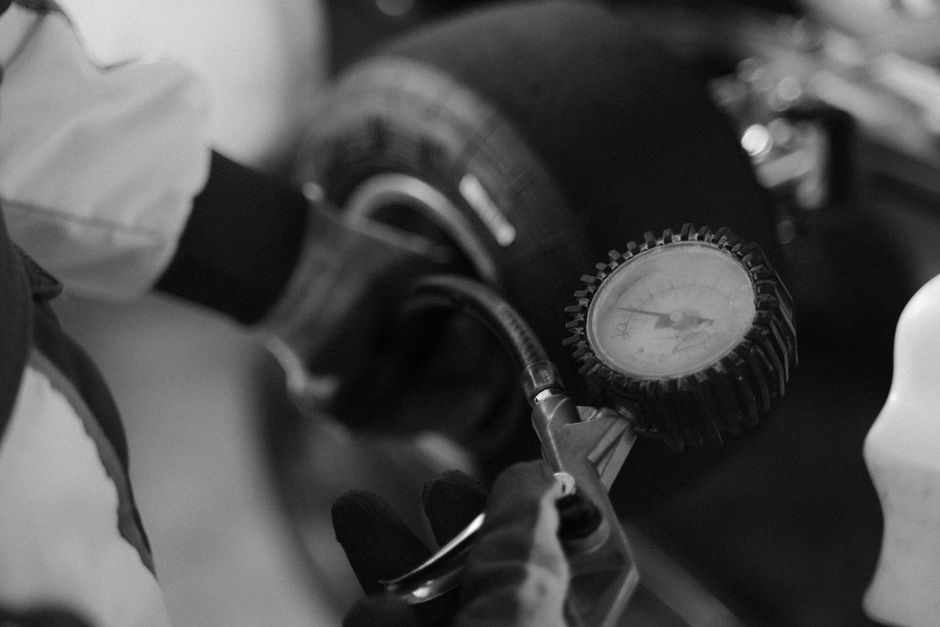
Table of Contents
- Key Takeaways
- The Champagne Pressure Equals Bus Tire Phenomenon Explained
- The Science Behind Those Millions of Bubbles
- Cork Velocity: A Champagne Bottle’s Dangerous Potential
- Frequently Asked Questions
- Sources
Did you know that the pressure inside a champagne bottle matches the air pressure in a bus tire? It’s true. A sealed bottle of bubbly holds about 90 pounds per square inch of pressure—roughly three times the pressure in a car tire. This surprising force is what makes the cork pop with such authority and sends the fizz dancing through your glass. The physics of champagne pressure equals some of the most interesting trivia in the world of beverages, and the truths behind those bubbles are even more fascinating than the myths.
Every bottle of champagne is a tiny pressure vessel, carefully engineered to contain an explosive amount of carbon dioxide. The science behind this beloved drink reveals unexpected connections to engineering, physics, and even safety regulations.
Key Takeaways
- Champagne bottles contain approximately 90 PSI of pressure, equivalent to a bus tire and triple that of a car tire
- A single bottle holds roughly 49 million bubbles waiting to escape when opened
- The cork can launch from a bottle at speeds exceeding 40 miles per hour
- Temperature dramatically affects pressure—warm champagne can reach dangerous levels
- The distinctive champagne bottle shape exists primarily for structural strength, not aesthetics
- Opening champagne incorrectly causes more eye injuries annually than many people realize
The Champagne Pressure Equals Bus Tire Phenomenon Explained
The comparison between champagne pressure and bus tires isn’t just a cute analogy. It’s a precise mechanical reality. During the secondary fermentation that creates champagne’s signature bubbles, yeast converts sugar into alcohol and carbon dioxide inside a sealed bottle. Unable to escape, this CO2 dissolves into the wine under increasing pressure. The result? A steady 5 to 6 atmospheres of pressure—that’s 75 to 90 PSI depending on temperature.
Bus tires operate at nearly identical pressures, typically around 85 to 100 PSI. Car tires, by contrast, run at a modest 30 to 35 PSI. This means champagne producers are essentially asking glass bottles to perform like pressure vessels in industrial applications. The thick glass, the punt (that indent at the bottom), and the mushroom-shaped cork secured with a wire cage all work together to contain this substantial force. Without these engineering features, champagne bottles would be dangerous grenades.
The Science Behind Those Millions of Bubbles
Scientists have calculated that an average bottle of champagne contains approximately 49 million bubbles. That’s not an exaggeration or a rough guess—researchers have actually studied bubble nucleation and formation in sparkling wine. Each bubble begins at a microscopic nucleation site: a tiny imperfection in the glass, a speck of dust, or a cellulose fiber from the cork. These invisible launch pads allow dissolved CO2 to come out of solution and form the streams of bubbles that rise elegantly through your flute.
The rate of bubble formation depends on temperature, glass cleanliness, and the shape of your vessel. A wider coupe glass releases bubbles faster than a narrow flute, which is why connoisseurs prefer flutes—they preserve the fizz longer. Even more fascinating, bubbles don’t just carry carbon dioxide. They also transport aromatic compounds to the surface, where they burst and release the wine’s bouquet into the air above your glass.
Cork Velocity: A Champagne Bottle’s Dangerous Potential
When a champagne cork pops, it doesn’t just drift away gently. Physics takes over with startling force. The cork can leave the bottle at speeds between 40 and 50 miles per hour under typical conditions. If the bottle has been shaken or warmed, velocities can exceed 60 MPH. At these speeds, a champagne cork becomes a projectile capable of causing serious injury.
Eye injuries from champagne corks are not urban legends. Ophthalmologists treat these injuries regularly, particularly around New Year’s Eve and other celebrations. The damage can be severe: retinal detachment, acute glaucoma, and even permanent vision loss. This is why experts universally recommend pointing the bottle away from people and controlling the cork’s release with your palm rather than letting it fly free.
| Condition | Pressure (PSI) | Cork Velocity (MPH) |
|---|---|---|
| Properly chilled (40-45°F) | 75-80 | 35-40 |
| Room temperature (68-72°F) | 90-95 | 45-50 |
| Warm/shaken (80°F+) | 110-130 | 55-65 |
1. The Punt Isn’t About Tradition—It’s About Physics
That distinctive indent at the bottom of a champagne bottle has a name: the punt. Many people assume it’s a holdover from ancient glassblowing techniques or a way to make bottles look fancier. The real reason is structural engineering. The punt distributes pressure more evenly across the bottom of the bottle, preventing weak points where the glass might rupture. A flat-bottomed bottle would concentrate stress at the edges, making it far more likely to explode. The punt transforms the bottle’s base into a dome that channels force toward the stronger sidewalls.
2. Temperature Is the Hidden Danger Variable
Champagne’s internal pressure increases dramatically with temperature. For every 18-degree Fahrenheit increase, the pressure rises by approximately 20 PSI. A bottle stored at 39°F might contain a manageable 70 PSI, but the same bottle left in a hot car at 90°F could reach 120 PSI or higher. This is why champagne should always be stored in cool conditions and chilled before opening. Warm champagne isn’t just less pleasant to drink—it’s genuinely hazardous to open.
3. The Wire Cage Has a Specific Name and Purpose
The wire contraption securing the cork is called a muselet, from the French word for muzzle. It typically requires six half-turns to remove, and this isn’t arbitrary. The muselet serves as a backup safety system. Even if the cork begins to work loose during storage or transport, the wire cage prevents it from becoming a projectile. Some champagne houses have experimented with alternative closures, but the muselet remains the industry standard because it balances security with ease of removal.
4. Champagne Bottles Are Thicker Than Regular Wine Bottles
A standard champagne bottle weighs approximately 2 pounds when empty, compared to about 1.2 pounds for a regular wine bottle of the same size. The extra glass isn’t decorative. It’s essential armor against the internal pressure. The glass must be thick enough to withstand not only the 90 PSI of normal storage but also the thermal shock of chilling, the vibration of transport, and occasional impacts. Champagne producers test their bottles rigorously, and quality control is strict because a bottle failure can be catastrophic.
5. Sabrage Works Because of Pressure, Not Magic
Sabrage—opening champagne with a sword—looks like showmanship, but it’s applied physics. The technique works because the pressure inside the bottle is desperate to escape. When you strike the bottle’s seam with a blade, you create a stress point that the internal pressure immediately exploits. The force from inside does most of the work, cleanly separating the collar and cork from the bottle. Attempting sabrage on a flat wine bottle would simply result in broken glass, because there’s no internal pressure to assist the separation.
6. Vintage vs. Non-Vintage Affects Bubble Behavior
Vintage champagne typically contains slightly less pressure than non-vintage champagne, and the bubbles behave differently. Longer aging allows more complex chemical reactions that affect how CO2 is bound in the wine. Vintage champagne often produces smaller, more persistent bubbles that rise more slowly. Non-vintage champagne, designed for more immediate consumption, tends toward larger, more aggressive bubbles. Both styles maintain similar baseline pressures, but the sensory experience differs noticeably.
7. Space Agencies Have Studied Champagne Bubbles
Scientists, including those working with space agencies, have studied champagne bubble formation in zero gravity and various atmospheric conditions. These experiments aren’t frivolous. Understanding how bubbles nucleate and rise in liquids has applications in industrial processes, medical imaging, and even predicting volcanic eruptions. Champagne provides an ideal study system because its bubble formation is consistent and easily observable. The research has revealed that in zero gravity, champagne bubbles don’t rise at all—they simply remain suspended in the liquid, creating a foam throughout the bottle.
Frequently Asked Questions
Why does champagne spray everywhere when shaken?
Shaking a champagne bottle creates thousands of additional nucleation sites throughout the liquid, causing rapid, widespread bubble formation when opened. The dissolved CO2 comes out of solution all at once rather than gradually, creating a foam that expands faster than it can escape through the bottle’s neck. This is why shaken champagne creates a fountain effect—the pressure is the same, but the release mechanism is dramatically accelerated.
Can a champagne bottle actually explode on its own?
Yes, though it’s rare with modern manufacturing standards. Bottles can explode if they have microscopic flaws in the glass, if they’re subjected to extreme temperature changes, or if secondary fermentation continues after bottling due to residual yeast. Historical records show that champagne cellars once lost 20 to 40 percent of their bottles to spontaneous explosions, but modern quality control has reduced this to well under one percent.
Does more expensive champagne have higher pressure?
No, the pressure inside a champagne bottle is relatively consistent across price points, typically ranging from 75 to 90 PSI regardless of cost. What distinguishes expensive champagne is the quality of grapes, the skill of blending, aging time, and production methods—not the amount of pressure. Legal requirements for champagne actually specify minimum pressure levels, so all authentic champagne must meet the same basic standard.
Is it true that champagne bubbles rise in a straight line?
No, this is a common misconception. High-speed photography reveals that champagne bubbles actually rise in a spiraling, wobbling pattern. They appear to rise straight only to the naked eye. The bubbles’ trajectory is affected by their size, the liquid’s viscosity, and convection currents in the glass. This complex motion is part of what makes champagne’s effervescence so visually captivating under close observation.