










1 / 10 Questions
0 Points

What Type Of Pastry Is Used To Make Napoleons?

Choux Pastry

Shortbread

Phyllo Dough

Puff Pastry

Points won
0
Correct score
0%

More Questions

More Articles

Top 10 Most Expensive Sports Equipment Ever Sold

Top 10 Most Expensive Sports Equipment Ever Sold

⏱️ 6 min read

The world of sports memorabilia and equipment has witnessed some truly astronomical prices over the years, with collectors and enthusiasts willing to pay millions for items that hold historical significance or were used by legendary athletes. From baseball bats that changed the game to racing machines that dominated their era, these pieces of sports history have commanded prices that far exceed their practical value, becoming priceless artifacts that represent pivotal moments in athletic achievement.

The Most Valuable Sports Equipment in History

1. Mark McGwire's 70th Home Run Baseball

In 1998, Mark McGwire's record-breaking 70th home run baseball became the most expensive piece of sports equipment when it sold for $3 million to comic book creator Todd McFarlane. This historic baseball represented the culmination of one of baseball's most memorable seasons, when McGwire shattered Roger Maris's long-standing single-season home run record. The ball was caught by research scientist Philip Ozersky, who later consigned it to auction. Despite the controversies that later surrounded McGwire's career and the steroid era of baseball, this piece of equipment remains one of the most significant purchases in sports memorabilia history.

2. Babe Ruth's 1920 New York Yankees Jersey

The Sultan of Swat's jersey from his first season with the New York Yankees fetched an incredible $4.4 million at auction, making it the most expensive piece of sports apparel ever sold. This particular jersey holds immense historical significance as it was worn during Ruth's transformative first year with the Yankees, when he hit 54 home runs and fundamentally changed the way baseball was played. The jersey represents not just a player, but an era-defining shift in America's pastime, when the game transitioned from small-ball tactics to the power-hitting style that would dominate for generations.

3. The Original Olympic Games Manifesto

While not equipment in the traditional sense, the original Olympic Manifesto penned by Baron Pierre de Coubertin in 1892 sold for $8.8 million in 2019, making it one of the most expensive sports-related items ever purchased. This 14-page document outlined de Coubertin's vision for reviving the ancient Olympic Games and laid the foundation for the modern Olympic movement. The manifesto represents the philosophical and organizational equipment that launched the world's greatest sporting event, making it an invaluable piece of sports history that transcends any single competition or athlete.

4. Michael Schumacher's Ferrari F2001 Formula One Car

The actual racing machine driven by Michael Schumacher during his dominant 2001 Formula One season sold at auction for $7.5 million. This Ferrari F2001 was the equipment Schumacher used to secure his fourth World Championship title, winning nine races throughout the season. The car represents the pinnacle of motorsport engineering from its era and was instrumental in Ferrari's continued dominance in Formula One. Unlike memorabilia, this is actual competition equipment that performed at the highest level of motorsport, making its price tag justified by both its historical significance and technological achievement.

5. Honus Wagner's Game-Used Baseball Bat from 1923

A game-used bat wielded by the legendary Honus Wagner sold for $442,000, making it one of the most expensive pieces of baseball equipment ever purchased. Wagner, known as "The Flying Dutchman," is considered one of the greatest players in baseball history, and this bat represents the tools used by early baseball pioneers. The bat's value lies not just in its association with Wagner, but in its representation of early 20th-century baseball, when the game was still developing its modern form and players like Wagner were establishing the standards of excellence.

6. James Naismith's Original Basketball Rules

The founding document of basketball, handwritten by the sport's inventor James Naismith in 1891, sold for $4.3 million in 2010. These two pages of rules represent the literal blueprint for one of the world's most popular sports. While technically documentation rather than physical equipment, these rules functioned as the essential equipment for organizing and playing the game, making them as fundamental to basketball as any ball or hoop. The document's sale to University of Kansas alumnus David Booth ensured these invaluable pages would be preserved and displayed for future generations.

7. Muhammad Ali's Boxing Gloves from the "Thrilla in Manila"

The boxing gloves worn by Muhammad Ali during his legendary 1975 bout against Joe Frazier in the Philippines sold for approximately $388,000. This third and final meeting between Ali and Frazier is considered one of the greatest boxing matches in history, with both fighters pushing themselves to the absolute limit in brutal tropical heat. The gloves represent not just a sporting event, but a cultural moment when boxing commanded global attention and Ali stood as one of the world's most recognizable figures. These pieces of equipment absorbed the impact of one of sports' most grueling contests.

8. Tiger Woods' Scotty Cameron Backup Putter

Even a backup putter from Tiger Woods' bag commanded an impressive $44,000 at auction, demonstrating the premium placed on equipment associated with dominant athletes. While Woods' primary putter would likely fetch far more, this backup club represents the equipment choices and preferences of golf's most successful modern player. The Scotty Cameron brand became synonymous with precision putting largely due to Woods' success, and this particular club represents the exacting standards and backup preparations of a champion who left nothing to chance.

9. The 1992 Olympic Dream Team Basketball

A basketball signed by all members of the legendary 1992 United States Olympic "Dream Team" sold for over $50,000, with game-used equipment from that tournament commanding even higher prices. This team, featuring Michael Jordan, Magic Johnson, Larry Bird, and other NBA legends, revolutionized international basketball and represented the first time NBA players competed in the Olympics. The equipment from this tournament symbolizes a watershed moment in sports globalization and the dominance of American basketball on the world stage.

10. Roger Federer's Match-Worn French Open Outfit

Tennis equipment and apparel from Roger Federer's career have commanded significant prices, with complete match-worn outfits from major championships selling for tens of thousands of dollars. Federer's equipment holds particular value because it represents the tools used by arguably the greatest tennis player in history during his pursuit of Grand Slam titles. The rackets, shoes, and clothing worn during championship matches become artifacts of sporting perfection, with collectors valuing the connection to moments of athletic brilliance and the elegant style that defined Federer's career.

The Enduring Value of Sports History

These ten examples of expensive sports equipment demonstrate that the true value of athletic artifacts extends far beyond their functional purpose. Whether it's a baseball that broke records, a jersey worn by a legend, or a racing car that dominated its competition, these items represent moments when human achievement reached extraordinary heights. They serve as tangible connections to the athletes and events that have shaped sports history, making them priceless to collectors who understand that they're not just purchasing equipment, but preserving pieces of cultural heritage. As sports continue to evolve and new records are broken, the equipment associated with these achievements will undoubtedly continue to command premium prices from those who recognize their historical significance.
The Truth About Strawberries Not Being True Berries

The Truth About Strawberries Not Being True Berries

The Truth About Strawberries Not Being True Berries

By TrivBits, Staff Writer — Published August 16, 2026

Table of Contents

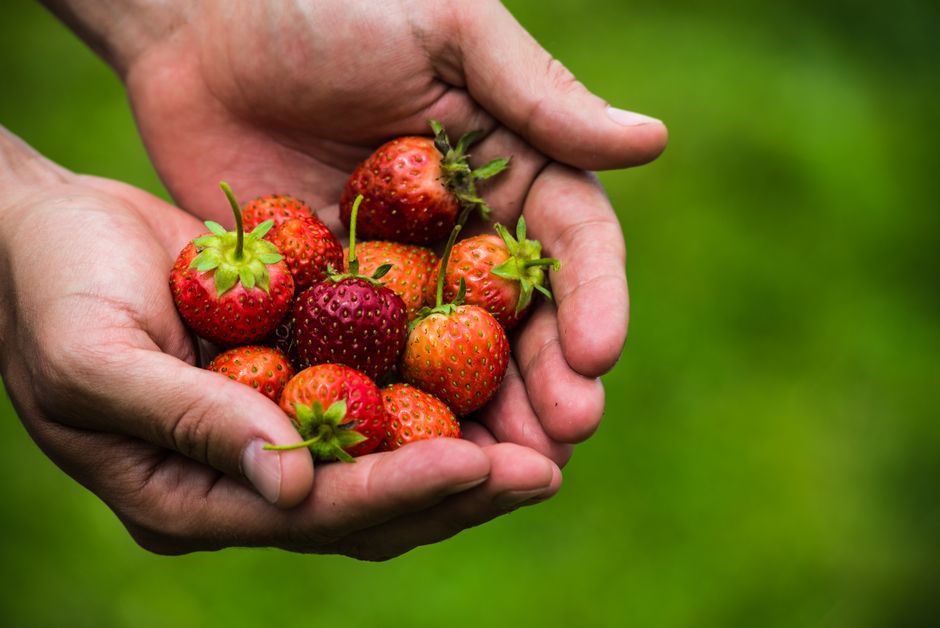
Your favorite summer fruit has been lying to you. Despite wearing the name proudly, strawberries aren't actually berries at all. This surprising truth about strawberries being true botanical impostors reveals one of nature's most delightful naming mix-ups. The facts get even more interesting when you discover what really qualifies as a berry—and which unexpected fruits make the cut.Botanists classify berries by strict scientific criteria that have nothing to do with how we use the word in everyday conversation. The amazing result? Bananas, grapes, and even kiwis are legitimate berries, while strawberries, raspberries, and blackberries are frauds.

Key Takeaways

  • Strawberries are classified as "aggregate accessory fruits" rather than true berries because their seeds sit on the outside.
  • True berries must develop from a single ovary and contain seeds on the inside, making bananas, grapes, and tomatoes legitimate berries.
  • Each strawberry has roughly 200 tiny seeds dotting its surface, and these are actually the true fruits of the plant.
  • The fleshy red part we eat is swollen receptacle tissue, not the actual fruit in botanical terms.
  • Raspberries and blackberries are also imposters, classified as aggregate fruits formed from multiple ovaries.
  • Pumpkins and watermelons qualify as berries under botanical classification, though they're specifically called "pepos."

The Truth About Strawberries and True Berry Classification

To understand why strawberries fail the berry test, you need to know what botanists actually mean by the term. A true berry develops from a single flower with one ovary and typically has several seeds embedded in fleshy tissue. The entire fruit wall develops from the ovary wall itself.Strawberries violate this definition in two critical ways. First, the seeds aren't inside the fruit—they're scattered across the surface. Those tiny specks you see are called achenes, and each one is technically a separate fruit containing a single seed. Second, the red flesh you actually eat isn't derived from the ovary at all. It's the swollen receptacle, the part of the flower that holds the reproductive organs.This makes strawberries "aggregate accessory fruits," a mouthful that describes their complex structure. Multiple ovaries from a single flower create the achenes, while accessory tissue (the receptacle) becomes the edible portion. Nature built strawberries backwards from a botanist's perspective.

Surprising Fruits That Actually Are Berries

The botanical definition of berries creates some genuinely shocking classifications. Grapes qualify easily—they develop from a single ovary and contain seeds surrounded by fleshy pulp. Tomatoes, eggplants, and peppers also meet every criterion, making them textbook berries despite their culinary roles as vegetables.Bananas might be the most mind-blowing example. Wild bananas contain large, hard seeds, though commercial varieties have been bred to be nearly seedless. Those tiny black specks in the center are undeveloped seed remnants. The entire banana develops from a single ovary with three carpels, visible as the three sections when you cut a banana crosswise.Even more surprising: citrus fruits are berries. Oranges, lemons, and grapefruits are specialized berries called hesperidia, with a leathery rind and juice-filled segments. Kiwis are berries. Avocados are berries. The botanical world operates by rules that contradict everything your grocery store suggests.

Why Strawberries Evolved Their Unusual Structure

Strawberries didn't develop their inside-out architecture by accident. The exposed seeds and fleshy receptacle serve specific evolutionary purposes related to seed dispersal and reproduction.Animals are drawn to the bright red color and sweet taste of ripe strawberries. When birds, mammals, or insects consume the fruit, the tiny achenes pass through digestive systems intact or get stuck to fur and feathers. This external seed placement actually improves dispersal efficiency compared to seeds hidden inside.The receptacle tissue provides nutritional rewards to animals without sacrificing the seeds themselves. Many true berries require animals to consume and digest the entire fruit, with seeds passing through the gut. Strawberries offer a different strategy: make the non-fruit tissue so appealing that animals spread the real fruits (achenes) far and wide.

Other Botanical Berry Imposters

Strawberries aren't alone in their berry fraud. Raspberries and blackberries are aggregate fruits formed from multiple ovaries of a single flower. Each little bubble on a raspberry is a separate drupelet containing its own seed. When you pick a raspberry, you're harvesting dozens of tiny fruits clustered together.Mulberries compound the confusion even further. Despite the name and appearance, they're multiple fruits formed from a cluster of many flowers. Each segment comes from a different flower entirely, making them fundamentally different from both true berries and aggregate fruits like raspberries.
Fruit NameCommon ClassificationBotanical Classification
StrawberryBerryAggregate Accessory Fruit
RaspberryBerryAggregate Fruit
BananaFruitTrue Berry
GrapeBerryTrue Berry
WatermelonMelonBerry (Pepo)
TomatoVegetableTrue Berry

The Cultural History of Strawberry Names

The word "strawberry" predates modern botanical classification by centuries. Old English "streawberige" possibly referred to the straw-like runners that strawberry plants send out, or to the practice of mulching plants with straw. Another theory suggests the name comes from the appearance of seeds "strewn" across the surface.People have cultivated and enjoyed strawberries for thousands of years without caring about botanical precision. Wild strawberries grew throughout Europe and Asia, while different species thrived in the Americas. The garden strawberry we know today resulted from an accidental cross between North and South American species in 18th-century France.Common names almost never align with scientific classification. We call peanuts nuts when they're legumes. We call koalas bears when they're marsupials. Language reflects cultural use and appearance rather than biological relationships, which is why grocery stores will never reorganize produce by botanical families.

Frequently Asked Questions

Are strawberries actually nuts?

No, strawberries aren't nuts. The tiny seeds on the outside are achenes (small dry fruits with one seed), while the fleshy red part is swollen receptacle tissue. The entire structure is classified as an aggregate accessory fruit.

Why do strawberries have seeds on the outside?

The "seeds" on the outside are actually individual fruits called achenes, each containing a seed. This arrangement evolved to aid seed dispersal by animals while protecting the seeds from being digested when animals eat the sweet receptacle tissue.

What is the most surprising true berry?

Bananas surprise most people as true berries because they develop from a single flower with one ovary and have seeds (or seed remnants) embedded in the flesh. Watermelons and pumpkins also qualify as specialized berries called pepos.

How many seeds does a strawberry have?

An average strawberry has approximately 200 seeds on its surface, though the exact number varies by variety and size. Each seed sits within its own achene, making every strawberry a collection of hundreds of tiny individual fruits.The strawberry's botanical identity crisis reminds us that nature doesn't organize itself according to human expectations. These delicious fruits will keep fooling us with their name, seeds stubbornly displayed where they don't belong, challenging every assumption we make about the foods we think we know.