










1 / 10 Questions
0 Points

What Country Has The Longest Coastline?

Indonesia

Australia

Russia

Canada

Points won
0
Correct score
0%

More Questions

More Articles

The Bizarre Truth About Napoleon’s Actual Height Records

By TrivBits, History Desk — Published August 19, 2026
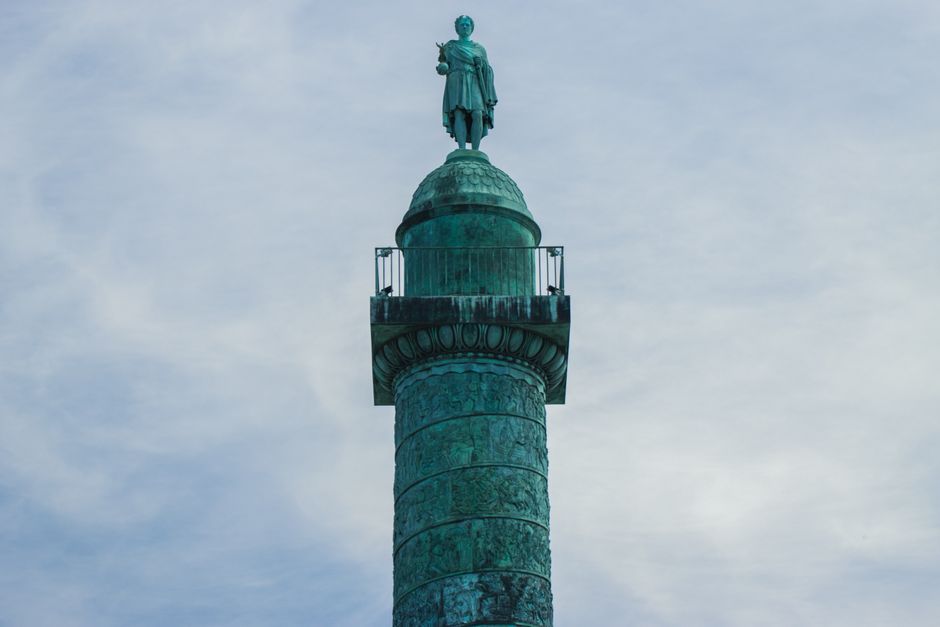
The Bizarre Truth About Napoleons Actual Height Records — History trivia by TrivBits

Table of Contents

For more than two centuries, Napoleon Bonaparte has been the butt of "short man" jokes across the world. The image of the pint-sized French emperor compensating for his stature with military aggression has become so ingrained in popular culture that psychologists even named a condition after him: the Napoleon complex. But here's the bizarre truth about Napoleon's height—he wasn't actually short at all, at least not by the standards of his era. The myth that has persisted through history is the result of measurement confusion, propaganda, and a misunderstanding that snowballed across generations.

The real Napoleon stood about 5 feet 6 inches tall in modern measurements, which was actually average or even slightly above average for a Frenchman in the early 19th century. This revelation challenges everything pop culture has told us about one of history's most influential figures and reveals how easily historical facts can be distorted over time.

Key Takeaways

  • Napoleon stood approximately 5 feet 6 inches in modern measurements, which was average height for his era and empire
  • The confusion arose primarily from differences between French and British measurement systems in the 18th and 19th century
  • British propaganda during the Napoleonic Wars deliberately portrayed Napoleon as diminutive to mock and diminish him
  • French inches (pouces) were longer than British inches, creating a measurement discrepancy that fueled the myth
  • Contemporary accounts from those who met Napoleon describe him as average in stature, not unusually short
  • The nickname "Le Petit Caporal" (The Little Corporal) was a term of endearment, not a reference to his physical height

The Measurement Mix-Up That Fooled Civilizations

At the heart of this historical misconception lies a simple but consequential mathematical error. When Napoleon died in 1821, his height was recorded as 5 feet 2 inches. This measurement was taken using French units—specifically, the pied du roi (king's foot) and the pouce (inch). The problem? French inches were substantially longer than their British counterparts.

A French inch measured approximately 2.71 centimeters, while a British inch was about 2.54 centimeters. This seemingly small difference had major implications. When Napoleon's recorded height of 5 feet 2 inches (French) was converted to British imperial measurements, it should have translated to roughly 5 feet 6 or 7 inches. Instead, English-speaking nations simply read "5 feet 2 inches" and assumed it meant British measurements.

The average height for French males during Napoleon's era hovered around 5 feet 5 inches in modern measurements. This means Napoleon was actually of typical height or perhaps even slightly taller than many of his countrymen. The past often surprises us with such revelations about figures we thought we knew.

British Propaganda and the Power of Caricature

The measurement confusion alone might not have cemented Napoleon's reputation as unusually short. British propaganda played an enormous role in spreading this image across the empire and beyond. During the Napoleonic Wars, British cartoonist James Gillray created wildly popular caricatures depicting Napoleon as a tiny, infantile figure—often shown being dwarfed by taller British officers or throwing childish tantrums.

These cartoons weren't meant to be accurate. They were weapons.

Political caricature in this century served as a powerful tool for shaping public opinion, much like modern political cartoons or memes. By portraying Napoleon as physically small, British propagandists suggested he was also small in character, ambition, and legitimacy. The images spread throughout England and eventually across Europe and the Atlantic, embedding themselves in the collective imagination of Western civilizations.

The propaganda was so effective that it outlasted the Napoleonic era itself, persisting through generations who had no firsthand knowledge of the French emperor. The caricatures became "common knowledge," and common knowledge rarely gets fact-checked across centuries.

What Eyewitnesses Actually Saw

Contemporary accounts from people who actually met Napoleon tell a different story. Visitors to his court, military officers who served under him, and diplomats who negotiated with him consistently described him as being of ordinary or unremarkable height. Some noted his stocky build and powerful presence, but few mentioned unusual shortness.

One factor that may have contributed to perceptions of Napoleon's height was the company he kept. The Imperial Guard, Napoleon's elite military unit, had minimum height requirements that were quite tall for the era. These soldiers often stood well over 6 feet. When Napoleon appeared alongside his towering guards, the contrast was obvious—but this says more about the exceptional height of his bodyguards than any deficiency in Napoleon himself.

The nickname "Le Petit Caporal" has often been misinterpreted as evidence of his short stature. In reality, this affectionate term was given to him by his troops early in his military career and had nothing to do with physical height. It reflected his hands-on leadership style and willingness to work alongside common soldiers, not his measurements.

Comparing Historical Heights Across the Empire

Historical FigureApproximate HeightEra
Napoleon Bonaparte5'6" to 5'7"Early 19th century
Average French male (1800s)5'5"Early 19th century
Duke of Wellington5'9"Early 19th century
King Louis XVI6'4"Late 18th century
Horatio Nelson5'4" to 5'6"Late 18th/Early 19th century

Why the Myth Refuses to Die

Even with historical records and measurement conversions readily available, the Napoleon height myth persists stubbornly in popular culture. Why? Because it's a compelling narrative that seems to explain so much. The idea of a short man overcompensating through military conquest fits neatly into psychological frameworks we find satisfying.

The myth also benefits from confirmation bias. Once we "know" Napoleon was short, we interpret everything through that lens. His ambition becomes compensation. His military campaigns become proof of insecurity. The narrative writes itself, even though it's built on a foundation of measurement errors and ancient propaganda.

Modern media continues to reinforce the myth. Films, books, and television shows routinely depict Napoleon as noticeably shorter than those around him, perpetuating the misconception for new generations. Each repetition makes the myth feel more true, even as historical evidence points in the opposite direction.

Frequently Asked Questions

How tall was Napoleon compared to other military leaders of his time?

Napoleon was approximately the same height as or taller than many of his contemporaries. Admiral Horatio Nelson, his British naval adversary, stood between 5 feet 4 inches and 5 feet 6 inches. The Duke of Wellington was taller at around 5 feet 9 inches, but Napoleon's height was thoroughly unremarkable for military commanders of his era.

Where did the term "Napoleon complex" come from?

The term "Napoleon complex" emerged in the early 20th century, roughly a hundred years after Napoleon's death, to describe a perceived inferiority complex in shorter men who overcompensate through aggressive or domineering behavior. The term is based entirely on the false premise that Napoleon was unusually short and that his military ambitions stemmed from insecurity about his height.

Did Napoleon's enemies deliberately spread false information about his height?

Yes, particularly the British. Political cartoonists like James Gillray created exaggerated caricatures showing Napoleon as tiny and childlike. While these were clearly satirical, they shaped public perception powerfully. The measurement confusion between French and British units provided just enough plausibility to make the propaganda stick in the public imagination.

What was the average height for men in France during Napoleon's lifetime?

The average height for French men in the early 19th century was approximately 5 feet 5 inches in modern measurements. This means Napoleon, at roughly 5 feet 6 or 7 inches, was actually average or slightly above average for his countrymen, completely contradicting the enduring myth of his diminutive stature.
Sources

Top 10 Forgotten Empires That Once Ruled the World

Top 10 Forgotten Empires That Once Ruled the World

⏱️ 7 min read

Throughout human history, countless civilizations have risen to dominate vast territories, amassing wealth, power, and cultural influence that shaped the ancient world. While empires like Rome, Egypt, and the British Empire remain household names, many other formidable powers have faded from popular memory despite their monumental achievements. These forgotten empires controlled strategic trade routes, pioneered innovative governance systems, and left lasting legacies that continue to influence modern societies. Understanding these lost civilizations provides crucial insight into the complex tapestry of human development and the cyclical nature of power throughout the ages.

Empires Lost to Time

1. The Aksumite Empire: Africa's Trading Powerhouse

Flourishing from approximately 100 to 940 CE in what is now Ethiopia and Eritrea, the Aksumite Empire stood as one of the four great powers of the ancient world alongside Rome, Persia, and China. This sophisticated civilization controlled crucial Red Sea trade routes, connecting the Roman Empire with India and beyond. The Aksumites developed their own written script, Ge'ez, minted their own currency, and constructed massive stone obelisks that still stand today. As one of the first major empires to adopt Christianity as a state religion in the 4th century, Aksum played a pivotal role in spreading the faith throughout Africa. Their naval dominance and commercial prowess generated immense wealth, yet this mighty empire has largely disappeared from mainstream historical narratives.

2. The Khmer Empire: Builders of Angkor Wat

Reigning over Southeast Asia from the 9th to 15th centuries, the Khmer Empire controlled much of modern-day Cambodia, Thailand, Laos, and Vietnam. At its height, the empire's capital region housed nearly one million people, making it one of the largest urban centers in the pre-industrial world. The Khmer developed sophisticated hydraulic engineering systems, constructing massive reservoirs and canals that supported intensive rice agriculture and sustained their vast population. Their architectural masterpiece, Angkor Wat, remains the largest religious monument ever built. Despite their technological innovations and cultural achievements, including advanced mathematics and astronomy, the Khmer Empire's grandeur has been overshadowed by other Asian civilizations in popular understanding.

3. The Songhai Empire: West Africa's Islamic Golden Age

Dominating West Africa from the 15th to 16th centuries, the Songhai Empire became one of the largest Islamic empires in history, controlling vital trans-Saharan trade routes that transported gold, salt, and slaves. Centered along the Niger River, this empire stretched across 1.4 million square kilometers at its zenith. The city of Timbuktu emerged as a renowned center of Islamic learning, housing the prestigious Sankore University and hundreds of thousands of scholarly manuscripts. Under rulers like Sunni Ali and Askia Muhammad, the empire established efficient bureaucratic systems and maintained a professional standing army. The Songhai's contributions to Islamic scholarship, commerce, and political organization remain largely unknown outside academic circles.

4. The Hittite Empire: Masters of Iron

Operating from approximately 1600 to 1178 BCE in ancient Anatolia (modern Turkey), the Hittite Empire challenged Egyptian dominance and pioneered the use of iron weaponry and chariots in warfare. This militaristic civilization established one of the earliest known constitutional monarchies and developed a sophisticated legal code that influenced subsequent Near Eastern societies. The Hittites mastered iron-smelting technology before their contemporaries, giving them significant military advantages. They signed the world's oldest surviving peace treaty with Egypt after the Battle of Kadesh. Despite their technological innovations and diplomatic achievements, the Hittites remained lost to history until archaeological discoveries in the 19th century revealed their significance.

5. The Maurya Empire: India's First Great Unification

Founded by Chandragupta Maurya in 322 BCE, the Maurya Empire unified most of the Indian subcontinent under a single administration for the first time. At its peak under Emperor Ashoka, the empire controlled approximately five million square kilometers and 50 million people—nearly half the world's population at the time. The Mauryans developed an extensive network of roads, established a sophisticated spy system, and created one of the ancient world's most efficient bureaucracies. Ashoka's conversion to Buddhism and subsequent promotion of dharma (righteous living) influenced Asian philosophy and governance for centuries. Despite being one of history's largest empires, the Mauryan legacy remains relatively obscure in Western historical consciousness.

6. The Seljuk Empire: Bridge Between East and West

Rising to prominence in the 11th century, the Seljuk Turks created an empire stretching from Central Asia to the Mediterranean, controlling strategic territories that included modern-day Iran, Iraq, Syria, and parts of Turkey. These nomadic warriors established a sophisticated Persian-Islamic administrative system, patronized arts and sciences, and built architectural marvels including the great mosques of Isfahan. The Seljuks' advance into Byzantine territory triggered the Crusades, making them pivotal players in medieval geopolitics. They facilitated cultural exchange between Islamic and Christian civilizations while preserving and transmitting Greek philosophical texts to Europe. Their role in shaping medieval history is frequently underestimated.

7. The Parthian Empire: Rome's Eastern Rival

Controlling territories from 247 BCE to 224 CE, the Parthian Empire stretched from the Mediterranean to India, serving as Rome's most formidable eastern adversary for nearly five centuries. The Parthians controlled the lucrative Silk Road trade routes, amassing enormous wealth from commerce between East and West. Their military innovations, particularly the devastating Parthian shot—firing arrows backward while retreating on horseback—repeatedly defeated Roman legions. The empire established a unique feudal system that balanced central authority with regional autonomy. Despite defeating Rome's wealthiest general, Crassus, and capturing multiple Roman standards, the Parthian Empire receives minimal attention compared to its Roman contemporary.

8. The Toltec Empire: Mesoamerica's Warrior Artists

Dominating central Mexico from approximately 900 to 1150 CE, the Toltec civilization profoundly influenced subsequent Mesoamerican cultures, including the Aztecs who claimed Toltec descent. Their capital, Tula, featured impressive pyramids, massive warrior statues, and sophisticated urban planning. The Toltecs advanced metallurgy, created detailed astronomical calendars, and developed complex religious practices that spread throughout the region. Their influence extended as far as the Yucatan Peninsula, where they may have occupied Chichen Itza. The Toltec reputation for military prowess and artistic achievement became legendary among later civilizations, yet they remain overshadowed by the Aztecs and Maya in popular understanding.

9. The Vijayanagara Empire: India's Hindu Bulwark

Established in 1336 CE in southern India, the Vijayanagara Empire resisted Islamic expansion in the subcontinent for over two centuries while fostering a golden age of Hindu culture, architecture, and commerce. The empire's capital city amazed visiting traders with its size, wealth, and organization, with some accounts suggesting it rivaled Beijing in grandeur. Vijayanagara controlled lucrative spice trade routes and diamond mines, generating vast revenues that funded magnificent temple complexes and irrigation systems. The empire promoted literature, music, and art while maintaining religious tolerance. Despite controlling much of southern India and leaving impressive ruins at Hampi, this empire remains largely unknown outside South Asian historical studies.

10. The Scythian Empire: Masters of the Steppe

Thriving from approximately 700 to 300 BCE across the Eurasian Steppe, the Scythians created a vast nomadic empire stretching from modern Ukraine to Central Asia. These feared horsemen pioneered mounted warfare tactics that influenced military strategy for millennia. The Scythians developed sophisticated metalworking techniques, creating intricate gold artifacts that showcased their distinctive animal style art. They established extensive trade networks connecting Greece, Persia, and China, serving as cultural intermediaries between civilizations. Greek historian Herodotus documented their customs, including their fierce female warriors who may have inspired Amazon legends. Despite their military prowess and cultural contributions, the Scythians are rarely discussed outside specialized academic contexts.

The Legacy of Lost Empires

These ten forgotten empires demonstrate that historical memory is selective and often biased toward civilizations that left extensive written records or whose legacies aligned with later dominant cultures. Each of these powers controlled vast territories, influenced millions of lives, and contributed innovations that shaped human development. From the Aksumites' commercial networks to the Hittites' iron technology, from the Mauryans' political unification to the Scythians' military tactics, these civilizations left indelible marks on human history. Recognizing their achievements provides a more complete understanding of our shared past and reminds us that today's superpowers may likewise fade from future memory, their accomplishments forgotten by subsequent generations focused on their own contemporary concerns.