
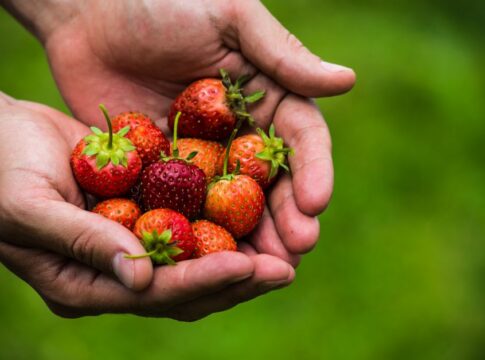
The Truth About Strawberries Not Being True Berries
By TrivBits, Staff Writer — Published August 16, 2026
Table of Contents
- Key Takeaways
- The Truth About Strawberries and True Berry Classification
- Surprising Fruits That Actually Are Berries
- Why Strawberries Evolved Their Unusual Structure
- Other Botanical Berry Imposters
- The Cultural History of Strawberry Names
- Frequently Asked Questions
Your favorite summer fruit has been lying to you. Despite wearing the name proudly, strawberries aren’t actually berries at all. This surprising truth about strawberries being true botanical impostors reveals one of nature’s most delightful naming mix-ups. The facts get even more interesting when you discover what really qualifies as a berry—and which unexpected fruits make the cut.
Botanists classify berries by strict scientific criteria that have nothing to do with how we use the word in everyday conversation. The amazing result? Bananas, grapes, and even kiwis are legitimate berries, while strawberries, raspberries, and blackberries are frauds.
Key Takeaways
- Strawberries are classified as “aggregate accessory fruits” rather than true berries because their seeds sit on the outside.
- True berries must develop from a single ovary and contain seeds on the inside, making bananas, grapes, and tomatoes legitimate berries.
- Each strawberry has roughly 200 tiny seeds dotting its surface, and these are actually the true fruits of the plant.
- The fleshy red part we eat is swollen receptacle tissue, not the actual fruit in botanical terms.
- Raspberries and blackberries are also imposters, classified as aggregate fruits formed from multiple ovaries.
- Pumpkins and watermelons qualify as berries under botanical classification, though they’re specifically called “pepos.”
The Truth About Strawberries and True Berry Classification
To understand why strawberries fail the berry test, you need to know what botanists actually mean by the term. A true berry develops from a single flower with one ovary and typically has several seeds embedded in fleshy tissue. The entire fruit wall develops from the ovary wall itself.
Strawberries violate this definition in two critical ways. First, the seeds aren’t inside the fruit—they’re scattered across the surface. Those tiny specks you see are called achenes, and each one is technically a separate fruit containing a single seed. Second, the red flesh you actually eat isn’t derived from the ovary at all. It’s the swollen receptacle, the part of the flower that holds the reproductive organs.
This makes strawberries “aggregate accessory fruits,” a mouthful that describes their complex structure. Multiple ovaries from a single flower create the achenes, while accessory tissue (the receptacle) becomes the edible portion. Nature built strawberries backwards from a botanist’s perspective.
Surprising Fruits That Actually Are Berries
The botanical definition of berries creates some genuinely shocking classifications. Grapes qualify easily—they develop from a single ovary and contain seeds surrounded by fleshy pulp. Tomatoes, eggplants, and peppers also meet every criterion, making them textbook berries despite their culinary roles as vegetables.
Bananas might be the most mind-blowing example. Wild bananas contain large, hard seeds, though commercial varieties have been bred to be nearly seedless. Those tiny black specks in the center are undeveloped seed remnants. The entire banana develops from a single ovary with three carpels, visible as the three sections when you cut a banana crosswise.
Even more surprising: citrus fruits are berries. Oranges, lemons, and grapefruits are specialized berries called hesperidia, with a leathery rind and juice-filled segments. Kiwis are berries. Avocados are berries. The botanical world operates by rules that contradict everything your grocery store suggests.
Why Strawberries Evolved Their Unusual Structure
Strawberries didn’t develop their inside-out architecture by accident. The exposed seeds and fleshy receptacle serve specific evolutionary purposes related to seed dispersal and reproduction.
Animals are drawn to the bright red color and sweet taste of ripe strawberries. When birds, mammals, or insects consume the fruit, the tiny achenes pass through digestive systems intact or get stuck to fur and feathers. This external seed placement actually improves dispersal efficiency compared to seeds hidden inside.
The receptacle tissue provides nutritional rewards to animals without sacrificing the seeds themselves. Many true berries require animals to consume and digest the entire fruit, with seeds passing through the gut. Strawberries offer a different strategy: make the non-fruit tissue so appealing that animals spread the real fruits (achenes) far and wide.
Other Botanical Berry Imposters
Strawberries aren’t alone in their berry fraud. Raspberries and blackberries are aggregate fruits formed from multiple ovaries of a single flower. Each little bubble on a raspberry is a separate drupelet containing its own seed. When you pick a raspberry, you’re harvesting dozens of tiny fruits clustered together.
Mulberries compound the confusion even further. Despite the name and appearance, they’re multiple fruits formed from a cluster of many flowers. Each segment comes from a different flower entirely, making them fundamentally different from both true berries and aggregate fruits like raspberries.
| Fruit Name | Common Classification | Botanical Classification |
|---|---|---|
| Strawberry | Berry | Aggregate Accessory Fruit |
| Raspberry | Berry | Aggregate Fruit |
| Banana | Fruit | True Berry |
| Grape | Berry | True Berry |
| Watermelon | Melon | Berry (Pepo) |
| Tomato | Vegetable | True Berry |
The Cultural History of Strawberry Names
The word “strawberry” predates modern botanical classification by centuries. Old English “streawberige” possibly referred to the straw-like runners that strawberry plants send out, or to the practice of mulching plants with straw. Another theory suggests the name comes from the appearance of seeds “strewn” across the surface.
People have cultivated and enjoyed strawberries for thousands of years without caring about botanical precision. Wild strawberries grew throughout Europe and Asia, while different species thrived in the Americas. The garden strawberry we know today resulted from an accidental cross between North and South American species in 18th-century France.
Common names almost never align with scientific classification. We call peanuts nuts when they’re legumes. We call koalas bears when they’re marsupials. Language reflects cultural use and appearance rather than biological relationships, which is why grocery stores will never reorganize produce by botanical families.
Frequently Asked Questions
Are strawberries actually nuts?
No, strawberries aren’t nuts. The tiny seeds on the outside are achenes (small dry fruits with one seed), while the fleshy red part is swollen receptacle tissue. The entire structure is classified as an aggregate accessory fruit.
Why do strawberries have seeds on the outside?
The “seeds” on the outside are actually individual fruits called achenes, each containing a seed. This arrangement evolved to aid seed dispersal by animals while protecting the seeds from being digested when animals eat the sweet receptacle tissue.
What is the most surprising true berry?
Bananas surprise most people as true berries because they develop from a single flower with one ovary and have seeds (or seed remnants) embedded in the flesh. Watermelons and pumpkins also qualify as specialized berries called pepos.
How many seeds does a strawberry have?
An average strawberry has approximately 200 seeds on its surface, though the exact number varies by variety and size. Each seed sits within its own achene, making every strawberry a collection of hundreds of tiny individual fruits.
The strawberry’s botanical identity crisis reminds us that nature doesn’t organize itself according to human expectations. These delicious fruits will keep fooling us with their name, seeds stubbornly displayed where they don’t belong, challenging every assumption we make about the foods we think we know.