
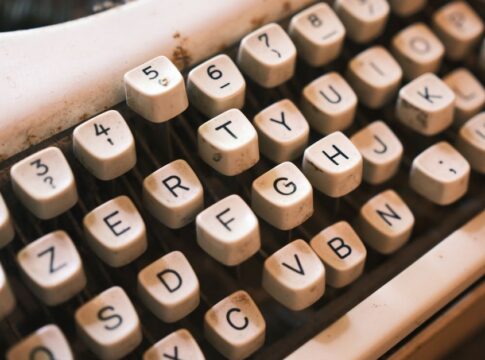
The Hidden Story Behind QWERTY Keyboard Layout Design
By Trivia Daily, Staff Writer — Published August 17, 2026
Table of Contents
- Key Takeaways
- The Hidden Story Behind QWERTY’s Mechanical Origins
- Myths and Misconceptions About Typing Speed
- The Competition: Alternative Keyboard Layouts
- Why QWERTY Won the Keyboard Wars
- QWERTY in the Digital Age
- Frequently Asked Questions
Every day, billions of fingers tap away on QWERTY keyboards, yet few people stop to wonder why the letters are arranged in such a seemingly random pattern. The hidden story behind this ubiquitous design reveals a fascinating blend of mechanical necessity, historical accident, and competitive business strategy. What began as a solution to a 19th-century typewriter problem became the global standard we use today, even though the original reasons for its design have long since disappeared.
The layout wasn’t created for efficiency or speed. In fact, some argue it was designed to do the opposite. This surprising truth challenges everything we assume about one of the most common interfaces in modern life.
Key Takeaways
- The QWERTY layout was developed in the 1870s for early typewriters, not computers or modern keyboards.
- Mechanical typewriter jams, not typing speed, drove the original design decisions behind letter placement.
- Common letter pairs were deliberately separated to reduce the likelihood of typebar collisions.
- Alternative layouts like Dvorak exist and may be more efficient, but QWERTY’s market dominance has proven nearly impossible to overcome.
- The top row spells “QWERTY” purely by coincidence, not as an intentional branding choice.
- Touch typists can reach peak speeds on QWERTY despite its mechanical origins, demonstrating human adaptability.
The Hidden Story Behind QWERTY’s Mechanical Origins
Christopher Latham Sholes, a newspaper editor and inventor from Wisconsin, developed the QWERTY layout in the early 1870s while perfecting his typewriter design. Early typewriters used a mechanical system where each key activated a metal arm called a typebar. When a typist pressed a key, the corresponding typebar would swing up to strike an ink ribbon against the paper.
The problem? Speed. When typists pressed keys in rapid succession, especially keys positioned close together, the typebars would jam. The metal arms would collide mid-swing, forcing the typist to stop and manually separate them. This wasn’t just annoying—it fundamentally limited the machine’s usefulness.
Sholes experimented with different arrangements to minimize these collisions. His solution involved studying which letter combinations appeared most frequently in English and physically separating those pairs on the keyboard. Common combinations like “TH” and “ST” were placed far apart, reducing the chance that their typebars would clash. The layout evolved through trial and error, with input from mechanics and telegraph operators who tested various prototypes.
Myths and Misconceptions About Typing Speed
A persistent myth claims that QWERTY was deliberately designed to slow typists down. This makes for a compelling story but oversimplifies the historical reality. The layout wasn’t created to reduce typing speed—it was engineered to prevent mechanical failures that would stop typing altogether. There’s a crucial difference between those two goals.
Another common misconception suggests that the top row was arranged to spell “QWERTY” as a marketing gimmick. No evidence supports this theory. The arrangement emerged from mechanical considerations, and the resulting word was simply a convenient way to refer to the layout after the fact.
Some critics argue that QWERTY is inefficient because it forces the left hand to do more work than the right, or because common letters occupy awkward positions. While alternative analyses show room for optimization, skilled typists routinely achieve speeds exceeding 100 words per minute on QWERTY keyboards. The human brain and fingers adapt remarkably well to almost any consistent pattern.
The Competition: Alternative Keyboard Layouts
Inventors have proposed numerous alternatives to QWERTY over the decades. The most famous challenger is the Dvorak Simplified Keyboard, patented in 1936 by August Dvorak and William Dealey. The Dvorak layout places the most common letters on the home row, where fingers naturally rest, and alternates between hands more frequently during typing.
| Layout | Year Introduced | Key Design Principle | Adoption Status |
|---|---|---|---|
| QWERTY | 1873 | Prevent typebar jams | Global standard |
| Dvorak | 1936 | Maximize home row usage | Niche alternative |
| Colemak | 2006 | Minimize finger movement | Growing but limited |
| Workman | 2010 | Reduce lateral finger motion | Minimal adoption |
Studies comparing typing speeds on different layouts have produced mixed results. Some research suggests Dvorak users type slightly faster with less finger fatigue, while other studies find minimal practical differences. The real barrier isn’t performance—it’s switching costs. Learning a new layout requires weeks of practice, and the productivity loss during transition discourages most people from making the change.
Why QWERTY Won the Keyboard Wars
QWERTY’s dominance stems from a phenomenon economists call “network effects” or “path dependence.” Once a technology achieves widespread adoption, switching becomes increasingly difficult even if superior alternatives exist. Typewriter manufacturers standardized on QWERTY in the late 19th century, training schools taught it, and millions of workers learned it.
When computers arrived in the mid-20th century, keyboard designers faced a choice: adopt an existing standard or create something new. They chose familiarity. Computer manufacturers knew that workers already trained on QWERTY typewriters would resist relearning a new system. The installed base of QWERTY users created an overwhelming incentive to maintain compatibility.
Remington, the company that manufactured Sholes’s typewriter design, played a crucial role in spreading QWERTY. Their aggressive marketing and sales success in the 1870s and 1880s established the layout as the de facto standard before serious competitors could gain traction. By the time anyone questioned whether QWERTY was optimal, millions of people had already invested time learning it.
QWERTY in the Digital Age
Modern keyboards face none of the mechanical constraints that shaped QWERTY’s original design. No typebars jam on a computer or smartphone. Yet the layout persists, a ghost of 19th-century engineering haunting 21st-century devices. Touchscreen keyboards could theoretically display any arrangement, dynamically reorganizing based on context or user preference. But manufacturers stick with QWERTY because users expect it.
Mobile devices have prompted some interface innovations. Swipe-typing systems let users drag their fingers across letters rather than tapping individually. Predictive text algorithms anticipate words and offer autocomplete suggestions. These features work around QWERTY’s limitations without replacing it, demonstrating how deeply embedded the layout has become in our collective muscle memory.
Voice recognition and gesture controls may eventually reduce our dependence on physical keyboards altogether. Until that transition occurs—if it occurs—QWERTY will likely remain the standard. The layout has survived technological revolutions from electric typewriters to personal computers to smartphones. Its persistence says less about its inherent superiority than about the powerful inertia of established standards.
Frequently Asked Questions
Why is the keyboard not in alphabetical order?
Keyboards aren’t alphabetical because the QWERTY layout was designed to prevent mechanical typewriter jams by separating commonly paired letters. An alphabetical arrangement would place frequently used letter combinations close together, causing typebar collisions in early typewriters.
Is QWERTY really slower than other keyboard layouts?
Research shows mixed results. While layouts like Dvorak may offer slight efficiency advantages in controlled studies, skilled typists achieve comparable speeds on QWERTY. The practical difference for most users is minimal, and the learning curve for switching layouts is steep.
Who invented the QWERTY keyboard layout?
Christopher Latham Sholes developed the QWERTY layout in the early 1870s while designing his typewriter. He worked with mechanics and telegraph operators to test various arrangements before settling on the configuration we use today.
Will we ever replace QWERTY with a better layout?
Widespread replacement is unlikely in the near future due to network effects and the massive installed base of QWERTY users. Voice recognition and alternative input methods may eventually reduce keyboard use altogether, but QWERTY will probably persist as long as physical keyboards remain common.
The next time your fingers fly across a keyboard, remember that you’re using a solution to a problem that no longer exists. QWERTY remains a testament to how historical accidents can become permanent features of our technological landscape, shaping billions of interactions long after their original purpose fades from memory.