
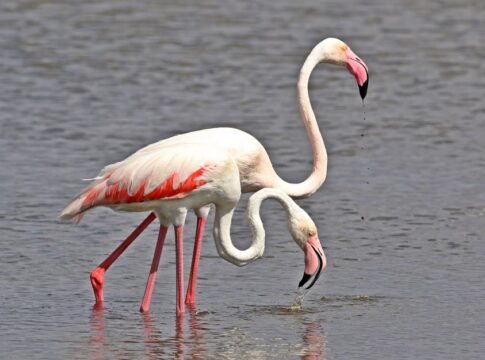
Why Flamingos Are Pink: The Surprising Diet Secret
By TrivBits, Staff Writer — Published August 12, 2026
Table of Contents
- Key Takeaways
- The Flamingos Pink Diet: What They Actually Eat
- How Carotenoids Transform Feather Color
- Color Variations Across Flamingo Species
- The Role of Color in Flamingo Society
- Captive Flamingos and Diet Management
- Frequently Asked Questions
Flamingos aren’t born pink. These elegant wading birds hatch with grayish-white feathers and only develop their signature rosy hue through years of eating specific foods. The flamingos pink diet is one of nature’s most fascinating examples of “you are what you eat”—literally transforming these birds from drab to dazzling through the power of pigments hidden in their meals. It’s a surprising truth that challenges what many assume is simply genetic inheritance.
The secret lies in carotenoids, the same natural pigments that make carrots orange and tomatoes red. For flamingos, these compounds are consumed through their specialized diet and gradually deposited into growing feathers, turning them various shades of pink, orange, and even red. Without the right foods, flamingos remain pale or white throughout their lives.
Key Takeaways
- Flamingos are born with gray or white feathers and develop pink coloring exclusively through their diet over time.
- Carotenoid pigments from algae, brine shrimp, and other small organisms are responsible for the pink coloration.
- The intensity of a flamingo’s color indicates diet quality and health, with brighter birds often being more attractive mates.
- Six flamingo species exist worldwide, each displaying different shades from pale pink to deep crimson depending on regional food sources.
- Captive flamingos require carotenoid supplements in their food to maintain their natural coloring.
- Flamingos can lose their pink color during breeding season as they transfer pigments to their eggs and chicks.
The Flamingos Pink Diet: What They Actually Eat
Flamingos are filter feeders with a highly specialized diet. Their curved bills work like sieves, allowing them to strain tiny organisms from water and mud. The primary foods vary by species and habitat, but all share one critical characteristic: they contain carotenoids.
Different flamingo species consume slightly different foods based on their environment. Greater flamingos primarily eat blue-green algae, small crustaceans, and mollusks. Lesser flamingos, meanwhile, are almost exclusively algae eaters, consuming spirulina and other microscopic organisms in vast quantities. Caribbean flamingos feast on brine shrimp, which are particularly rich in carotenoids and give these birds some of the most vibrant coloring among all species.
A single flamingo can filter up to 20 beakfuls of water per second while feeding. This remarkable efficiency allows them to consume enough carotenoid-rich organisms daily to maintain their distinctive appearance. The birds’ tongues pump water through comb-like structures called lamellae that trap food particles while expelling water and sediment.
How Carotenoids Transform Feather Color
The transformation from food to feather color is a complex biological process. When flamingos consume carotenoid-rich organisms, these pigments are absorbed in the liver and broken down into molecules that can be deposited in growing feathers and skin. The process isn’t immediate—it takes years for young flamingos to develop their full adult coloration.
Two specific carotenoids are primarily responsible for flamingo coloration: beta-carotene and canthaxanthin. These compounds are fat-soluble, meaning they’re stored in fatty tissues and gradually released over time. As new feathers grow, these pigments are incorporated into the keratin structure, creating the pink, orange, or red hues we associate with healthy flamingos.
Interestingly, flamingos can metabolize and deposit carotenoids more efficiently than most other birds. This specialized ability is why their entire bodies—not just isolated patches—display such uniform and intense coloring. Even their skin, legs, and bills show pink tones from carotenoid accumulation.
Color Variations Across Flamingo Species
Not all flamingos are created equal when it comes to color intensity. The six species of flamingos worldwide display a remarkable range of hues based on their geographic locations and available food sources.
| Species | Primary Color | Main Diet | Geographic Range |
|---|---|---|---|
| Greater Flamingo | Pale pink to white | Algae, small crustaceans | Africa, Europe, Asia |
| Lesser Flamingo | Dark pink to red | Spirulina algae | Africa, India |
| Caribbean Flamingo | Bright pink to orange-red | Brine shrimp, algae | Caribbean, northern South America |
| Chilean Flamingo | Pale pink with crimson markings | Algae, diatoms | South America |
| Andean Flamingo | Pale pink with yellow legs | Diatoms, algae | High Andes mountains |
| James’s Flamingo | Pale pink to white | Diatoms | High Andes mountains |
The Role of Color in Flamingo Society
Color isn’t just aesthetically interesting for flamingos—it’s a critical social signal. Brighter, more intensely colored flamingos are generally healthier and have access to better feeding grounds. During breeding season, the most vibrantly colored individuals attract more mates and enjoy greater reproductive success.
Flamingos actually enhance their appearance before breeding. They preen oil from a gland near their tail and spread it across their feathers, which contains carotenoids that intensify their color temporarily. This “makeup” behavior demonstrates how important visual appearance is to flamingo courtship and social hierarchy.
Curiously, parent flamingos can lose significant coloration while raising chicks. They secrete a nutrient-rich “crop milk” to feed their young, and this substance is packed with carotenoids transferred from the parents’ own reserves. Dedicated parents literally give their color to their offspring, appearing noticeably paler after the breeding season until they rebuild their pigment stores through feeding.
Captive Flamingos and Diet Management
Zoos and wildlife parks face an interesting challenge: keeping flamingos pink. Without access to their natural carotenoid-rich foods, captive flamingos would gradually fade to white or pale gray. To prevent this, animal care specialists supplement flamingo diets with synthetic or natural carotenoids.
Common supplements include canthaxanthin, spirulina powder, and even cooked carrots or peppers. The Smithsonian‘s National Zoo and other institutions carefully monitor flamingo coloration as an indicator of nutritional health. If birds begin to pale, keepers adjust supplement levels to restore proper pigmentation.
This dietary management has taught researchers valuable lessons about carotenoid absorption and metabolism. The knowledge gained from captive flamingo nutrition has applications beyond bird care, contributing to broader understanding of how carotenoids function as antioxidants and health indicators across species.
Frequently Asked Questions
Are baby flamingos pink when they hatch?
No, flamingo chicks hatch with gray or white downy feathers. They gradually develop pink coloration over two to three years as they consume carotenoid-rich foods and mature into adults.
Can flamingos lose their pink color?
Yes, flamingos can lose their pink coloration if deprived of carotenoid-rich foods. Captive flamingos without dietary supplements will fade to white, and wild flamingos can temporarily pale during breeding season when transferring pigments to their offspring.
Do all flamingos eat the same thing?
No, different flamingo species have specialized diets based on their habitats. While all consume carotenoid-rich organisms, some species primarily eat algae while others focus on brine shrimp, mollusks, or diatoms depending on what’s available in their environment.
Why are some flamingos more colorful than others?
Color intensity varies based on diet quality, health, age, and species. Flamingos with access to carotenoid-rich food sources develop brighter coloring, while those in nutrient-poor environments or during breeding season may appear paler.
The next time you marvel at a flamingo’s vibrant plumage, remember you’re witnessing the visible result of millions of microscopic meals. These birds are living proof that beauty sometimes comes from the most unexpected places—in this case, from the humble algae and tiny crustaceans that transform gray birds into one of nature’s most iconic pink wonders.