
By TrivBits, Staff Writer — Published October 1, 2026
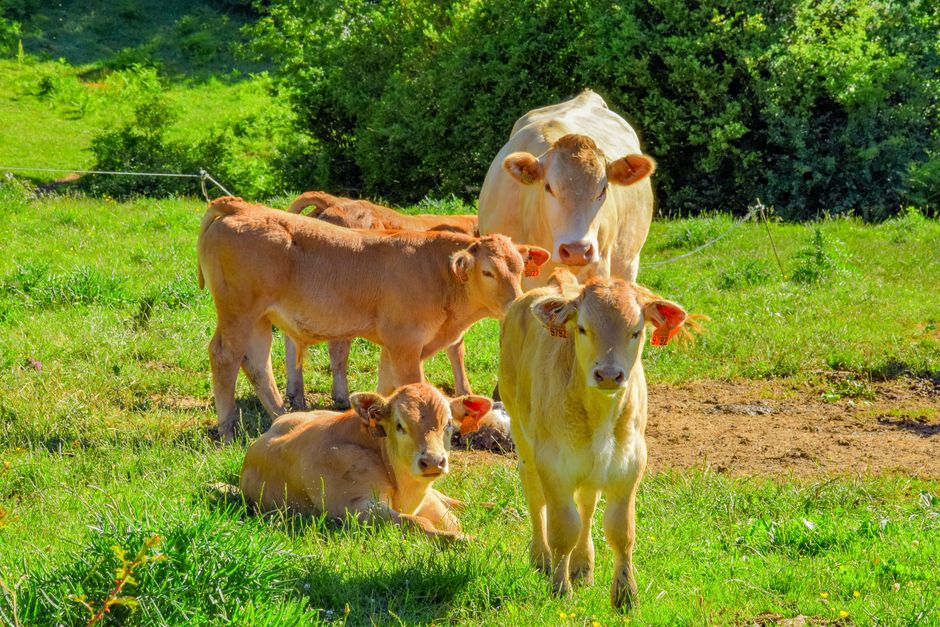
Table of Contents
- Key Takeaways
- The Science Behind Bovine Best Friends
- How Cattle Communicate Within the Herd
- Understanding Herd Hierarchy and Social Structure
- 11 Surprising Behaviors You Didn’t Know About Cattle
- Frequently Asked Questions
- Sources
Did you know that cows form close bonds with specific herd members, choosing best friends they prefer to spend time with? These gentle giants display far more emotional complexity than most people realize. When you watch a herd grazing peacefully in a pasture, you’re actually witnessing a sophisticated social network at work—complete with friendships, hierarchies, and communication systems that rival many other mammals. The facts about cows, friends, and herd dynamics reveal surprising truths that challenge common myths about farm animals being simple or emotionally limited.
Scientific research into bovine behavior has uncovered fascinating insights. Cows recognize individual faces, remember past experiences, and even hold grudges. They celebrate when they solve problems and become stressed when separated from their preferred companions. These interesting and often unknown aspects of cattle psychology demonstrate that herd life is far richer than it appears from the roadside.
Key Takeaways
- Cows form selective friendships within their herds, preferring to spend time with two to four specific individuals
- Heart rate and stress hormone levels decrease when cows are paired with their preferred companions
- Cattle possess excellent long-term memory and can recognize more than 70 individual herd members
- Young calves engage in playful behavior including running, jumping, and head-butting games
- Herd hierarchies are maintained through subtle body language rather than constant aggression
- Mother cows use distinct vocal calls that their calves can recognize even when separated
The Science Behind Bovine Best Friends
Research conducted at Northampton University demonstrated that cows experience measurable physiological changes based on social companionship. When researchers paired cows with their preferred friends versus random herd members, those with their chosen companions showed lower heart rates and reduced cortisol levels. The difference wasn’t subtle—it was statistically significant and consistent across multiple trials.
This preference isn’t random. Cows actively choose specific individuals to groom, graze beside, and rest near. They’ll seek out these preferred companions even when other herd members are closer or more convenient. The bonds often form between animals of similar age or those who spent time together as calves, though older cows sometimes “adopt” younger ones, forming cross-generational friendships that last for years.
What makes these friendships particularly remarkable is their stability. Unlike some animals that form temporary alliances based on immediate needs, cows maintain consistent preferences. A cow’s best friend today will likely remain her preferred companion months or even years later, barring separation or death.
How Cattle Communicate Within the Herd
Bovine communication operates on multiple channels simultaneously. Vocalizations range from low-frequency moos that carry across pastures to higher-pitched distress calls. Mother cows develop individualized calls for their calves, and research shows that calves can distinguish their mother’s voice from other adults within the herd.
Body language conveys even more information. Ear position, tail swishing, head orientation, and posture all transmit meaning to other herd members. A cow lowering her head while approaching signals potential aggression, while licking another cow’s face or neck indicates affection and bonding. Cattle spend considerable time engaged in mutual grooming, which serves both practical hygiene purposes and social bonding functions.
Chemical communication also plays a role. Cows possess a vomeronasal organ that detects pheromones, allowing them to gather information about reproductive status, stress levels, and individual identity through scent. This multi-sensory communication system creates a rich information network throughout the herd.
Understanding Herd Hierarchy and Social Structure
Every cattle herd maintains a social hierarchy, sometimes called a “pecking order,” though the reality is more nuanced than simple dominance rankings. Position within the hierarchy affects access to preferred feeding spots, shaded resting areas, and grooming partners. However, this structure remains relatively stable and peaceful once established.
Dominance is typically established through subtle displays rather than violent confrontations. Two cows might engage in parallel walking, where they match each other’s pace while assessing size and confidence. Head-to-head pushing contests occasionally occur, but serious fighting is rare in established herds. Once hierarchy is determined, subordinate animals generally yield space to more dominant individuals without conflict.
Age, size, and temperament all influence social rank. Older, larger cows typically hold higher positions, but personality matters too. Some smaller cows maintain surprisingly high status through assertiveness and confidence. Interestingly, a cow’s position can shift over time, particularly as she ages or following significant herd composition changes.
11 Surprising Behaviors You Didn’t Know About Cattle
1. Cows Choose Specific Best Friends and Get Stressed When Separated
Within any herd, individual cows form tight bonds with two to four preferred companions. When separated from these friends—even temporarily—their stress hormones spike and milk production can decrease. Farmers who understand this dynamic often keep bonded pairs together during medical procedures or transport to minimize anxiety.
2. Cattle Have Excellent Memories That Last Years
Cows remember individual humans, other cattle, and specific locations for extended periods. They can recall which people treated them kindly or roughly, responding differently based on past experiences. This memory extends to spatial learning—cows remember the locations of water sources, preferred grazing spots, and escape routes years after first encountering them.
3. Young Calves Play Games Similar to Other Young Mammals
Calves engage in energetic play that includes running races, bucking, jumping, and mock fighting. They’ll spontaneously start galloping in groups, seemingly racing each other across pastures. This play serves important developmental functions, building muscle strength, coordination, and social skills needed for adult herd life.
4. Cows Can Recognize More Than 70 Individual Faces
Facial recognition isn’t limited to humans—cows excel at it too. Research demonstrates that cattle can distinguish between dozens of individual herd members based on facial features alone. They use this ability to navigate complex social relationships and remember which individuals are friends, rivals, or strangers.
5. Mother Cows Hide Their Newborn Calves for Safety
In the first days after birth, mother cows often hide their calves in tall grass or secluded spots rather than keeping them constantly at their side. The mother returns periodically to nurse, but the calf remains hidden and still between feedings. This ancient instinct protected calves from predators and remains strong even in domestic cattle.
6. Cattle Display Problem-Solving Excitement
When cows successfully solve puzzles or navigate challenges—such as figuring out how to open a gate or access food from a new feeder—researchers have observed behavioral changes consistent with excitement or satisfaction. Their heart rates increase, they move more energetically, and some even engage in small jumps or head-tosses that suggest positive emotional states.
7. Cows Align Their Bodies With Earth’s Magnetic Field
Satellite imagery analysis of cattle herds worldwide revealed a surprising pattern: cows tend to align their bodies along north-south magnetic axes when resting or grazing. While the exact reason remains debated, this behavior suggests cattle possess magnetoreception—the ability to detect Earth’s magnetic field—similar to migratory birds.
8. Herds Maintain Collective Decision-Making Processes
When a herd needs to move to new grazing areas or water sources, the decision emerges through a democratic-like process. Multiple individuals will face a particular direction, essentially “voting” for that choice. Once enough herd members orient toward the same direction, the group moves together. No single leader dictates all movements.
9. Cows Produce Different Moos for Different Situations
Bovine vocalizations aren’t generic—they’re situationally specific. Cows produce distinct calls when searching for calves, signaling distress, expressing hunger, or greeting herd members. Acoustic analysis reveals measurable differences in frequency, duration, and intensity based on context, suggesting a more sophisticated vocal communication system than previously recognized.
10. Cattle Can Hold Grudges Against Other Herd Members
Cows remember negative interactions with specific individuals and adjust their behavior accordingly for extended periods. If one cow repeatedly displaces another from preferred feeding spots, the subordinate animal will begin avoiding that individual proactively, even when resources aren’t currently contested. This demonstrates both memory and the ability to predict behavior based on past patterns.
11. Herds Designate Babysitters for Groups of Calves
In some herds, one or two adult cows will supervise multiple calves while other mothers graze at a distance. This cooperative calf-watching allows mothers to feed more efficiently while ensuring young animals remain protected. The babysitting cows keep calves grouped together and alert mothers to potential dangers, demonstrating collaborative parenting beyond the mother-calf bond.
| Behavior Type | Purpose | Social Complexity Level |
|---|---|---|
| Selective Friendship Formation | Emotional support, stress reduction | High |
| Facial Recognition | Individual identification, relationship management | High |
| Hierarchical Organization | Resource access, conflict reduction | Moderate |
| Collective Decision-Making | Group movement coordination | Moderate |
| Cooperative Calf-Watching | Protection, feeding efficiency | Moderate-High |
Frequently Asked Questions
Do cows actually feel sadness when separated from friends?
Yes, scientific measurements confirm that cows experience physiological stress when separated from preferred companions. Their heart rates increase, cortisol levels rise, and behavioral indicators suggest distress. These changes mirror stress responses in other social mammals when separated from bonded individuals, supporting the conclusion that cows experience genuine emotional discomfort during separation.
How long do cow friendships typically last?
Cow friendships can persist for years when animals remain in the same herd. Research tracking individual cattle over multiple years has documented stable, long-term preferences between specific pairs. These bonds only break when animals are permanently separated, one dies, or major herd disruptions occur. Some friendships formed during calfhood continue into old age.
Can cows recognize their human caretakers?
Absolutely. Cows distinguish between individual humans and remember positive or negative past interactions with specific people. They respond differently to familiar versus unfamiliar handlers, often approaching people who have treated them gently while avoiding those associated with stressful experiences. This recognition persists across extended time periods, demonstrating robust human-animal memory.
Do bulls form friendships like cows do?
Bulls also form social bonds, though their relationship patterns differ somewhat from cows. Young bulls often develop strong friendships with peers, engaging in play and maintaining proximity. Adult bulls in bachelor groups establish hierarchies but can coexist peacefully with preferred companions. However, breeding bulls kept with cow herds may display different social patterns focused more on reproductive access than friendship bonding.
The next time you pass a pasture full of grazing cattle, look closer at the patterns. Those cows standing side-by-side aren’t randomly positioned—they’re probably best friends who chose each other’s company. The seemingly simple herd contains the same emotional complexity, social navigation, and relationship maintenance that defines community life across the animal kingdom.