
Why Soccer Goalkeepers Wear Different Color Jerseys
By TrivBits, Staff Writer — Published August 15, 2026
Table of Contents
- Key Takeaways
- The Official Rule Behind Soccer Goalkeepers Wear Requirements
- How the Rule Evolved From Chaos to Clarity
- The Psychology and Strategy of Goalkeeper Jersey Colors
- Comparing Goalkeeper Jersey Features Across Levels
- Special Cases and Exceptions in Goalkeeper Attire
- The Modern Goalkeeper Jersey as Technical Equipment
- Frequently Asked Questions
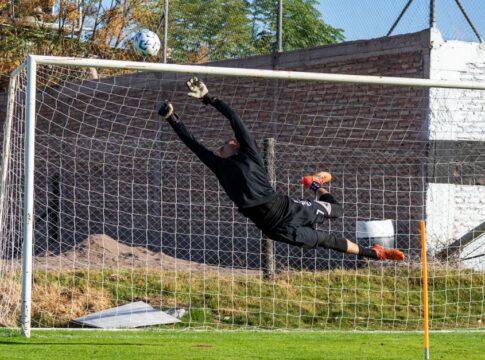
Watch any soccer match and one player immediately stands out: the goalkeeper, dressed in a jersey that contrasts sharply with everyone else on the pitch. This isn’t a fashion statement or team tradition. Soccer goalkeepers wear different color jerseys because of a rule embedded in the sport’s official laws, designed to help referees make split-second decisions in the heat of play. What began as a practical solution to on-field confusion has become one of soccer’s most recognizable visual signatures, and the story behind this colorful requirement reveals surprising facts about how the beautiful game evolved.
The rule exists to ensure instant visual distinction. Referees need to identify the one player allowed to use their hands within the penalty area, and opposing teams need to track defensive positioning at a glance. This simple color-coding system prevents chaos during corner kicks, penalty appeals, and goal-mouth scrambles where bodies pile up and milliseconds matter.
Key Takeaways
- Law 4 of the official Laws of the Game mandates that goalkeepers wear colors distinguishing them from all field players and match officials.
- The rule became mandatory in the 1970s after decades of goalkeepers wearing the same jerseys as their teammates caused confusion.
- Goalkeepers typically choose from bright colors like yellow, green, orange, or pink that contrast with traditional team colors.
- The distinct jersey helps referees instantly identify who can legally handle the ball inside the penalty area.
- Modern goalkeeper jerseys often feature padding on elbows and shoulders for protection during dives and collisions.
- Before the rule, some goalkeepers wore caps or different colored shirts informally, but no official requirement existed.
The Official Rule Behind Soccer Goalkeepers Wear Requirements
The International Football Association Board, soccer’s rule-making body, codified the goalkeeper jersey requirement in Law 4 of the Laws of the Game. This law states that each goalkeeper must wear colors that distinguish them from other players and the match officials. The rule serves a critical function: allowing referees to make accurate calls about handball infractions, which only apply to field players.
Imagine a crowded penalty box during a corner kick. Ten or more players jostle for position as the ball arcs through the air. A hand deflects it. Whose hand? If everyone wore identical colors, referees would face an impossible task determining whether the goalkeeper—who can legally use hands—or a field player touched the ball. The distinct jersey eliminates ambiguity.
The requirement extends beyond just the jersey. Goalkeepers must ensure their shorts, socks, and any visible undershirts also differ from those worn by field players and officials. This head-to-toe distinction means that even when only part of a player is visible in a tangle of bodies, referees can identify them.
How the Rule Evolved From Chaos to Clarity
Early soccer matches featured no such requirement. Goalkeepers wore the same jerseys as their teammates throughout the late 19th and early 20th centuries. Some keepers adopted informal distinctions—wearing caps, different colored shirts, or rolling up their sleeves—but these were personal choices, not mandated practices.
As the sport professionalized and matches grew faster and more physical, the need for clear identification became obvious. Referees struggled to spot illegal handballs. Spectators couldn’t always tell which player was the keeper from distant seats. Television broadcasts, which began covering major matches in the mid-20th century, amplified the confusion for viewers watching from home.
By the 1970s, soccer’s governing bodies formalized what many teams had already adopted informally. The rule became universal, applying from grassroots youth leagues to World Cup finals. Today, violating the jersey rule can result in a player being barred from the field until they change into compliant clothing.
The Psychology and Strategy of Goalkeeper Jersey Colors
Goalkeepers don’t just grab any contrasting color at random. Many choose bright, eye-catching hues like fluorescent yellow, lime green, or vivid orange. These colors serve dual purposes: they satisfy the rule’s requirement while potentially offering psychological advantages.
Some sports psychologists suggest that bright, unusual colors may create a larger perceived presence in the goal, making the keeper appear to occupy more space than they physically do. Whether this truly affects opposing shooters remains debated, but the theory persists in coaching circles. Conversely, some keepers prefer darker colors, believing they make it harder for shooters to read body language and anticipate diving direction.
Teams typically provide goalkeepers with multiple jersey options for each season—often three or four different colors. This variety ensures that no matter what the opponents or referees wear, the goalkeeper can select a jersey that provides maximum contrast. If the opposing team wears yellow and the referee crew wears black, the keeper might choose pink or green.
Comparing Goalkeeper Jersey Features Across Levels
| Level | Typical Colors Available | Special Features | Rule Enforcement |
|---|---|---|---|
| Professional | 3-4 options per season | Padded elbows, grip-enhancing fabric, moisture-wicking technology | Strictly enforced by match officials |
| Amateur/Recreational | 1-2 standard colors | Basic padding, standard fabric | Enforced but with more flexibility |
| Youth | Often single bright color | Minimal padding, durable materials | Enforced to teach proper rules |
Special Cases and Exceptions in Goalkeeper Attire
The rule allows for practical exceptions. Goalkeepers may wear tracksuit bottoms instead of shorts in cold weather, provided they differ in color from all field players. They can add gloves, which field players rarely use, without color restrictions since gloves clearly indicate goalkeeper status.
Long-sleeved undershirts are common among keepers, who spend matches diving on hard ground and artificial turf. These underlayers must also contrast with field players’ clothing. Some goalkeepers wear protective headgear after injuries, and these too must comply with color requirements.
International competitions sometimes feature special commemorative or charity jerseys. Even during these occasions, goalkeepers must wear distinct colors. FIFA and other governing bodies review proposed jerseys before major tournaments to ensure compliance. Teams that arrive at matches with non-compliant goalkeeper kits face potential fines or forfeit.
The Modern Goalkeeper Jersey as Technical Equipment
Today’s goalkeeper jerseys blend rule compliance with advanced athletic technology. Manufacturers engineer these garments with padded panels protecting elbows, shoulders, and sometimes ribs—areas that absorb impact during dives and collisions. The padding uses lightweight foam that doesn’t restrict movement while cushioning falls on hard surfaces.
Fabrics incorporate moisture-wicking materials that pull sweat away from skin, keeping goalkeepers dry during intense matches. Some jerseys feature textured panels on the forearms and chest that enhance grip when catching or holding the ball. These technical innovations occur within the constraint that the jersey must remain visually distinct—a design challenge that pushes sportswear companies to innovate with both color and function.
Frequently Asked Questions
Can a goalkeeper wear the same color as field players?
No, Law 4 of the Laws of the Game explicitly prohibits goalkeepers from wearing colors that match field players, opponents, or match officials. Referees will require a jersey change before allowing play to continue.
What happens if a field player has to play goalkeeper during a match?
If the regular goalkeeper is injured or sent off and no substitute keeper is available, a field player must put on a goalkeeper jersey before assuming the position. Teams carry spare goalkeeper jerseys specifically for this situation.
Do goalkeepers in other sports wear different colors?
Yes, many sports adopted similar rules. Ice hockey goalies wear distinct jerseys, and handball goalkeepers must also wear contrasting colors. The principle of visual identification crosses multiple sports where one player has unique privileges.
Why do some goalkeepers wear long sleeves while field players wear short sleeves?
Sleeve length is a personal choice for comfort and protection. Goalkeepers often prefer long sleeves for additional padding and protection when diving, but the rule only mandates color distinction, not sleeve length.
Next time you watch a match, notice how that splash of fluorescent yellow or electric green does more than catch your eye. It represents decades of rule refinement, turning what was once on-field confusion into instant clarity—proof that sometimes the simplest solutions, like a different colored shirt, solve the most complex problems.