
By TrivBits, Staff Writer — Published September 20, 2026
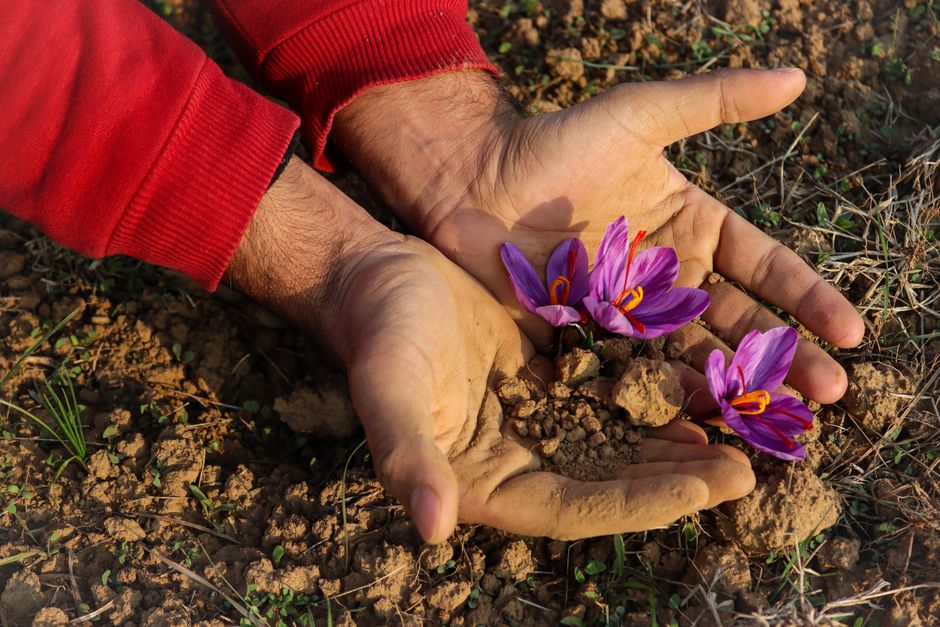
Table of Contents
- Key Takeaways
- The Surprising Reality of Shocking Saffron Harvesting
- The Economics Behind Hand-Harvested Saffron
- Why Saffron Harvesting Resists Modernization
- Frequently Asked Questions
- Sources
Did you know that the world’s most expensive spice requires one of the most painstaking harvesting processes on Earth? Shocking saffron harvesting involves waking before dawn, plucking thousands of delicate flowers, and extracting tiny crimson threads with tweezers. This ancient practice has barely changed in millennia, and the reasons why will surprise you.
The labor behind your saffron rice or paella tells a fascinating story of tradition, economics, and botanical peculiarity. These interesting facts reveal truths that most saffron users never consider when sprinkling the golden spice into their dishes.
Key Takeaways
- Saffron must be harvested entirely by hand because machines would destroy the delicate flowers and stigmas
- Each flower produces only three usable saffron threads, requiring thousands of flowers for a single ounce
- Harvesters work during a narrow window of just a few hours each morning during a brief autumn season
- It takes roughly 150,000 to 170,000 flowers to produce one kilogram of dried saffron
- The entire harvest season lasts only about three weeks per year
- One person can harvest approximately 1,500 flowers in a single day of intensive work
The Surprising Reality of Shocking Saffron Harvesting
1. The Harvest Window Opens for Just Three Hours Each Day
Saffron harvesters rise in darkness for good reason. The Crocus sativus flowers must be picked shortly after they bloom but before the sun climbs too high. Heat causes the delicate petals to wilt and open fully, making the stigmas harder to extract and reducing their quality. This creates an urgent morning race against the clock, typically between dawn and mid-morning. Families and communities work together during these precious hours, knowing that flowers left too long in the sun lose potency and value. The pressure is immense—miss the window, and you’ve lost that day’s potential harvest entirely.
2. Each Flower Yields Only Three Precious Threads
Here’s a truth that explains saffron’s staggering price: inside each purple crocus bloom hide just three red stigmas. These are the saffron threads. Not three bunches or three clusters—three individual threads. To accumulate enough saffron for a single ounce (about 28 grams) of the dried spice, harvesters must process approximately 4,000 flowers. The math becomes almost absurd at scale. A pound requires roughly 70,000 flowers. The sheer volume of blossoms needed transforms saffron cultivation into an exercise in agricultural patience and determination.
3. Machines Cannot Do This Job (And Probably Never Will)
Despite centuries of technological advancement, shocking saffron harvesting remains stubbornly manual. Engineers and agricultural innovators have tried to mechanize the process, but the flowers are simply too fragile. The stigmas are thread-thin and attached to the flower with remarkable delicacy. Any mechanical picking device crushes the petals or tears the stigmas irregularly, contaminating the harvest with yellow stamen material or damaging the essential oils that give saffron its flavor and aroma. Human fingers, guided by experienced eyes, remain the only tool gentle and precise enough for this task.
4. The Entire Annual Harvest Happens in Three Weeks
Saffron farmers face one of agriculture’s most compressed harvest calendars. The Crocus sativus blooms for roughly three weeks each autumn, typically in October or November depending on the region. During this narrow window, every flower must be picked, every stigma extracted, every thread dried. There are no second chances, no extended seasons. Families often cancel other commitments, and communities organize harvest parties to ensure no flower goes to waste. The intensity is remarkable—an entire year’s income depends on these 21 days of focused, dawn-to-dusk labor.
5. Separating the Threads Requires Tweezers and Infinite Patience
Picking the flowers is only half the battle. After harvest comes the tedious work of extraction. Workers sit for hours, carefully opening each flower and using their fingernails or small tweezers to pluck out the three red stigmas without including the yellow stamens. The yellow parts are worthless and would dilute the saffron’s quality and value. This separation process often continues long after the morning harvest ends, with families working into the evening to process the day’s haul. A skilled worker might process 1,000 flowers in an hour, but that’s still only three grams of fresh saffron.
6. Fresh Saffron Weighs Five Times More Than Dried
The stigmas extracted from flowers contain significant moisture. Through careful drying—traditionally over low heat or in specialized drying rooms—the threads lose roughly 80 percent of their weight. This means those 150,000 flowers that yield one kilogram of dried saffron actually produce about five kilograms of fresh threads. The drying process is critical and requires expertise. Too much heat destroys the aromatic compounds; too little allows mold. Getting it right preserves the distinctive flavor and intense color that make saffron valuable.
7. Harvesters Compete Against Weather Every Single Day
Rain is saffron’s nemesis during harvest season. A single downpour can flatten flowers, soak the delicate stigmas, or trigger early wilting. Wind presents similar challenges, sometimes blowing petals off before harvesters can reach them. Frost can damage unopened buds. Farmers watch weather forecasts obsessively during the harvest weeks, sometimes rushing to pick flowers earlier than ideal if storms threaten. This meteorological uncertainty adds another layer of stress to an already demanding process. Unlike many crops that tolerate some weather variation, saffron demands near-perfect conditions during its brief season.
8. A Full Day’s Work Yields Less Than Ten Grams of Dried Saffron
Consider the economics: an experienced harvester working a full day might pick 1,500 flowers. After extraction and drying, this produces approximately seven to ten grams of finished saffron—about two teaspoons. At retail prices of $10 to $20 per gram in many markets, that’s $70 to $200 for a full day’s intensive labor, before accounting for land costs, bulb investment, and other expenses. This explains why saffron production has declined in many regions where labor costs have risen, and why it persists in areas where traditional farming methods and family labor keep it economically viable.
9. The Crocus Itself Is Sterile and Cannot Reproduce Without Humans
Here’s a final fascinating truth: Crocus sativus is a sterile triploid plant. It produces no viable seeds. Every saffron crocus in existence must be propagated by humans manually dividing and replanting the bulbs. This means saffron cultivation requires not just harvest labor but also ongoing propagation work. The relationship between humans and this plant spans thousands of years of careful maintenance. Without human intervention, saffron would cease to exist within a single generation. We didn’t just domesticate this plant—we became essential to its survival.
The Economics Behind Hand-Harvested Saffron
Understanding the labor explains why saffron costs more per ounce than gold in some markets. The price reflects human hours, not just rarity. When you purchase saffron, you’re buying someone’s pre-dawn wake-up calls, their patient finger work, and their expertise in timing, extraction, and drying.
| Harvest Stage | Time Required | Flowers Processed |
|---|---|---|
| Morning picking | 3-4 hours | 1,200-1,500 |
| Stigma extraction | 4-6 hours | 1,200-1,500 |
| Drying process | 12-24 hours | All daily harvest |
Different regions have developed slight variations in technique, but the fundamental process remains unchanged. Iranian, Spanish, Kashmiri, and Greek saffron all require the same painstaking hand labor. The terroir affects flavor profiles, but human hands remain constant across all traditions.
Why Saffron Harvesting Resists Modernization
Agricultural mechanization has transformed nearly every other crop. Combines harvest wheat, machines pick tomatoes, automated systems sort fruit. Saffron stands apart. The biology of the crocus and the chemistry of its stigmas demand gentleness that only human touch provides.
Some researchers have explored robotic solutions using computer vision and soft robotics, but none have achieved commercial viability. The flowers grow at irregular heights, bloom on unpredictable schedules even within the same field, and require split-second decisions about readiness that current AI cannot match reliably.
The result is a living connection to ancient agricultural practices. Today’s saffron harvesters use essentially the same methods as Persian farmers 3,000 years ago. This continuity is rare in modern food production.
Frequently Asked Questions
Why can’t saffron harvesting be automated with modern technology?
The flowers and stigmas are extremely delicate and require precise, gentle handling that machines cannot replicate without damaging the product. The stigmas must be separated from yellow stamens with accuracy that current robotics cannot achieve economically. Additionally, flowers bloom at varying heights and readiness levels that require human judgment to assess in real-time.
How long does saffron remain potent after harvesting?
Properly dried and stored saffron maintains its potency for approximately two to three years when kept in an airtight container away from light and moisture. However, it begins losing aromatic strength after about six months, which is why fresher saffron commands premium prices. The color compounds remain stable longer than the volatile aromatic oils.
Do all saffron-producing regions use identical harvesting methods?
While the fundamental hand-harvesting process is universal, regional variations exist in drying techniques and quality standards. Spanish saffron is often dried using traditional methods over oak embers, while Iranian producers may use specialized drying rooms. Greek and Kashmiri traditions have their own refinements, but all require manual flower picking and stigma extraction.
How much can a skilled harvester earn during saffron season?
Earnings vary dramatically by region and economic conditions. In traditional saffron-growing areas, families often work their own small plots, making direct wage comparisons difficult. In areas with hired labor, harvesters typically earn local agricultural wages, though the intense seasonal nature and specialized skill can command premiums. The brief season means annual income from saffron alone is limited.