
By TrivBits, Staff Writer — Published September 20, 2026
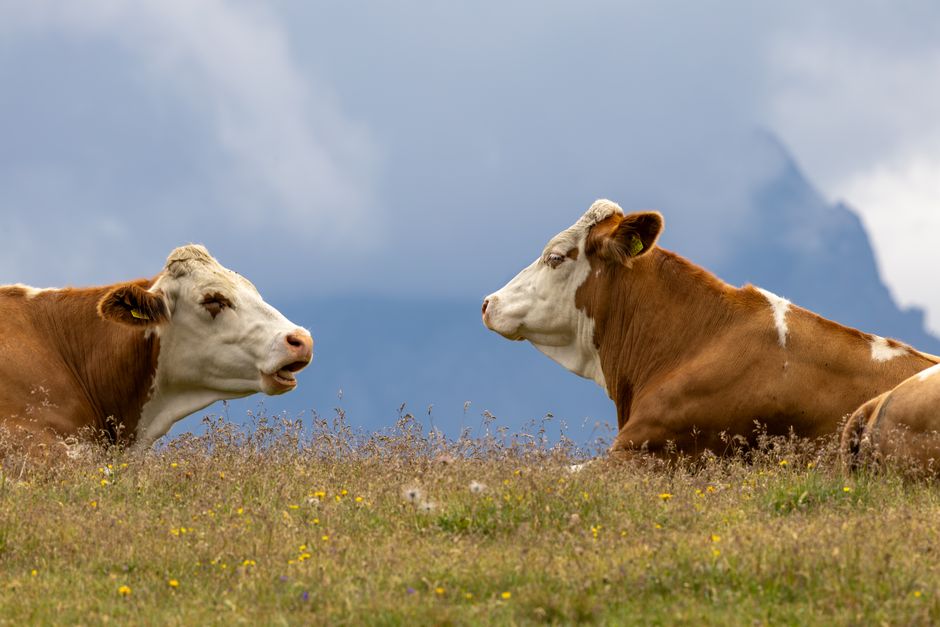
Table of Contents
- Key Takeaways
- How Cows Choose Friends and What Makes These Bonds Special
- The Science Behind Cows Friends Stressed: Measuring Emotional Bonds
- Unknown Benefits: How Friendships Improve Cow Health and Productivity
- Myths Versus Truths About Cow Intelligence and Social Life
- Practical Applications: How Farms Are Adapting to This Knowledge
- Frequently Asked Questions
- Sources
Did you know that cows form deep emotional bonds with specific herd mates? It’s one of those surprising facts that challenges how we think about farm animals. Research shows that cows have best friends and experience measurable stress when separated from their preferred companions. These gentle giants aren’t just grazing mindlessly—they’re navigating complex social relationships that would make any trivia enthusiast reconsider what they thought they knew about bovine behavior.
This isn’t folklore or anthropomorphic wishful thinking. Scientists have documented these friendships through careful observation and physiological measurements, revealing truths about cow intelligence and emotion that many find genuinely fascinating.
Key Takeaways
- Cows form preferential friendships with one or two specific individuals in their herd, choosing to spend most of their time with these companions.
- When separated from their best friends, cows show elevated heart rates and increased cortisol levels—biological markers of stress.
- Paired with friends, cows remain calmer during stressful situations and show improved overall well-being.
- These social bonds affect milk production, feeding behavior, and general health in dairy cattle.
- Recognition of cow friendships has practical implications for animal welfare standards on farms worldwide.
How Cows Choose Friends and What Makes These Bonds Special
Watch a herd of cows long enough and patterns emerge. Certain individuals consistently graze together, groom each other, and rest side by side. These aren’t random pairings. Researchers at Northampton University in the United Kingdom observed that cows select specific herd mates as preferred companions, much like humans choose close friends from a larger social circle.
The selection process involves interesting factors. Cows often befriend others of similar age and temperament. Calves that grow up together frequently maintain these bonds into adulthood. Personality matters too—bold cows tend to pair with other confident individuals, while more timid cattle seek out similarly cautious companions.
What’s particularly striking is the exclusivity of these relationships. While cows interact with many herd members throughout the day, they reserve special behaviors for their chosen friends. Mutual grooming, synchronized movement, and preferential proximity happen most frequently between bonded pairs. These friendships can last for years, sometimes a cow’s entire lifetime.
The Science Behind Cows Friends Stressed: Measuring Emotional Bonds
How do scientists prove that separation causes genuine stress rather than simple disorientation? The evidence comes from multiple physiological indicators that paint a clear picture of bovine distress.
Heart rate monitoring reveals immediate responses. When researchers separated cows from their preferred companions and placed them with unfamiliar herd mates, heart rates spiked noticeably. These elevated rates persisted throughout the separation period. Reunite the friends, and heart rates returned to baseline levels within minutes.
Cortisol measurements tell a similar story. This stress hormone rises in cow blood and saliva samples when animals are isolated from their friends. The cortisol spike mirrors what happens in humans during social stress—a remarkable parallel that suggests similar underlying emotional mechanisms.
Behavioral observations add another layer of evidence. Separated cows vocalize more frequently, pace restlessly, and show reduced interest in food. They display what animal behaviorists recognize as anxiety-related behaviors. Place them back with their friends, and these behaviors diminish dramatically.
Unknown Benefits: How Friendships Improve Cow Health and Productivity
The practical implications extend beyond interesting trivia. Farmers have discovered that respecting cow friendships actually improves agricultural outcomes.
Milk production increases when dairy cows are housed with their preferred companions. The reduction in chronic stress allows their bodies to allocate more energy toward lactation rather than stress response. Studies have documented measurable differences in milk yield between cows housed with friends versus those paired randomly.
Feeding behavior also improves. Cows eat more calmly and consistently when their friends are nearby. This stable nutrition intake supports better overall health and more predictable growth rates in beef cattle. The presence of a familiar companion appears to create a sense of security that facilitates normal behavior patterns.
Even veterinary procedures become less stressful. Cows undergoing routine health checks remain calmer when their best friend stands nearby. This calm translates to easier handling, reduced risk of injury to both animals and handlers, and lower stress hormone levels during medical interventions.
Myths Versus Truths About Cow Intelligence and Social Life
Common misconceptions paint cows as simple creatures with minimal emotional lives. The friendship research challenges these outdated views and reveals a more complex reality.
| Myth | Truth |
|---|---|
| Cows are solitary and indifferent to other cattle | Cows are highly social animals that form structured hierarchies and meaningful relationships |
| All herd members are interchangeable to a cow | Cows recognize dozens of individual herd mates and show clear preferences |
| Cows lack the intelligence for emotional bonds | Cows demonstrate problem-solving abilities and emotional responses comparable to dogs |
| Separating cows has no psychological impact | Separation from friends causes measurable stress with health consequences |
These truths matter because they inform how we treat cattle in agricultural settings. Recognizing cognitive and emotional complexity creates ethical obligations that go beyond basic physical care.
Practical Applications: How Farms Are Adapting to This Knowledge
Progressive farmers are redesigning management practices around bovine social needs. Instead of randomly grouping cattle, they track friendships and keep bonded pairs together during moves, medical procedures, and housing assignments.
Some dairy operations now maintain “friendship maps” documenting which cows prefer each other’s company. When culling older cows or reorganizing herds, managers consult these maps to minimize social disruption. The initial investment in tracking pays dividends through reduced stress-related health problems and improved productivity.
Transportation protocols have evolved too. Cattle transporters increasingly ensure that friends travel together, reducing the compounded stress of unfamiliar environments and social isolation. Arrival at new locations goes more smoothly when cows have familiar companions for emotional support.
Even slaughterhouse procedures are being reconsidered in some regions. Animal welfare advocates argue that keeping friends together until the end reduces fear and suffering during final moments—a controversial but growing consideration in humane farming discussions.
Frequently Asked Questions
Do cows recognize individual humans the way they recognize cow friends?
Yes, cows can distinguish between individual humans and remember people for years. They respond differently to handlers who have treated them gently versus those who were rough or frightening. However, their bonds with other cows appear stronger and more emotionally significant than their relationships with humans, likely because cows are their natural social group.
How many friends does a typical cow have?
Most cows form close bonds with two to four preferred companions within their herd, though they’ll have one or two especially close friends. They recognize and interact peacefully with many more herd members—cows can remember approximately 50 to 70 individual cattle—but reserve their deepest bonds for a select few.
Can cows become depressed if their best friend dies or is permanently removed?
Research suggests cows do experience grief-like responses when permanently separated from close companions. They may show reduced appetite, decreased activity, increased vocalization, and elevated stress hormones for days or weeks following the loss. These responses gradually diminish as they form new bonds, but the adjustment period is measurable and real.
Are cow friendships exclusive, or do they have friend groups?
Cow friendships tend toward exclusive pairs or small trios rather than large friend groups. While cows exist within larger herd social structures and have acquaintances throughout the group, their intimate grooming and resting behaviors concentrate on one or two special companions. This pattern resembles human best friendships more than casual social networks.