
By TrivBits, Staff Writer — Published August 28, 2026
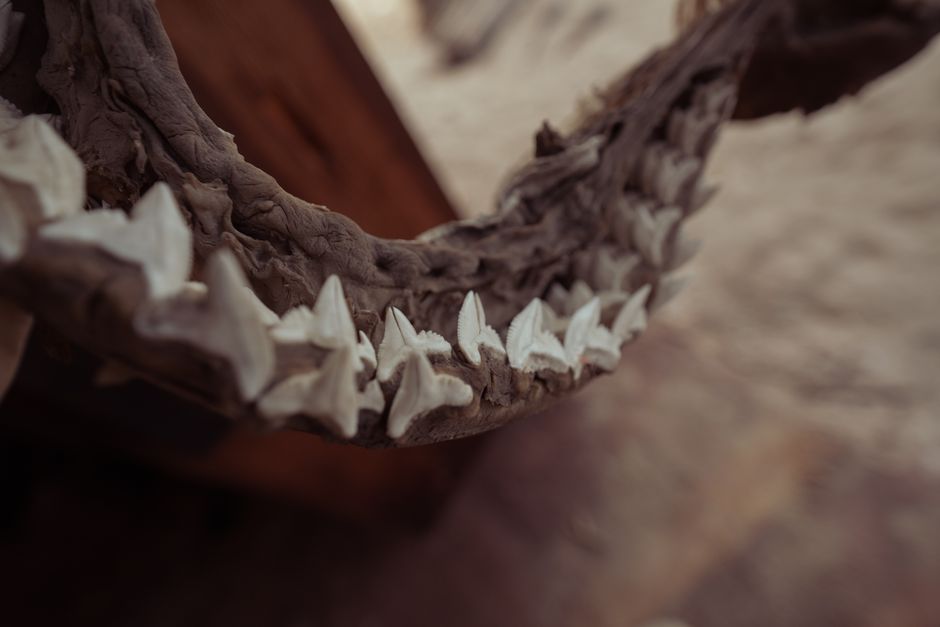
Table of Contents
- Key Takeaways
- When Sharks Predate Trees: Understanding Deep Time
- The First Trees: Late to the Party
- What the Fossil Evidence Shows
- Why This Trivia Matters: Perspective on Evolutionary Time
- Common Myths and Unknown Truths
- Frequently Asked Questions
- Sources
Did you know that sharks swam through ancient oceans roughly 200 million years before the first trees took root on land? This surprising fact sounds impossible at first. After all, forests seem timeless, primordial, like they’ve always been part of Earth’s landscape. But the fossil record tells a different story—one where apex predators ruled the seas long before woody plants reached for the sky.
The truth behind why sharks predate trees reveals how young forests really are in geological terms. It’s a fascinating glimpse into deep time, where our assumptions about what’s “ancient” get turned upside down.
Key Takeaways
- Sharks first appeared approximately 450 million years ago during the Ordovician period, while trees emerged around 350-380 million years ago.
- Early sharks evolved in the oceans before plants had developed the woody tissue and height that define true trees.
- The gap between shark and tree evolution spans roughly 70-100 million years—longer than the entire age of dinosaurs.
- This timeline challenges common assumptions about what counts as “ancient” in nature.
- Both sharks and trees have shown remarkable evolutionary staying power, adapting through multiple mass extinction events.
- The fossil record provides clear evidence for these timelines through preserved remains in rock strata worldwide.
When Sharks Predate Trees: Understanding Deep Time
The story begins in the Ordovician period, about 450 million years ago. Oceans dominated the planet. Early shark ancestors—primitive fish with cartilaginous skeletons—appeared in these ancient seas. These weren’t the sleek predators we recognize today. They were experimental models, testing out body plans that would eventually lead to modern sharks.
What did Earth look like then? Barren. Rocky continents stretched without a hint of green forests. Plants existed, sure—mosses, liverworts, and small primitive vegetation hugged the ground near water. But nothing tall. Nothing woody. The very concept of a tree didn’t exist yet.
Trees required several evolutionary innovations that took millions of years to develop. They needed lignin, the complex organic polymer that makes wood rigid. They needed vascular systems sophisticated enough to transport water and nutrients dozens of feet upward against gravity. They needed root systems that could anchor substantial weight. None of this happened overnight in evolutionary terms.
The First Trees: Late to the Party
The earliest tree-like plants appeared during the Devonian period, somewhere between 350 and 380 million years ago. Archaeopteris and Wattieza represent some of the first organisms we’d recognize as trees, with woody trunks and branches reaching upward.
Think about that gap. Between 70 and 100 million years separate shark origins from tree origins. To put this in perspective, that’s longer than the entire Cretaceous period—the whole span from the rise of flowering plants to the asteroid that wiped out non-avian dinosaurs.
Sharks had already diversified into multiple forms by the time trees appeared. Some had bizarre spiral tooth whorls. Others experimented with different fin configurations. The oceans were their laboratory, and they’d been conducting experiments for eons while land remained largely lifeless.
What the Fossil Evidence Shows
Paleontologists don’t make these claims lightly. The fossil record, while incomplete, provides compelling evidence through multiple lines of investigation.
| Period | Time (Million Years Ago) | Shark Evidence | Tree Evidence |
|---|---|---|---|
| Ordovician | ~450 | Scales and teeth from early sharks | None—only small plants |
| Silurian | ~430 | More diverse shark fossils | Vascular plants emerging, no trees |
| Devonian | ~380 | Well-established shark diversity | First true trees appear |
| Carboniferous | ~350 | Abundant shark species | Vast forests dominate land |
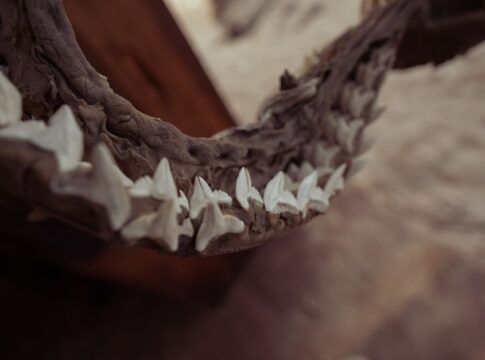
Shark fossils present special challenges. Cartilage doesn’t preserve as readily as bone. But sharks constantly shed teeth throughout their lives, and these hard structures fossilize beautifully. Scales, spines, and occasional body impressions fill out the picture. Together, they paint a clear timeline.
Tree fossils become abundant once woody plants evolve. Petrified wood, leaf impressions, and fossilized root systems appear in Devonian rock layers. Before that? Nothing resembling trees exists in the geological record.
Why This Trivia Matters: Perspective on Evolutionary Time
This interesting fact does more than win trivia contests. It recalibrates our sense of time and change on Earth.
Humans tend to think of forests as eternal, unchanging backdrops. We imagine dinosaurs lumbering through jungles, ancient forests stretching back forever. But forests are relatively recent inventions. For millions upon millions of years, continents stood naked under alien skies while complex life thrived exclusively in water.
Sharks represent one of evolution’s most successful designs. They’ve survived at least four major mass extinction events. The basic body plan—streamlined, efficient, adaptable—works so well that it’s remained largely unchanged for hundreds of millions of years. Trees, younger by comparison, have also proven remarkably resilient, transforming Earth’s atmosphere and landscapes in ways still visible today.
Common Myths and Unknown Truths
Several misconceptions surround this topic. Let’s address them directly.
Myth: Modern sharks are identical to ancient sharks. Not quite. Early sharks looked strange by today’s standards. The modern shark body plan emerged later. What’s remarkable is that the fundamental design—cartilaginous skeleton, multiple gill slits, replaceable teeth—has proven so durable.
Myth: No plants existed before trees. Plants colonized land before trees evolved. Small, ground-hugging vegetation appeared perhaps 470 million years ago. Trees represent a later innovation in plant evolution, not the beginning of terrestrial plant life.
Unknown truth: The gap is huge. Most people, when learning sharks predate trees, underestimate the timeline. Seventy to one hundred million years isn’t a small head start. It’s an enormous span during which Earth’s climate, geography, and atmospheric composition changed dramatically multiple times.
Frequently Asked Questions
How do scientists know sharks are older than trees?
Scientists use radiometric dating of rock layers containing fossils. Shark teeth and scales appear in geological strata dated to approximately 450 million years ago, while the earliest tree fossils appear in layers dated to roughly 380 million years ago. The rock layers’ ages are determined through the decay of radioactive isotopes, providing reliable timelines.
Were there any tall plants before trees evolved?
Some pre-tree plants achieved modest height. Early vascular plants like Cooksonia stood only inches tall. Later plants reached a few feet. But nothing approached true tree height or possessed woody trunks until the Devonian period. The landscape remained relatively flat and low-lying for millions of years.
Did early sharks look like modern sharks?
Not exactly. While they shared basic features like cartilaginous skeletons and teeth, many early sharks had unusual characteristics. Some possessed strange dorsal spines, others had peculiar jaw structures. The streamlined, torpedo-shaped body we associate with sharks today evolved over time through natural selection.
Why did trees take so long to evolve compared to sharks?
Trees required multiple complex adaptations working together: lignin for structural support, sophisticated vascular systems for water transport, extensive root networks, and reproductive strategies suited for terrestrial life. Each innovation took time. Marine life had a head start because oceans provided buoyancy, eliminating the need for rigid support structures that land plants required.