
Why Apples Float in Water: The Science Behind Bobbing
By Trivia Daily, Staff Writer — Published August 9, 2026
Table of Contents
- Key Takeaways
- The Density Factor: Why Apples Float Water
- Inside an Apple: Anatomy of Buoyancy
- Comparing Floating Fruits and Vegetables
- The Cultural History of Apple Bobbing
- Factors That Affect Apple Buoyancy
- Frequently Asked Questions
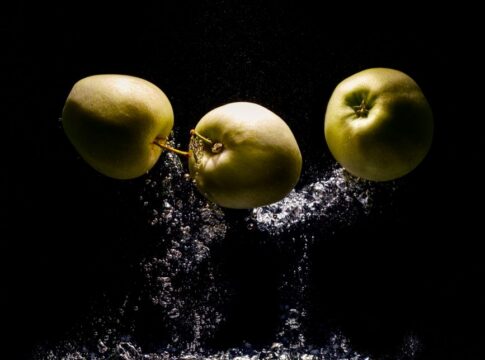
Drop an apple into a bucket of water and watch it bob cheerfully to the surface. This simple phenomenon has delighted children at harvest festivals for generations, but the science behind why apples float water is more fascinating than you might expect. The answer lies in a surprising fact: apples are roughly 25 percent air by volume. That’s right—every crisp bite you take contains tiny pockets of air trapped within the fruit’s cellular structure, making apples less dense than water and perfectly buoyant for bobbing games and scientific curiosity alike.
This everyday wonder demonstrates fundamental principles of physics while revealing something remarkable about how fruits grow and develop. Understanding why apples float opens a window into plant biology, density, and the clever ways nature packages nutrition.
Key Takeaways
- Apples float because they contain approximately 25 percent air by volume, making them less dense than water.
- The air pockets exist within the intercellular spaces of the apple’s tissue, allowing gas exchange while the fruit develops on the tree.
- An object floats when its overall density is less than the density of water, which is 1 gram per cubic centimeter.
- Most apple varieties float, though very dense or waterlogged apples may sink or hover near the surface.
- The tradition of apple bobbing dates back centuries and relies entirely on this natural buoyancy.
- Other fruits with similar air content, like pears and some citrus fruits, also float in water.
The Density Factor: Why Apples Float Water
The principle governing whether apples float water is deceptively simple: density. When an object’s density is lower than water’s density, it floats. Water has a density of 1 gram per cubic centimeter at room temperature. Apples, despite feeling solid and heavy in your hand, have an average density between 0.8 and 0.9 grams per cubic centimeter—comfortably below water’s threshold.
But why are apples less dense than water when they’re mostly made of water themselves? The answer lies in their internal architecture. Apple flesh consists of cells separated by intercellular spaces filled with air. These microscopic air pockets serve important biological functions while the fruit grows. They allow oxygen to reach interior cells and enable carbon dioxide to escape during respiration. This network of air channels makes up about one-quarter of the apple’s total volume, drastically reducing its overall density.
The phenomenon becomes even more interesting when you consider that the apple’s composition includes sugars, starches, and other compounds that are denser than water. Yet the air content overrides these heavier components, ensuring buoyancy.
Inside an Apple: Anatomy of Buoyancy
An apple’s structure is an engineering marvel designed for seed dispersal and nutrition storage. The fruit develops from the flower’s ovary, gradually swelling as cells multiply and expand. During this growth, cells don’t pack together tightly like bricks in a wall. Instead, they maintain spaces between them—tiny air-filled gaps that create a sponge-like texture at the microscopic level.
This tissue, called parenchyma, makes up most of the apple’s edible flesh. Parenchyma cells are relatively large and have thin walls, creating substantial intercellular air spaces. These spaces explain why biting into an apple produces that satisfying crunch—you’re literally breaking through walls of cells and collapsing air pockets. The sound of a crisp apple is partly the sound of air escaping.
The skin, or epidermis, also plays a role. Covered with a waxy cuticle, it helps trap air within the fruit while protecting against water loss. This sealed environment maintains the apple’s buoyancy even after harvest, sometimes for months when properly stored.
Comparing Floating Fruits and Vegetables
Apples aren’t alone in their buoyancy. Many fruits and vegetables float, while others sink, based on their internal structure and air content. This table shows how common produce behaves in water:
| Produce | Floats or Sinks | Approximate Air Content |
|---|---|---|
| Apples | Float | ~25% |
| Pears | Float | ~20-25% |
| Lemons | Float (usually) | ~15-20% |
| Bananas | Float (when ripe) | Variable |
| Grapes | Sink | Low |
| Potatoes | Sink | Very low |
| Tomatoes | Float (usually) | ~5% |
The variation depends on each plant’s cellular structure and evolutionary adaptations. Dense vegetables like potatoes store energy as tightly-packed starch with minimal air spaces. Fruits meant to be carried by water or animals often incorporate more air for buoyancy or lighter weight.
The Cultural History of Apple Bobbing
The tradition of bobbing for apples—attempting to catch floating apples with your teeth—has roots in ancient harvest festivals. This game exists precisely because apples float reliably and bob back to the surface when pushed underwater. Without the fruit’s natural buoyancy, the tradition would never have developed.
Historical records connect apple bobbing to Celtic festivals celebrating the autumn harvest, though the practice spread across many cultures. The game requires no equipment beyond a tub of water and apples, making it accessible to communities throughout history. The challenge lies not in keeping apples afloat—they manage that themselves—but in catching the slippery, bobbing targets.
This folk tradition inadvertently demonstrates scientific principles. Each time an apple is pushed down and springs back up, it illustrates buoyant force—the upward pressure exerted by water on less-dense objects.
Factors That Affect Apple Buoyancy
While most apples float readily, several factors can influence their behavior in water. Apple variety matters somewhat, as different cultivars have varying densities. Denser varieties with less air content may float lower in the water or, rarely, hover just beneath the surface.
Ripeness also plays a role. As apples mature and age, cellular breakdown can reduce air spaces or allow water to infiltrate tissues. Overripe or damaged apples may lose buoyancy. Temperature affects density too—cold water is slightly denser than warm water, which can change how high an apple floats.
Interestingly, if you cut an apple in half, the pieces usually still float. The exposed interior may absorb some water over time, gradually reducing buoyancy, but the remaining air pockets typically provide enough lift. This resilience makes apples remarkably reliable floaters across various conditions.
Frequently Asked Questions
Do all apples float in water?
Nearly all apple varieties float due to their internal air content, though extremely dense or waterlogged specimens might sink. The vast majority of fresh, healthy apples will bob to the surface reliably.
Why do some fruits sink while apples float?
Fruits sink when their overall density exceeds water’s density, typically because they have tightly-packed cells with minimal air spaces. Grapes, for example, have dense flesh with little internal air, making them heavier than an equivalent volume of water.
Can you make an apple sink by adding weight?
Yes, attaching weight to an apple will overcome its natural buoyancy and cause it to sink. This demonstrates that buoyancy depends on the combined density of the entire object, not just the apple itself.
Do cooked apples still float?
Cooked apples often lose buoyancy because heat breaks down cell walls and collapses air pockets, allowing water to infiltrate the tissue. Applesauce, for instance, sinks readily because the cellular structure has been destroyed.
The next time you encounter a floating apple, remember you’re witnessing an elegant intersection of biology and physics. Those microscopic air pockets—invisible to the eye but accounting for a quarter of the fruit’s volume—transform a simple snack into a buoyant wonder. Nature designed apples not for bobbing games, but for survival and reproduction, yet we benefit from the same features that help apple trees thrive.