
By TrivBits, Staff Writer — Published October 16, 2026
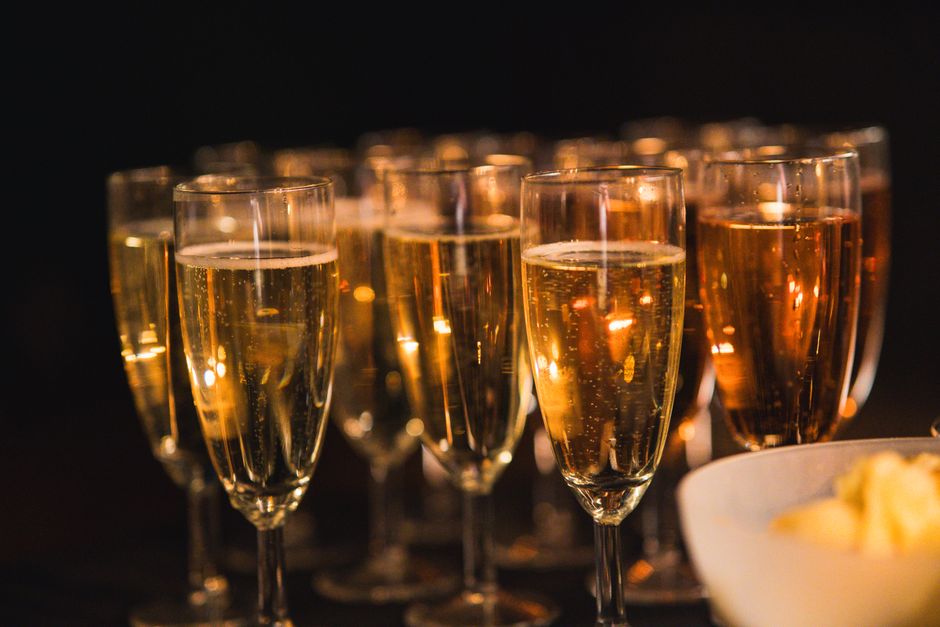
Table of Contents
- Key Takeaways
- The Physics Behind What Causes Champagne Bubbles
- The Dirt Particle Truth: What’s Really in Your Glass
- Busting the Myth of “Pure” Bubbles
- Why Bubble Formation Matters Beyond Aesthetics
- Comparing Nucleation Sources in Champagne Glasses
- Frequently Asked Questions
- Sources
Pop open a bottle of champagne and watch the magic unfold: thousands of tiny bubbles race to the surface in mesmerizing streams. But what actually causes champagne bubbles to form in those precise, elegant lines? The surprising answer involves something you’d never expect in your celebratory drink—microscopic particles of dust, lint, and even dried residue from dishwashing. This fascinating phenomenon reveals that the effervescent beauty we associate with luxury actually depends on tiny imperfections.
Did you know that perfectly clean glass would barely produce any bubbles at all? The science behind champagne’s fizz challenges our assumptions about purity and perfection in unexpected ways.
Key Takeaways
- Champagne bubbles require nucleation sites—microscopic imperfections or particles—to form on glass surfaces
- These particles include cellulose fibers from towels, dust specks, and residual detergent that create rough spots for carbon dioxide to collect
- A single stream of bubbles typically originates from one tiny particle, often invisible to the naked eye
- Perfectly smooth, ultra-clean glass produces significantly fewer bubbles than typical glassware
- The carbon dioxide dissolved in champagne needs these anchor points to transition from liquid to gas efficiently
- Scientists have photographed the actual particles responsible for bubble streams using specialized microscopy
The Physics Behind What Causes Champagne Bubbles
Champagne contains dissolved carbon dioxide under pressure. When you pour it into a glass, that pressure drops dramatically. The CO₂ wants to escape as gas, but it faces an interesting problem: pure liquid makes it surprisingly difficult for gas bubbles to spontaneously form.
This is where nucleation comes in. Think of it as needing a foundation to build upon. The carbon dioxide molecules cluster around microscopic irregularities—tiny cavities, scratches, or particles stuck to the glass. These imperfections provide the rough surface area where gas can accumulate more easily than in smooth liquid.
Each bubble stream you see rising from the bottom of your flute originates from a single nucleation site. That single speck of dust or fiber becomes a bubble factory, continuously releasing CO₂ as long as gas remains dissolved in the liquid. The process is remarkably efficient: one particle can generate thousands of bubbles over several minutes.
The bubbles themselves grow as they rise. They start microscopic but collect more carbon dioxide molecules during their journey upward, often doubling or tripling in size before reaching the surface.
The Dirt Particle Truth: What’s Really in Your Glass
Scientists using electron microscopy have identified exactly what these nucleation sites are. The results might make neat freaks uncomfortable, but they’re perfectly harmless.
Cellulose fibers from cloth towels are among the most common culprits. When you dry a champagne flute, microscopic threads detach and cling to the glass. These hollow fibers are particularly effective at trapping tiny air pockets, making them excellent nucleation sites.
Dust particles are another frequent source. Even in relatively clean environments, airborne particles settle on glassware. A speck measuring just a few micrometers across—far too small to see—can anchor a persistent bubble stream.
Residual detergent or minerals from hard water also create nucleation points. Dishwashers may leave behind microscopic deposits that serve the same purpose. Scratches in the glass itself, whether from normal wear or intentional etching, provide similar rough surfaces.
Some champagne glasses are actually manufactured with laser-etched points at the bottom specifically to create consistent bubble streams. These intentional imperfections ensure the visual spectacle buyers expect, turning an accident of physics into deliberate design.
Busting the Myth of “Pure” Bubbles
Here’s an interesting truth that contradicts intuition: the cleaner and smoother your glass, the fewer bubbles you’ll see. Laboratory experiments with ultra-clean, polished glass surfaces produce disappointing results—the champagne looks nearly flat despite containing the same amount of dissolved CO₂.
This creates a paradox for perfectionists. The most visually appealing champagne service actually requires a bit of “contamination.” Professional sommeliers know this instinctively, though they might not describe it in scientific terms.
The myth that champagne bubbles form spontaneously from the liquid itself persists, but physics doesn’t support it. Homogeneous nucleation—bubble formation without any particle or surface irregularity—requires much higher levels of supersaturation than champagne provides. You’d need far more dissolved CO₂ under much greater pressure for truly spontaneous bubbles.
Why Bubble Formation Matters Beyond Aesthetics
Those rising bubbles aren’t just pretty to watch. They fundamentally change how champagne tastes and smells. As bubbles burst at the surface, they create tiny droplets that launch aromatic compounds into the air above your glass. This aerosol effect is why champagne smells more intense than still wine with similar composition.
The bubble streams also create circulation currents in the liquid, continuously mixing it and bringing fresh champagne into contact with nucleation sites. This sustains the fizz longer than simple passive degassing would allow.
Temperature affects the entire process significantly. Colder champagne holds more dissolved CO₂ and produces smaller, more numerous bubbles. Warmer champagne releases gas faster with larger, less elegant bubbles. The ideal serving temperature balances bubble aesthetics with flavor release.
Comparing Nucleation Sources in Champagne Glasses
| Nucleation Source | Effectiveness | Typical Origin |
|---|---|---|
| Cellulose fibers | Very high | Cloth towels, paper products |
| Dust particles | High | Airborne contamination |
| Glass scratches | Moderate to high | Normal wear, intentional etching |
| Detergent residue | Moderate | Dishwashing |
| Mineral deposits | Moderate | Hard water |
Frequently Asked Questions
Can champagne bubbles form without any particles or imperfections?
Technically yes, but it requires extreme conditions not present in normal champagne. Homogeneous nucleation would need dramatically higher CO₂ concentrations and pressure. In practical terms, every bubble stream in your glass originates from some microscopic particle or surface irregularity, even if you can’t see it.
Does the shape of the glass affect bubble formation?
Absolutely. Tall, narrow flutes preserve bubbles longer by minimizing surface area where CO₂ escapes. They also make bubble streams more visible and dramatic. Wider glasses like coupes allow faster degassing and shorter bubble paths, though they better release aromatic compounds for smelling.
Are the particles in champagne glasses safe to drink?
Yes, completely safe. The dust, fibers, and residues that create nucleation sites are the same microscopic particles present in virtually all food and drink. They’re far too small to pose any health concern and are identical to what you’d find in any beverage served in glassware.
Why do some champagne glasses have etched points at the bottom?
Manufacturers etch these points deliberately to guarantee consistent bubble streams. They recognized that random particles might not always be present or positioned ideally, so they engineered permanent nucleation sites. This ensures every glass produces the visual spectacle customers expect from champagne.
The next time you toast with champagne, take a moment to appreciate the invisible architects of those elegant bubble streams. Those microscopic specks of dust and fiber, far from being flaws, are essential collaborators in one of nature’s most delightful displays. Sometimes imperfection creates the most beautiful results.