
By TrivBits, Staff Writer — Published November 3, 2026
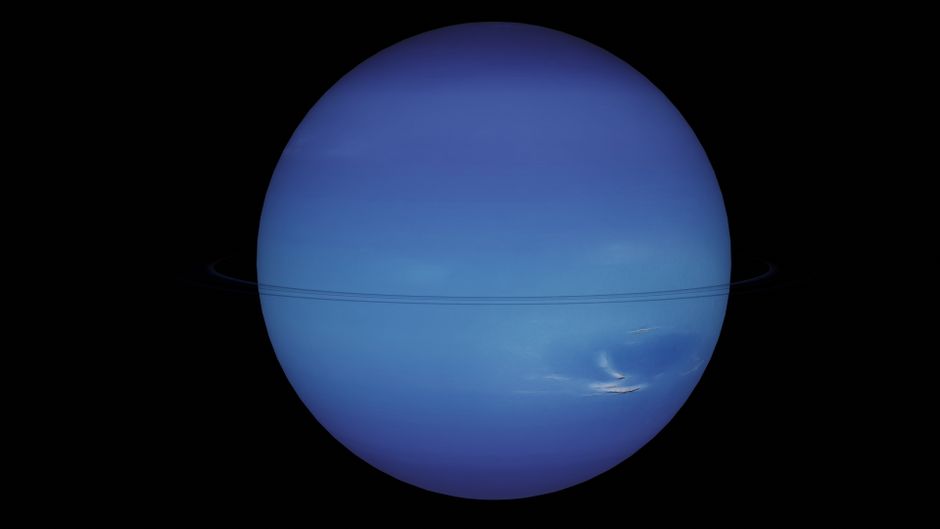
Table of Contents
- Key Takeaways
- How Diamond Rain on Neptune Actually Works
- The Laboratory Evidence Behind This Trivia
- Unknown Facts About Neptune’s Diamond Ocean
- Myths Versus Scientific Facts
- Comparing Ice Giants: Neptune and Uranus
- Why This Discovery Matters Beyond Trivia
- Frequently Asked Questions
- Sources
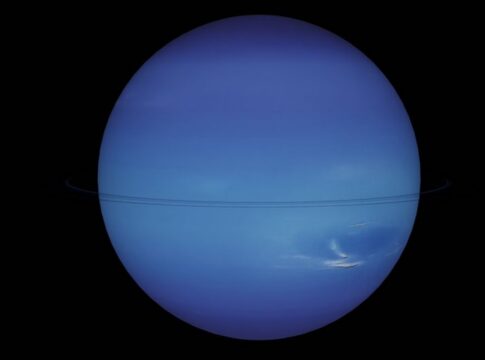
Did you know that one of the most surprising phenomena in our solar system might be happening right now on Neptune? Scientists believe that deep within this icy giant planet, atmospheric conditions create diamond rain neptune experiences constantly—actual diamonds forming in the atmosphere and falling toward the core like frozen precipitation. This isn’t science fiction. It’s a fascinating consequence of extreme pressure and chemistry operating at scales we can barely imagine.
Neptune sits nearly 2.8 billion miles from Earth, shrouded in mystery and churning with winds faster than the speed of sound. But beneath those sapphire-blue clouds, something even more interesting is likely occurring: a shower of precious gems.
Key Takeaways
- Neptune’s extreme atmospheric pressure and temperature likely convert methane into solid diamonds that fall like rain toward the planet’s core.
- Laboratory experiments have successfully recreated the conditions necessary for diamond formation, confirming this theory is scientifically plausible.
- Uranus, Neptune’s planetary twin, probably experiences the same diamond precipitation phenomenon.
- These diamonds could accumulate in a layer around Neptune’s core, potentially forming an ocean or shell of crystallized carbon.
- The discovery helps scientists understand planetary formation and the behavior of materials under extreme conditions.
- Similar processes might occur on giant exoplanets throughout the galaxy.
How Diamond Rain on Neptune Actually Works
Neptune’s atmosphere consists primarily of hydrogen and helium, with about 2-3% methane. That methane gives Neptune its distinctive blue color. But around 5,000 miles below the visible cloud tops, things get wild. Temperatures soar to roughly 5,000 degrees Fahrenheit while pressure reaches millions of times Earth’s atmospheric pressure at sea level.
Under these brutal conditions, methane molecules—each containing one carbon atom bonded to four hydrogen atoms—break apart. The carbon atoms, freed from their hydrogen companions, get squeezed together. Pressure does remarkable things to carbon. Enough force transforms it from graphite into diamond, the hardest naturally occurring substance we know.
The newly formed diamonds, heavier than the surrounding gases, begin to fall. They descend through thousands of miles of increasingly dense atmosphere. Some might melt again in the hotter depths. Others could reach the rocky core intact, accumulating over billions of years into a layer of diamond unlike anything on Earth.
The Laboratory Evidence Behind This Trivia
Scientists didn’t just dream up this theory. They tested it. Researchers have used powerful lasers and specialized equipment to recreate Neptune-like conditions in laboratories. By blasting polystyrene—a hydrocarbon similar in structure to methane—with intense shock waves, they generated the extreme pressures and temperatures found deep within ice giant planets.
The results? Tiny diamonds formed in nanoseconds. X-ray measurements confirmed their structure. The experiments demonstrated that the chemical pathway from simple hydrocarbons to crystallized carbon works exactly as predicted. What happens in a laboratory chamber lasting billionths of a second happens continuously on Neptune across planetary scales.
These experiments also revealed that the process is surprisingly efficient. A substantial fraction of the carbon converts to diamond rather than remaining as graphite or other forms. If the lab results scale up accurately, Neptune might be producing thousands of tons of diamonds every year.
Unknown Facts About Neptune’s Diamond Ocean
Here’s where things get even more interesting. The falling diamonds don’t necessarily stay solid forever. As they sink deeper, temperatures continue rising. Eventually, they might reach a depth where diamonds melt—yes, liquid carbon exists under the right conditions.
Scientists speculate that Neptune could have an entire ocean of liquid carbon, with solid diamond icebergs floating on its surface. Picture that: icebergs made of Earth’s most valued gemstone, bobbing in a sea of melted diamond. The truths about our universe often surpass fiction.
This diamond layer could explain some of Neptune’s unusual properties. The planet generates more heat than it receives from the Sun, and the energy released by falling and compressing diamonds might contribute to that internal heat budget. The layer might also affect Neptune’s magnetic field, which behaves strangely compared to other planets.
Myths Versus Scientific Facts
Let’s address some common misconceptions. First, these aren’t gem-quality diamonds you’d find in jewelry. They form quickly under chaotic conditions, likely emerging as small crystals or even diamond “hail” rather than perfect stones. Size estimates vary, but most would probably measure micrometers to perhaps a few millimeters across.
Second, we’re not going to mine Neptune for diamonds anytime soon. The technical challenges are insurmountable with current technology. You’d need to descend thousands of miles into an atmosphere with crushing pressure and scorching temperatures, then somehow extract and transport diamonds back to Earth across billions of miles. The cost would make even the finest Earth diamonds seem cheap.
Third, this phenomenon doesn’t make diamonds less valuable or special on Earth. Neptune’s diamond rain exists in a completely alien environment we’ll likely never directly observe. The diamonds we treasure formed through different geological processes over millions of years in Earth’s mantle.
Comparing Ice Giants: Neptune and Uranus
| Property | Neptune | Uranus |
|---|---|---|
| Distance from Sun | ~2.8 billion miles | ~1.8 billion miles |
| Atmospheric Methane | ~2-3% | ~2-3% |
| Diamond Rain Likelihood | Highly probable | Highly probable |
| Internal Heat Generation | Significant excess heat | Minimal excess heat |
| Atmospheric Pressure (deep) | Millions of atmospheres | Millions of atmospheres |
Both ice giants likely experience diamond precipitation, but Neptune’s more vigorous internal dynamics might make the process more intense or widespread.
Why This Discovery Matters Beyond Trivia
Understanding diamond rain on Neptune isn’t just interesting cocktail party trivia. It teaches us about planetary interiors, which we can’t directly observe. The same physics applies to thousands of Neptune-sized exoplanets discovered orbiting other stars. Many of those worlds might also rain diamonds, giving us a framework for understanding their structure and evolution.
The research also pushes materials science forward. Learning how carbon behaves under extreme conditions has applications in industrial diamond production, high-pressure physics, and even nuclear fusion research. Nature’s experiments, conducted over billions of years on planetary scales, provide insights no laboratory could easily replicate.
Plus, it reminds us how strange and wonderful our solar system truly is. We live in a cosmic neighborhood where glass rains sideways on one world, sulfuric acid clouds blanket another, and diamonds fall from the sky on ice giants billions of miles away.
Frequently Asked Questions
How big are the diamonds that rain on Neptune?
Scientists estimate the diamonds range from microscopic crystals measuring micrometers across to possibly larger chunks a few millimeters in diameter. They form rapidly under turbulent conditions, so they wouldn’t have time to grow into the large, clear gemstones found on Earth. Think diamond dust or hail rather than jewelry-grade stones.
Could we ever collect diamonds from Neptune?
Not with any foreseeable technology. Neptune’s diamond-forming region exists thousands of miles deep in an atmosphere with pressures millions of times greater than Earth’s surface and temperatures hot enough to vaporize most materials. The distance alone—nearly 3 billion miles—makes any mining mission impossibly expensive and technically unfeasible.
Do any other planets have diamond rain?
Uranus almost certainly experiences the same phenomenon, as it shares Neptune’s composition and structure. Some large exoplanets orbiting other stars likely have similar conditions. Jupiter and Saturn, being primarily hydrogen and helium with less methane, probably don’t produce diamond rain in the same way, though they have their own exotic chemistry.
How do scientists know this happens if they can’t see it?
Scientists combine theoretical models of planetary interiors with laboratory experiments that recreate Neptune-like conditions. When they subject hydrocarbon materials to the extreme pressures and temperatures calculated for Neptune’s deep atmosphere, diamonds form. The physics is well-understood and reproducible, giving researchers confidence the same process occurs naturally on Neptune.
The universe never stops surprising us. A planet billions of miles away transforms simple methane into the hardest substance we know, creating a perpetual shower of gems that sink through alien skies. Next time you see a diamond, remember: somewhere in the outer solar system, countless more are falling right now through Neptune’s blue depths, accumulating in ways we’re only beginning to understand.