
By TrivBits, Staff Writer — Published October 31, 2026
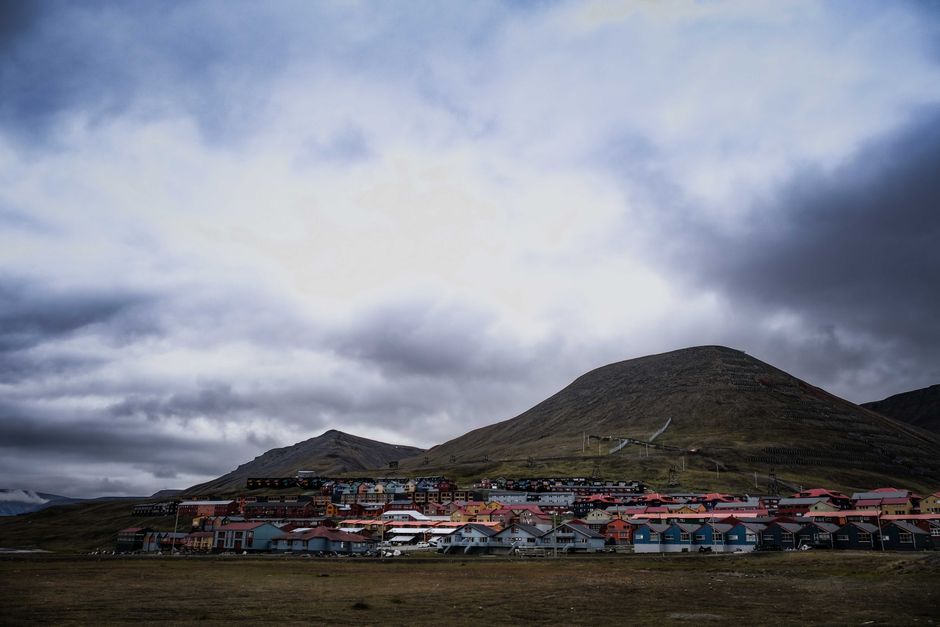
Table of Contents
- Key Takeaways
- Why This Town Banned Death: The Permafrost Problem
- How the Law Actually Works
- Life in the World’s Northernmost Town
- Other Unusual Restrictions in Longyearbyen
- The Science Behind Permafrost Preservation
- Frequently Asked Questions
- Sources
Imagine living in a place where dying is technically illegal. Sounds like science fiction, right? Yet in Longyearbyen, Norway—the world’s northernmost permanent settlement—this bizarre restriction is very real. This town banned death in a way that’s become one of the most surprising facts about Arctic life, though the truth behind the law is more nuanced than the myth suggests.
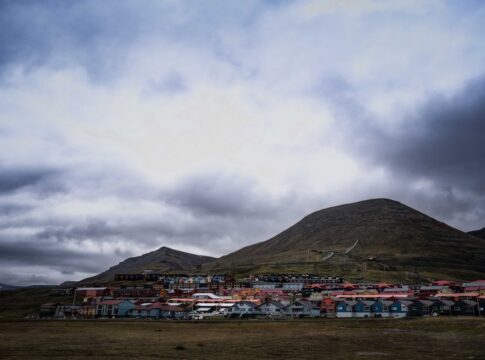
Located on the remote archipelago of Svalbard, roughly 800 miles from the North Pole, Longyearbyen has enforced this unusual policy for decades. Did you know that if you’re gravely ill here, you’ll likely be flown to mainland Norway? The reasoning isn’t supernatural or bureaucratic whimsy—it’s rooted in cold, hard permafrost.
Key Takeaways
- Longyearbyen hasn’t allowed burials in its cemetery since the 1950s due to permafrost preventing normal decomposition
- Bodies buried in the frozen ground remain preserved indefinitely, creating potential health hazards
- Terminally ill residents are transported to mainland Norway for end-of-life care
- The “ban on death” is more accurately a ban on dying in the town without prior arrangements
- Svalbard’s extreme Arctic environment creates unique challenges for standard practices taken for granted elsewhere
- The cemetery still exists but contains only graves from before the ban was implemented
Why This Town Banned Death: The Permafrost Problem
The interesting backstory begins with a discovery that changed everything. In the 1950s, scientists examining older graves in Longyearbyen’s cemetery made an unsettling find: bodies weren’t decomposing. The permafrost—ground that remains frozen year-round—acted like a natural deep freeze, preserving human remains almost perfectly.
This isn’t just creepy trivia. It’s a genuine public health concern. Preserved bodies can harbor pathogens, viruses, and bacteria that would normally break down during decomposition. In regular soil, microorganisms and natural processes reduce remains to bones within years. Not here. In Longyearbyen’s frozen earth, a body from 1950 looks remarkably similar to how it did upon burial.
The permafrost extends hundreds of feet deep in some areas. There’s no escaping it by digging deeper. Winter temperatures routinely plunge below minus 20 degrees Fahrenheit, and even summer barely nudges the surface layer above freezing. The ground is a permanent freezer.
Authorities realized they couldn’t keep adding preserved bodies indefinitely. So they stopped. The cemetery closed to new burials, and the unwritten rule became official policy: don’t die here.
How the Law Actually Works
Here’s where myths and truths diverge. Nobody’s getting arrested for having a heart attack in Longyearbyen. The law doesn’t literally make dying illegal—that would be absurd. What it does is create a practical framework that acknowledges reality.
If you become seriously ill or reach advanced age with terminal conditions, you’re expected to relocate to mainland Norway. The town’s small hospital can handle emergencies and routine medical care, but it’s not equipped for long-term palliative care or chronic terminal illness. This isn’t cruelty; it’s logistics.
Sudden deaths do occur. Accidents happen. When they do, bodies are transported to the mainland for burial or cremation. The ban specifically targets the act of being buried in Longyearbyen’s frozen ground, not the unfortunate reality of mortality itself.
Think of it as zoning law meets Arctic survival. Just as some cities restrict certain activities in certain areas, Longyearbyen restricts permanent interment. The unknown factor for many visitors is just how literally the environment shapes local regulations.
Life in the World’s Northernmost Town
Longyearbyen isn’t just famous for its death ban. This settlement of roughly 2,000 people exists in one of Earth’s most extreme environments. Polar bears outnumber humans on Svalbard. Residents are required to carry firearms when leaving town. The sun doesn’t rise for months during polar night, then doesn’t set for months during polar day.
Despite these challenges, it’s a functioning modern community. There are schools, restaurants, hotels, and even a university center. People aren’t just surviving—they’re building lives, raising families, and running businesses. The death ban is simply one more adaptation to an environment that demands creative solutions.
The town attracts scientists, adventurers, and workers in tourism and mining. Many residents are temporary, staying a few years before moving on. This transient population actually makes the death ban more practical. Most people don’t plan to spend their final years in the High Arctic anyway.
Other Unusual Restrictions in Longyearbyen
The death ban isn’t the only quirky rule. Cats are banned to protect Arctic bird populations. Removing shoes indoors is mandatory—not just polite—because coal dust and snow would make indoor spaces unlivable. And perhaps most surprisingly, you cannot give birth here either.
Pregnant women must fly to the mainland several weeks before their due date. The hospital lacks facilities for childbirth complications or neonatal intensive care. So while you can’t die in Longyearbyen, you can’t be born there either. You can live there, work there, even get married there—but the beginning and end of life happen elsewhere.
| Restriction | Reason | Exception |
|---|---|---|
| No burials | Permafrost preservation | None since 1950s |
| No births | Limited medical facilities | Emergency early labor only |
| No cats | Wildlife protection | None |
| Mandatory firearms training | Polar bear safety | Within town limits |
The Science Behind Permafrost Preservation
Why does frozen ground preserve bodies so effectively? Temperature is the obvious answer, but there’s more to it. Decomposition requires bacterial activity, insect access, and chemical processes that all depend on specific temperature ranges. Below freezing, these processes halt almost completely.
Scientists have studied this phenomenon extensively in Svalbard. The archipelago hosts the Global Seed Vault, which uses the same permafrost properties to preserve seeds from around the world. If permafrost can keep seeds viable for centuries, it can certainly preserve human tissue.
This preservation raises fascinating questions about disease. Could century-old pathogens remain viable? In theory, yes. Researchers have successfully revived ancient bacteria from permafrost samples. While the risk is probably small, why take chances with a growing cemetery of perfectly preserved bodies?
Frequently Asked Questions
Has anyone actually been buried in Longyearbyen since the ban?
No new burials have been permitted in the cemetery since the ban was implemented in the 1950s. All deaths since then have resulted in bodies being transported to mainland Norway for burial or cremation. The existing graves remain as historical markers, but the cemetery is effectively closed.
What happens if someone dies suddenly in Longyearbyen?
Emergency deaths do occur, from accidents or sudden medical events. In these cases, the body is kept temporarily in cold storage at the hospital, then flown to mainland Norway as soon as logistics allow. The law doesn’t punish unexpected death—it simply prohibits local burial in the permafrost.
Can elderly people live in Longyearbyen?
Yes, but practical considerations limit this. While there’s no age restriction, people with serious chronic illnesses or requiring extensive medical care typically relocate to mainland Norway where better facilities exist. Healthy retirees can and do live there, but most residents are working-age adults.
Are there other towns that have banned death?
A few other places have declared similar bans, though usually for different reasons. Some small communities in France and Brazil have symbolically “banned death” to protest lack of cemetery space or government neglect, but these are political statements rather than enforced policies. Longyearbyen’s ban is unique in being both serious and environmentally necessary.
Longyearbyen’s death ban reminds us that human settlements in extreme environments require extreme adaptations. What seems like a bizarre law is actually a practical response to geological reality. Next time you think your local regulations are strange, consider the town where even the ground refuses to let go of the past.