
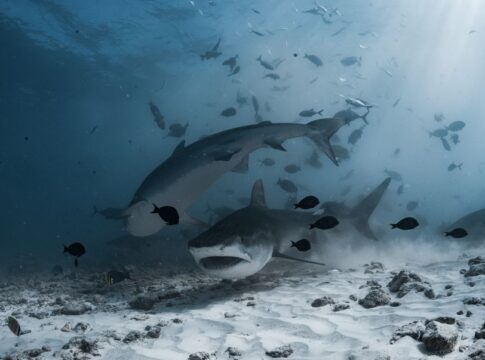
Why Sharks Must Keep Swimming or They Will Suffocate
By Trivia Daily, Staff Writer — Published August 18, 2026
Table of Contents
- Key Takeaways
- How Sharks Must Keep Swimming to Breathe
- The Evolutionary Split: Ram Ventilators vs. Buccal Pumpers
- Beyond Breathing: Why Swimming Prevents Sinking
- Comparing Shark Breathing Methods
- Do Sharks Ever Sleep?
- Frequently Asked Questions
The image of a shark gliding endlessly through the ocean is iconic, but there’s a surprising truth behind this constant motion: for many shark species, stopping means dying. While this sounds like an exaggeration, the reality is both fascinating and complex. Sharks must keep swimming to survive, but not all of them—and the reason reveals an amazing evolutionary split that has shaped ocean predators for millions of years. This curious fact about shark respiration has captivated scientists and trivia enthusiasts alike, offering a window into how different species have adapted to life in the sea.
The mechanics behind this phenomenon lie in how sharks breathe. Unlike humans who actively pull air into their lungs, many sharks rely on a process called “ram ventilation” to force oxygen-rich water over their gills. Without forward motion, these sharks cannot breathe, making perpetual swimming a matter of life and death.
Key Takeaways
- Many shark species must swim continuously to breathe through a process called ram ventilation, where forward motion forces water over their gills.
- Not all sharks need constant movement—species like nurse sharks and wobbegongs use buccal pumping to actively draw water over their gills while resting.
- Great white sharks, mako sharks, and whale sharks are among the species that cannot stop swimming without suffocating.
- Sharks lack swim bladders, so continuous swimming also helps them maintain buoyancy and avoid sinking.
- Some sharks enter a state of reduced activity while still moving, allowing them to rest without fully stopping.
- This evolutionary adaptation reflects different hunting strategies and habitat preferences across shark species.
How Sharks Must Keep Swimming to Breathe
The breathing mechanism that requires constant motion is surprisingly straightforward. Ram ventilation works like an underwater jet engine in reverse. As a shark swims forward with its mouth slightly open, water rushes in, flows over the gill filaments where oxygen extraction occurs, and exits through the gill slits on the sides of the head. The faster the shark swims, the more water passes through, and the more oxygen it can extract.
This system is remarkably efficient for active predators. Great white sharks, mako sharks, and whale sharks all depend on ram ventilation. These species are built for movement—streamlined bodies, powerful tails, and metabolisms that demand high oxygen levels. For them, swimming isn’t optional. Even during periods of rest, they must maintain forward motion, often moving in slow, energy-conserving patterns.
The alternative breathing method, called buccal pumping, allows other shark species to pump water over their gills using specialized muscles in their cheeks and pharynx. Nurse sharks, lemon sharks, and wobbegongs can lie motionless on the ocean floor, actively drawing water in through their mouths and pushing it out over their gills. This adaptation suits their more sedentary lifestyles and ambush-hunting strategies.
The Evolutionary Split: Ram Ventilators vs. Buccal Pumpers
The division between these two breathing strategies reflects millions of years of evolutionary adaptation. Fast-moving, open-ocean predators evolved to maximize efficiency during constant hunting. Ram ventilation eliminates the energy cost of pumping muscles, allowing these sharks to dedicate more resources to speed and endurance. It’s an interesting trade-off: perpetual motion in exchange for superior hunting capability.
Bottom-dwelling and coastal sharks, meanwhile, benefit from the ability to rest. Species that hunt by ambush or feed on slow-moving prey don’t need constant motion. For them, buccal pumping provides flexibility—they can wait motionless for prey, conserving energy while still breathing effectively.
Some sharks have evolved a hybrid approach. They can use both ram ventilation when swimming and switch to buccal pumping when moving slowly. This versatility offers the best of both worlds, though these species tend to prefer one method over the other based on their primary lifestyle.
Beyond Breathing: Why Swimming Prevents Sinking
Constant swimming solves another critical problem for sharks: buoyancy. Unlike most bony fish, sharks lack swim bladders—the gas-filled organs that allow fish to hover effortlessly at any depth. Instead, sharks rely on several adaptations to avoid sinking like stones.
Their large, oil-rich livers provide some buoyancy. Shark liver oil is less dense than water, creating lift. Great white sharks have livers that can account for up to 25 percent of their total body weight. But this isn’t enough on its own. Forward motion generates hydrodynamic lift, much like an airplane wing. The shape of a shark’s pectoral fins creates an upward force as water flows over them during swimming. Stop moving, and gravity wins.
This explains why obligate ram ventilators—sharks that must keep swimming to breathe—are also the species most dependent on motion for buoyancy. The two challenges have the same solution: keep moving forward.
Comparing Shark Breathing Methods
| Breathing Method | How It Works | Example Species | Lifestyle |
|---|---|---|---|
| Ram Ventilation | Forward motion forces water over gills | Great white, mako, whale shark | Active, open-ocean hunters |
| Buccal Pumping | Muscles actively pump water over gills | Nurse shark, wobbegong, lemon shark | Bottom-dwellers, ambush predators |
| Hybrid | Can use both methods as needed | Caribbean reef shark, blacktip shark | Adaptable, varied habitats |
Do Sharks Ever Sleep?
The requirement for constant motion raises an intriguing question: when do these sharks sleep? The answer is that sleep, as mammals experience it, may not exist for obligate ram ventilators. Instead, they appear to enter states of reduced brain activity while continuing to swim. Some species show patterns of slower swimming during certain times, suggesting rest periods even without complete stillness.
Sharks that can use buccal pumping have more flexibility. They’ve been observed resting in caves and on the sea floor, sometimes for hours. These rest periods may serve similar restorative functions as sleep in other animals, though the neurological details remain an active area of research.
One remarkable discovery involves great white sharks engaging in what scientists call “yo-yo diving”—repeatedly swimming up and down through the water column. This behavior may allow brief periods of reduced activity during the glide phases, offering rest without stopping entirely.
Frequently Asked Questions
Do all sharks die if they stop swimming?
No, only obligate ram ventilators like great white sharks, mako sharks, and whale sharks will suffocate if they stop swimming. Many other species, including nurse sharks and wobbegongs, can rest on the ocean floor and breathe using buccal pumping to actively move water over their gills.
How long can a shark survive without swimming?
For obligate ram ventilators, survival without forward motion is measured in minutes before oxygen deprivation becomes critical. Sharks that use buccal pumping can remain motionless indefinitely as long as they continue actively pumping water over their gills.
Can sharks swim backwards?
Sharks cannot swim backwards due to their body structure and fin design. Their pectoral fins are rigid and designed for forward motion and steering, not reverse propulsion. This limitation means they must turn their entire body to change direction or retreat.
Why don’t sharks have swim bladders like other fish?
Sharks are cartilaginous fish that evolved separately from bony fish, and they never developed swim bladders. Instead, they use oil-rich livers for buoyancy and rely on continuous swimming to generate hydrodynamic lift, which suits their predatory lifestyle.
The next time you watch a shark glide through aquarium waters or ocean footage, you’re witnessing not just a predator, but a creature locked in perpetual motion by the very design that makes it so successful. It’s a reminder that evolution’s solutions are rarely simple—and that staying alive sometimes means never standing still.