
By TrivBits, Staff Writer — Published November 11, 2026
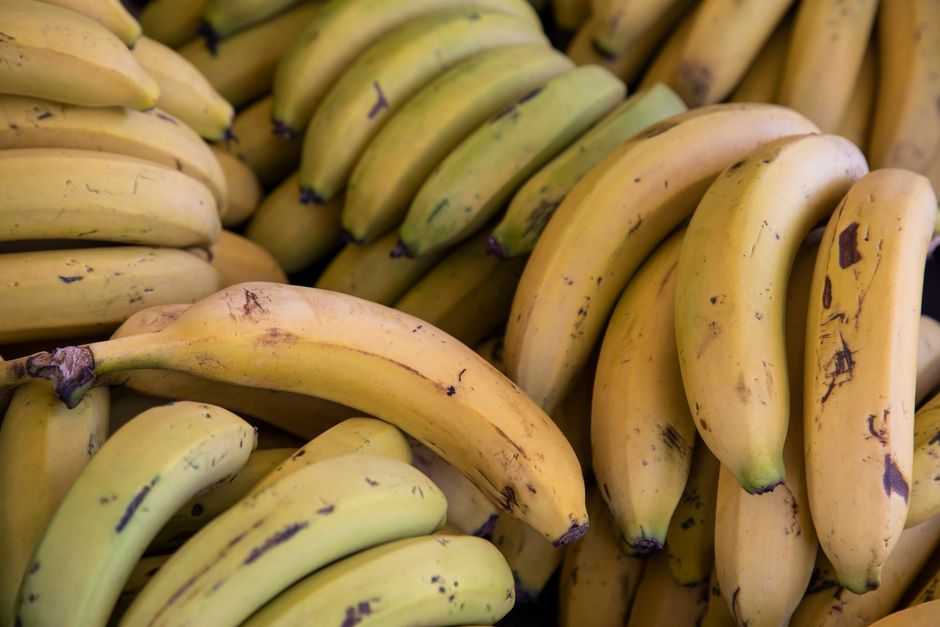
Table of Contents
- Key Takeaways
- Banana Clones Shocking Truth: They’re All Identical Twins
- The Seedless Paradox: Why Bananas Can’t Reproduce Naturally
- 7 Banana Clones Shocking Facts You Never Knew
- The Monoculture Problem: All Eggs in One Genetic Basket
- Why Don’t We Just Plant Different Bananas?
- Frequently Asked Questions
- The Clone Wars Continue
- Sources
Did you know that the banana you ate for breakfast is genetically identical to every other Cavendish banana on Earth? These banana clones shocking the scientific community aren’t the product of some futuristic lab experiment. They’re the result of a quirk in banana biology that’s been hiding in plain sight for over a century. The truth about how bananas reproduce might just change the way you look at the fruit bowl forever.
Most people assume bananas grow from seeds like apples or oranges. That assumption couldn’t be more wrong. The surprising reality involves plant cuttings, genetic uniformity, and a vulnerability that threatens the world’s banana supply.
Key Takeaways
- All Cavendish bananas are genetically identical clones propagated from cuttings, not seeds
- Commercial bananas are sterile and cannot reproduce sexually, making natural evolution impossible
- The lack of genetic diversity leaves the entire crop vulnerable to diseases like Panama Disease
- Wild bananas contain large, hard seeds that make them nearly inedible
- A previous banana variety, the Gros Michel, was wiped out by disease in the 1950s
- Scientists are racing to develop disease-resistant varieties before history repeats itself
Banana Clones Shocking Truth: They’re All Identical Twins
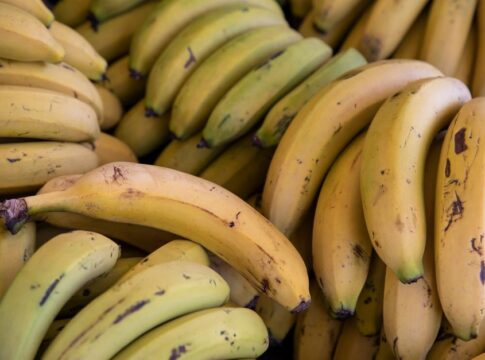
Every Cavendish banana shares 100% of its DNA with every other Cavendish. Think about that for a moment. Whether you buy bananas in Tokyo, Toronto, or Timbuktu, you’re getting the exact same genetic material. This isn’t an approximation or close similarity—it’s complete genetic uniformity.
Farmers don’t plant banana seeds. Instead, they cut pieces from existing banana plants, called “pups” or suckers, which grow from the parent plant’s root system. Each cutting develops into a full-sized banana plant that’s genetically identical to its parent. This process, repeated worldwide for decades, has created a global monoculture of clones.
The Seedless Paradox: Why Bananas Can’t Reproduce Naturally
Here’s where banana biology gets truly interesting. Wild bananas contain large, hard seeds that dominate the fruit’s interior. Our ancestors selectively cultivated mutant bananas with a genetic quirk: triploidy. Instead of the normal two sets of chromosomes (diploid), Cavendish bananas have three sets (triploid).
This chromosomal abnormality makes the plants sterile. They can’t produce viable seeds or reproduce sexually. The tiny black specks inside your banana? Those are the remnants of what would be seeds in a fertile plant. They’re completely non-functional. The banana’s sterility gave us convenient, seedless fruit but eliminated the plant’s ability to evolve and adapt naturally.
7 Banana Clones Shocking Facts You Never Knew
1. The Cavendish Wasn’t Always the World’s Banana
Before the 1950s, a different variety called the Gros Michel dominated global markets. By all accounts, it tasted better than today’s Cavendish—sweeter, creamier, and more aromatic. The artificial banana flavoring in candy supposedly mimics the Gros Michel, which explains why it tastes nothing like modern bananas. A fungal disease called Panama Disease (Tropical Race 1) devastated Gros Michel plantations worldwide, effectively wiping out commercial production. The banana industry switched to the Cavendish because it was resistant to that particular strain.
2. A New Fungus Is Threatening Total Banana Extinction
History is repeating itself with terrifying precision. A new strain of Panama Disease, called Tropical Race 4 (TR4), specifically targets Cavendish bananas. First detected in Asia in the 1990s, it has now spread to Latin America, the world’s largest banana-exporting region. Because every Cavendish plant is genetically identical, what kills one can kill them all. There’s no cure, and infected soil remains contaminated for decades.
3. Banana Plants Aren’t Actually Trees
Despite their tree-like appearance, banana plants are technically giant herbs. The “trunk” isn’t woody at all—it’s a pseudostem made of tightly packed leaf bases. After producing one bunch of bananas, the entire aerial part of the plant dies. New growth emerges from the underground rhizome, creating a perpetual cycle. This unusual growth pattern makes cloning through cuttings particularly efficient.
4. There Are Over 1,000 Banana Varieties Worldwide
The Cavendish represents just one variety among more than a thousand banana cultivars grown globally. Many regions cultivate cooking bananas called plantains, as well as red bananas, blue java bananas, and dozens of other varieties with distinct flavors and textures. However, the Cavendish accounts for roughly 47% of global banana production and dominates international export markets. Most of this incredible diversity never leaves its region of origin.
5. Scientists Are Creating GMO Bananas to Save the Species
Researchers in Australia, India, and elsewhere are developing genetically modified bananas with resistance to TR4. One approach inserts genes from wild banana species that show natural disease resistance. Another uses CRISPR gene-editing technology to modify the Cavendish’s own genes. These efforts face significant hurdles, including regulatory approval, public acceptance of GMO foods, and the challenge of maintaining the Cavendish’s familiar taste and texture.
6. Bananas Are Radioactive (But Harmless)
Bananas contain potassium-40, a naturally occurring radioactive isotope. This fact has led to the creation of the “banana equivalent dose,” an informal measurement of radiation exposure. One banana contains about 0.1 microsieverts of radiation. You’d need to eat roughly 10 million bananas in one sitting to receive a fatal radiation dose—long before radiation became a problem, you’d face far more immediate health concerns.
7. The Clone Army Grows From Underground Networks
A single banana plant’s root system can produce dozens of genetically identical offspring over its lifetime. Commercial growers harvest these pups when they reach appropriate size, transplant them to new locations, and repeat the process indefinitely. Some banana plantations have been propagating from the same genetic lineage for over fifty years. The original parent plant from which all modern Cavendish descend grew in the greenhouses of Chatsworth House in England during the 1800s.
The Monoculture Problem: All Eggs in One Genetic Basket
Genetic diversity serves as nature’s insurance policy. When a population contains varied genetics, some individuals survive diseases that kill others. Those survivors pass on resistance genes to future generations. Evolution happens.
Banana clones lack this protective mechanism entirely. Every plant has identical vulnerabilities. A pathogen that successfully attacks one Cavendish can theoretically attack them all. This isn’t speculation—we’ve already witnessed it happen to the Gros Michel. The banana industry’s reliance on a single cloned variety represents one of agriculture’s most precarious gambles.
| Banana Variety | Era of Dominance | Downfall |
|---|---|---|
| Gros Michel | 1900s–1950s | Panama Disease TR1 |
| Cavendish | 1960s–Present | Threatened by TR4 |
| Future Variety? | Unknown | To be determined |
Why Don’t We Just Plant Different Bananas?
The global food system doesn’t pivot easily. Banana plantations represent billions of dollars in infrastructure optimized for Cavendish cultivation. The variety ships well, ripens predictably, and meets consumer expectations developed over decades. Switching to a new variety requires massive investment, consumer education, and time.
More fundamentally, we lack an obvious replacement. Other banana varieties have drawbacks: shorter shelf life, different textures, unfamiliar flavors, or their own disease vulnerabilities. The search for “Cavendish 2.0” continues, but finding a variety that matches all the Cavendish’s commercial advantages while adding disease resistance remains challenging.
Frequently Asked Questions
Are all bananas genetically identical?
All Cavendish bananas are genetically identical clones, but other banana varieties exist with different genetics. However, the Cavendish dominates global markets, so the bananas you typically find in supermarkets are indeed genetic duplicates of each other.
Can you grow a banana tree from a banana?
No, you cannot grow a commercial banana plant from the fruit itself because Cavendish bananas don’t produce viable seeds. To propagate bananas, you need a cutting or pup from an existing plant’s root system.
What will happen if the Cavendish banana goes extinct?
If Panama Disease TR4 destroys Cavendish production, the banana industry would need to transition to a different variety, as it did when the Gros Michel disappeared. This would likely cause temporary shortages, price increases, and a period of adjustment as consumers adapt to a new banana variety with different characteristics.
Do wild bananas still exist?
Yes, wild bananas still grow in Southeast Asia and other tropical regions. These contain large, hard seeds and relatively little edible flesh, making them very different from the seedless varieties we cultivate. Wild species serve as valuable genetic resources for breeding programs.
The Clone Wars Continue
The story of banana clones reveals both human ingenuity and its limitations. We engineered the perfect fruit—seedless, sweet, convenient—but in doing so, created a genetic monoculture vulnerable to catastrophic collapse. The race to save bananas isn’t just about preserving a popular snack. It’s about learning to balance agricultural efficiency with the resilience that only genetic diversity can provide.
Next time you peel a banana, consider the invisible DNA shared by billions of identical siblings across the planet. That yellow fruit represents a fascinating experiment in global-scale cloning—and a ticking biological clock.