
By TrivBits, Staff Writer — Published October 3, 2026
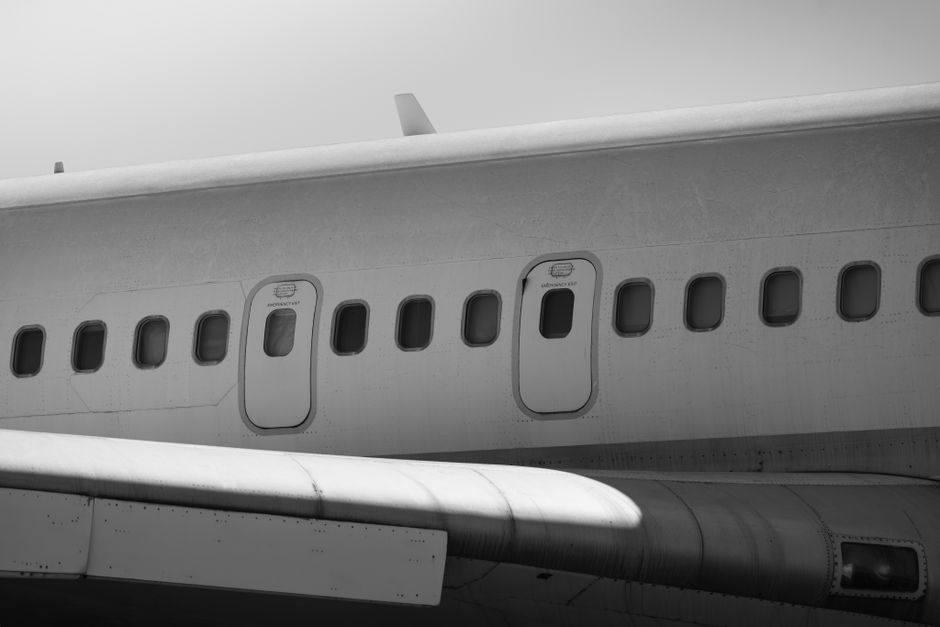
Table of Contents
- Key Takeaways
- The De Havilland Comet Disasters
- The Science of Stress Concentration
- How Round Windows Save Lives
- Aviation’s Expensive Lesson
- Myths and Truths About Aircraft Windows
- Frequently Asked Questions
- Sources
Did you know that airplane windows round shapes aren’t just an aesthetic choice? They’re a life-saving design feature born from tragedy. In the early 1950s, the world’s first commercial jet airliner introduced a new era of luxurious, high-altitude travel. But within months, two catastrophic mid-air disasters revealed a fatal flaw hidden in the aircraft’s square windows—a mistake that would forever change how engineers design pressurized aircraft.
The surprising truth is that corners can kill. This fascinating piece of aviation trivia involves metal fatigue, stress concentration, and a revolutionary shift in aircraft safety that still protects millions of passengers today.
Key Takeaways
- Airplane windows are round to prevent dangerous stress concentration at corners that can lead to catastrophic structural failure.
- The de Havilland Comet, the world’s first commercial jet airliner, suffered fatal crashes in 1954 due to square window designs.
- Sharp corners in pressurized aircraft create stress points up to three times higher than the surrounding structure.
- Rounded windows distribute pressure evenly across the fuselage, preventing crack formation and propagation.
- Modern aircraft windows are actually rounded rectangles, carefully engineered to balance passenger views with structural integrity.
- This design change represents one of aviation’s most important safety lessons, fundamentally altering aircraft engineering worldwide.
The De Havilland Comet Disasters
The de Havilland Comet entered service in 1952, dazzling passengers with unprecedented speed and comfort. Flying at 40,000 feet, well above turbulent weather, this sleek British jetliner promised a glamorous future for air travel. Engineers equipped it with large, square windows that offered panoramic views of the sky.
Then disaster struck. In January 1954, a Comet broke apart near the Italian island of Elba, killing everyone aboard. Investigators recovered wreckage from the Mediterranean seafloor but found no definitive cause. The fleet resumed flying after modifications. Just months later, another Comet disintegrated mid-flight under eerily similar circumstances.
Britain grounded the entire Comet fleet. The Royal Aircraft Establishment launched one of the most intensive aviation investigations in history. What they discovered would rewrite the rules of aircraft design forever.
The Science of Stress Concentration
Pressurized aircraft face enormous physical stresses. At cruising altitude, cabin pressure remains comfortable for passengers while outside pressure drops dramatically. This pressure differential pushes outward on every square inch of the fuselage, like an inflating balloon.
Here’s where geometry becomes critical. When engineers cut a square or rectangular opening in a pressurized cylinder, stress doesn’t distribute evenly. Instead, it concentrates intensely at the corners—particularly the sharp 90-degree angles. Think of trying to tear a piece of paper: it’s much easier to continue a tear from a small notch than to start one on a smooth edge.
Investigators placed a complete Comet fuselage in a massive water tank and subjected it to repeated pressurization cycles, simulating thousands of flights. The metal eventually fractured—starting precisely at the corners of the square windows. Microscopic cracks had formed at these stress points, growing imperceptibly with each flight until catastrophic failure occurred.
The physics is unforgiving. Sharp corners can experience stress levels approximately three times higher than surrounding areas. Round or oval shapes, by contrast, distribute stress smoothly and evenly around their entire perimeter, preventing dangerous concentration points.
How Round Windows Save Lives
Circular and oval windows eliminate the corner problem entirely. Without sharp angles, stress flows smoothly around the opening, much like water flowing around a smooth stone in a stream rather than hitting a sharp obstacle.
Modern aircraft windows typically feature rounded rectangles—a compromise between the structural perfection of circles and passengers’ desire for good viewing angles. Every corner is carefully radiused, with generous curves that prevent stress concentration. Engineers calculate these curves precisely, using advanced computer modeling to ensure no weak points exist.
The difference is dramatic. A properly designed rounded window can withstand tens of thousands of pressurization cycles without developing dangerous fatigue cracks. The fuselage maintains its structural integrity flight after flight, year after year.
Interestingly, what looks like a single window from inside the cabin is actually a sophisticated multi-layer system. The outer pane bears the pressure load, while inner panes protect passengers and provide insulation. That tiny hole you might notice in the inner pane? It allows pressure equalization between layers, preventing moisture buildup and ensuring the outer pane handles the structural stress.
Aviation’s Expensive Lesson
The Comet disasters claimed dozens of lives but taught the aviation industry invaluable lessons about metal fatigue, pressurization stress, and structural design. De Havilland redesigned the aircraft with oval windows and reinforced structure, but the program never recovered commercially. Competitors, particularly Boeing and Douglas, incorporated these hard-won lessons into their designs from the beginning.
The Boeing 707 and Douglas DC-8, which dominated commercial aviation for decades, featured rounded windows from their first flights. Every commercial aircraft since has followed this principle. The regulation became so fundamental that round windows are now simply understood as essential to pressurized aircraft design.
Engineers also learned to inspect aircraft for microscopic cracks using sophisticated techniques, to limit the number of pressurization cycles an airframe can safely endure, and to understand how materials behave under repeated stress. These advances, born from tragedy, have made modern air travel extraordinarily safe.
Myths and Truths About Aircraft Windows
Some interesting facts and common misconceptions surround airplane windows. Many passengers believe windows are round purely for aerodynamics, but external shape contributes minimally to drag—it’s the internal pressure stress that matters most.
Another myth suggests windows could be eliminated entirely for stronger aircraft. While technically possible, windows serve important psychological and practical functions. Passengers generally prefer natural light and outside views, and windows provide emergency exit options and visual references for crew.
The truth is that modern aviation represents countless small refinements, each addressing specific engineering challenges. Window shape is just one example of how tragedy, investigation, and innovation combine to create safer technology.
Frequently Asked Questions
Why don’t airplane windows crack from pressure?
Aircraft windows are engineered from multiple layers of acrylic or composite materials designed to withstand enormous pressure differentials. The outer pane, typically about half an inch thick, bears the primary structural load. Windows undergo rigorous testing and are designed with safety factors far exceeding normal flight conditions. The rounded shape also prevents stress concentration that could initiate cracks.
Could aircraft ever return to square windows with modern materials?
While advanced materials are stronger than those used in the 1950s, the fundamental physics of stress concentration hasn’t changed. Sharp corners still create dangerous stress points regardless of material strength. Modern composite materials and advanced alloys allow for larger windows with gentler curves, but eliminating rounded corners entirely would compromise structural integrity and safety.
Are all airplane windows the same shape?
Window shapes vary slightly between aircraft models, but all pressurized aircraft use rounded or oval designs. Some feature more circular windows, while others use rounded rectangles that are taller or wider depending on fuselage design and manufacturer preferences. Military aircraft and unpressurized planes sometimes use different shapes since they don’t face the same internal pressure stresses.
What other aircraft features changed because of the Comet crashes?
The Comet disasters revolutionized aircraft testing and certification. Engineers developed better understanding of metal fatigue, implemented rigorous full-scale fatigue testing, improved inspection techniques for detecting microscopic cracks, and established service life limits for aircraft structures. These investigations also led to better fastener designs and reinforced areas around any fuselage openings, not just windows.
Next time you gaze out an airplane window at 35,000 feet, take a moment to appreciate those gentle curves. They represent decades of engineering knowledge, purchased at terrible cost but saving countless lives ever since. The simple elegance of a rounded window contains layers of physics, tragedy, investigation, and innovation—a perfect example of how even the smallest design details can mean the difference between disaster and safety.