











1 / 10 Questions
0 Points

Which Detective's London Address Gets The Most Fan Mail?

Philip Marlowe

Miss Marple

Sherlock Holmes

Hercule Poirot

Points won
0
Correct score
0%

More Questions

More Articles

Top 10 Most Impressive Stats in Sports History

Top 10 Most Impressive Stats in Sports History

⏱️ 6 min read

Throughout the history of competitive athletics, certain achievements stand so far above the rest that they seem almost superhuman. These statistical milestones represent the pinnacle of human performance, combining natural talent, relentless dedication, and often a touch of the extraordinary. From the baseball diamond to the basketball court, from the gridiron to the hockey rink, these records have become the benchmarks against which all other athletic accomplishments are measured.

The Most Remarkable Athletic Achievements Ever Recorded

1. Wilt Chamberlain's 100-Point Game

On March 2, 1962, Wilt Chamberlain accomplished what many consider the most unbreakable record in basketball history by scoring 100 points in a single NBA game. Playing for the Philadelphia Warriors against the New York Knicks, Chamberlain shot 36-for-63 from the field and 28-for-32 from the free-throw line. No player has come within 19 points of this record since, with Kobe Bryant's 81-point performance in 2006 being the closest anyone has come in over six decades. The feat is even more impressive considering the pace of modern basketball and defensive strategies that make such individual dominance nearly impossible today.

2. Joe DiMaggio's 56-Game Hitting Streak

During the summer of 1941, New York Yankees center fielder Joe DiMaggio captivated America by recording at least one hit in 56 consecutive games. This streak remains one of baseball's most sacred records, with no player coming within 12 games of matching it since. Statistical analyses have shown that given the probability factors involved, this achievement is extraordinarily unlikely to ever be replicated. DiMaggio batted .408 during the streak with 15 home runs and 55 RBIs, demonstrating remarkable consistency under immense pressure as the entire nation watched his pursuit of history.

3. Wayne Gretzky's 2,857 Career Points

Wayne Gretzky's NHL career point total of 2,857 represents perhaps the most dominant statistical achievement in any major sport. "The Great One" accumulated 894 goals and 1,963 assists over his 20-year career, finishing 936 points ahead of the second-place Jaromir Jagr. What makes this record even more remarkable is that if you removed all of Gretzky's goals, his assists alone would still make him the NHL's all-time leading scorer. He holds or shares 61 NHL records, and many hockey experts consider his point total to be the most unbreakable record in professional sports.

4. Byron Nelson's 11 Consecutive Tournament Victories

In 1945, professional golfer Byron Nelson achieved an incomprehensible feat by winning 11 consecutive PGA Tour events. During this stretch, Nelson won 18 tournaments overall that year, another record that still stands. His scoring average of 68.33 strokes per round that season remained unmatched for decades. The modern PGA Tour's competitive depth, with players from around the globe competing at the highest level, makes it virtually impossible to imagine anyone winning even half as many consecutive tournaments today.

5. Cal Ripken Jr.'s 2,632 Consecutive Games Played

Baltimore Orioles shortstop Cal Ripken Jr. redefined the meaning of durability and reliability by playing in 2,632 consecutive games between 1982 and 1998. This streak, which surpassed Lou Gehrig's previously "unbreakable" record of 2,130 games, spanned over 16 years without missing a single contest. Ripken's achievement is particularly impressive given the physical demands of playing shortstop, one of baseball's most demanding defensive positions. In an era of load management and injury precautions, this record represents a bygone era of athletic endurance.

6. Michael Phelps's 23 Olympic Gold Medals

American swimmer Michael Phelps transformed Olympic competition by winning 23 gold medals across four Olympic Games from 2004 to 2016. His total of 28 Olympic medals overall is 10 more than the second-place athlete in history. At the 2008 Beijing Olympics alone, Phelps won eight gold medals in a single Games, breaking Mark Spitz's record of seven. The dominance Phelps displayed across multiple swimming disciplines and over such an extended period establishes him as arguably the greatest Olympian of all time.

7. Julio Urias's Perfect Game Alongside 27 Strikeouts

While several pitchers have thrown perfect games in Major League Baseball history, the theoretical maximum of 27 strikeouts in such a game remains one of baseball's ultimate achievements. Though no pitcher has accomplished this exact feat in MLB, the combination represents the absolute pinnacle of pitching dominance. The closest approximation came when pitchers like Kerry Wood struck out 20 batters in a nine-inning game, demonstrating the near-impossibility of achieving perfection in this manner against professional hitters.

8. Usain Bolt's 100-Meter World Record

Jamaican sprinter Usain Bolt's 100-meter dash time of 9.58 seconds, set at the 2009 World Championships in Berlin, represents the fastest any human being has ever been recorded running. Bolt broke his own previous world record by 0.11 seconds, an enormous margin in a sport where improvements are typically measured in hundredths of a second. Biomechanical experts have analyzed this performance extensively, and many believe Bolt was operating at the near-theoretical limit of human speed, making this record potentially unbreakable for generations.

9. Cy Young's 511 Career Victories

Pitcher Cy Young won 511 games during his Major League Baseball career from 1890 to 1911, a total that stands nearly 100 wins ahead of the second-place Walter Johnson. In modern baseball, where starting pitchers rarely throw more than 200 innings per season and winning 20 games is considered exceptional, Young's record appears completely untouchable. The league's highest honor for pitchers is named after him, cementing his legacy as the standard bearer for pitching excellence. To put this in perspective, a modern pitcher would need to average 25 wins per season for over 20 years to approach this record.

10. Jerry Rice's 22,895 Receiving Yards

San Francisco 49ers and Oakland Raiders wide receiver Jerry Rice accumulated 22,895 receiving yards over his 20-season NFL career, establishing a record that towers over all others in professional football. Rice finished his career with 5,403 more receiving yards than the second-place Larry Fitzgerald, a gap larger than most receivers accumulate in entire Hall of Fame careers. His 197 receiving touchdowns and 208 total touchdowns are similarly untouchable records. Rice's combination of longevity, consistency, and peak performance has established statistical benchmarks that may never be seriously challenged.

The Lasting Impact of Statistical Excellence

These ten statistical achievements represent more than just numbers in a record book; they embody the absolute peak of human athletic potential combined with unwavering determination and favorable circumstances. What makes these records particularly special is that many of them have stood for decades and show no signs of being seriously threatened. They serve as inspiration for future generations of athletes while simultaneously reminding us of the extraordinary heights that can be reached when talent, opportunity, and relentless effort converge. As sports continue to evolve with better training methods, nutrition, and technology, these records stand as monuments to athletes who achieved the seemingly impossible and defined greatness for their respective sports.
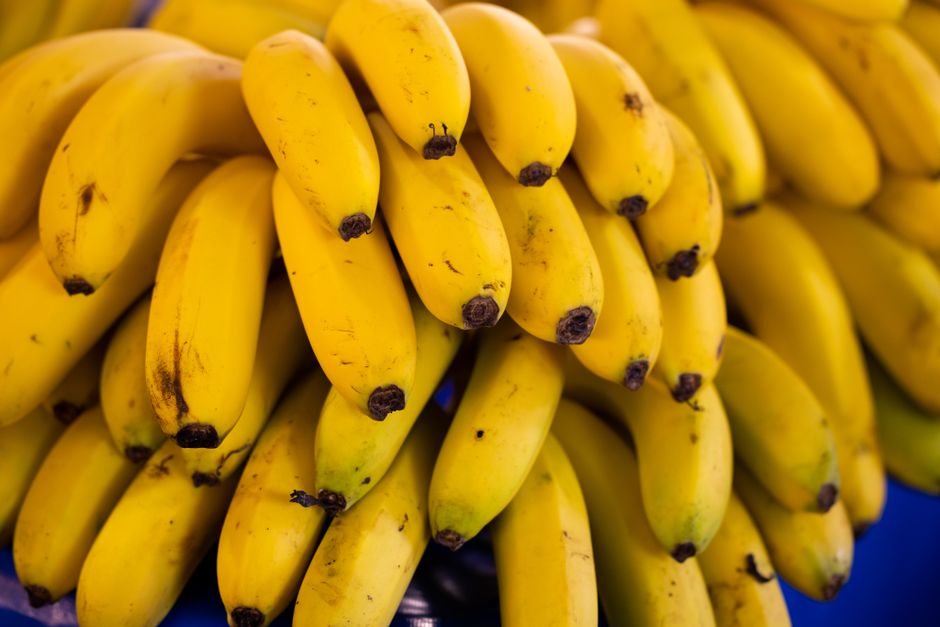
7 Facts About Bananas Being Radioactive: Potassium Truth

7 Facts About Bananas Being Radioactive: Potassium Truth

By TrivBits, Staff Writer — Published September 2, 2026

7 Facts About Bananas Being Radioactive: Potassium Truth — Quick Facts trivia by TrivBits

Table of Contents

Did you know that your breakfast banana is actually radioactive? Before you panic and swear off fruit forever, here's the surprising truth: bananas radioactive potassium content is completely natural and harmless. This interesting bit of trivia has sparked countless myths and misconceptions about radiation in everyday foods. The reality is far more fascinating than frightening.

Every banana contains a small amount of radioactive isotopes, making them one of the most well-known naturally radioactive foods we consume regularly. But what does this really mean for your health, and why do scientists actually use bananas as a unit of radiation measurement?

Key Takeaways

  • Bananas contain potassium-40, a naturally occurring radioactive isotope that makes them measurably radioactive
  • The radiation from bananas is so minimal that you would need to eat millions in one sitting to experience any harmful effects
  • Scientists use the "Banana Equivalent Dose" as an informal way to explain radiation exposure to the public
  • Your body naturally regulates potassium levels, preventing radioactive accumulation from bananas
  • Many common foods contain similar or higher levels of natural radioactivity than bananas
  • The radioactive potassium in bananas is actually essential for human life and normal body functions

Understanding Natural Radioactivity in Bananas Radioactive Potassium

Radiation isn't always a man-made phenomenon. Natural radioactivity surrounds us constantly, from cosmic rays bombarding Earth to radioactive elements in soil and rocks. Bananas happen to be particularly rich in potassium, and about 0.01% of all naturally occurring potassium is the radioactive isotope potassium-40.

This isotope has a half-life of roughly 1.25 billion years. When it decays, it releases a tiny amount of radiation in the form of beta particles and gamma rays. A typical banana contains about 450 milligrams of potassium, which means approximately 15 becquerels of radioactivity—a becquerel being one radioactive decay per second. That's an incredibly small amount.

Your body needs potassium to function. Hearts beat, muscles contract, and nerves fire electrical signals all thanks to potassium. The fact that a tiny fraction of this essential element is radioactive is simply a quirk of nature, not a health hazard.

1. The Banana Equivalent Dose Is a Real Scientific Concept

Scientists Created a Banana-Based Radiation Scale

Nuclear physicists and radiation safety experts face a constant challenge: explaining radiation exposure to people who lack technical backgrounds. Enter the Banana Equivalent Dose, or BED. This informal measurement unit compares radiation exposure to eating one banana, which delivers about 0.1 microsieverts of radiation dose.

The concept helps put scary-sounding radiation numbers into perspective. A chest X-ray? That's about 100 bananas. A cross-country flight exposes you to roughly 400 banana equivalents. While not used in formal scientific papers, the BED has become a popular educational tool for science communicators.

2. You'd Need to Eat 10 Million Bananas at Once for Radiation Poisoning

The Deadly Dose Is Impossibly High

Here's where the trivia gets truly mind-boggling. To receive a fatal radiation dose from bananas alone, you would need to eat approximately 10 million bananas in one sitting. That's roughly 2,000 tons of fruit.

Long before radiation became a problem, you'd face far more immediate dangers. The potassium from that many bananas would cause fatal hyperkalemia, stopping your heart. The sheer volume would cause your stomach to rupture. You'd probably slip on all those peels and suffer a fatal injury first. The radiation is literally the least of your worries in this absurd scenario.

3. Your Body Maintains Constant Potassium Levels

Homeostasis Prevents Radioactive Buildup

One crucial fact often missing from banana radiation discussions: your body tightly regulates potassium concentration through homeostasis. When you eat a banana, you don't simply add more potassium to your system indefinitely.

Your kidneys work constantly to maintain equilibrium. Extra potassium gets excreted in urine. This means eating more bananas doesn't increase your body's total radioactivity—it just replaces existing potassium. The radioactive potassium-40 in your body remains relatively constant at about 4,000 becquerels, regardless of your banana consumption habits.

4. Many Foods Are More Radioactive Than Bananas

Bananas Aren't Special in the Radioactive Food World

Bananas get all the attention, but they're far from the most radioactive food. Brazil nuts contain radium and can be up to 1,000 times more radioactive than bananas. Lima beans, potatoes, carrots, and red meat all contain measurable radioactivity.

Food Item Approximate Radioactivity (Becquerels per kg) Primary Isotope
Brazil Nuts 4,000-7,000 Radium-226
Bananas 130 Potassium-40
Potatoes 125 Potassium-40
Carrots 80 Potassium-40
Red Meat 50 Potassium-40

Even drinking water contains traces of radioactive elements. Coffee, tea, and beer all register measurable radioactivity. We live in a naturally radioactive world, and our bodies evolved to handle these background levels without issue.

5. Potassium-40 Has Been Radioactive for Billions of Years

This Isotope Is Older Than Earth Itself

The potassium-40 in your banana formed in the heart of dying stars billions of years ago. When massive stars exploded as supernovae, they scattered heavy elements across space, including radioactive isotopes. These elements eventually coalesced into our solar system.

Because potassium-40 has such a long half-life, a significant amount remains today. Scientists actually use this isotope for potassium-argon dating, a method to determine the age of rocks and fossils. The same radioactive element that makes your banana measurably radioactive also helps us understand Earth's ancient history.

6. Banana Shipments Can Trigger Radiation Detectors

Ports and Borders Monitor for Radioactive Materials

Here's an unknown fact that surprises most people: large shipments of bananas occasionally trigger radiation alarms at ports and border crossings. Security systems designed to detect smuggled radioactive materials are sensitive enough to pick up the collective radiation from thousands of bananas in a shipping container.

Customs officials and security personnel are trained to recognize these false alarms. Bananas, along with other naturally radioactive cargo like cat litter (which often contains clay with radioactive elements) and granite countertops, appear on lists of innocent items that might set off detectors. It's a reminder of just how sensitive modern radiation detection equipment has become.

7. Human Bodies Are Also Naturally Radioactive

You're More Radioactive Than a Single Banana

Perhaps the most mind-blowing truth: you are radioactive. The average human body contains about 140 grams of potassium at any given time, which means roughly 4,000 becquerels of radioactivity from potassium-40 alone. That's equivalent to about 30 bananas worth of radiation.

You also contain radioactive carbon-14, which forms in the atmosphere and enters your body through the food chain. Add in traces of other radioactive isotopes, and each human body serves as a low-level radiation source. Sleeping next to another person exposes you to slightly more radiation than sleeping alone. This natural radioactivity is completely normal and has been part of human existence since our species evolved.

Frequently Asked Questions

Can eating too many bananas actually harm you through radiation?

No, radiation from bananas cannot harm you in any realistic eating scenario. Your body regulates potassium levels, preventing accumulation. You'd face fatal potassium poisoning or physical impossibility long before radiation became dangerous. The radiation dose from even dozens of bananas daily remains negligible.

Why are bananas more famous for being radioactive than other foods?

Bananas became the poster child for food radioactivity largely due to the Banana Equivalent Dose concept, which science educators popularized. They're widely consumed, easily recognized, and have just enough radioactivity to be measurable but obviously harmless. This combination makes them perfect for teaching about radiation without causing alarm.

Does cooking or freezing bananas reduce their radioactivity?

No, cooking or freezing has no effect on radioactivity. Radioactive decay is a nuclear process, not a chemical one. Temperature, pressure, and chemical reactions don't change how quickly potassium-40 decays. The only thing that reduces radioactivity is time—and with a half-life of 1.25 billion years, you'll be waiting a while.

Are organic bananas less radioactive than conventional ones?

Organic and conventional bananas contain essentially identical amounts of radioactive potassium. Radioactivity in bananas comes from naturally occurring potassium-40 in the soil, which all banana plants absorb regardless of farming method. Growing practices don't affect the natural isotope ratio of potassium.

Sources