
By TrivBits, Staff Writer — Published September 23, 2026
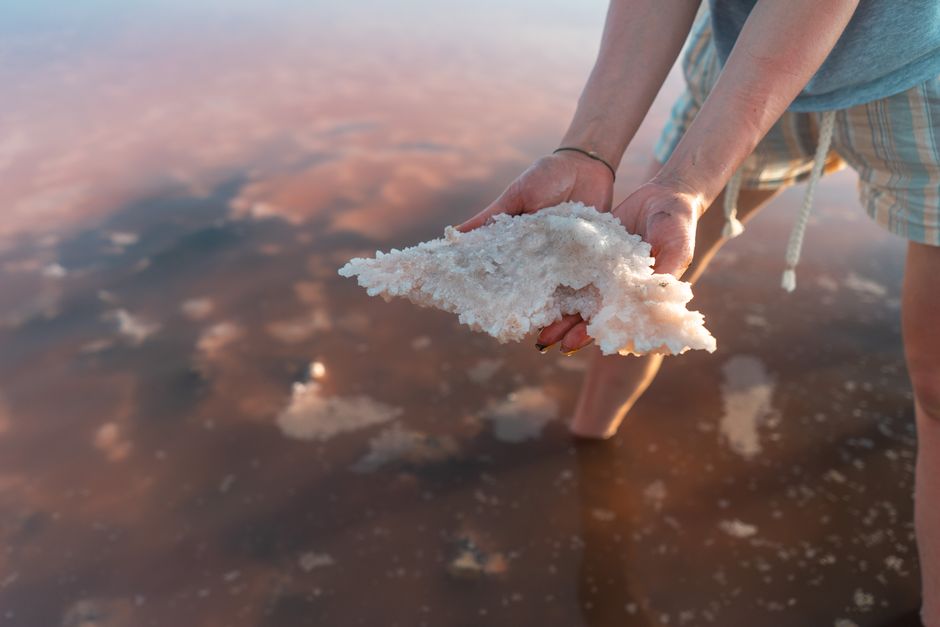
Table of Contents
- Key Takeaways
- Understanding Dead Salt Density and Its Remarkable Properties
- The Science Behind Maximum Salt Saturation
- 11 Fascinating Trivia Facts About Dead Sea Salt Density
- Frequently Asked Questions
- The Unique Legacy of Extreme Salinity
- Sources
Did you know that the Dead Sea is so dense with salt that swimmers float effortlessly on its surface like human corks? This natural wonder, nestled between Jordan and Israel, holds some of the most interesting secrets about dead salt density and what happens when water becomes saturated beyond belief. The Dead Sea isn’t just salty—it’s one of the saltiest bodies of water on Earth, with density limits that create bizarre and fascinating phenomena.
From ancient myths to modern scientific discoveries, the surprising truths about this hyper-saline lake challenge what we think we know about water. Let’s explore the unknown facts that make the Dead Sea’s salt concentration so remarkable.
Key Takeaways
- The Dead Sea contains roughly 34% salt concentration, nearly ten times saltier than ocean water
- Dead salt density creates buoyancy so strong that sinking is nearly impossible for swimmers
- The lake is shrinking rapidly, causing salt density to increase even further over time
- Crystallized salt formations grow naturally along the shoreline as water evaporates
- No fish or aquatic plants can survive in these extreme salinity conditions
- The density of Dead Sea water exceeds 1.24 kg/L, compared to 1.03 kg/L for regular seawater
Understanding Dead Salt Density and Its Remarkable Properties
The Dead Sea earns its title through extreme chemistry. While typical ocean water contains about 3.5% dissolved salts, the Dead Sea packs in approximately 34% salinity—a staggering difference that fundamentally changes how water behaves. This concentration approaches the theoretical limit of how much salt water can hold before crystals begin forming spontaneously.
What makes this density so special? Salt molecules increase water’s mass without significantly increasing its volume. Each liter of Dead Sea water weighs about 1.24 kilograms, creating a liquid denser than the human body. That’s why floating happens automatically. Your body, with an average density around 1.01 kg/L, simply cannot sink through the heavier brine below.
The minerals dissolved in the Dead Sea aren’t just sodium chloride (table salt) either. Magnesium chloride, calcium chloride, and potassium chloride make up significant portions of the dissolved solids, each contributing to the water’s unusual properties and therapeutic reputation.
The Science Behind Maximum Salt Saturation
Every liquid has a saturation point—a limit to how much solid it can dissolve. Temperature plays a huge role. Warmer water holds more dissolved salt than cold water, which is why the Dead Sea’s hot climate helps maintain such extreme concentrations without constant crystallization.
When water reaches supersaturation, salt crystals precipitate out naturally. Walk along the Dead Sea shore and you’ll see this process in action. White crusty formations coat rocks, driftwood, and anything that stays submerged long enough. These aren’t just deposits—they’re active demonstrations of chemistry at work, showing what happens when dead salt density exceeds physical limits.
| Body of Water | Salinity (%) | Density (kg/L) | Can Humans Sink? |
|---|---|---|---|
| Fresh Water Lake | 0.05 | 1.00 | Yes |
| Ocean Water | 3.5 | 1.03 | Yes |
| Great Salt Lake | 5-27 | 1.15 | Difficult |
| Dead Sea | 34 | 1.24 | Nearly Impossible |
11 Fascinating Trivia Facts About Dead Sea Salt Density
1. The Dead Sea Is Actually a Lake, Not a Sea
Despite its name, the Dead Sea is technically a hypersaline lake with no outlet to the ocean. It sits at the lowest elevation on Earth’s land surface—roughly 430 meters below sea level—making it a terminal lake where water flows in but can only escape through evaporation. This geographical trap is precisely why salt accumulates to such extreme levels over millennia.
2. You Can Read a Newspaper While Floating Upright
The buoyancy created by dead salt density is so powerful that swimmers naturally float with their torso and head above water. People famously photograph themselves reading newspapers while bobbing in the Dead Sea, a feat impossible in regular ocean water. The dense brine supports your weight so effectively that maintaining this position requires no effort whatsoever.
3. The Lake Is Shrinking at an Alarming Rate
The Dead Sea loses approximately one meter of depth each year due to water diversion from the Jordan River and mineral extraction operations. As the water level drops, the remaining water becomes even saltier, pushing dead salt density toward absolute saturation limits. Sinkholes now dot the shoreline where underground salt layers dissolve and collapse.
4. Ancient Salt Crystals Form Natural Sculptures
Objects left in the Dead Sea become encrusted with thick layers of crystallized salt within weeks. Artists have intentionally submerged sculptures and everyday items, transforming them into ghostly white mineral formations. These natural “artworks” demonstrate how quickly supersaturated water deposits its dissolved cargo onto any available surface.
5. Swimming Technique Must Be Completely Different
Traditional swimming strokes don’t work in the Dead Sea. The extreme buoyancy makes it nearly impossible to push yourself underwater or maintain a horizontal swimming position. Most visitors adopt a sitting or reclining posture, using gentle hand movements to navigate. Diving is not just difficult—it’s essentially impossible without weights.
6. The Water Burns Open Cuts and Eyes
The high mineral concentration makes Dead Sea water incredibly irritating to mucous membranes and broken skin. Even tiny scratches sting intensely upon contact. Getting the brine in your eyes causes severe burning that requires immediate freshwater rinsing. This isn’t a myth—the chemical composition is genuinely harsh on sensitive tissues.
7. Density Varies Between Surface and Depths
Dead salt density isn’t uniform throughout the water column. Historically, the lake had distinct layers: less salty water near the surface and denser brine below. Temperature differences and evaporation rates created this stratification. However, as water levels drop, these layers have begun mixing, changing the lake’s fundamental structure.
8. No Life Except Specialized Microbes Survives
The “Dead” Sea lives up to its name. Fish, aquatic plants, and most organisms cannot survive such extreme salinity. Only specially adapted bacteria and microbial fungi tolerate these conditions. These extremophiles provide clues about how life might exist in harsh environments elsewhere in the solar system, making the Dead Sea a laboratory for astrobiology research.
9. The Salt Contains Valuable Industrial Minerals
Companies extract potash, bromine, and magnesium from Dead Sea water for industrial use. These minerals have commercial value in fertilizers, flame retardants, and manufacturing. The extraction process accelerates water depletion, creating tension between economic interests and environmental preservation. The lake’s chemical richness makes it a natural mineral mine.
10. Ancient Scrolls Were Preserved in Nearby Caves
The Dead Sea Scrolls, discovered in caves near the shoreline, survived for over two thousand years partly because of the region’s extreme dryness. The same evaporation that concentrates salt in the lake creates an arid climate perfect for preservation. The connection between dead salt density and archaeological treasure is coincidental but fascinating.
11. Future Saturation May Create a Salt Desert
If current trends continue, scientists predict the Dead Sea could eventually evaporate to the point where it becomes a salt flat rather than a lake. The remaining brine would reach absolute saturation, unable to hold any more dissolved minerals. This transformation would eliminate one of Earth’s most unique natural wonders, turning liquid into crystalline desert.
Frequently Asked Questions
Can you actually sink in the Dead Sea if you try?
It’s extremely difficult but theoretically possible with deliberate effort and added weight. The dead salt density creates buoyancy about 30% greater than ocean water, so your body naturally wants to float. Attempting to dive or submerge yourself feels like pushing against an invisible cushion. Most people cannot force themselves more than a few inches underwater without external weight.
Why doesn’t the Dead Sea keep getting saltier forever?
The Dead Sea maintains an equilibrium between salt input and salt crystallization. As concentration increases, salt begins precipitating onto the lakebed and shores. This natural process prevents unlimited accumulation. However, as water volume decreases, the saturation point approaches more quickly, and more salt deposits form along the shrinking shoreline.
Is Dead Sea salt different from regular table salt?
Yes, significantly. While table salt is primarily sodium chloride, Dead Sea salt contains high concentrations of magnesium, potassium, and calcium chlorides. These minerals give it different properties and are the basis for its reputation in cosmetics and therapeutic treatments. The mineral diversity contributes to the water’s extreme density and unusual chemical profile.
How long can you safely stay in the Dead Sea?
Experts recommend limiting immersion to 10-15 minutes at a time. The high mineral content can dehydrate skin and, if swallowed, cause serious health problems. The density also puts unusual pressure on your body in the floating position. Short visits allow you to experience the phenomenon safely without risking mineral imbalance or skin irritation.
The Unique Legacy of Extreme Salinity
The Dead Sea stands as one of nature’s most extreme laboratories, where dead salt density creates conditions found almost nowhere else on Earth. Its future remains uncertain as environmental pressures threaten to transform this ancient wonder into something entirely different. Whether it survives as a lake or becomes a memory preserved only in photographs and scientific records, its lessons about saturation, density, and the limits of liquid chemistry will continue fascinating curious minds for generations to come.