7 Surprising Facts About Champagne Bubbles and Pressure
By TrivBits, Staff Writer — Published August 4, 2026Table of Contents
Pop a bottle of champagne and you'll witness one of nature's most elegant physics demonstrations. Those dancing champagne bubbles aren't just pretty—they're the result of extreme pressure and fascinating chemistry that transforms a simple beverage into liquid fireworks. The pressure inside a champagne bottle rivals that of a bus tire, and every glass contains millions of bubbles rising in mesmerizing columns. What makes these effervescent spheres so special goes far beyond their ability to tickle your nose.From the science behind the pop to the surprising trivia about what makes bubbles behave the way they do, champagne offers a masterclass in physics, chemistry, and engineering. Let's discover what makes these tiny spheres of carbon dioxide so remarkable.
Key Takeaways
- Champagne bottles contain pressure roughly three times that of car tires, reaching about 90 pounds per square inch.
- A single bottle of champagne holds approximately 49 million bubbles when properly poured.
- Champagne corks can fly at speeds up to 40 miles per hour when released suddenly.
- The bubbles in champagne form around microscopic imperfections and fibers in the glass, not spontaneously.
- Colder champagne produces smaller, more numerous bubbles that last longer in the glass.
- The shape of your glass dramatically affects how bubbles behave and how quickly champagne goes flat.
Understanding Champagne Bubbles and Pressure
The pressure inside a champagne bottle is truly astonishing. At approximately 90 pounds per square inch, it's roughly three times the pressure found in your car tires and about the same as the pressure inside a double-decker bus tire. This intense force comes from carbon dioxide created during the secondary fermentation process that defines champagne production. Winemakers trap this gas inside the bottle, where it dissolves into the wine under pressure. The moment you pop the cork, that pressure releases dramatically, allowing dissolved CO₂ to escape as bubbles.Temperature plays a critical role in this pressure dynamic. A warm bottle can reach pressures exceeding 100 psi, while a properly chilled bottle at around 40°F maintains a more manageable 75-80 psi. This is why champagne should always be served cold—not just for taste, but for safety and bubble quality.
The Seven Most Surprising Champagne Bubble Facts
1. Champagne Bottles Contain Millions of Invisible Bubble Factories
Every champagne glass contains countless microscopic imperfections—tiny scratches, cellulose fibers from towels, or dust particles—that serve as nucleation sites where bubbles form. Without these imperfections, champagne would struggle to bubble at all. Scientists have discovered that a single glass can contain thousands of these nucleation points, each one spawning a continuous stream of bubbles. Some high-end glassmakers deliberately etch tiny points into the bottom of champagne flutes to create consistent bubble columns. A typical bottle poured into proper glasses releases approximately 49 million bubbles over the course of its consumption, each one beginning its journey from one of these microscopic launching pads.
2. A Flying Cork Can Cause Serious Injury
That celebratory pop comes with genuine danger. When released suddenly, a champagne cork can rocket out of the bottle at speeds between 25 and 40 miles per hour. At these velocities, the cork becomes a projectile capable of causing eye injuries, broken glasses, or painful bruises. The pressure behind this launch is substantial enough that champagne-related eye injuries send people to emergency rooms every year, particularly during New Year's celebrations. Professional sommeliers always point the bottle away from people and cover the cork with a towel while opening, applying steady pressure to ease it out with a gentle sigh rather than an explosive pop.
3. Bubble Size Reveals Temperature and Quality
Smaller bubbles indicate better champagne handling and proper serving temperature. Cold champagne produces finer, more persistent bubbles because lower temperatures allow more CO₂ to remain dissolved in the wine. As these smaller bubbles rise more slowly, they create a creamier mousse and deliver flavor compounds more gently to your palate. Larger, faster-rising bubbles typically indicate warmer champagne or lower-quality sparkling wine. Expert tasters can gauge a champagne's storage conditions and serving temperature simply by observing bubble size and persistence. The ideal serving temperature of 45-48°F produces bubbles that are small, numerous, and long-lasting.
4. Glass Shape Dramatically Affects Bubble Behavior
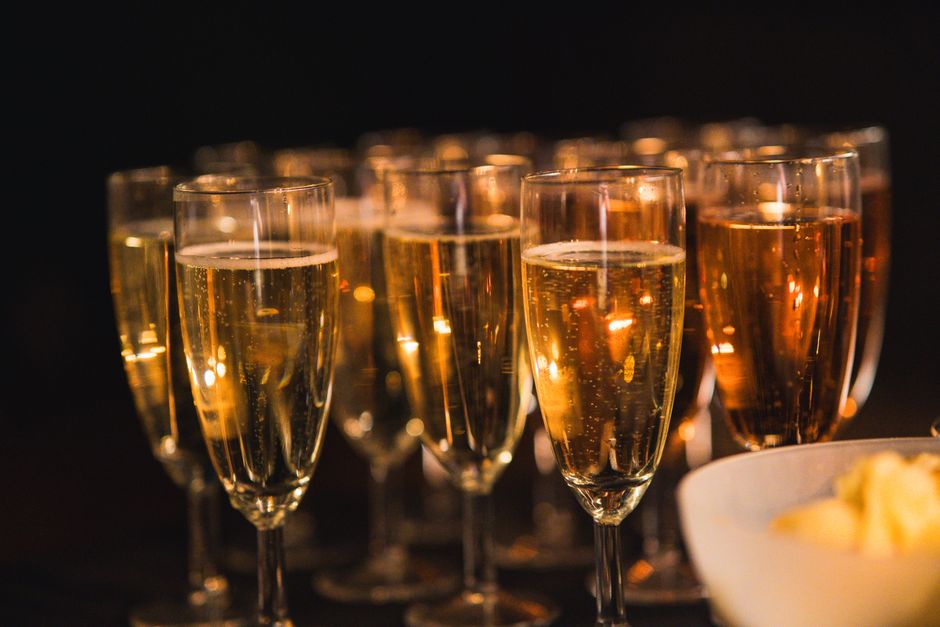
The difference between a flute and a coupe isn't just aesthetic—it fundamentally changes your champagne experience. Wide, shallow coupes allow bubbles to escape rapidly and champagne to go flat within minutes. The surface area exposed to air is so large that CO₂ dissipates quickly, taking aromatic compounds with it. Tall, narrow flutes preserve bubbles far longer by minimizing surface area and concentrating the bubble streams. Some research suggests that tulip-shaped glasses offer the best compromise, preserving bubbles while allowing aromatic compounds to collect near the rim where your nose can appreciate them. The same champagne can taste markedly different depending solely on glassware geometry.
5. Pouring Technique Controls Bubble Loss
How you pour champagne determines how much CO₂ you waste. Pouring straight down into the center of a glass creates turbulence that releases massive amounts of dissolved carbon dioxide, potentially losing up to 20-30% of the bubbles before you even take a sip. The proper technique—tilting the glass and pouring gently down the side, like pouring beer—preserves significantly more CO₂. This gentle pour minimizes agitation and keeps more gas dissolved in the wine. Professional champagne service always involves this angled pour, followed by allowing the foam to settle before topping up the glass. Those few extra seconds of careful pouring can extend the life of your champagne's effervescence by several minutes.
6. Bubbles Carry Flavor Compounds to Your Nose
Champagne bubbles aren't just visual entertainment—they're flavor delivery systems. As bubbles rise and burst at the surface, they create tiny aerosol droplets that carry aromatic compounds into the air above your glass. This is why champagne smells more intense than still wine of similar composition. Each bursting bubble acts like a microscopic catapult, launching volatile flavor molecules toward your nose. Scientists estimate that millions of these micro-droplets form in a single glass, creating an aromatic cloud that enhances the tasting experience. This is also why flat champagne tastes so different—without bubbles, those aromatic compounds remain trapped in the liquid rather than reaching your olfactory receptors.
7. Champagne Pressure Requires Specially Engineered Bottles
Champagne bottles aren't ordinary glass containers. They must withstand enormous internal pressure, which requires thicker, heavier glass than regular wine bottles. A standard champagne bottle weighs nearly twice as much as a comparable still wine bottle, with glass thickness reaching up to half an inch at the base. The distinctive punt (the indentation at the bottle's bottom) isn't just traditional—it's structural engineering. This concave base distributes pressure more evenly across the glass, preventing weak points that could lead to explosions. Even with these reinforcements, champagne producers lose a small percentage of bottles to spontaneous breakage during aging. The entire bottle design, from the thick glass to the mushroom-shaped cork and wire cage, exists solely to contain those 90 pounds of pressure safely.
How Temperature Affects Champagne Bubbles
Temperature governs nearly every aspect of champagne bubble behavior. Warmer champagne holds less dissolved CO₂, meaning bubbles form more aggressively and escape faster. The wine goes flat more quickly, and the larger bubbles create a harsher sensation on the palate. Colder champagne keeps more gas in solution, releasing it gradually as elegant streams of fine bubbles. Below 40°F, however, champagne becomes too cold—flavors mute and the wine loses its aromatic complexity.
| Temperature | Bubble Characteristics | Taste Impact |
|---|
| 40-45°F | Very fine, persistent bubbles | Optimal balance of bubbles and flavor |
| 45-50°F | Small to medium, steady streams | Full flavor expression with good effervescence |
| 50-55°F | Larger, faster-rising bubbles | Diminished bubble quality, faster flattening |
| Above 55°F | Large, aggressive bubbles | Harsh sensation, rapid CO₂ loss, muted flavors |
The Science Behind the Pop
That satisfying pop when opening champagne is actually a miniature sonic boom. As the cork exits the bottle, the sudden pressure drop causes the escaping CO₂ to expand rapidly and cool dramatically—often below freezing. This creates a visible fog of condensed water vapor mixed with CO₂ gas. The popping sound occurs when the cork breaks the sound barrier in the narrow bottle neck, creating a shock wave. High-speed cameras have captured this moment, revealing that the gas cloud erupts at speeds potentially exceeding 50 miles per hour.The wire cage (called a muselet) that secures the cork exists because cork alone cannot reliably contain the pressure. Natural cork is porous and can slowly leak or even pop out spontaneously. The cage provides a mechanical backup, ensuring the cork stays in place during storage and transport. Interestingly, it takes exactly six half-turns to remove a standard champagne cage—a detail that has remained consistent across producers for over a century.
Frequently Asked Questions
How long do champagne bubbles last in a glass?
In a proper flute at the right temperature, champagne bubbles can persist for 10-20 minutes or longer. Wide glasses or warm temperatures reduce this to just a few minutes. The quality of the champagne and cleanliness of the glass also significantly affect bubble longevity.
Why does champagne bubble more in a dirty glass?
Residues, soap film, or dust particles create additional nucleation sites where bubbles form. While this might seem to increase bubbles, it actually causes the champagne to go flat faster by releasing dissolved CO₂ more rapidly. Clean, smooth glasses preserve champagne longer.
Can champagne bottles really explode?
Yes, though it's rare with modern production standards. Bottles can explode if they have manufacturing defects, are stored at excessively warm temperatures, or develop too much pressure during fermentation. This is why champagne cellars traditionally have thick walls and why bottles are stored horizontally to keep corks moist and sealed.
Do more expensive champagnes have better bubbles?
Generally, yes. Premium champagnes undergo longer aging periods that allow better integration of CO₂, producing finer, more persistent bubbles. Higher-quality production methods and stricter quality control also contribute to superior bubble characteristics, though proper storage and serving temperature matter just as much as price.Next time you raise a glass of champagne, you're holding a carefully engineered pressure vessel filled with millions of tiny physics experiments. Each bubble's journey from glass imperfection to bursting finale represents a perfect balance of chemistry, temperature, and time—a reminder that some of life's most elegant pleasures have surprisingly explosive origins.