









1 / 10 Questions
0 Points

What Planet Has A Day Longer Than Its Year?

Venus

Mars

Jupiter

Mercury

Points won
0
Correct score
0%

More Questions

More Articles

Did You Know These Desserts Didn’t Originate Where You Think?

Did You Know These Desserts Didn’t Originate Where You Think?

⏱️ 5 min read

The world of desserts is filled with delicious surprises, but perhaps none are as surprising as discovering that many beloved sweets didn't originate where most people believe. From iconic pastries to celebrated confections, the true birthplaces of these treats often challenge our assumptions and reveal fascinating stories of culinary migration, adaptation, and cultural exchange. Understanding the authentic origins of these desserts not only enriches our appreciation for them but also highlights the interconnected nature of global cuisine.

The French Croissant Actually Has Austrian Roots

Perhaps one of the most iconic symbols of French baking, the croissant is synonymous with Parisian cafés and French breakfast culture. However, this flaky, buttery pastry actually traces its origins to Austria. The predecessor of the croissant, known as the kipferl, was a crescent-shaped pastry enjoyed in Vienna as early as the 13th century. The kipferl featured a denser texture than the modern croissant but shared the distinctive curved shape.

The pastry made its way to France in the 18th century, most likely when Austrian princess Marie Antoinette married the future King Louis XVI. French bakers then refined the recipe, introducing the lamination technique that creates the characteristic layers and airy texture we associate with croissants today. The French transformation was so successful that the croissant became completely identified with French cuisine, while its Austrian heritage faded from popular memory.

Fortune Cookies: An American Creation, Not Chinese

The fortune cookie has become an ubiquitous ending to Chinese restaurant meals across the United States, leading most Americans to assume this crispy, prophecy-bearing treat originated in China. The reality is quite different: fortune cookies were likely invented in California in the early 20th century.

The exact origin story remains debated, with both San Francisco and Los Angeles claiming credit for the creation. The most credible accounts suggest Japanese immigrants first created these cookies, inspired by traditional Japanese crackers called tsujiura senbei. Makoto Hagiwara, a Japanese landscape designer at Golden Gate Park's Japanese Tea Garden, is often credited with serving the first fortune cookies to visitors around 1914.

During World War II, when Japanese Americans were sent to internment camps, Chinese restaurant owners adopted the fortune cookie. It became so associated with Chinese-American cuisine that when they were introduced in China in the 1990s, they were marketed as "genuine American fortune cookies."

German Chocolate Cake Has No German Connection

Despite its name suggesting European origins, German chocolate cake is thoroughly American. The dessert was named after Samuel German, an American chocolatier who developed a type of dark baking chocolate for the Baker's Chocolate Company in 1852. This product became known as "Baker's German's Sweet Chocolate."

The cake recipe itself first appeared in a Dallas newspaper in 1957, submitted by a homemaker named Mrs. George Clay. The recipe used Baker's German's Sweet Chocolate, and its popularity skyrocketed when the chocolate company began distributing the recipe nationally. Over time, the possessive form was dropped, and people began assuming the cake had German origins. The coconut-pecan frosting that characterizes this cake is entirely an American innovation with no ties to traditional German baking.

Flan's Journey From Ancient Rome to Latin America

While flan is strongly associated with Spanish and Latin American cuisine, this creamy caramel custard dessert has much older origins. The ancient Romans created early versions of custard desserts, and the word "flan" itself comes from the Latin word "flado," meaning flat cake. The Romans had an abundance of eggs due to their chicken domestication practices, leading them to experiment with egg-based dishes both savory and sweet.

During the Middle Ages, both sweet and savory flans became popular throughout Europe. Spanish conquistadors later brought flan recipes to the Americas during colonization, where it was adapted with local ingredients and techniques. Today, each Latin American country has developed its own variations, from Mexican cajeta flan to Cuban flan de queso, making it difficult for many to imagine this dessert originated anywhere but Latin America.

The Surprising Russian Origins of Charlotte Russe

Charlotte Russe, despite its French-sounding name and association with elegant European desserts, was actually created by French chef Marie-Antoine Carême while working in Russia for Tsar Alexander I. Carême, often called the "King of Chefs and the Chef of Kings," invented this dessert in the early 19th century as a variation of the British Charlotte dessert.

The original Charlotte was a molded dessert with bread lining the outside. Carême replaced the bread with ladyfinger cookies and added a Bavarian cream filling, creating an elegant dessert worthy of the Russian imperial court. He named it "Charlotte à la Russe" in honor of his Russian host country. The dessert later gained popularity in France and throughout Europe, with many assuming it was a traditional French creation.

Why These Misconceptions Matter

Understanding the true origins of these desserts provides valuable lessons about cultural exchange and culinary evolution. Food rarely develops in isolation; instead, recipes travel with immigrants, traders, and conquerors, adapting to new environments and available ingredients. The stories behind these desserts remind us that cuisine is constantly evolving and that attributing dishes to single cultures oversimplifies the complex history of human migration and cultural interaction.

These culinary misconceptions also highlight how successful adaptation can eclipse original creation. When a culture embraces and perfects an imported dish, it can become so integrated into that culture's identity that the foreign origins are forgotten entirely. This process isn't about cultural appropriation but rather cultural adoption and transformation, demonstrating how food serves as a universal language that transcends borders and brings diverse traditions together.
Top 10 Quick Facts About the Most Remote Islands

Top 10 Quick Facts About the Most Remote Islands

⏱️ 7 min read

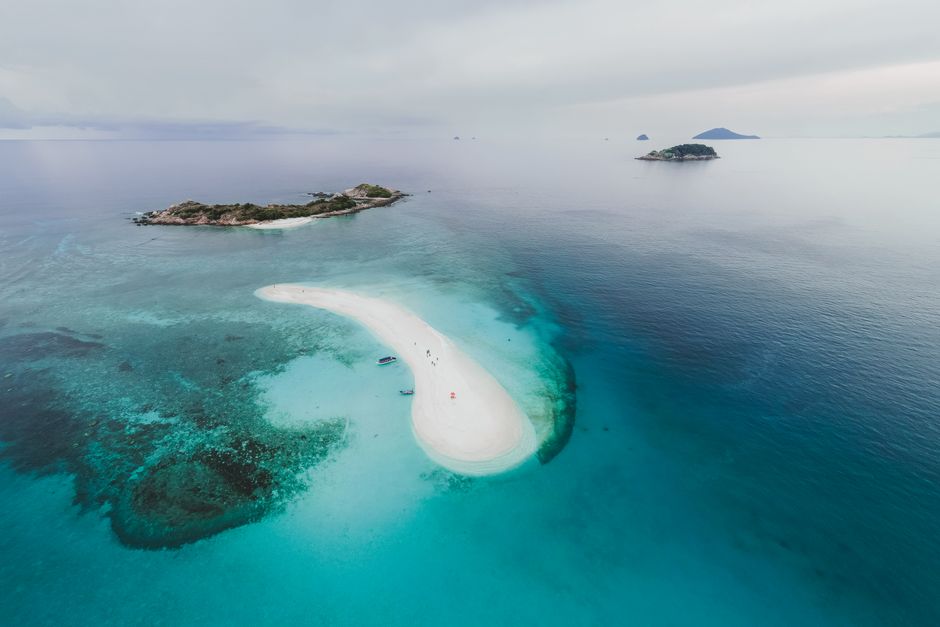
The world's most remote islands represent some of Earth's last truly isolated frontiers, where nature thrives in spectacular solitude and human presence is either minimal or nonexistent. These far-flung landmasses, scattered across vast expanses of ocean, offer fascinating insights into geological processes, unique ecosystems, and the extreme limits of human habitation. Understanding these isolated territories reveals remarkable stories of survival, discovery, and the raw power of nature operating beyond the reach of modern civilization.

The World's Most Isolated Inhabited Place

Tristan da Cunha: 1,750 Miles from the Nearest Continent

Tristan da Cunha holds the distinction of being the most remote inhabited archipelago on Earth, located in the South Atlantic Ocean approximately 1,750 miles from South Africa and 2,088 miles from South America. This British Overseas Territory is home to roughly 245 permanent residents who live in the settlement of Edinburgh of the Seven Seas. The island has no airport, making it accessible only by boat, with the journey from South Africa taking approximately six days. The isolation is so extreme that the community operates with a unique social structure where decisions are made collectively, and land is communally owned by all islanders.

Bouvet Island: The Most Remote Uninhabited Land

Bouvet Island, a Norwegian dependency in the South Atlantic Ocean, claims the title of the most remote uninhabited island in the world. Located approximately 1,404 miles from the nearest land (Queen Maud Land, Antarctica), this volcanic island is almost entirely covered by glaciers and is surrounded by treacherous waters. The island spans only 19 square miles and has never supported a permanent human population. Its extreme isolation and harsh conditions make it a pristine natural laboratory, with scientists occasionally visiting to study its unique ecosystem and geology despite the significant logistical challenges involved.

Easter Island's Mysterious Distance from Civilization

Easter Island, or Rapa Nui, stands as one of the world's most remote inhabited islands, positioned 2,182 miles west of Chile and 1,289 miles from the nearest inhabited island, Pitcairn. This Polynesian island is famous for its 887 monumental stone statues called moai, but equally remarkable is how the ancient Polynesians discovered and settled this isolated speck of land in the vast Pacific Ocean. The island's extreme remoteness contributed to the development of a unique culture that evolved in near-total isolation for centuries, demonstrating humanity's remarkable ability to adapt and thrive in the most challenging environments.

Geographic and Environmental Characteristics

Kerguelen Islands: The Desolation Islands of the Indian Ocean

The Kerguelen Islands, also known as the Desolation Islands, are located in the southern Indian Ocean, approximately 2,051 miles from Madagascar and 1,243 miles from Antarctica. This French territory consists of one large island and about 300 smaller islands, covering a total area of 2,577 square miles. The archipelago experiences some of the strongest winds on Earth, with gusts regularly exceeding 100 miles per hour. Despite the harsh conditions, Kerguelen supports a permanent research station with 50 to 100 scientists and support staff, who study the unique wildlife including millions of seabirds, elephant seals, and the only insect that has adapted to the extreme environment—the Kerguelen cabbage fly.

Pitcairn Island: Where the Bounty Mutineers Vanished

Pitcairn Island, located in the southern Pacific Ocean, is one of the world's least populated territories with only about 50 residents. The island sits approximately 3,300 miles from New Zealand and 3,700 miles from Panama, making it extraordinarily difficult to reach. Pitcairn gained historical significance as the hiding place of the HMS Bounty mutineers in 1790, who sought refuge in this remote location to avoid capture. The descendants of these mutineers and their Tahitian companions still inhabit the island today. The extreme isolation means that supply ships arrive only four times per year, and the island has no airport, making it one of the least accessible inhabited places on Earth.

Unique Ecosystems and Wildlife

South Georgia Island: A Sub-Antarctic Wildlife Paradise

South Georgia Island, located in the southern Atlantic Ocean about 1,000 miles east of the Falkland Islands, serves as one of the world's most important breeding grounds for seabirds and marine mammals despite its remote location. The island hosts approximately 400,000 king penguins, millions of macaroni penguins, and the largest breeding population of Antarctic fur seals on the planet. The combination of extreme remoteness and rich marine resources surrounding the island creates a unique ecosystem where wildlife has evolved with minimal human interference. The island's isolation has also preserved the remains of abandoned whaling stations, which stand as frozen monuments to early 20th-century industry.

Socotra Island: The Galápagos of the Indian Ocean

Socotra, part of Yemen, lies approximately 240 miles east of the Horn of Africa and 380 miles south of the Arabian Peninsula in the Indian Ocean. This remote archipelago has been isolated for millions of years, resulting in one of the most unique flora collections on Earth. Approximately 37 percent of Socotra's 825 plant species are found nowhere else in the world, including the distinctive dragon's blood tree with its umbrella-shaped crown. The island's extreme isolation has created what scientists call a "lost world," where evolution has proceeded independently from mainland species, producing bizarre and ancient-looking plants that appear almost alien in their appearance.

Historical and Strategic Significance

Saint Helena: Napoleon's Island Prison

Saint Helena, a British Overseas Territory in the South Atlantic Ocean, sits approximately 1,200 miles from the nearest mainland (Africa) and 1,800 miles from South America. This volcanic island gained historical prominence as the place of Napoleon Bonaparte's exile from 1815 until his death in 1821. The British government chose Saint Helena specifically because of its extreme remoteness, making escape virtually impossible. The island remained one of the world's most isolated communities until 2016, when an airport was finally constructed, ending its centuries-long dependence on boat access alone. Prior to the airport, the journey from Cape Town took five days by ship.

Macquarie Island: A Remote Research Station in the Southern Ocean

Macquarie Island, an Australian territory located approximately 930 miles southeast of Tasmania and roughly halfway between Australia and Antarctica, serves as a crucial meteorological and scientific research station. The island's position in the Southern Ocean makes it strategically important for monitoring weather patterns, ocean currents, and climate change in the sub-Antarctic region. Despite its importance, Macquarie Island remains one of the most difficult places to reach, with access limited to occasional research vessels and annual resupply missions. The island's ecosystem is so pristine and scientifically valuable that it was designated a UNESCO World Heritage Site, with strict controls on human activity to preserve its unique environment.

Diego Garcia: The Military Base in the Middle of Nowhere

Diego Garcia, the largest island in the Chagos Archipelago in the central Indian Ocean, represents one of the most strategically significant remote locations on Earth. Located approximately 1,000 miles south of India and 2,200 miles east of Tanzania, this British-controlled territory hosts a major United States military base. The island's extreme remoteness makes it an ideal location for military operations, satellite tracking, and naval support facilities. Unlike most remote islands, Diego Garcia features modern infrastructure including an 11,000-foot runway capable of handling large military aircraft. The military presence means the island maintains regular supply chains despite its isolation, though civilian access remains severely restricted.

Conclusion

The world's most remote islands showcase the extraordinary diversity of isolated ecosystems, human adaptability, and the geological forces that shape our planet. From Tristan da Cunha's tiny community surviving in complete isolation to the uninhabited glaciers of Bouvet Island, these far-flung territories remind us that vast portions of Earth remain largely untouched by human activity. Whether serving as wildlife sanctuaries, scientific research stations, historical landmarks, or homes to small communities, these remote islands demonstrate both the resilience of life and the challenges of existence at the edges of human reach. Their continued isolation in an increasingly connected world makes them invaluable for understanding natural processes, preserving biodiversity, and maintaining perspectives on humanity's place in the global ecosystem.