
By TrivBits, Staff Writer — Published September 7, 2026
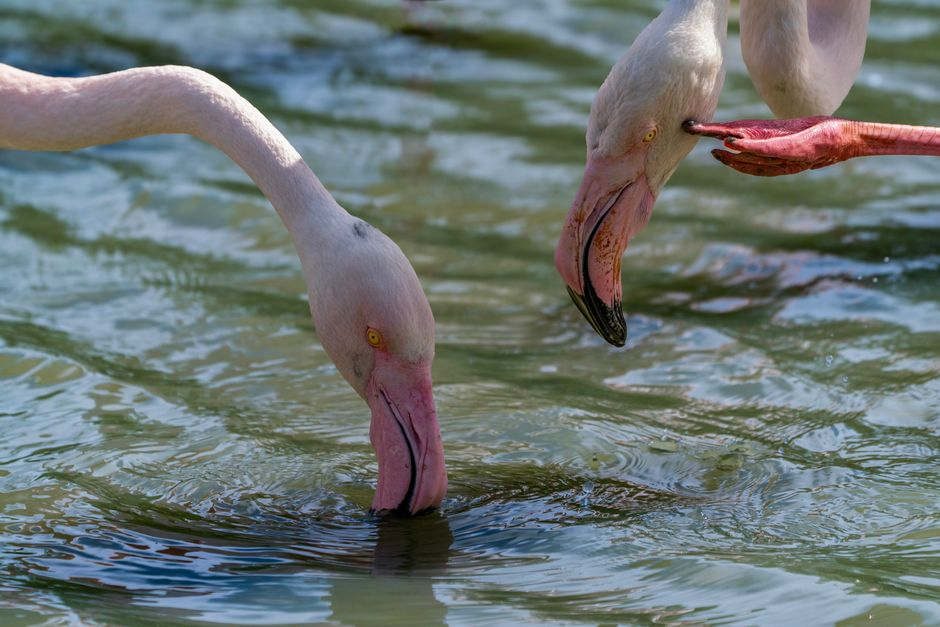
Table of Contents
- Key Takeaways
- The Anatomy Behind the Upside-Down Feast
- How the Filter-Feeding Process Actually Works
- 11 Fascinating Trivia Facts About This Unique Behavior
- Myths and Truths About Flamingo Feeding
- The Evolution of This Remarkable Adaptation
- Comparing Flamingo Species and Their Feeding Adaptations
- Frequently Asked Questions
- Sources
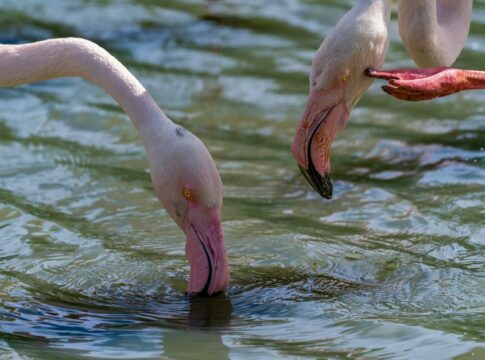
Flamingos are among nature’s most recognizable birds, with their vibrant pink plumage and impossibly long legs. But did you know that these elegant creatures feed in one of the most unusual ways in the animal kingdom? When flamingos eating upside down, they’re not just being quirky—they’re using a highly specialized feeding system that has evolved over millions of years. This surprising behavior is essential to their survival and involves fascinating anatomical adaptations that most people have never heard about.
The truth behind this peculiar dining habit reveals just how remarkable these birds really are. Let’s explore the interesting and often unknown facts about how flamingos turn the world upside down for their meals.
Key Takeaways
- Flamingos feed with their heads completely inverted, a unique adaptation among birds
- Their beaks contain specialized filter-feeding structures called lamellae that trap tiny food particles
- The upside-down position allows water to flow through their beaks in the most efficient direction
- Flamingos can filter up to 20 beakfuls of water per second while feeding
- Their pink color comes directly from the carotenoid pigments in the organisms they eat
- Different flamingo species have differently shaped beaks adapted to specific food sources
The Anatomy Behind the Upside-Down Feast
The flamingo’s beak is an engineering marvel. Unlike most birds that peck or grab their food, flamingos have developed a filtering system that works like a biological sieve. The upper mandible of their beak is smaller and more mobile than the lower one—the exact opposite of nearly every other bird species. This reversed structure means that when a flamingo bends its neck and turns its head upside down, the beak functions as intended, with the larger lower mandible on top acting as a stable platform.
Inside the beak, rows of hair-like structures called lamellae line both mandibles. These plates number in the hundreds and create a comb-like filtering mechanism. When a flamingo pumps water through its beak, these lamellae trap algae, diatoms, small crustaceans, and other microscopic organisms while allowing water and sediment to escape. The spacing and density of lamellae vary between species, allowing different flamingos to target different food sizes.
How the Filter-Feeding Process Actually Works
The mechanics of flamingo feeding involve several coordinated movements. First, the bird submerges its head upside down in shallow water. Then it uses its thick, fleshy tongue as a piston, rapidly pumping back and forth inside the beak. This creates suction that draws water in through the front of the beak and forces it out through the sides.
The tongue moves at remarkable speed. Research has shown that flamingos can perform up to four pumping cycles per second, processing enormous volumes of water in a single feeding session. The entire system operates on the principle of continuous flow—water constantly enters, gets filtered, and exits, while food particles accumulate on the lamellae and are then swallowed. This efficient process allows flamingos to extract nutrition from environments where food exists in very dilute concentrations.
11 Fascinating Trivia Facts About This Unique Behavior
1. The Upside-Down Position Is Mandatory, Not Optional
Flamingos cannot feed effectively in any other position. Their entire feeding apparatus only works when inverted because of how the beak’s filtering chambers are oriented. The curvature of the beak and the positioning of the lamellae mean that gravity and water flow only align properly when the head is upside down. Young flamingos must learn this technique, and chicks that fail to master the inverted feeding position cannot survive in the wild.
2. Different Species Have Different Filtering Specialties
Not all flamingos eat the same things. Greater flamingos have widely spaced lamellae designed to catch larger prey like small shrimp and mollusks. Lesser flamingos, by contrast, have extremely fine, densely packed lamellae that can filter microscopic blue-green algae and diatoms. This specialization reduces competition between species that share the same habitats, allowing multiple flamingo types to coexist in the same lakes and lagoons.
3. They Can Feed in Waters Too Alkaline for Most Animals
Many flamingo species thrive in extremely caustic, alkaline lakes that would burn the skin of most creatures. These harsh environments are rich in specialized algae that few other animals can access. The flamingo’s scaly legs and tough skin protect them from the corrosive water, giving them exclusive access to abundant food sources. Some African soda lakes where flamingos feed have pH levels approaching 10 or higher—nearly as alkaline as household ammonia.
4. The Pink Color Is a Direct Result of Their Diet
Flamingos are born with gray or white feathers. The iconic pink, orange, or reddish coloration develops entirely from carotenoid pigments in the organisms they filter from the water. Beta-carotene and similar compounds from algae and tiny crustaceans get absorbed during digestion and deposited in growing feathers. A flamingo’s color intensity directly reflects its diet quality—brighter birds are typically healthier and more attractive to potential mates.
5. Their Tongues Are Covered in Tiny Spines
The flamingo tongue isn’t smooth—it’s covered in backward-facing spines that help channel food toward the throat while the tongue pumps water through the beak. These spines also help scrape accumulated food particles off the lamellae. The tongue is so central to feeding that it accounts for a significant portion of the bird’s overall feeding efficiency, working in perfect synchronization with the beak’s filtering structures.
6. Flamingos Feed Both Day and Night
Unlike many birds that feed only during daylight hours, flamingos often feed around the clock, especially during breeding season when energy demands are highest. Their feeding technique doesn’t require vision to locate individual prey items—they simply filter whatever is in the water. This allows them to feed effectively even in complete darkness, giving them access to food sources that undergo daily vertical migrations in the water column.
7. They Prefer Shallow Water for Maximum Efficiency
While flamingos can wade in relatively deep water thanks to their long legs, they feed most efficiently in water depths of just a few inches to about two feet. In shallow water, they can easily reach the bottom sediments where many algae and microorganisms concentrate. Their long necks and legs evolved specifically to allow them to exploit these shallow, productive zones that other water birds cannot effectively access.
8. The Filtering System Can Handle Sediment
Flamingo feeding often stirs up mud and sediment from the lake bottom. The lamellae system is sophisticated enough to separate food from inorganic particles. Heavier sediment particles fall out of the filtering current, while the lighter organic food particles get trapped by the lamellae. This ability to feed in turbid, muddy water gives flamingos access to food sources in environments where visual hunters would struggle.
9. Chicks Are Fed “Crop Milk” Before Learning to Filter
Baby flamingos cannot filter-feed immediately after hatching. Parents produce a highly nutritious secretion called crop milk—a red-colored fluid rich in fat, protein, and the same carotenoids that color adult feathers. Both parents can produce this substance in their upper digestive tract and regurgitate it to feed their chicks. This continues for several weeks until the young bird’s beak develops enough to begin filter-feeding independently.
10. The Beak Contains Sensory Receptors
Recent research suggests that flamingo beaks contain specialized sensory cells that help detect food concentrations in the water. These receptors may respond to chemical cues or subtle changes in water texture that indicate high densities of algae or small crustaceans. This sensory ability helps flamingos locate the richest feeding patches in vast, seemingly uniform bodies of water.
11. They Sometimes Feed While Walking
Flamingos don’t always stand still while feeding. They often walk slowly forward with their heads submerged and inverted, sweeping their beaks side to side through the water. This technique, called “stamping,” also involves rapidly treading their feet to stir up bottom sediments and dislodge buried organisms. The combination of walking and filtering allows them to cover large areas and access food that would otherwise remain hidden in the substrate.
Myths and Truths About Flamingo Feeding
One common misconception is that flamingos eat fish. While they do occasionally consume very small fish or fish larvae, their filtering system is designed for organisms much smaller than what we typically think of as fish. The lamellae spacing in most species is far too fine to retain anything as large as even a minnow—they’re built for microscopic prey.
Another myth suggests that flamingos drink through their beaks while feeding. In reality, flamingos drink freshwater separately from feeding, usually by submerging their beaks normally (right-side up) and using a different swallowing mechanism. Their specialized feeding behavior is exclusively for food collection, not hydration.
The Evolution of This Remarkable Adaptation
Flamingos belong to an ancient lineage of birds, with fossil evidence suggesting their basic body plan has remained relatively unchanged for millions of years. The upside-down feeding strategy likely evolved as flamingos exploited ecological niches with abundant microscopic food but intense competition from other water birds. By developing a filtering system rather than relying on visual hunting or diving, flamingos accessed resources that other birds couldn’t efficiently harvest.
This evolutionary path created one of nature’s most specialized feeders. The trade-off is significant—flamingos are exceptional at filter-feeding but poorly adapted for almost any other feeding strategy. They’ve committed entirely to their ecological niche, which has allowed them to thrive in some of Earth’s most extreme aquatic environments.
Comparing Flamingo Species and Their Feeding Adaptations
| Species | Lamellae Type | Primary Food Source | Typical Habitat |
|---|---|---|---|
| Greater Flamingo | Coarse, widely spaced | Small invertebrates, mollusks | Coastal lagoons, estuaries |
| Lesser Flamingo | Fine, densely packed | Microscopic algae, diatoms | Alkaline lakes |
| Caribbean Flamingo | Medium spacing | Algae, small crustaceans | Coastal waters, salt ponds |
| Chilean Flamingo | Medium-coarse | Algae, invertebrates | Temperate wetlands |
Frequently Asked Questions
Why don’t flamingos get dizzy from feeding upside down?
Flamingos have specialized blood flow regulation in their necks and heads that prevents blood from pooling when inverted. Their cardiovascular system has adapted to maintain consistent blood pressure regardless of head position, allowing them to feed upside down for extended periods without the disorientation that would affect most animals in that position.
How long can a flamingo feed continuously?
Flamingos can feed for several hours at a stretch, taking only brief breaks to rest their neck muscles and reposition. During peak feeding times, especially before breeding season, they may spend up to 12 hours per day filtering food from the water. The exact duration depends on food availability—when food is scarce, they must feed longer to meet their nutritional needs.
Do flamingos ever eat anything besides filtered food?
While filter-feeding comprises the vast majority of their diet, flamingos occasionally consume larger items like insect larvae or very small fish that get caught in their filtering system. However, their anatomy is so specialized for filtering that they cannot effectively hunt or consume prey items much larger than a few millimeters. They are obligate filter-feeders and cannot survive on conventional bird foods.
Can flamingos feed in saltwater and freshwater?
Yes, different flamingo species have adapted to various salinity levels, from freshwater to hypersaline environments. Their kidneys are highly efficient at excreting excess salt, and they have specialized salt glands near their eyes that eliminate concentrated salt solutions. This physiological flexibility allows them to exploit feeding opportunities across a wide range of aquatic environments, from coastal saltwater to inland alkaline lakes.
The next time you see a flamingo standing gracefully on one leg, remember that beneath that elegant exterior is one of nature’s most specialized feeding machines. These remarkable birds have turned the world upside down—quite literally—to carve out their unique place in the ecosystem.