










1 / 10 Questions
0 Points

Which State Grows Nearly All Of America's Artichokes?

Florida

Washington

Oregon

California

Points won
0
Correct score
0%

More Questions

More Articles

Pilots and Copilots Eat Different Meals: Why?

Pilots and Copilots Eat Different Meals: Why?

By TrivBits, Staff Writer — Published September 27, 2026

Pilots and Copilots Eat Different Meals: Why? — General trivia by TrivBits

Table of Contents

Did you know that when you're cruising at 35,000 feet, the two people flying the plane never eat the same meal? It's one of those surprising aviation facts that sounds like a myth but is absolutely true. Pilots and copilots eat different meals during flights, and the reason has nothing to do with personal preference or rank. This fascinating safety protocol exists to protect everyone on board from a very real, potentially catastrophic risk.

The practice might seem overly cautious at first glance. After all, what are the odds that both pilots would get sick from the same meal? But when you're responsible for hundreds of lives and there's no emergency room at 40,000 feet, even unlikely scenarios demand serious planning.

Key Takeaways

  • Pilots and copilots must eat different meals to prevent simultaneous food poisoning that could incapacitate the flight crew.
  • This safety rule applies primarily to long-haul flights where crew meals are served and consumed in the cockpit.
  • Airlines typically prepare multiple meal options for cockpit crew, often differing in protein source or main ingredients.
  • The practice has been standard in commercial aviation for decades, though it's not universally mandated by international law.
  • Food safety incidents involving pilots, while rare, have occurred throughout aviation history and reinforced this protocol.
  • The rule extends beyond just the main course—pilots often eat at different times and may avoid sharing any food items.

Why Pilots and Copilots Different Meals Matter for Flight Safety

The logic behind this interesting safety measure is straightforward: foodborne illness. If contaminated food makes its way onto a flight and both pilots consume the same dish, both could become severely ill simultaneously. Bacterial contamination from sources like salmonella, E. coli, or staphylococcus can cause symptoms ranging from nausea and vomiting to incapacitation within hours.

Flying a commercial aircraft requires constant attention and quick decision-making. Even a single pilot becoming ill mid-flight creates a serious situation. Both pilots falling ill at once? That's a genuine emergency. While modern aircraft can fly on autopilot for extended periods, landing requires human intervention, especially in challenging weather or at complex airports.

The meal separation protocol creates a buffer. If one pilot's meal is contaminated, the other remains healthy and capable of safely operating the aircraft and landing at the nearest suitable airport. It's risk management at its most practical.

How Airlines Implement the Different Meal Policy

Airlines handle this requirement in various ways. Most provide at least two distinct meal options for the cockpit crew. The captain typically chooses first, and the first officer receives a different selection. These aren't just different flavors of the same dish—they're completely separate meals, often with different protein sources.

For example, if the captain selects chicken, the first officer might receive beef or fish. The meals are usually prepared in different batches, sometimes even by different catering facilities, though this varies by airline and route. Some carriers go further, ensuring that even side dishes and sauces differ between the two meals.

Timing matters too. Many airlines stagger meal times so pilots eat at different points during the flight. This temporal separation provides an additional safety margin—if contamination symptoms appear in one pilot, the other hasn't yet consumed their potentially problematic meal and can avoid it entirely.

Historical Context and Real-World Incidents

While dramatic incidents of both pilots falling ill remain exceptionally rare in modern aviation, the concern isn't purely theoretical. There have been documented cases throughout aviation history where pilots experienced food poisoning during flights, though typically not simultaneously.

The practice gained widespread adoption during the jet age expansion of the 1960s and 1970s, when long-haul international flights became routine and crew meals became standard. Aviation authorities and airlines recognized that as flight durations increased, so did crew exposure to potentially contaminated food.

The rule reflects aviation's broader safety philosophy: plan for scenarios that seem unlikely but carry catastrophic consequences. The industry learned through decades of experience that multiple redundancies and seemingly excessive precautions save lives.

Regulations and Variations Across Airlines

Interestingly, the different meal rule isn't universally mandated by international aviation law. The International Civil Aviation Organization (ICAO) doesn't specifically require it in their standards. Instead, it's typically an airline policy or recommendation from national aviation authorities.

Many airlines include the requirement in their Standard Operating Procedures (SOPs) or crew manuals. Some countries' aviation regulators strongly recommend the practice, while others leave it to airline discretion. Despite this variation, the vast majority of major international carriers follow the protocol, especially on long-haul routes.

Short-haul flights present different considerations. On quick regional hops, pilots might not eat full meals at all, instead consuming snacks or waiting until after landing. The rule becomes most critical on transcontinental or transoceanic flights lasting six hours or more, where crew fatigue and hunger make in-flight meals necessary.

Beyond Meals: Other Aviation Food Safety Measures

The different meal policy is just one layer of food safety in aviation. Airlines also maintain strict protocols about food preparation, storage, and handling. Catering facilities serving airlines must meet rigorous health and safety standards, often exceeding those required for regular restaurants.

Many airlines prohibit pilots from bringing their own food from unknown sources for similar contamination concerns. Some carriers recommend pilots avoid certain high-risk foods like raw seafood or undercooked eggs in the 24 hours before a flight. The goal is minimizing any food-related health risks that could compromise flight safety.

Cabin crew meals follow similar principles on many airlines, ensuring that flight attendants also eat different options to maintain at least some healthy crew members in case of contamination.

Frequently Asked Questions

Do pilots on all flights eat different meals?

The practice is most common on long-haul international flights where crew meals are standard. On short regional flights, pilots often don't eat full meals in the cockpit, making the rule less relevant. The protocol is strongest on flights exceeding four to six hours where in-flight dining is necessary for crew wellbeing.

What happens if a pilot gets food poisoning during a flight?

If one pilot becomes ill, the healthy pilot takes full control of the aircraft. They may request priority landing at the nearest suitable airport and declare a medical emergency if the situation warrants. Flight attendants can provide assistance, and in extreme cases, airlines can contact ground-based medical support for guidance.

Are pilots allowed to share food in the cockpit?

Most airline policies discourage or prohibit sharing meals between pilots for the same contamination-prevention reasons. Some airlines extend this to all food items, including snacks and beverages, though enforcement varies. The principle remains: minimize the chance that both pilots consume identical potentially contaminated food.

Do military or private pilots follow this rule?

Military aviation often has similar protocols, especially for long-duration missions or strategic aircraft. Private aviation varies widely—corporate flight departments for major companies frequently adopt commercial airline safety practices, while smaller private operations may not have formal meal policies. The principle makes sense for any multi-crew operation regardless of aircraft type.

Next time you board a flight, you can take comfort knowing that even the small detail of what's on the pilots' dinner trays reflects decades of safety thinking. It's a simple solution to a potentially serious problem—and a reminder that in aviation, no precaution is too small when lives depend on it.
Sources

What Causes Octopus Blue Blood: Copper-Based Truth

What Causes Octopus Blue Blood: Copper-Based Truth

By TrivBits, Staff Writer — Published October 13, 2026

What Causes Octopus Blue Blood: Copper-Based Truth — Quick Facts trivia by TrivBits

Table of Contents

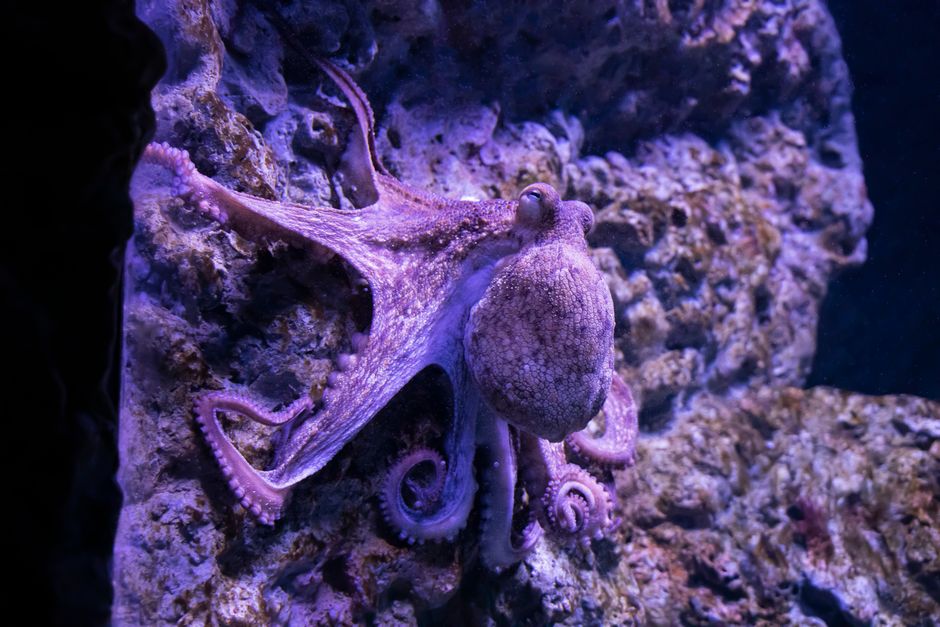
Did you know that octopuses have blue blood coursing through their bodies? It sounds like science fiction, but this surprising fact has a fascinating biological explanation. What causes octopus blue blood isn't magic or mythology—it's chemistry. While human blood gets its red color from iron-based hemoglobin, octopus blood relies on a copper-based molecule called hemocyanin. This remarkable adaptation helps these intelligent invertebrates thrive in ocean environments where oxygen can be scarce.

The truth behind blue blood reveals how evolution crafts elegant solutions to environmental challenges. This interesting trivia opens a window into the hidden world of marine biology and the unknown diversity of respiratory systems across the animal kingdom.

Key Takeaways

  • Octopus blood is blue because it contains hemocyanin, a copper-based oxygen-transport molecule, instead of iron-based hemoglobin
  • Hemocyanin is more efficient than hemoglobin in cold, low-oxygen ocean environments where many octopuses live
  • The copper atoms in hemocyanin turn blue when they bind with oxygen, creating the distinctive blue color
  • Many other mollusks and arthropods, including squid, horseshoe crabs, and some spiders, also have blue blood
  • This adaptation represents millions of years of evolutionary refinement for life in marine ecosystems
  • The blue color is only visible when the blood is oxygenated; deoxygenated hemocyanin appears colorless

What Causes Octopus Blue Blood: The Copper Connection

The secret lies in the molecular structure of hemocyanin. Unlike hemoglobin, which wraps iron atoms in protein chains, hemocyanin uses copper atoms as its oxygen-binding core. When oxygen molecules attach to these copper atoms, they trigger a chemical reaction that produces the characteristic blue color. Think of it like oxidized copper on old pennies or the Statue of Liberty—copper changes appearance when it interacts with oxygen.

Hemocyanin floats freely in octopus blood plasma rather than being packaged inside blood cells. This fundamental difference from vertebrate blood systems means octopus blood is less viscous. The molecule itself is enormous compared to hemoglobin, making it one of the largest respiratory proteins in nature. Each hemocyanin molecule can be several hundred times larger than a hemoglobin molecule.

The copper-oxygen bond creates a distinct blue hue when viewed outside the body. Inside the octopus, circulating through translucent tissues, the effect is less dramatic but still present. Marine biologists who handle octopuses during research can sometimes see the faint blue tinge in injured specimens or during medical procedures.

Why Copper Works Better Than Iron for Ocean Life

Evolution doesn't make random choices. Hemocyanin offers specific advantages in marine environments. Cold water holds more dissolved oxygen than warm water, but it also makes biochemical reactions sluggish. Hemocyanin remains efficient at low temperatures where hemoglobin would struggle.

The molecule excels in environments with variable oxygen levels. Deep ocean waters, rocky crevices, and tidal zones all present oxygen challenges. Hemocyanin binds oxygen loosely enough to release it readily to tissues, yet firmly enough to capture it from sparse surroundings. This flexibility makes it ideal for creatures that move between different ocean zones.

There's a tradeoff, though. Hemocyanin carries less oxygen per molecule than hemoglobin does. But octopuses compensate with three hearts—two branchial hearts that pump blood through the gills, and one systemic heart that circulates it through the body. This cardiovascular architecture maximizes the efficiency of their copper-based blood system.

Other Creatures with Blue Blood

Octopuses aren't alone in their azure circulatory systems. The adaptation appears across multiple evolutionary lineages, suggesting it's a successful strategy for marine and some terrestrial invertebrates.

Animal Group Examples Habitat
Cephalopods Octopuses, squid, cuttlefish Marine environments worldwide
Crustaceans Lobsters, crabs, shrimp Oceans, some freshwater
Chelicerates Horseshoe crabs, some spiders, scorpions Marine and terrestrial
Gastropods Some marine snails Ocean floors and reefs

Horseshoe crabs, ancient creatures that have remained largely unchanged for hundreds of millions of years, also rely on hemocyanin. Their blue blood has become medically valuable—it's harvested to test for bacterial contamination in vaccines and medical devices. The coincidence of copper-based blood appearing in such distantly related animals demonstrates convergent evolution at work.

Myths and Truths About Blue Blood

The term "blue blood" meaning nobility has nothing to do with actual blue blood. That phrase likely originated from European aristocrats whose pale skin made their veins appear blue through the surface. Human blood is never blue, even in veins—it's always red, just darker when deoxygenated.

Some believe octopus blood is toxic or acidic because of its unusual color. Not true. The blood is simply adapted for different chemistry. It's no more dangerous than red blood would be to touch. The copper concentration is precisely calibrated for oxygen transport, not toxicity.

Another misconception suggests blue blood makes octopuses cold-blooded in the same way as fish. Actually, octopuses are ectothermic—their body temperature matches their environment—but this relates to metabolism, not blood color. The hemocyanin simply works well in the temperature ranges where octopuses live.

The Evolutionary Journey to Copper-Based Blood

Scientists believe hemocyanin evolved independently multiple times across different animal groups. This parallel evolution suggests that in certain environments, copper-based oxygen transport offers clear survival advantages. The earliest evidence of hemocyanin-using creatures dates back hundreds of millions of years to ancient oceans.

Genetic studies reveal that the genes coding for hemocyanin are quite different from those coding for hemoglobin, confirming these are truly separate evolutionary inventions. The complexity of the hemocyanin molecule indicates a long refinement process. Nature experimented with various oxygen-transport solutions, and in the ocean's depths, copper won out over iron for many species.

Climate change and ocean acidification now pose new challenges for hemocyanin-dependent creatures. As ocean chemistry shifts, researchers study whether copper-based blood systems will adapt as effectively as they have over geological time scales. Early research suggests some species may struggle more than others.

Frequently Asked Questions

Can octopuses survive with damaged blood?

Octopuses can tolerate some blood loss, but they're more vulnerable than vertebrates because their blood doesn't clot as effectively. The hemocyanin system lacks the complex clotting factors found in mammalian blood. Minor injuries usually heal, but significant blood loss can be fatal. Their remarkable regenerative abilities help them recover from many injuries, though.

Is octopus blood always blue?

The blue color is most vivid when the blood is oxygenated. Deoxygenated hemocyanin appears nearly colorless or has a faint grayish tint. So the blood changes appearance as it circulates—bright blue leaving the gills where it picks up oxygen, then fading as it delivers oxygen to body tissues. The color shift is less dramatic than the bright red to dark red change in human blood.

Do any vertebrates have blue blood?

No vertebrates have blue blood. All vertebrates—fish, amphibians, reptiles, birds, and mammals—use iron-based hemoglobin and have red blood. Blue blood is exclusively found in certain invertebrates. This represents a fundamental divide in how different branches of the animal kingdom solved the oxygen-transport problem.

Could humans use hemocyanin instead of hemoglobin?

Humans couldn't survive with hemocyanin. Our metabolism requires the higher oxygen-carrying capacity of hemoglobin. Hemocyanin works for octopuses because their metabolic needs, body temperature, and cardiovascular systems are completely different from ours. The entire physiological system evolved together—you can't simply swap one component. Scientists have studied hemocyanin for potential medical applications, but not as a hemoglobin replacement.

Sources