9 Surprising Facts About Golf Ball Dimple Aerodynamics
By TrivBits, Staff Writer — Published August 10, 2026
Table of Contents
A smooth golf ball would travel roughly half the distance of a dimpled one. That single fact revolutionized the game and turned what began as accidental surface damage into one of sport's most elegant engineering solutions. The golf ball dimple isn't just decoration—it's a masterclass in fluid dynamics that allows players to launch balls over 300 yards with the right swing. Discover how these tiny indentations create surprising aerodynamic effects that seem to defy common sense.
The science behind golf ball dimples reveals fascinating truths about air resistance, turbulence, and the counterintuitive ways objects move through fluids. From the exact number of dimples to the way they manipulate airflow, these interesting features represent decades of research and testing. Let's explore the amazing physics that make every drive possible.
Key Takeaways
- Dimpled golf balls travel approximately twice as far as smooth balls due to reduced drag and increased lift.
- Most modern golf balls feature between 300 and 500 dimples, with the exact count varying by manufacturer design.
- Dimples create a thin turbulent boundary layer of air that clings to the ball's surface, allowing smoother separation of airflow.
- The Magnus effect, enhanced by dimples, generates significant lift that keeps balls airborne longer.
- Golf ball dimple patterns are so crucial to performance that manufacturers hold patents on specific designs.
- Early golfers discovered dimples accidentally when they noticed worn, nicked balls flew better than new smooth ones.
The Paradox of Golf Ball Dimple Design
Dimples reduce drag by creating turbulence. That statement seems backwards—turbulence usually increases resistance. But in the case of a golf ball traveling at high speed, dimples trigger what aerodynamicists call a turbulent boundary layer. This thin layer of chaotic air hugs the ball's surface more tightly than the smooth, laminar flow around a polished sphere would.
The result? Air separates from the ball's surface much later in its journey around the back half. A smooth ball creates a large wake of low-pressure turbulent air behind it, like a parachute of drag. Dimples shrink that wake dramatically. The pressure difference between front and back decreases, and the ball slices through air with far less resistance. Wind tunnel tests consistently show that dimpled balls experience roughly 50 percent less drag than their smooth counterparts at typical golf ball velocities.
How Dimples Generate Unexpected Lift
Backspin combines with dimples to create substantial upward force. When a golf ball spins backward while moving forward, the Magnus effect comes into play. The top of the ball moves with the airflow while the bottom moves against it. Dimples amplify this effect by ensuring turbulent air grips both surfaces effectively. The velocity difference creates higher pressure below and lower pressure above, generating lift that can keep a well-struck ball airborne for impressive distances.
Professional golfers rely on this principle for every shot. A driver might impart 3,000 revolutions per minute of backspin, and the dimples convert that rotation into crucial lift. Without dimples, the same swing would produce a shot that drops to the ground in a disappointing arc. The interplay between spin, dimple design, and air pressure turns physics into performance.
Dimple Depth and Shape Matter Enormously
Not all dimples are created equal. Manufacturers experiment with depth (typically between 0.010 and 0.020 inches), diameter, and edge sharpness. Deeper dimples generally create more turbulence but may increase drag at certain speeds. Shallower dimples reduce turbulence but might not trigger the optimal boundary layer. The shape matters too—some balls feature hexagonal dimples, others use circular patterns, and some combine multiple geometries.
Engineers use sophisticated computer modeling and wind tunnel testing to optimize these variables. The goal is maximum distance for average swing speeds while maintaining control and predictable flight. Even tiny changes in dimple architecture can alter a ball's trajectory by several yards over a 250-yard drive. That's why golf ball design represents a fiercely competitive field where patents protect specific dimple arrangements.
The Evolution From Smooth to Dimpled
Nineteenth-century golfers played with smooth leather balls stuffed with feathers, later replaced by smooth gutta-percha balls. Players noticed something curious: older, scuffed balls with nicks and scratches outperformed pristine new ones. Caddies began intentionally roughening ball surfaces with hammers. By the early 1900s, manufacturers started molding deliberate patterns into balls.
The transition wasn't immediate. Early patterns included raised bumps (the opposite of dimples) and various groove designs. Systematic testing eventually proved that indentations outperformed protrusions. The modern dimple pattern emerged through decades of trial, error, and increasingly sophisticated understanding of aerodynamics. What began as folk observation became rigorous engineering science.
Nine Surprising Facts About Golf Ball Dimple Aerodynamics
1. Dimples Double the Distance of Every Shot
A smooth golf ball hit with a professional-level swing would travel approximately 130 yards. The same swing with a dimpled ball sends it over 260 yards. This isn't a marginal improvement—dimples fundamentally transform the ball's interaction with air. The drag reduction and lift enhancement work together to extend flight time and distance so dramatically that the modern game would be unrecognizable without them. Every course would need to be half its current length, and par scores would require complete recalculation.
2. The Optimal Number of Dimples Remains Hotly Debated
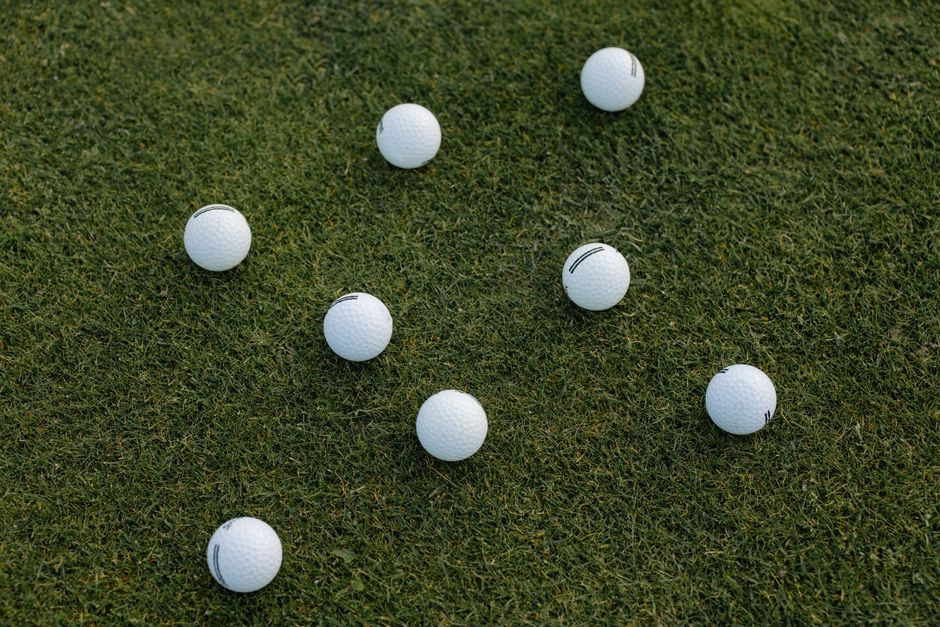
Golf balls typically feature between 300 and 500 dimples, but there's no universal agreement on the perfect count. Titleist Pro V1 balls have 352 dimples. Callaway Chrome Soft balls feature 332. Some manufacturers have experimented with over 1,000 tiny dimples. The number depends on dimple size, depth, pattern arrangement, and intended ball performance. More dimples aren't automatically better—coverage percentage and pattern symmetry matter more than raw count. Manufacturers guard their specific formulas as proprietary secrets.
3. Dimples Create a Boundary Layer Thinner Than a Human Hair
The turbulent boundary layer that dimples generate measures incredibly thin—often less than a millimeter thick. Yet this microscopic zone of chaotic air flow determines whether a ball soars or plummets. The layer must be thick enough to delay flow separation but thin enough not to create excessive friction. Engineers measure these boundary layers using specialized equipment that can detect air velocity changes at scales invisible to the naked eye. The precision required to optimize this hair-thin layer demonstrates the sophistication of modern golf ball design.
4. Temperature Affects Dimple Performance Significantly
Cold air is denser than warm air, which changes how dimples interact with the atmosphere. A golf ball will travel roughly 2 yards less for every 10-degree Fahrenheit drop in temperature. The dimples still work, but the denser air creates more drag overall. Professional golfers account for weather conditions when selecting balls and planning shots. Dimple efficiency peaks in moderate temperatures where air density, viscosity, and ball material properties align optimally. Winter golf requires different expectations for distance and trajectory.
5. Asymmetrical Dimple Patterns Can Cause Unpredictable Flight
Perfectly symmetrical dimple distribution ensures consistent flight regardless of how the ball is positioned on the tee. If dimples cluster unevenly, the ball develops aerodynamic imbalances. One side might generate more lift or less drag, causing curves and wobbles. Quality control in manufacturing must ensure dimples are precisely placed within tight tolerances. Even minor asymmetries—a few dimples slightly off-center—can transform a straight drive into a hook or slice. Professional-grade balls undergo rigorous testing to eliminate such variations.
6. Dimples Work Differently at Different Speeds
A golf ball's aerodynamic behavior changes throughout its flight. Immediately after impact, when velocity exceeds 150 miles per hour, dimples primarily reduce drag. As the ball slows during flight, the Magnus effect and lift generation become more important. Dimples must perform effectively across this entire speed range. Engineers optimize patterns for the velocities most common in actual play. A ball designed for maximum distance off the tee might sacrifice some performance at the lower speeds encountered during approach shots. No single dimple design excels at every velocity.
7. Hexagonal Dimples Provide Superior Surface Coverage
Circular dimples, while traditional, leave flat spaces between each indentation. Some manufacturers use hexagonal or other polygonal shapes to maximize dimpled surface area. Hexagons tessellate perfectly, covering more of the ball with turbulence-generating geometry. Callaway pioneered hexagonal dimple patterns with specific models. The increased coverage can reduce drag by ensuring air encounters dimpled surfaces rather than smooth patches. However, hexagonal edges may create different turbulence characteristics than circular curves, requiring careful optimization to avoid unintended effects.
8. Dimple Edges Are Sharper Than They Appear
The transition from ball surface to dimple depth occurs over a remarkably short distance. Sharp edges trigger turbulence more effectively than gradual slopes. Manufacturers carefully control edge radius during molding to achieve optimal sharpness without creating stress points that might crack under impact. The edge acts like a tiny speed bump that trips smooth laminar flow into turbulence. Too rounded, and air flows smoothly past without generating the desired boundary layer. Too sharp, and manufacturing becomes difficult and durability suffers. The engineering sweet spot measures in thousandths of an inch.
9. Worn Dimples Reduce Performance Measurably
Golf balls don't last forever. Repeated impacts, abrasion from sand and rough terrain, and general wear gradually flatten dimples. A ball with worn dimples loses aerodynamic efficiency, flying shorter distances with less predictable trajectories. Studies show that balls used for 18 holes of typical play can lose several yards of distance compared to fresh balls. Professional golfers replace balls frequently, sometimes after just a few holes. Recreational players might not notice the gradual degradation, but the physics doesn't lie—shallow dimples mean compromised performance.
Comparing Dimple Patterns Across Popular Golf Balls
| Golf Ball Model |
Number of Dimples |
Dimple Pattern |
Primary Design Goal |
| Titleist Pro V1 |
352 |
Spherically-tiled tetrahedral |
Consistent flight and soft feel |
| Callaway Chrome Soft |
332 |
HEX Aerodynamics |
Maximum surface coverage |
| TaylorMade TP5 |
322 |
Seamless Tour Flight |
Reduced drag at high speed |
| Bridgestone Tour B X |
330 |
Dual Dimple |
Enhanced distance and control |
Frequently Asked Questions
Why don't other sports balls have dimples?
Different sports require different aerodynamic properties. Baseballs need stitches for pitchers to grip and create movement. Soccer balls benefit from smooth, predictable trajectories. Tennis balls use fuzzy fabric to increase drag for controlled bounces. Golf uniquely demands maximum distance combined with backspin control, making dimples the ideal solution for its specific requirements.
Can you legally modify a golf ball's dimples?
The USGA and R&A strictly regulate golf ball specifications for tournament play. Modifying dimples would violate equipment rules and render the ball illegal for official competition. Balls must conform to standards for size, weight, initial velocity, and overall distance. Recreational players can technically use any ball, but altered dimples would likely worsen performance rather than improve it.
How do manufacturers test dimple designs?
Companies use wind tunnels, robotic swing machines, and computational fluid dynamics software to evaluate dimple patterns. Wind tunnels reveal drag coefficients and lift characteristics at various speeds. Robotic testing ensures consistent swing conditions for comparing balls. Computer simulations model airflow around millions of dimple variations before physical prototypes are ever made. The combination provides comprehensive data for optimization.
Do golf balls work in space without air?
Without atmosphere, dimples provide no aerodynamic benefit. Astronaut Alan Shepard famously hit golf balls on the Moon during the Apollo 14 mission in 1971. In the lunar vacuum, the balls traveled based purely on initial velocity and reduced gravity—dimples were irrelevant. The shots traveled farther than on Earth despite weaker swings, but solely due to low gravity and lack of air resistance, not dimple design.
The next time you watch a golf ball soar down the fairway, remember those tiny dimples are performing aerodynamic magic. What looks like simple decoration represents over a century of observation, experimentation, and increasingly sophisticated engineering. Those few hundred indentations transform physics into flight, proving that sometimes the smallest details make the biggest difference.