










1 / 10 Questions
0 Points

What material are pearls made from?

Quartz

Calcite

Nacre

Coral

Points won
0
Correct score
0%

More Questions

More Articles

The Byzantine Empire Lasted 1,123 Years: Forgotten Facts

The Byzantine Empire Lasted 1,123 Years: Forgotten Facts

By TrivBits, History Desk — Published August 22, 2026
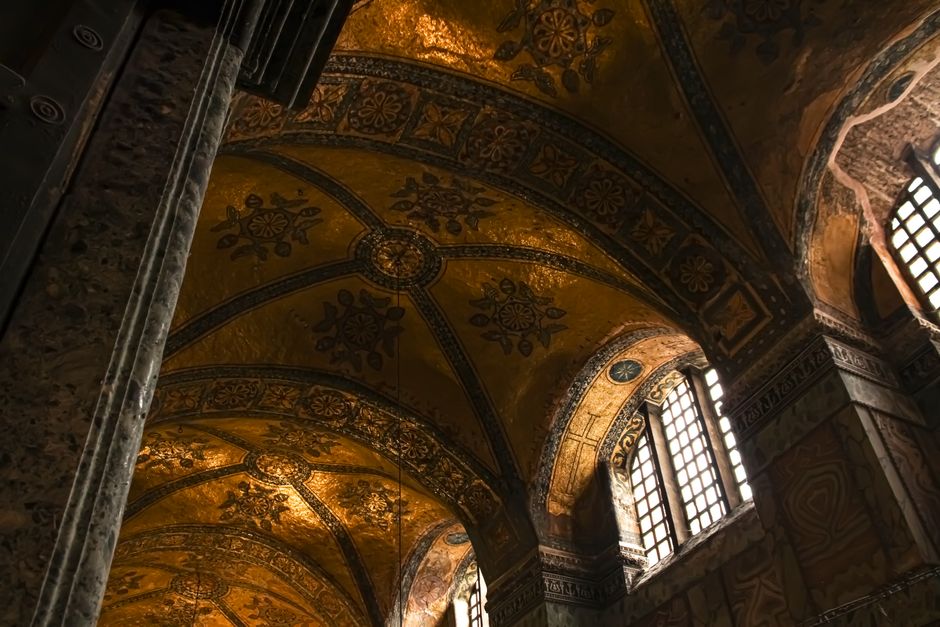
The Byzantine Empire Lasted 1,123 Years: Forgotten Facts — History trivia by TrivBits

Table of Contents

When we think of ancient civilizations that shaped our world, Rome usually steals the spotlight. But here's something most people miss: the Byzantine Empire lasted from 330 CE to 1453 CE, an astonishing span of over eleven centuries. While Western Rome crumbled in the fifth century, its eastern half—what historians call the Byzantine Empire—thrived for another thousand years, preserving classical knowledge, pioneering legal systems, and defending Europe's southeastern frontier against wave after wave of invaders.

This empire wasn't just Rome's shadow. It was a vibrant, evolving civilization that blended Greek culture, Roman law, and Christian faith into something entirely unique. From Constantinople's legendary walls to the glittering mosaics of Ravenna, the Byzantines left an indelible mark on history that we're only beginning to fully appreciate.

Key Takeaways

  • The Byzantine Empire lasted 1,123 years, from its founding in 330 CE until Constantinople fell to the Ottomans in 1453 CE.
  • Byzantines never called themselves "Byzantine"—they were Romans (Rhomaioi) who saw their empire as the legitimate continuation of ancient Rome.
  • Constantinople's triple-layered walls protected the city for over a millennium, surviving countless sieges until gunpowder artillery changed warfare forever.
  • Byzantine scholars fleeing the empire's collapse brought classical Greek texts to Italy, helping spark the Renaissance.
  • The empire's legal code, compiled under Justinian I, became the foundation for civil law systems still used across Europe today.
  • Greek fire, a Byzantine naval weapon whose exact formula remains unknown, gave the empire a decisive military advantage for centuries.

Why the Byzantine Empire Lasted So Long Against the Odds

Geography was destiny for Constantinople. Emperor Constantine I chose the site of ancient Byzantium with strategic genius—a peninsula where Europe meets Asia, controlling the vital sea route between the Mediterranean and Black seas. Enemies had to cross water to reach the city's landward walls, and those walls were formidable.

The Theodosian Walls, completed in 413 CE, featured three layers of defense: an outer wall, an inner wall towering sixty feet high, and a moat. For over eight hundred years, these fortifications turned back Persians, Arabs, Bulgars, and Rus Vikings. Only twice did enemies breach them—during the Fourth Crusade in 1204 (when fellow Christians betrayed the city) and finally in 1453.

But stone alone doesn't explain longevity. The Byzantines mastered diplomacy, often called their "secret weapon." They played enemies against each other, paid tribute when necessary, and married into foreign dynasties. Why fight when gold and intrigue could achieve the same goal? This pragmatic approach—shocking to medieval Western Europeans who prized martial honor—kept the empire alive through crisis after crisis.

The Empire That Forgot It Was Byzantine

Here's an irony: no Byzantine ever used that word. The term "Byzantine Empire" was invented by German historian Hieronymus Wolf in 1557, a century after the empire ceased to exist. Citizens called themselves Rhomaioi—Romans—and their emperor was the Roman Emperor, full stop.

This wasn't delusion. When the empire split administratively in 395 CE, both halves remained Roman. The western portion collapsed in 476 CE, but the eastern empire continued without interruption. They maintained Roman law, Roman administrative structures, and the Roman claim to universal authority. That the empire's daily language shifted from Latin to Greek by the seventh century didn't change their identity.

The transformation was gradual. Early emperors like Justinian I (reigned 527-565 CE) still spoke Latin and dreamed of reconquering the West. Later rulers embraced their Hellenic heritage while never abandoning their Roman political identity. It was both/and, not either/or.

Justinian's Code: Ancient Law That Still Matters

In 529 CE, Emperor Justinian commissioned a monumental task: organize and systematize a thousand years of Roman law. The result, the Corpus Juris Civilis, condensed millions of words from countless legal sources into a coherent system.

This wasn't just an academic exercise. Justinian's Code addressed property rights, contracts, inheritance, and criminal justice with remarkable sophistication. Concepts we take for granted—innocent until proven guilty, the right to legal representation, written contracts—were refined and codified by Byzantine jurists.

When Western Europe rediscovered these texts in the eleventh century, they revolutionized medieval law. Today's civil law systems in continental Europe, Latin America, and parts of Asia trace their lineage directly to Justinian's legal framework. Not bad for a sixth-century project.

Greek Fire and Military Innovation

Around 672 CE, Byzantine engineers developed a weapon that terrified enemies for centuries: Greek fire. This incendiary mixture ignited on contact with water, making it devastatingly effective in naval warfare. Byzantine dromons (warships) equipped with flamethrowers could set enemy fleets ablaze even in the middle of the sea.

The formula was a closely guarded state secret, known only to the imperial family and a handful of craftsmen. Modern historians still debate its exact composition—probably a petroleum-based mixture with additives like quicklime or sulfur. What we know for certain: it worked spectacularly, saving Constantinople during the Arab sieges of 674-678 and 717-718 CE.

Beyond flamethrowers, the Byzantines excelled at military organization. Their theme system divided the empire into military districts where soldier-farmers received land in exchange for service. This created a motivated, locally-based defensive force that could mobilize quickly—crucial for an empire constantly defending multiple frontiers.

The Fall and Its Unexpected Legacy

By 1453, the mighty empire had shrunk to Constantinople and a few scattered territories. Sultan Mehmed II brought seventy thousand troops and massive cannons capable of hurling stones weighing over half a ton. After a fifty-three-day siege, the walls that had stood for a millennium finally fell on May 29, 1453.

Emperor Constantine XI died fighting in the streets, last of the Roman emperors. The medieval era effectively ended that day, though historians would debate the significance for centuries.

But here's the twist: the empire's fall scattered its treasures. Byzantine scholars fled west, carrying precious manuscripts—Greek texts of Plato, Aristotle, and ancient dramatists that had been lost to Western Europe for centuries. Italian humanists eagerly absorbed this knowledge. The Renaissance, which would reshape Western civilization, was partly ignited by refugees from a dying empire.

Comparing Byzantine Longevity to Other Empires

Empire Duration Peak Territory Ultimate Fate
Byzantine Empire 1,123 years (330-1453 CE) Approximately 3.5 million sq km Conquered by Ottoman Turks
Roman Empire (West) Roughly 500 years (27 BCE-476 CE) Approximately 5 million sq km Fragmented into Germanic kingdoms
Ottoman Empire Approximately 600 years (1299-1922 CE) Approximately 5.2 million sq km Dissolved after World War I
Han Dynasty Roughly 400 years (206 BCE-220 CE) Approximately 6 million sq km Collapsed into three kingdoms

Frequently Asked Questions

Why did the Byzantine Empire last so much longer than Western Rome?

The eastern empire had several advantages: wealthier provinces (Egypt, Syria, Anatolia), better natural defenses, more urbanized economy, and fewer Germanic migration pressures. Constantinople's strategic location and impregnable walls also provided a secure capital that could weather crises that would have destroyed a land-based capital.

What language did the Byzantine Empire speak?

Initially Latin was the official language, but Greek gradually became dominant by the seventh century. Greek had always been the common language of the eastern Mediterranean, and as the empire lost Latin-speaking territories in the West, Greek naturally prevailed. By the medieval period, Byzantine emperors issued decrees in Greek, though they still claimed the Roman title.

How did the Byzantine Empire finally fall?

The empire never recovered from the Fourth Crusade's sack of Constantinople in 1204, which fractured it into competing states. Although Byzantines reclaimed the capital in 1261, the empire was permanently weakened. The rise of the Ottoman Turks in Anatolia gradually surrounded Constantinople, and in 1453, Sultan Mehmed II's cannons breached the ancient walls after a fifty-three-day siege.

What is the Byzantine Empire's greatest contribution to modern civilization?

Arguably, preserving classical knowledge through the Middle Ages. Byzantine scholars copied and studied Greek and Roman texts that might otherwise have been lost forever. Their legal codes influenced modern civil law, their architectural innovations inspired Islamic and Western building, and their theological debates shaped Christianity. The empire was a bridge connecting the ancient and modern worlds.
Sources

7 Surprising Facts About Champagne Bubbles and Pressure

7 Surprising Facts About Champagne Bubbles and Pressure

7 Surprising Facts About Champagne Bubbles and Pressure

By TrivBits, Staff Writer — Published August 4, 2026

Table of Contents

Pop a bottle of champagne and you'll witness one of nature's most elegant physics demonstrations. Those dancing champagne bubbles aren't just pretty—they're the result of extreme pressure and fascinating chemistry that transforms a simple beverage into liquid fireworks. The pressure inside a champagne bottle rivals that of a bus tire, and every glass contains millions of bubbles rising in mesmerizing columns. What makes these effervescent spheres so special goes far beyond their ability to tickle your nose. From the science behind the pop to the surprising trivia about what makes bubbles behave the way they do, champagne offers a masterclass in physics, chemistry, and engineering. Let's discover what makes these tiny spheres of carbon dioxide so remarkable.

Key Takeaways

  • Champagne bottles contain pressure roughly three times that of car tires, reaching about 90 pounds per square inch.
  • A single bottle of champagne holds approximately 49 million bubbles when properly poured.
  • Champagne corks can fly at speeds up to 40 miles per hour when released suddenly.
  • The bubbles in champagne form around microscopic imperfections and fibers in the glass, not spontaneously.
  • Colder champagne produces smaller, more numerous bubbles that last longer in the glass.
  • The shape of your glass dramatically affects how bubbles behave and how quickly champagne goes flat.

Understanding Champagne Bubbles and Pressure

The pressure inside a champagne bottle is truly astonishing. At approximately 90 pounds per square inch, it's roughly three times the pressure found in your car tires and about the same as the pressure inside a double-decker bus tire. This intense force comes from carbon dioxide created during the secondary fermentation process that defines champagne production. Winemakers trap this gas inside the bottle, where it dissolves into the wine under pressure. The moment you pop the cork, that pressure releases dramatically, allowing dissolved CO₂ to escape as bubbles. Temperature plays a critical role in this pressure dynamic. A warm bottle can reach pressures exceeding 100 psi, while a properly chilled bottle at around 40°F maintains a more manageable 75-80 psi. This is why champagne should always be served cold—not just for taste, but for safety and bubble quality.

The Seven Most Surprising Champagne Bubble Facts

1. Champagne Bottles Contain Millions of Invisible Bubble Factories

Every champagne glass contains countless microscopic imperfections—tiny scratches, cellulose fibers from towels, or dust particles—that serve as nucleation sites where bubbles form. Without these imperfections, champagne would struggle to bubble at all. Scientists have discovered that a single glass can contain thousands of these nucleation points, each one spawning a continuous stream of bubbles. Some high-end glassmakers deliberately etch tiny points into the bottom of champagne flutes to create consistent bubble columns. A typical bottle poured into proper glasses releases approximately 49 million bubbles over the course of its consumption, each one beginning its journey from one of these microscopic launching pads.

2. A Flying Cork Can Cause Serious Injury

That celebratory pop comes with genuine danger. When released suddenly, a champagne cork can rocket out of the bottle at speeds between 25 and 40 miles per hour. At these velocities, the cork becomes a projectile capable of causing eye injuries, broken glasses, or painful bruises. The pressure behind this launch is substantial enough that champagne-related eye injuries send people to emergency rooms every year, particularly during New Year's celebrations. Professional sommeliers always point the bottle away from people and cover the cork with a towel while opening, applying steady pressure to ease it out with a gentle sigh rather than an explosive pop.

3. Bubble Size Reveals Temperature and Quality

Smaller bubbles indicate better champagne handling and proper serving temperature. Cold champagne produces finer, more persistent bubbles because lower temperatures allow more CO₂ to remain dissolved in the wine. As these smaller bubbles rise more slowly, they create a creamier mousse and deliver flavor compounds more gently to your palate. Larger, faster-rising bubbles typically indicate warmer champagne or lower-quality sparkling wine. Expert tasters can gauge a champagne's storage conditions and serving temperature simply by observing bubble size and persistence. The ideal serving temperature of 45-48°F produces bubbles that are small, numerous, and long-lasting.

4. Glass Shape Dramatically Affects Bubble Behavior

The difference between a flute and a coupe isn't just aesthetic—it fundamentally changes your champagne experience. Wide, shallow coupes allow bubbles to escape rapidly and champagne to go flat within minutes. The surface area exposed to air is so large that CO₂ dissipates quickly, taking aromatic compounds with it. Tall, narrow flutes preserve bubbles far longer by minimizing surface area and concentrating the bubble streams. Some research suggests that tulip-shaped glasses offer the best compromise, preserving bubbles while allowing aromatic compounds to collect near the rim where your nose can appreciate them. The same champagne can taste markedly different depending solely on glassware geometry.

5. Pouring Technique Controls Bubble Loss

How you pour champagne determines how much CO₂ you waste. Pouring straight down into the center of a glass creates turbulence that releases massive amounts of dissolved carbon dioxide, potentially losing up to 20-30% of the bubbles before you even take a sip. The proper technique—tilting the glass and pouring gently down the side, like pouring beer—preserves significantly more CO₂. This gentle pour minimizes agitation and keeps more gas dissolved in the wine. Professional champagne service always involves this angled pour, followed by allowing the foam to settle before topping up the glass. Those few extra seconds of careful pouring can extend the life of your champagne's effervescence by several minutes.

6. Bubbles Carry Flavor Compounds to Your Nose

Champagne bubbles aren't just visual entertainment—they're flavor delivery systems. As bubbles rise and burst at the surface, they create tiny aerosol droplets that carry aromatic compounds into the air above your glass. This is why champagne smells more intense than still wine of similar composition. Each bursting bubble acts like a microscopic catapult, launching volatile flavor molecules toward your nose. Scientists estimate that millions of these micro-droplets form in a single glass, creating an aromatic cloud that enhances the tasting experience. This is also why flat champagne tastes so different—without bubbles, those aromatic compounds remain trapped in the liquid rather than reaching your olfactory receptors.

7. Champagne Pressure Requires Specially Engineered Bottles

Champagne bottles aren't ordinary glass containers. They must withstand enormous internal pressure, which requires thicker, heavier glass than regular wine bottles. A standard champagne bottle weighs nearly twice as much as a comparable still wine bottle, with glass thickness reaching up to half an inch at the base. The distinctive punt (the indentation at the bottle's bottom) isn't just traditional—it's structural engineering. This concave base distributes pressure more evenly across the glass, preventing weak points that could lead to explosions. Even with these reinforcements, champagne producers lose a small percentage of bottles to spontaneous breakage during aging. The entire bottle design, from the thick glass to the mushroom-shaped cork and wire cage, exists solely to contain those 90 pounds of pressure safely.

How Temperature Affects Champagne Bubbles

Temperature governs nearly every aspect of champagne bubble behavior. Warmer champagne holds less dissolved CO₂, meaning bubbles form more aggressively and escape faster. The wine goes flat more quickly, and the larger bubbles create a harsher sensation on the palate. Colder champagne keeps more gas in solution, releasing it gradually as elegant streams of fine bubbles. Below 40°F, however, champagne becomes too cold—flavors mute and the wine loses its aromatic complexity.
Temperature Bubble Characteristics Taste Impact
40-45°F Very fine, persistent bubbles Optimal balance of bubbles and flavor
45-50°F Small to medium, steady streams Full flavor expression with good effervescence
50-55°F Larger, faster-rising bubbles Diminished bubble quality, faster flattening
Above 55°F Large, aggressive bubbles Harsh sensation, rapid CO₂ loss, muted flavors

The Science Behind the Pop

That satisfying pop when opening champagne is actually a miniature sonic boom. As the cork exits the bottle, the sudden pressure drop causes the escaping CO₂ to expand rapidly and cool dramatically—often below freezing. This creates a visible fog of condensed water vapor mixed with CO₂ gas. The popping sound occurs when the cork breaks the sound barrier in the narrow bottle neck, creating a shock wave. High-speed cameras have captured this moment, revealing that the gas cloud erupts at speeds potentially exceeding 50 miles per hour. The wire cage (called a muselet) that secures the cork exists because cork alone cannot reliably contain the pressure. Natural cork is porous and can slowly leak or even pop out spontaneously. The cage provides a mechanical backup, ensuring the cork stays in place during storage and transport. Interestingly, it takes exactly six half-turns to remove a standard champagne cage—a detail that has remained consistent across producers for over a century.

Frequently Asked Questions

How long do champagne bubbles last in a glass?

In a proper flute at the right temperature, champagne bubbles can persist for 10-20 minutes or longer. Wide glasses or warm temperatures reduce this to just a few minutes. The quality of the champagne and cleanliness of the glass also significantly affect bubble longevity.

Why does champagne bubble more in a dirty glass?

Residues, soap film, or dust particles create additional nucleation sites where bubbles form. While this might seem to increase bubbles, it actually causes the champagne to go flat faster by releasing dissolved CO₂ more rapidly. Clean, smooth glasses preserve champagne longer.

Can champagne bottles really explode?

Yes, though it's rare with modern production standards. Bottles can explode if they have manufacturing defects, are stored at excessively warm temperatures, or develop too much pressure during fermentation. This is why champagne cellars traditionally have thick walls and why bottles are stored horizontally to keep corks moist and sealed.

Do more expensive champagnes have better bubbles?

Generally, yes. Premium champagnes undergo longer aging periods that allow better integration of CO₂, producing finer, more persistent bubbles. Higher-quality production methods and stricter quality control also contribute to superior bubble characteristics, though proper storage and serving temperature matter just as much as price. Next time you raise a glass of champagne, you're holding a carefully engineered pressure vessel filled with millions of tiny physics experiments. Each bubble's journey from glass imperfection to bursting finale represents a perfect balance of chemistry, temperature, and time—a reminder that some of life's most elegant pleasures have surprisingly explosive origins.