1 / 10 Questions
0 Points

What grain is sake traditionally made from?

Rice

Barley

Corn

Wheat

Points won
0
Correct score
0%

More Questions

More Articles

The Hidden Story Behind Boxing Rings Being Square

The Hidden Story Behind Boxing Rings Being Square

The Hidden Story Behind Boxing Rings Being Square

By TrivBits, Staff Writer — Published August 18, 2026

Table of Contents

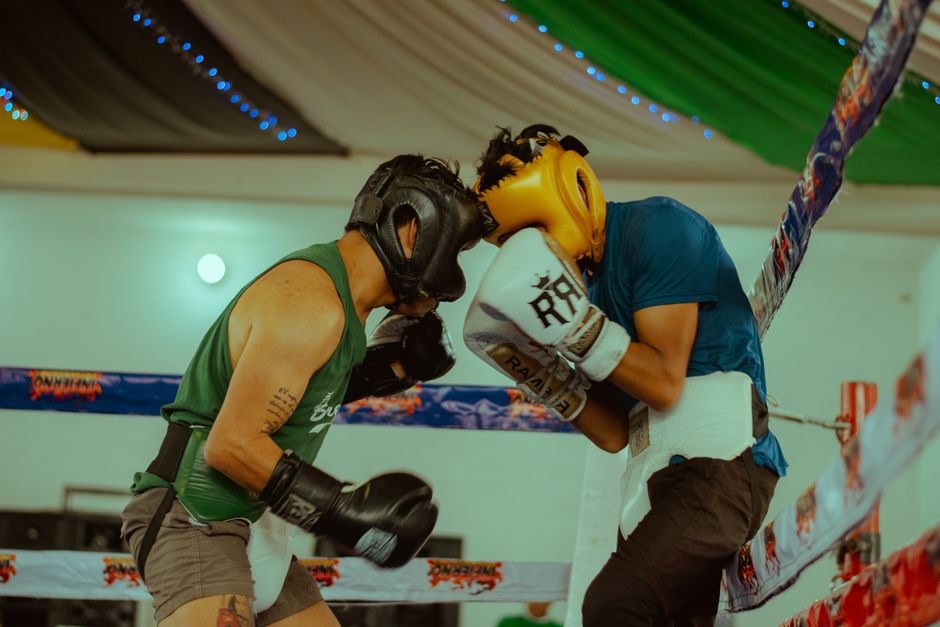
Step into any boxing arena and you'll encounter one of sport's most amusing contradictions: the "ring" is actually a square. This linguistic quirk isn't just a funny oversight—it's a fascinating window into boxing's evolution from bare-knuckle brawls in makeshift circles to the precisely regulated sport we know today. The hidden story behind this paradox reveals surprising truths about how ancient combat traditions shaped modern athletics. Before roped platforms and padded corners, fighters and spectators formed human circles to contain the action. The term "ring" stuck even as the sport transformed, leaving us with a delightful piece of trivia that makes you question what else we've been calling by the wrong name all along.

Key Takeaways

  • Boxing rings are square despite their name because early matches took place in circular areas formed by spectators standing around fighters.
  • The transition to square platforms occurred in the 1830s when the London Prize Ring Rules introduced roped enclosures with posts at corners.
  • Modern professional boxing rings measure between 16 and 24 feet on each side, with 20 feet being the most common size.
  • The square shape provides strategic corners where fighters can trap opponents, fundamentally changing boxing tactics.
  • The term "ring" appears in boxing vocabulary throughout, from "throwing your hat in the ring" to "saved by the bell."
  • Ancient Greek and Roman combat sports also used circular areas, establishing the ring terminology over two millennia ago.

The Hidden Story Behind Ancient Combat Circles

Long before boxing became an organized sport, fighters gathered in open spaces where crowds naturally formed circles around them. This wasn't unique to boxing—ancient Greek pankration and Roman gladiatorial contests followed similar patterns. Spectators created living boundaries, pressing close enough to see every blow while maintaining just enough distance to avoid the action themselves. These circles served multiple purposes. They contained the fight within a defined space. They prevented fighters from fleeing. They also created an intimate arena where every spectator had a reasonable view, though those in front certainly got the best angles. The circular formation was organic, practical, and deeply embedded in combat sport culture for centuries. When prize fighting emerged in 18th-century England, matches still took place in these informal circles. Organizers would sometimes draw a literal circle on the ground, but more often, the crowd itself defined the boundaries. The fighters would "square off" in the center of this circular space—an interesting linguistic detail that foreshadowed the shape change to come.

Why Boxing Rings Became Square Platforms

The transformation from circle to square happened gradually during the 1830s and 1840s. The London Prize Ring Rules, established in 1838, standardized many aspects of boxing including the fighting area. Rather than relying on crowds to form boundaries, organizers began constructing elevated platforms with posts at the corners and ropes strung between them. Why choose a square? Engineering and construction played major roles. Four corner posts create a stable structure far easier to build than a circular one. Ropes could be stretched taut between posts at uniform heights, creating clear boundaries that wouldn't shift or sag unpredictably. The square also maximized usable fighting space within a given perimeter of rope. The elevated platform itself offered advantages. It gave spectators better sightlines, especially those farther back. It separated fighters from the crowd, reducing interference and creating a more controlled environment. It also added an element of danger—falling through the ropes became a real possibility, though modern rings have multiple rope levels to prevent this. Despite this radical change in shape and structure, the word "ring" persisted. Tradition runs deep in boxing, and the terminology was already woven into the sport's language. Fighters still "entered the ring" and "threw their hats in the ring" to challenge opponents, even though those rings were now decidedly square.

How Ring Dimensions Shape Modern Boxing

Today's boxing rings follow strict regulations, though different sanctioning bodies allow some variation. Professional rings typically measure 20 feet per side, though sizes from 16 to 24 feet are permitted. The platform stands approximately four feet above the ground, surrounded by four ropes stretched between padded corner posts.
Ring Component Standard Measurement Purpose
Side Length 16–24 feet (typically 20 feet) Defines fighting area
Platform Height 3–4 feet Elevates for visibility
Number of Ropes 4 Contains fighters safely
Canvas Padding 1–1.5 inches Cushions falls
Corner Posts 4 padded posts Supports ropes, protects fighters
The square shape fundamentally changed boxing strategy. Corners became tactical features where a skilled fighter could trap an opponent, limiting their movement and escape routes. "Working the corners" became essential technique. Fighters learn to cut off the ring, using angles to force opponents toward these dead-end spaces. Smaller rings favor aggressive, pressure fighters who can close distance quickly. Larger rings benefit boxers with superior footwork and defensive skills who need room to move. This is why ring size negotiations sometimes become contentious before major fights—the dimensions genuinely affect tactical advantages.

Boxing Terminology That Preserves the Circle

The word "ring" survived in countless boxing expressions that reveal the sport's circular origins. When someone declares they're "throwing their hat in the ring," they're referencing an old practice where challengers literally tossed headwear into the fighting circle to announce their intention to compete. "Having a ring in your ears" refers to the ringing sensation after being struck, but also echoes the circular space where such blows occurred. Referees still perform a "ring walk" before major fights, ceremonially checking the ropes and canvas. Fighters make their "ring entrance" accompanied by music and fanfare. The "ring doctor" monitors for injuries. Even "ringside seats" preserve the circular imagery, though they're now arranged around a square. This linguistic persistence isn't unique to English. Many languages adopted similar terms as boxing spread globally, cementing "ring" as the universal descriptor regardless of the actual shape. The contradiction became so normalized that most people never question it until someone points out the obvious mismatch.

Frequently Asked Questions

When did boxing rings change from circles to squares?

The transition occurred primarily in the 1830s and 1840s when the London Prize Ring Rules standardized the use of roped, square platforms. However, informal circular areas persisted in some locations well into the late 19th century before square rings became universal.

Are there any circular boxing rings today?

No major boxing organizations use circular rings for professional or amateur competition. The square shape is mandated by all recognized sanctioning bodies including the WBC, WBA, IBF, and WBO, as well as by Olympic boxing rules.

Why don't they just call it a boxing square?

Tradition and linguistic inertia keep "ring" in use. The term was established for centuries before the shape changed, and boxing's conservative culture values historical continuity. Changing the name now would erase this interesting piece of the sport's history.

Do other combat sports use square rings?

Wrestling uses square rings similar to boxing. Mixed martial arts competitions typically use octagonal cages, while some kickboxing organizations use traditional square rings. Sumo wrestling maintains the circular ring called a dohyō, preserving the original shape-name alignment. Next time you watch a boxing match, take a moment to appreciate this quirky historical artifact. The square ring stands as a reminder that language preserves our past even as technology and practices evolve. Sometimes the most interesting trivia hides in plain sight, waiting for curious minds to discover the stories behind everyday contradictions.
Did You Know These Historical Figures Had Extremely Bizarre Phobias?

Did You Know These Historical Figures Had Extremely Bizarre Phobias?

⏱️ 5 min read

Throughout history, some of the world's most influential leaders, artists, and innovators have harbored secret fears that seem almost incongruous with their public personas. While these individuals shaped nations, created masterpieces, and changed the course of human events, they simultaneously battled irrational anxieties that would surprise most people today. These phobias reveal a deeply human side to figures often placed on pedestals, reminding us that greatness and vulnerability can coexist within the same person.

Sigmund Freud's Fear of Ferns and Travel

The father of psychoanalysis, Sigmund Freud, spent his career analyzing the fears and anxieties of others, yet he struggled with his own peculiar phobias. Freud suffered from pteridophobia, an irrational fear of ferns. This seemingly innocuous plant caused him genuine distress, which is particularly ironic given his professional focus on understanding the unconscious mind and irrational fears.

Even more debilitating was Freud's siderodromophobia, or fear of train travel. Despite living in an era when trains were the primary mode of long-distance transportation, Freud experienced severe anxiety when boarding trains. He would arrive at stations excessively early and pace nervously on platforms. This fear didn't prevent him from traveling, but it certainly made his journeys uncomfortable. Freud himself attempted to analyze these fears through his own theoretical framework, suggesting they stemmed from deeper psychological conflicts, though he never fully resolved them.

Edgar Allan Poe's Terror of Being Buried Alive

The master of macabre literature, Edgar Allan Poe, was plagued by taphophobia—the fear of being buried alive. This phobia wasn't merely a passing concern but an obsession that permeated both his personal life and literary works. Stories such as "The Premature Burial," "The Fall of the House of Usher," and "The Cask of Amontillado" all feature this terrifying scenario in vivid detail.

During Poe's lifetime, the fear of premature burial wasn't entirely unfounded. Medical science was less advanced, and cases of people being mistakenly declared dead did occur, though far less frequently than popular imagination suggested. Poe's fixation went beyond rational concern, however, manifesting as a genuine phobia that likely influenced his dark, claustrophobic writing style. The irony of his death adds another layer to this fear—Poe died under mysterious circumstances, and the exact cause remains disputed to this day.

Queen Elizabeth I's Fear of Roses

Elizabeth I, one of England's most powerful monarchs, harbored an unusual fear of roses, known as rhodophobia. The queen who navigated treacherous political waters, survived assassination plots, and defeated the Spanish Armada was inexplicably terrified of one of England's most beloved flowers. Historical accounts suggest she couldn't bear to be in the same room as roses and would become visibly distressed in their presence.

The origins of this fear remain somewhat mysterious, though some historians speculate it may have stemmed from a traumatic childhood experience or perhaps a symbolic association with the Wars of the Roses, which had devastated England before the Tudor dynasty. Whatever the cause, her staff knew to keep roses far from the queen's presence, a challenging task given their popularity in Tudor gardens and decorative arrangements.

Napoleon Bonaparte's Fear of Cats

Napoleon Bonaparte, the military genius who conquered much of Europe and instilled fear in countless enemies, was himself afraid of cats. This condition, called ailurophobia, seems almost comical when considering Napoleon's fearsome reputation on the battlefield. Historical accounts describe instances where the emperor would break out in a cold sweat upon encountering a feline.

One famous anecdote tells of Napoleon's aide-de-camp finding the great military leader in his bedroom, disheveled and sweating, calling for help—all because a small kitten had wandered into his quarters. The contrast between his courage facing armies and his panic facing a harmless house cat illustrates the irrational nature of phobias. They don't discriminate based on a person's strength, intelligence, or accomplishments.

Nikola Tesla's Obsessive Fear of Germs and Pearls

Brilliant inventor Nikola Tesla exhibited multiple phobias that significantly impacted his daily life. He suffered from severe mysophobia, or fear of germs, which manifested in obsessive-compulsive behaviors. Tesla would use dozens of napkins to clean his dining area and refused to touch anything that might harbor bacteria. He was particularly afraid of hair and round objects, especially pearls.

Tesla's pearl phobia was so severe that he couldn't speak to women wearing pearl jewelry. On one occasion, he reportedly sent his secretary home to change when she arrived wearing pearls. These fears, combined with his need for everything to be divisible by three, suggest Tesla may have suffered from obsessive-compulsive disorder. Despite these challenges, he managed to produce groundbreaking work in electrical engineering that transformed modern civilization.

The Psychology Behind Historical Phobias

Understanding why these accomplished individuals developed such specific fears requires examining the nature of phobias themselves. Phobias are anxiety disorders characterized by excessive, irrational fear of specific objects or situations. They can develop from traumatic experiences, learned behaviors, or even genetic predispositions.

What makes these historical examples particularly fascinating is how these individuals achieved greatness despite their fears. Their phobias didn't define them or prevent them from making significant contributions to society. This demonstrates the complex nature of human psychology—brilliant minds can harbor irrational fears, and courage in one area doesn't necessarily translate to fearlessness in all aspects of life.

Lessons from Famous Fears

These historical phobias offer valuable insights for contemporary society. They humanize figures who might otherwise seem unreachable or perfect, making their achievements more relatable. They also highlight that mental health challenges, including anxiety disorders, have always been part of the human experience, regardless of era, status, or accomplishment.

Furthermore, these examples demonstrate that having fears or anxieties doesn't preclude success or greatness. Each of these individuals found ways to work around their phobias, adapting their environments and routines to manage their anxieties while still pursuing their goals. Their stories serve as reminders that psychological challenges are surmountable and that vulnerability and strength can coexist within the same person.