1 / 10 Questions
0 Points

What fruit is a pickle made from?

Eggplant

Green tomato

Cucumber

Zucchini

Points won
0
Correct score
0%

More Questions

More Articles

The Truth About Baseball Umpires Wearing Black Until 1970

The Truth About Baseball Umpires Wearing Black Until 1970

The Truth About Baseball Umpires Wearing Black Until 1970

By TrivBits, Staff Writer — Published August 17, 2026

Table of Contents

For nearly a century, baseball umpires dressed like undertakers. The truth about baseball umpires and their all-black uniforms is more interesting than you might think. While players donned colorful pinstripes and team logos, the men calling balls and strikes stood behind home plate in somber, dark attire that made them look more suited for a funeral than a ballpark. This wasn't just tradition—it was a deliberate choice rooted in authority, visibility, and the evolving professionalism of America's pastime. The shift away from black in 1970 marked one of the most visible changes in baseball's long history, yet most fans never questioned why umpires wore black in the first place. The surprising facts behind this wardrobe evolution reveal how baseball's arbiters balanced respect, practicality, and the need to command attention on the diamond.

Key Takeaways

  • Baseball umpires wore all-black uniforms from the late 1800s until Major League Baseball officially changed to lighter colors in 1970.
  • The black uniform was chosen to convey authority and formality, similar to judges in courtrooms.
  • Heat-related health concerns and improved fabric technology drove the shift to cooler, lighter-colored uniforms.
  • Modern umpires typically wear navy blue or black shirts with gray pants, though some leagues have experimented with different color combinations.
  • The National League and American League had slightly different uniform policies until they unified under MLB in 2000.
  • Television broadcasting made umpire visibility more important, influencing uniform design decisions in the 1970s.

The Truth About Baseball Umpires and Their Dark Beginnings

When organized baseball took shape in the mid-to-late 1800s, umpires needed a uniform that commanded respect. Baseball borrowed from other authority figures of the era. Judges wore black robes. Police officers wore dark uniforms. The choice of black for umpires wasn't arbitrary—it was symbolic. Early umpires often faced hostile crowds and argumentative players. A formal, dignified appearance helped establish their role as the final word on the field. The all-black suit—complete with coat, vest, and bow tie in the earliest days—sent a clear message: these men were officials, not participants in the game. By the early 20th century, the black uniform had become standard across professional baseball. Umpires wore black wool coats during cooler months and black shirts during summer games. The heavy, dark fabric absorbed heat mercilessly under the sun, especially during day games in places like St. Louis and Kansas City, where temperatures regularly soared above 90 degrees Fahrenheit.

Why Black Became Unbearable

The health toll of black wool uniforms became impossible to ignore. Umpires working doubleheaders in July and August faced genuine heat exhaustion risks. Standing still behind home plate, crouching repeatedly, and wearing heavy protective gear under dark clothing created dangerous conditions. Fabric technology had also evolved significantly by the 1960s. Synthetic blends and lighter-weight materials offered better breathability than the wool that had been standard for decades. Baseball officials recognized that protecting umpire health didn't require sacrificing professionalism. The timing of the change also coincided with baseball's television boom. Color broadcasts made uniform choices more visible to millions of viewers. Lighter-colored shirts provided better contrast against stadium backgrounds, making umpires easier to see on screen. The visual clarity benefited both broadcast viewers and fans in the stands.

The 1970 Uniform Revolution

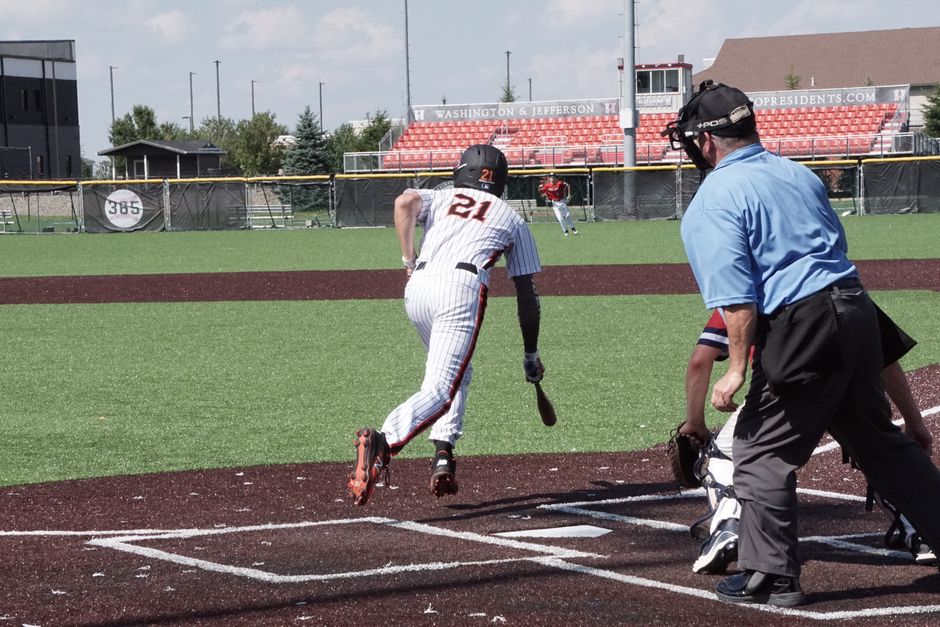
Major League Baseball officially approved lighter-colored umpire uniforms in 1970. The new standard featured light blue short-sleeved shirts during warm weather, paired with dark pants. The change was immediate and universal across both leagues. Not everyone celebrated the shift. Some traditionalists argued that the lighter uniforms diminished the umpire's authority. Others worried that colored shirts made umpires too visible, drawing attention away from the players. These concerns proved unfounded. Umpires maintained their authority through their calls and presence, not their wardrobe. The practical benefits were undeniable. Umpires reported feeling cooler and more comfortable during long games. Heat-related incidents decreased noticeably. The new uniforms also allowed for greater flexibility—short sleeves in summer, long sleeves in cooler weather, and jackets when temperatures dropped.

Modern Umpire Uniform Standards

Today's umpires wear navy blue or black polo-style shirts with gray pants as their standard uniform. The specific shade and style have varied slightly over the decades, with MLB occasionally updating the design for improved comfort and appearance. Different levels of baseball have adopted varying uniform standards:
League Level Typical Shirt Color Typical Pant Color
Major League Baseball Navy blue or black Charcoal gray
Minor League Baseball Navy blue Gray
College Baseball Navy blue or powder blue Gray or khaki
High School Baseball Varies by state (often navy or black) Gray or black
The protective equipment umpires wear has also evolved dramatically. Modern chest protectors, shin guards, and masks use lightweight materials that provide superior protection without the bulk of earlier designs. These improvements have made the job safer and more comfortable than ever before.

The Psychology of Umpire Uniforms

Uniform color affects how people perceive authority. Research in psychology has shown that darker colors convey power and formality, while lighter colors appear more approachable. Baseball's shift from black to navy blue struck a balance—maintaining authority while reducing the intimidating severity of all-black attire. Interestingly, some amateur and youth leagues have experimented with even lighter colors, including powder blue and tan. These variations reflect different philosophies about the umpire's role. Professional baseball has largely stuck with darker shades, preserving the connection to the sport's formal traditions while embracing practical improvements.

Frequently Asked Questions

When did MLB umpires stop wearing all black?

Major League Baseball umpires officially stopped wearing all-black uniforms in 1970, transitioning to lighter-colored shirts, typically light blue initially and later navy blue. The change was made primarily for health and comfort reasons, as black uniforms caused excessive heat absorption during summer games.

Why did baseball umpires originally wear black?

Umpires wore black to convey authority and formality, similar to judges and other officials in the late 1800s and early 1900s. The dark, formal attire helped establish their role as neutral arbiters who commanded respect from players and fans alike.

Do all baseball umpires wear the same uniform today?

Professional baseball umpires follow standardized uniform requirements set by their leagues, typically navy blue or black shirts with gray pants. However, amateur, college, and high school umpires may have different uniform standards that vary by organization and region.

What color do home plate umpires wear during the World Series?

World Series umpires wear the same navy blue or black shirts and gray pants as they do during regular season games. MLB maintains consistent umpire uniform standards throughout the season and postseason, though umpires may wear special commemorative patches for championship series. The next time you watch a baseball game, take a moment to appreciate the umpire's uniform. What seems like a simple wardrobe choice actually reflects more than a century of evolution in baseball's culture, technology, and understanding of human comfort. Those navy blue shirts represent a sport willing to honor tradition while embracing practical change—a balance baseball continues to strike in countless ways.
Did You Know These Famous Leaders Had Secret Double Lives?

Did You Know These Famous Leaders Had Secret Double Lives?

⏱️ 5 min read

Throughout history, many influential leaders have maintained carefully guarded secrets that would have shocked their contemporaries. Behind the public personas of authority and respectability, these figures led double lives that ranged from surprising hobbies to clandestine activities that could have destroyed their careers. These hidden aspects of their lives reveal the complex nature of leadership and the lengths some would go to protect their reputations while pursuing their true passions or necessities.

Thomas Jefferson's Hidden Family

One of America's founding fathers, Thomas Jefferson, maintained one of the most controversial secret lives in American history. While publicly advocating for liberty and democratic ideals, Jefferson kept a parallel family hidden from public view. After his wife Martha's death in 1782, Jefferson began a relationship with Sally Hemings, an enslaved woman at his Monticello estate who was actually his late wife's half-sister. This relationship, which lasted nearly four decades, produced at least six children.

For over two centuries, Jefferson's descendants and historians debated the truth of this relationship. Jefferson never publicly acknowledged these children, and the matter remained a subject of speculation until DNA testing in 1998 provided compelling evidence supporting the historical accounts. This revelation fundamentally changed how historians and the public view one of America's most celebrated presidents, demonstrating the stark contradiction between his public pronouncements on equality and his private actions.

Queen Christina of Sweden's Gender Nonconformity

Queen Christina of Sweden, who ruled from 1632 to 1654, lived a life that defied the gender expectations of her era. Raised as a prince due to her father's desire for a male heir, Christina continued to adopt masculine behaviors and dress throughout her reign. She refused to marry despite immense political pressure, famously declaring that she was "born free" and would remain so.

The queen's private life included passionate relationships with both men and women, most notably with her lady-in-waiting Ebba Sparre, whom she called "Belle." Christina's letters to Sparre contained deeply romantic language that went far beyond conventional friendship. After abdicating her throne in one of history's most dramatic royal departures, Christina lived the rest of her life in Rome, where she enjoyed greater freedom to express her authentic self, wearing men's clothing and pursuing intellectual interests typically reserved for men.

J. Edgar Hoover's Concealed Personal Life

As the director of the FBI for nearly five decades, J. Edgar Hoover projected an image of stern morality and traditional American values. He wielded enormous power, collecting secret files on politicians, activists, and celebrities, often focusing on their private lives and alleged moral failings. Yet Hoover himself maintained a carefully hidden personal life that contradicted his public image.

Hoover lived with his mother until her death when he was 43, then began a close relationship with FBI Associate Director Clyde Tolson that lasted until Hoover's death in 1972. The two men were inseparable, dining together daily, vacationing together, and attending social events as a pair. While the exact nature of their relationship remains debated, Hoover left Tolson his estate and Tolson accepted the American flag draped over Hoover's coffin, a gesture typically reserved for widows. The irony that Hoover may have been concealing his own homosexuality while allegedly investigating and persecuting others for theirs remains one of history's most striking examples of hypocrisy.

Alexander Hamilton's Financial Scandal and Blackmail

Alexander Hamilton, one of America's most brilliant founding fathers and the first Secretary of the Treasury, became entangled in an affair that nearly destroyed his career and reputation. In 1791, while serving in George Washington's cabinet, Hamilton began an affair with Maria Reynolds, a woman who claimed to be in an abusive marriage and seeking help.

The affair quickly became a blackmail scheme orchestrated by Maria's husband, James Reynolds. Hamilton paid substantial sums to keep the affair secret, creating a complex web of payments that eventually attracted the attention of political opponents who suspected him of embezzling Treasury funds. In an unprecedented move, Hamilton published a detailed confession of the affair in 1797 to clear his name of financial corruption, sacrificing his personal reputation to preserve his professional integrity. This remarkable pamphlet laid bare intimate details of his private life, shocking the nation and devastating his wife Eliza.

Lawrence of Arabia's Complex Identity

T.E. Lawrence, known as Lawrence of Arabia, led one of the most enigmatic double lives of the 20th century. While celebrated as a British war hero who united Arab tribes against the Ottoman Empire during World War I, Lawrence struggled with his identity and the contradictions of his mission. He oscillated between his British military role and his deep identification with Arab culture and people.

After the war, despite his fame, Lawrence enlisted in the Royal Air Force under assumed names, seeking anonymity and escape from his celebrity. He changed his name legally to T.E. Shaw and worked as an ordinary aircraftman and later a soldier, a dramatic fall from his status as a lieutenant colonel and international hero. Lawrence's writings reveal a man tormented by his experiences, including alleged sexual assault during the war, guilt over perceived betrayals of his Arab allies, and questions about his own sexuality and identity. He lived his final years in obscurity, dying in a motorcycle accident in 1935.

The Legacy of Secret Lives

These historical examples demonstrate that even the most prominent leaders often maintained private lives that contradicted their public personas. Whether driven by societal pressures, personal desires, or complex circumstances, these double lives reveal the human complexity behind historical figures often reduced to simplified narratives. Understanding these hidden aspects provides a more complete picture of history and reminds us that leadership and personal authenticity have often been in tension, particularly in eras with rigid social expectations.