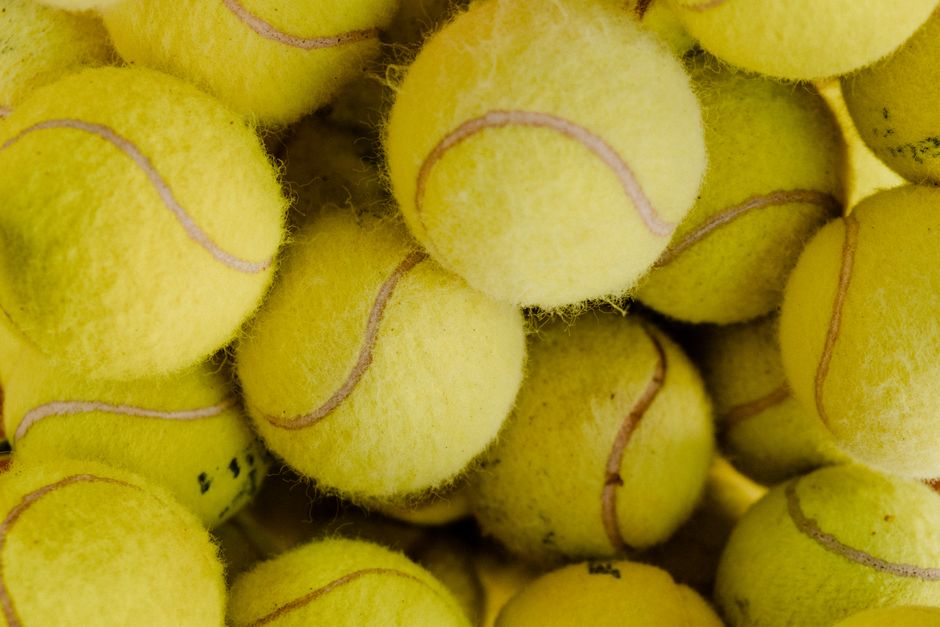
Pick up a tennis ball today and you'll find a bright, fluorescent yellow sphere staring back at you. But this iconic color wasn't always the standard. For nearly a century, tennis balls were white or black, and the switch to yellow happened for a reason that might surprise you: television. The story of why tennis balls are yellow reveals a fascinating intersection of technology, visibility science, and the evolution of sports broadcasting that forever changed one of the world's most popular games.
Tennis has been played since the 12th century in various forms, but the modern game emerged in the 1870s. Throughout most of tennis history, players used white balls on grass courts and occasionally black balls for indoor play. The color seemed perfectly natural—until color television arrived and changed everything.
Key Takeaways
Tennis balls were traditionally white or black until the 1970s when yellow became the official color for major tournaments.
The International Tennis Federation officially approved yellow tennis balls in 1972 specifically to improve visibility for television audiences watching on color broadcasts.
Wimbledon, the sport's most traditional tournament, resisted the change and continued using white balls until 1986.
The specific shade used is "optic yellow" or "fluorescent yellow," chosen because it contrasts well against both grass and clay courts.
Studies confirmed that yellow tennis balls are easier for both players and spectators to track during fast-paced matches.
Despite the official change, many people still mistakenly call tennis balls "green" due to how our eyes perceive the fluorescent yellow color.
The Original Colors: White and Black Tennis Balls
When lawn tennis became formalized in the 1870s, white was the logical choice. The game was played predominantly on grass courts, where white balls provided reasonable contrast against the green playing surface. White also matched the sport's elegant, upper-class aesthetic—players wore all white, clubs maintained pristine grounds, and tradition reigned supreme.
Black balls existed too. They were used primarily for indoor courts where lighting conditions made white balls difficult to see. Some players preferred them for clay courts as well. But white remained the standard for professional tournaments and championship play for decades.
The problem with white balls became apparent as the game evolved. As players developed more powerful serves and faster groundstrokes, tracking a white ball became increasingly challenging for spectators. But the real catalyst for change came from an unexpected source: living room television sets.
How Television Changed Tennis Ball Colors Forever
Color television broadcasting began in earnest during the 1960s. Tennis tournaments, eager to expand their audiences, embraced the new medium. But producers quickly discovered a problem: white tennis balls were nearly invisible on television screens. Against light backgrounds, the balls seemed to disappear. Even on grass courts, the contrast wasn't sufficient for viewers at home to follow the action.
Researchers and tennis officials began experimenting with different colors in the late 1960s and early 1970s. They tested various shades, looking for the perfect balance: a color that would show up clearly on television, remain visible on different court surfaces, and not disadvantage players who had trained their entire lives tracking white balls.
Yellow emerged as the winner. Specifically, a bright, fluorescent shade called "optic yellow" provided excellent contrast against grass, clay, and hard courts. The color stood out dramatically on color television broadcasts, making matches easier and more enjoyable to watch.
In 1972, the International Tennis Federation made it official: yellow tennis balls were approved for tournament play. The change was driven entirely by broadcasting considerations, marking one of the first times television significantly altered the equipment of a major sport.
Wimbledon's White Ball Rebellion
Not everyone embraced the change immediately. Wimbledon, tennis's oldest and most prestigious tournament, stubbornly maintained its white ball tradition. The All England Club valued tradition above television considerations, and white balls remained the standard at Wimbledon throughout the 1970s and into the 1980s.
But even Wimbledon eventually capitulated. In 1986, the tournament officially switched to yellow balls. The decision reflected both practical considerations—yellow balls were simply easier for everyone to see—and the reality that television had become crucial to the sport's economics and global reach.
The switch marked the end of an era. Today, you'd be hard-pressed to find a professional tournament anywhere in the world using white tennis balls.
The Science Behind the Perfect Shade
Why yellow specifically? The answer lies in human vision and color perception. Our eyes contain three types of color receptors (cones) that respond to different wavelengths of light. Yellow light, particularly the fluorescent yellow used in tennis balls, stimulates both the red and green cones strongly, making it one of the most visible colors to the human eye.
Fluorescent yellow also maintains visibility across various lighting conditions. Whether in bright sunlight, under stadium lights, or in the slight shade of clouds, the color remains distinct and trackable. This consistency is crucial for a sport where balls regularly travel over 100 miles per hour.
The color also works across different court surfaces. On green grass, the yellow provides obvious contrast. On red clay, it stands out clearly. On blue or green hard courts, it remains visible. Few other colors offer such versatility.
Why Some People Call Tennis Balls Green
Here's an interesting quirk: despite being officially yellow, many people perceive tennis balls as green or describe them as chartreuse. This phenomenon relates to how our brains process color information and how fluorescent colors interact with our vision.
Fluorescent yellow contains wavelengths that fall between what we typically categorize as pure yellow and pure green. Depending on lighting conditions, surrounding colors, and individual differences in color perception, some people's brains interpret the color as closer to green than yellow. The debate occasionally sparks heated discussions online, similar to the famous "dress" debate of 2015.
But make no mistake: officially and technically, tennis balls are yellow. The International Tennis Federation specifies yellow, manufacturers label them yellow, and professional players call them yellow.
Frequently Asked Questions
When did tennis balls officially become yellow?
The International Tennis Federation officially approved yellow tennis balls for tournament play in 1972, though Wimbledon continued using white balls until 1986. The change was made primarily to improve visibility for television viewers watching on color broadcasts.
Are tennis balls yellow or green?
Tennis balls are officially yellow—specifically a shade called "optic yellow" or "fluorescent yellow." Some people perceive them as greenish due to the fluorescent properties of the dye and individual variations in color perception, but they are manufactured and classified as yellow.
Why were tennis balls originally white?
White tennis balls were traditional because they provided reasonable contrast against grass courts, where the game was primarily played. White also matched the sport's elegant aesthetic and the all-white clothing worn by players in the sport's early decades.
Do all tennis balls have to be yellow?
While yellow is the standard for professional tournaments, recreational tennis balls can be found in various colors including white, orange, and even pink. Youth tennis programs often use different colored balls to indicate different compression levels for teaching purposes.
The humble tennis ball's color transformation reminds us how technology shapes even the smallest details of our lives. What began as a practical solution to a broadcasting problem became so ingrained that most people under 50 have never seen a professional match played with white balls. Next time you watch a tennis match or pick up a racket yourself, you'll know that the yellow blur flying across the court represents a surprising moment when television changed sports forever.
Ever wondered why your skin suddenly prickles into tiny bumps when you're cold, scared, or listening to a powerful piece of music? What causes goosebumps is an ancient survival reflex hardwired into your nervous system—a fascinating remnant of our evolutionary past. This peculiar physical reaction, scientifically known as piloerection or the pilomotor reflex, reveals surprising truths about how our bodies still carry echoes of our hairier ancestors. Did you know this seemingly simple response involves a complex interplay of muscles, nerves, and hormones that once served a critical survival function?
The bumpy texture appears when tiny muscles at the base of each hair follicle contract, pulling the hair upright. While this reflex might seem quirky or unnecessary in modern humans, it tells an interesting story about adaptation and evolution.
Key Takeaways
Goosebumps occur when tiny arrector pili muscles contract around hair follicles, creating the characteristic bumpy appearance on skin
The reflex evolved as a survival mechanism in our furrier ancestors to provide insulation and make them appear larger to predators
Cold temperatures, strong emotions, and certain stimuli trigger the sympathetic nervous system to activate this ancient response
Humans retain this reflex despite having much less body hair than our evolutionary predecessors
The same physiological mechanism that creates goosebumps exists across many mammal species
Musical frisson—chills from music—uses the same pathway but for emotional rather than physical reasons
What Causes Goosebumps: The Ancient Survival Mechanism Behind the Reflex
The biological machinery behind goosebumps is elegantly simple. Each hair follicle on your body connects to a minuscule muscle called the arrector pili. When your sympathetic nervous system activates—the part responsible for your fight-or-flight response—these muscles receive a signal to contract. The contraction pulls the hair shaft upright while simultaneously creating a small depression in the surrounding skin, pushing up the area around it. This creates the bumpy landscape we recognize as goosebumps.
In our evolutionary ancestors who possessed thick body hair, this reflex served two critical survival functions. First, raising the hair created a thicker layer of insulation by trapping air close to the skin—much like fluffing a down jacket. Second, when confronted by predators or rivals, the erected hair made the animal appear significantly larger and more threatening. Think of how a cat arches its back and its fur stands on end when frightened.
Modern humans inherited this reflex, but with one crucial difference: we've lost most of our body hair through evolution. The mechanism persists even though the practical benefits have largely disappeared. It's a biological vestige, like your appendix or wisdom teeth—a reminder of a different time in human development.
The Nervous System's Role in Triggering Piloerection
Your autonomic nervous system controls goosebumps without any conscious thought. Specifically, the sympathetic branch responds to various stimuli by releasing norepinephrine, a neurotransmitter that binds to receptors on the arrector pili muscles. This chemical signal causes the muscles to contract almost instantaneously.
Temperature regulation provides the most common trigger. When thermoreceptors in your skin detect cold, they send signals to your hypothalamus—your brain's temperature control center. The hypothalamus then activates various warming mechanisms, including shivering, constricting blood vessels near the skin surface, and yes, raising your body hair. Even though the insulation benefit is minimal in hairless humans, the reflex activates anyway.
Emotional stimuli follow a similar pathway. Fear, excitement, awe, or even intense pleasure can activate your sympathetic nervous system. Your body doesn't distinguish between physical threats and emotional ones—the same ancient alarm system responds to both. This explains why you might get goosebumps during a horror movie or when hearing a particularly moving speech.
Emotional Goosebumps: When Music and Memories Move You
One of the most interesting aspects of goosebumps involves their emotional triggers. Many people experience what researchers call "musical frisson"—that spine-tingling sensation when listening to certain songs or performances. This phenomenon taps into the same neural circuitry as temperature-induced goosebumps but originates from entirely different brain regions.
Studies suggest that unexpected harmonies, sudden volume changes, or emotionally resonant lyrics can trigger the release of dopamine in your brain's reward centers. This pleasurable response then cascades through your nervous system, eventually reaching those tiny muscles at your hair follicles. Essentially, your body treats profound emotional experiences with the same urgency as physical threats or temperature changes.
Not everyone experiences musical frisson equally. Research indicates that people with certain personality traits—particularly those who score high in openness to experience—report more frequent emotional goosebumps. The intensity and frequency vary widely among individuals, making this a fascinating example of how our ancient reflexes interact with modern emotional experiences.
Goosebumps Across the Animal Kingdom
Humans aren't alone in experiencing piloerection. The reflex appears throughout the mammal kingdom, though with much more practical applications for our furrier relatives. Porcupines raise their quills as a defensive display. Dogs and cats fluff their coats when cold or threatened. Even primates with more substantial body hair than humans use this reflex for thermoregulation and social signaling.
Birds have a parallel mechanism called "ptiloerection" where they fluff their feathers. Watch a bird on a cold morning, and you'll see it puff up to trap warm air—the exact same principle that once worked for our hairy ancestors. This widespread distribution across species underscores how fundamental and ancient this reflex truly is.
Animal
Primary Function
Visibility
Cats
Threat display and insulation
Highly visible along spine and tail
Porcupines
Defense mechanism
Dramatic quill erection
Humans
Vestigial response
Subtle bumps on skin
Dogs
Temperature control and intimidation
Raised hackles along back
Common Myths About Goosebumps Debunked
Several misconceptions surround this common phenomenon. Some people believe goosebumps actively warm you up—they don't, at least not in modern humans. The minimal hair we possess cannot trap enough air to provide meaningful insulation. The reflex activates as part of a broader warming response, but shivering and blood vessel constriction do the actual temperature work.
Another myth suggests that goosebumps indicate someone is lying or experiencing guilt. While stress and nervousness can trigger the response, there's no reliable connection between goosebumps and deception. The sympathetic nervous system activates for countless reasons, making goosebumps a poor lie detector.
Some claim that frequent goosebumps indicate a medical condition. In reality, experiencing them regularly is perfectly normal, especially if you're sensitive to temperature changes or emotional stimuli. However, if piloerection occurs constantly without apparent triggers, it might warrant a medical consultation, as it could indicate an overactive sympathetic nervous system.
Frequently Asked Questions
Why do some people get goosebumps more easily than others?
Individual variation in goosebump frequency relates to differences in sympathetic nervous system sensitivity, personality traits, and even genetics. People who are more emotionally responsive or have lower thresholds for sympathetic activation tend to experience goosebumps more frequently. Temperature sensitivity also varies significantly between individuals.
Can you trigger goosebumps on purpose?
Most people cannot voluntarily trigger goosebumps because the reflex is controlled by the autonomic nervous system, which operates outside conscious control. However, some rare individuals have learned to activate their sympathetic nervous system through intense concentration or mental imagery, allowing them to produce goosebumps at will. This ability remains uncommon and difficult to develop.
Do goosebumps serve any function in modern humans?
In practical terms, goosebumps provide minimal functional benefit to modern humans. The reflex persists as an evolutionary holdover from when our ancestors had much more body hair. The response might offer slight psychological benefits by heightening alertness during emotional or threatening situations, but the physical advantages are negligible.
Why are they called "goosebumps"?
The term comes from the resemblance of human skin during piloerection to the skin of a plucked goose. When a goose's feathers are removed, the skin shows prominent bumps where the feather follicles are located. Human skin during goosebumps displays a similar bumpy texture, inspiring the colorful name that stuck in English-speaking cultures.
Your body carries countless reminders of its evolutionary journey, and goosebumps rank among the most visible and universal. This tiny reflex connects you to millions of years of mammalian history, a whisper from ancestors who needed every advantage to survive. Next time you feel that familiar prickle across your skin, take a moment to appreciate the ancient machinery still humming along beneath your surface.