











1 / 10 Questions
0 Points

What Color Are Martian Sunsets?

Blue

Purple

Green

Red

Points won
0
Correct score
0%

More Questions

More Articles

Top 10 Facts About the World Cup Every Fan Should Know

Top 10 Facts About the World Cup Every Fan Should Know

⏱️ 6 min read

The FIFA World Cup stands as the most prestigious tournament in international football, captivating billions of viewers every four years. Whether you're a seasoned supporter or new to the beautiful game, understanding the rich history and fascinating details behind this global phenomenon deepens appreciation for the sport. From record-breaking achievements to surprising historical moments, these essential facts illuminate why the World Cup remains the pinnacle of football excellence.

Essential World Cup Knowledge

1. The Tournament's Humble Beginnings in 1930

The inaugural FIFA World Cup took place in Uruguay in 1930, featuring just 13 teams. FIFA president Jules Rimet championed the idea of a global football championship, and Uruguay was chosen as the host nation partly because they were celebrating their centenary of independence. The host nation went on to win that first tournament, defeating Argentina 4-2 in the final. Interestingly, only four European teams made the long journey to South America, as transatlantic travel was both expensive and time-consuming. This modest beginning contrasts sharply with today's tournament, which features 32 teams expanding to 48 in 2026.

2. Brazil's Unmatched Five Championship Titles

Brazil holds the distinction of being the most successful nation in World Cup history, having claimed the trophy five times in 1958, 1962, 1970, 1994, and 2002. The Seleção is also the only country to have qualified for every single World Cup tournament since its inception. Their dominance in the sport has produced legendary players like Pelé, Ronaldo, Ronaldinho, and more recently, Neymar. Germany and Italy follow with four titles each, but Brazil's consistent presence and success over decades cement their status as football royalty.

3. The Original Trophy Was Stolen and Never Recovered

The original World Cup trophy, known as the Jules Rimet Trophy, was awarded to Brazil permanently in 1970 after their third victory. However, in 1983, the trophy was stolen from the Brazilian Football Confederation headquarters in Rio de Janeiro and was never recovered. It is believed to have been melted down by thieves who were only interested in the gold. The current trophy, introduced in 1974, is known simply as the FIFA World Cup Trophy and is made of 18-karat gold. Unlike its predecessor, this trophy is never awarded permanently to any nation; winners receive a gold-plated replica instead.

4. The Fastest Goal in World Cup History

Turkish striker Hakan Şükür holds the record for the fastest goal in World Cup history, scoring just 11 seconds into Turkey's third-place playoff match against South Korea in 2002. This incredible feat showcases the unpredictable and thrilling nature of tournament football. The previous record of 15 seconds had stood for decades, and Şükür's achievement remains one of the most remarkable moments in World Cup lore. Fast starts can set the tone for entire matches, and this goal certainly energized Turkey on their way to a 3-2 victory.

5. The Hand of God and the Goal of the Century

In the 1986 quarter-final between Argentina and England, Diego Maradona scored two of the most famous goals in football history within five minutes of each other. The first, dubbed "The Hand of God," saw Maradona punch the ball into the net with his hand—a clear foul that went unnoticed by officials. Minutes later, he scored what would be called "The Goal of the Century," dribbling past five English players from his own half to score a legitimate masterpiece. These contrasting goals perfectly encapsulated Maradona's genius and controversial nature, defining one of football's most iconic matches.

6. Germany's Stunning 7-1 Demolition of Brazil

The 2014 World Cup semi-final witnessed one of the most shocking results in sporting history when Germany defeated host nation Brazil 7-1 in Belo Horizonte. This humiliating defeat on home soil traumatized Brazilian fans and became known as the "Mineirazo," referencing the Mineirão stadium where it occurred. Germany scored five goals in just 18 minutes during the first half, exploiting a Brazilian team that appeared shell-shocked without their injured star Neymar. The result demonstrated that even the most storied football nations are vulnerable to catastrophic collapse under pressure.

7. Just Eight Nations Have Ever Won the Tournament

Despite 21 World Cup tournaments being held, only eight different countries have lifted the trophy: Brazil, Germany, Italy, Argentina, Uruguay, France, England, and Spain. This exclusive club highlights the dominance of traditional football powers and the difficulty of winning the ultimate prize. Several talented nations, including the Netherlands, who have reached three finals, have never managed to claim victory. This statistic underscores the extraordinary combination of skill, tactics, mental strength, and fortune required to become world champions.

8. The World Cup Truce Phenomenon

The World Cup has occasionally brought about temporary ceasefires in conflicts. During the 2006 World Cup, Ivory Coast used their qualification to help broker a peace agreement in their civil war, with players making direct appeals that contributed to a ceasefire. Similarly, during the 1998 tournament, some warring factions in various global conflicts observed informal truces to watch matches. While football cannot solve deep-seated political issues, these moments demonstrate the sport's unique power to unite people across divides and provide common ground for dialogue.

9. Miroslav Klose's Record-Breaking 16 Goals

German striker Miroslav Klose holds the all-time record for World Cup goals with 16, scored across four tournaments between 2002 and 2014. He surpassed Brazil's Ronaldo, who had scored 15 goals, during the 2014 semi-final against Brazil. Klose's consistency and longevity at the highest level exemplify the dedication required to succeed in international football. His record demonstrates that World Cup success isn't just about individual brilliance in a single tournament but sustained excellence over multiple campaigns.

10. The Expansion to 48 Teams Starting in 2026

Beginning with the 2026 World Cup, co-hosted by the United States, Canada, and Mexico, the tournament will expand from 32 to 48 teams. This significant change aims to make the World Cup more inclusive and provide opportunities for emerging football nations. The format will feature 16 groups of three teams, with the top two from each group advancing to a 32-team knockout stage. While this expansion has generated debate about potentially diluting quality, it promises more matches, greater global representation, and increased revenue for football development worldwide.

Understanding Football's Greatest Stage

These ten facts reveal the World Cup's evolution from a modest 13-team tournament to a global phenomenon that transcends sport. From Brazil's unmatched success to Germany's systematic excellence, from controversial moments to record-breaking achievements, the tournament's history is filled with drama that captivates audiences worldwide. The expansion to 48 teams signals football's continued growth and FIFA's ambition to truly globalize the sport. Whether celebrating stunning goals, marveling at individual records, or reflecting on the tournament's ability to briefly unite a divided world, the World Cup remains unparalleled in its cultural significance. Understanding these essential facts enhances appreciation for every match, every goal, and every moment of brilliance that makes the World Cup the greatest show in sports.
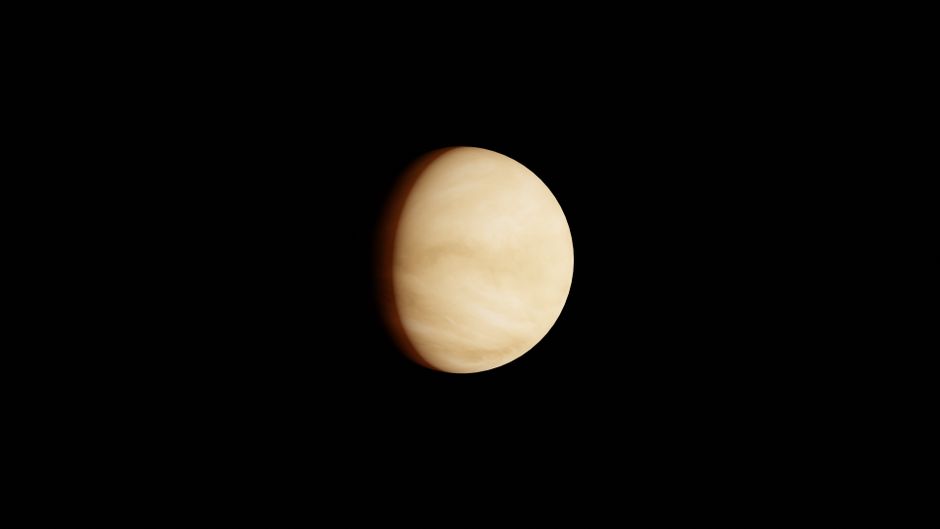
Why Venus Rotates Backwards: The Planetary Mystery

Why Venus Rotates Backwards: The Planetary Mystery

By TrivBits, Staff Writer — Published August 25, 2026

Why Venus Rotates Backwards: The Planetary Mystery — Quick Facts trivia by TrivBits

Table of Contents

Did you know that Venus spins in the opposite direction from most planets in our solar system? While Earth and most of its planetary siblings rotate counterclockwise when viewed from above the North Pole, Venus rotates backwards—clockwise, earning it the distinction of having what scientists call "retrograde rotation." This surprising fact makes Venus one of the most interesting oddballs in our cosmic neighborhood, and the reasons behind this backward spin have puzzled astronomers for decades.

The story of how Venus came to rotate backwards involves violent cosmic collisions, gravitational forces, and perhaps even a completely different planetary past. Understanding this phenomenon reveals fascinating truths about planetary formation and the chaotic early days of our solar system.

Key Takeaways

  • Venus rotates backwards (retrograde rotation) compared to most planets in our solar system, spinning clockwise when viewed from above its north pole.
  • Only Venus and Uranus have retrograde rotation among the major planets, making this an unusual planetary characteristic.
  • The most widely accepted theory suggests one or more massive collisions during the solar system's formation knocked Venus into its backward spin.
  • Venus rotates extremely slowly—one Venusian day lasts longer than one Venusian year.
  • The planet's thick atmosphere may have influenced or maintained its unusual rotation through atmospheric tides over billions of years.
  • This backward rotation means the Sun rises in the west and sets in the east on Venus.

Why Venus Rotates Backwards: The Leading Theories

The question of Venus's backward rotation has generated several scientific theories. The most compelling explanation involves catastrophic impacts during the solar system's turbulent youth, roughly four billion years ago. During this period, planetary bodies frequently collided as they settled into stable orbits.

Scientists believe that one or more massive objects—possibly as large as Earth's moon or even bigger—slammed into Venus with such force that they fundamentally altered its rotation. Think of it like hitting a spinning top at just the right angle to reverse its spin. These weren't gentle bumps. These were world-shattering impacts that could liquefy entire hemispheres and reshape a planet's destiny.

A second theory proposes that gravitational interactions with the Sun, combined with Venus's extraordinarily thick atmosphere, gradually slowed and then reversed the planet's original rotation over billions of years. Venus's atmosphere is roughly ninety times denser than Earth's, creating substantial atmospheric tides. These tides, pulled by the Sun's gravity, could act like brakes on the planet's rotation.

Some researchers suggest Venus may have originally rotated "normally" but slowly decelerated to a standstill before beginning to spin in the opposite direction. This process would have taken an immense amount of time—potentially billions of years—making it one of the slowest transformations in the solar system.

The Slowest Spin in the Solar System

Venus doesn't just rotate backwards—it rotates incredibly slowly. One complete rotation takes approximately 243 Earth days. Here's the truly mind-bending part: Venus completes an orbit around the Sun in about 225 Earth days. This means a single day on Venus is actually longer than a Venusian year.

If you could stand on Venus's scorching surface (you can't—you'd be crushed and incinerated), you'd experience sunrise in the west and sunset in the east. But you'd have to wait months between sunrises. The Sun would creep across the sky at an almost imperceptible pace, taking the equivalent of nearly four Earth months to travel from one horizon to the other.

Comparing Planetary Rotations

Planet Rotation Direction Length of Day Notable Features
Mercury Prograde (normal) 59 Earth days Slow rotation, tidally locked to Sun
Venus Retrograde (backwards) 243 Earth days Day longer than year
Earth Prograde (normal) 24 hours Standard counterclockwise rotation
Mars Prograde (normal) 24.6 hours Very similar to Earth
Uranus Retrograde (backwards) 17 hours Also tilted 98 degrees on its side

Myths and Truths About Venus's Rotation

One common misconception is that Venus's rotation is somehow connected to its position as Earth's "twin." While Venus and Earth share similar sizes and masses, their rotations couldn't be more different. Earth spins once every twenty-four hours; Venus takes eight months by comparison.

Another myth suggests that Venus's backward rotation makes it unique. While rare, Venus isn't completely alone. Uranus also rotates retrograde, though its situation is different—Uranus is tilted so far on its axis that it essentially rolls around the Sun like a ball. Several moons in the solar system also exhibit retrograde rotation, likely captured asteroids that were gravitationally snagged by their parent planets.

Some early theories proposed that Venus's rotation was slowing down and would eventually stop entirely. Current evidence doesn't support this idea. Venus's rotation appears stable, maintained by the complex interplay between its dense atmosphere, the Sun's gravitational pull, and the planet's internal structure.

The Atmospheric Connection

Venus's atmosphere plays a fascinating role in this mystery. The upper atmosphere actually rotates much faster than the planet itself, whipping around Venus in just four Earth days—a phenomenon called "super-rotation." Winds at cloud level reach speeds of roughly 360 kilometers per hour, circling the planet in a fraction of the time it takes the surface to complete one rotation.

This creates a unique situation where the atmosphere and the solid planet are almost decoupled, spinning at dramatically different rates. Scientists continue studying whether these atmospheric dynamics helped cause the backward rotation or are merely a consequence of it. The dense atmosphere may have acted like a viscous brake, slowing Venus's original rotation through friction and thermal tides over geological time.

Frequently Asked Questions

Does Venus rotate backwards compared to all planets?

Venus rotates backwards compared to most planets, but not all. Uranus also has retrograde rotation, though it's tilted dramatically on its side. The vast majority of planets, moons, and other solar system bodies rotate in the same direction they orbit the Sun—counterclockwise when viewed from above the North Pole. Venus is one of only two major planets that break this pattern.

How long is a day on Venus?

A single day on Venus—one complete rotation—lasts approximately 243 Earth days. Remarkably, this is longer than Venus's year, which takes about 225 Earth days. This unusual relationship means that if you could observe from Venus's surface, you'd see the Sun rise in the west, slowly cross the sky over months, and set in the east, with only about two sunrises per Venusian year.

Can we prove what caused Venus to rotate backwards?

We cannot definitively prove what caused Venus's retrograde rotation because the event happened billions of years ago, leaving no direct evidence. Scientists rely on computer simulations, planetary formation models, and observations of Venus's current state to develop theories. The collision hypothesis remains the most widely accepted explanation, but atmospheric braking and gravitational interactions may have also played roles. Future missions studying Venus's interior structure might provide additional clues.

Will Venus ever rotate normally again?

There's no evidence suggesting Venus's rotation will reverse again to match other planets. The planet's rotation appears stable under current conditions. While theoretical scenarios involving massive impacts could alter its spin, such events are extraordinarily unlikely in our solar system's current, relatively calm state. Venus will almost certainly maintain its backward rotation for billions of years to come.

Venus's backward rotation reminds us that planetary evolution is neither simple nor predictable. Each world in our solar system carries scars and quirks from its violent formation, and Venus's leisurely backward spin is one of the most intriguing. Every time you look up at that bright "evening star," you're seeing a planet that literally moves to its own rhythm—one that defies the cosmic norm and keeps astronomers questioning what really happened in those chaotic early days when worlds were still finding their place in space.

Sources