
By TrivBits, Staff Writer — Published October 16, 2026
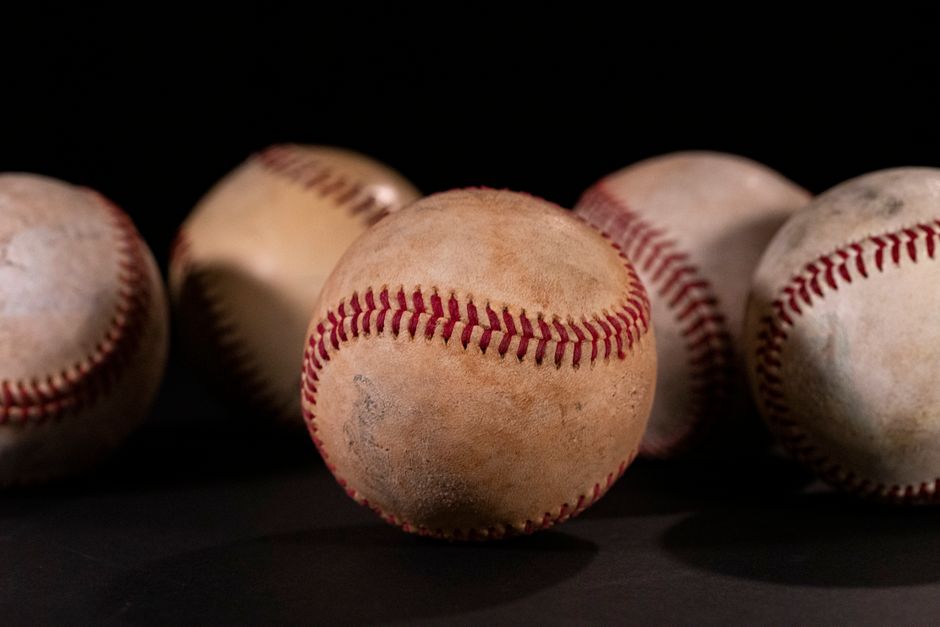
Table of Contents
- Key Takeaways
- What Causes Baseball Curve: The Magnus Effect Explained
- The Anatomy of Spin: How Pitchers Create the Curve
- Busting Myths: Curveball Truths and Misconceptions
- Comparing Pitch Types: How Different Spins Create Different Breaks
- The Science in Action: Modern Measurement and Optimization
- Frequently Asked Questions
- Sources
Did you know that a baseball curving through the air isn’t an optical illusion? It’s real physics in action. The surprising truth is that what causes baseball curve balls to bend their path mid-flight is a phenomenon discovered centuries before baseball even existed. When a pitcher throws a curve, they’re harnessing invisible forces that act on spinning objects moving through air—forces powerful enough to make a ball deviate more than a foot from its original trajectory.
The secret lies in spin, air pressure, and a principle named after a German physicist who never threw a pitch in his life. These facts reveal how America’s pastime intersects with fundamental laws of nature.
Key Takeaways
- The Magnus effect, discovered in 1852, explains what causes baseball curve balls to change direction mid-flight through differential air pressure.
- A curveball can spin at roughly 1,500 to 2,000 revolutions per minute, creating enough force to bend its path significantly.
- The spinning ball drags air around it, creating higher pressure on one side and lower pressure on the other, pushing the ball sideways.
- Curveballs are not optical illusions—high-speed cameras confirm the ball genuinely curves through space.
- The amount of curve depends on spin rate, velocity, and the orientation of the spin axis.
- Myths about curveballs harming young pitchers’ arms have been largely debunked by sports medicine research.
What Causes Baseball Curve: The Magnus Effect Explained
Heinrich Gustav Magnus wasn’t thinking about baseball when he described the force that bears his name. The German physicist was studying artillery shells in the 1850s. But his discovery perfectly explains what causes baseball curve balls to defy straight-line motion.
Here’s how it works. When a pitcher releases a curveball, the ball rotates rapidly—often topspin for a traditional “12-to-6” curve. As the ball moves forward and spins, it drags a thin layer of air around with it due to friction. On one side of the ball, this dragged air moves in the same direction as the ball’s forward motion. On the other side, it moves against the forward motion.
This creates asymmetric airflow. Where the spinning surface and the ball’s forward motion align, air moves faster. Where they oppose each other, air moves slower. According to Bernoulli’s principle, faster-moving air creates lower pressure. The pressure difference pushes the ball toward the low-pressure side—and the ball curves.
The effect is surprisingly powerful. A well-thrown curveball can break 10 to 17 inches horizontally or vertically from where it would have traveled without spin. That’s enough to turn a potential home run into a strikeout.
The Anatomy of Spin: How Pitchers Create the Curve
Pitchers don’t just throw hard—they engineer spin. The grip matters enormously. For a curveball, pitchers typically place their middle and index fingers along the seams of the baseball, using the raised stitching as a handle to impart rotation.
During release, the pitcher snaps their wrist downward, rolling the fingers over the top of the ball. This creates topspin. The axis of rotation determines the direction of the break. A pure topspin curveball drops sharply. Tilt that axis slightly, and you get horizontal movement too—what pitchers call a “slurve” (slider-curve hybrid).
Spin rate is crucial. Professional pitchers generate between 1,500 and 2,500 revolutions per minute on their curveballs. Higher spin rates generally produce sharper breaks, though velocity matters too. A slower curveball has more time to curve, but less dramatic Magnus force per unit time. It’s a delicate balance.
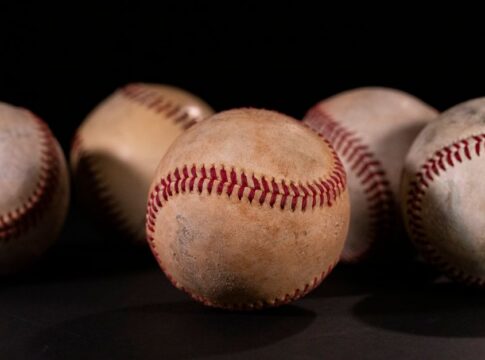
Interestingly, the seams themselves contribute. A smooth ball wouldn’t curve nearly as well. Those 108 stitches create turbulence that helps the ball grip the air, enhancing the Magnus effect. The orientation of the seams as the ball spins can even cause slight variations in movement—something elite pitchers learn to exploit.
Busting Myths: Curveball Truths and Misconceptions
For decades, people debated whether curveballs actually curved or if batters were fooled by optical illusions. That myth is thoroughly debunked. High-speed photography and modern tracking systems like Statcast measure every inch of a pitch’s trajectory. The curve is real, measurable, and predictable based on physics.
Another persistent myth involves youth baseball. Many coaches and parents worry that throwing curveballs damages young arms. The interesting truth from sports medicine research is more nuanced. Studies have found that improper mechanics and overuse cause arm injuries, not specific pitch types. A curveball thrown with good form may actually stress the elbow less than a fastball. The real danger is volume—throwing too many pitches of any kind without adequate rest.
Some batters claim curveballs “rise” or perform impossible movements. While a ball can’t actually rise (gravity always pulls down), an underhand curveball with backspin can fall more slowly than expected, creating a rising illusion. The human visual system struggles to track objects that change speed and direction, making some pitches look supernatural when they’re simply obeying physics in surprising ways.
Comparing Pitch Types: How Different Spins Create Different Breaks
| Pitch Type | Spin Direction | Typical Spin Rate (RPM) | Primary Movement |
|---|---|---|---|
| Curveball | Topspin | 1,500–2,500 | Downward break |
| Slider | Tilted topspin | 2,200–2,700 | Downward and lateral |
| Fastball | Backspin | 2,000–2,600 | Resists gravity (appears to “rise”) |
| Changeup | Minimal spin | 1,200–1,800 | Drops due to reduced Magnus lift |
Each pitch exploits the Magnus effect differently. Fastballs use backspin to create upward force, counteracting some of gravity’s pull—they don’t actually rise, but they fall less than expected. Changeups minimize spin to maximize drop. Sliders combine spin axes for diagonal movement. All rely on the same underlying physics, just applied in different directions.
The Science in Action: Modern Measurement and Optimization
Today’s pitchers benefit from technology that would astound earlier generations. Doppler radar systems track pitch movement with millimeter precision. Slow-motion cameras capture seam orientation and release point. Biomechanics labs analyze arm angles and finger pressure.
This data revolution has changed how pitchers train. They can now see exactly how grip adjustments affect spin rate. They learn which arm angles maximize movement while minimizing injury risk. Some pitchers have added inches to their curveball break simply by optimizing spin efficiency—getting more rotation without throwing harder.
The Magnus effect remains constant, but human understanding of how to exploit it keeps evolving. What once seemed like mysterious talent is increasingly understood as applied physics, practiced and refined through thousands of repetitions.
Frequently Asked Questions
Can a pitcher throw a ball that curves in two different directions?
Not during a single pitch. Once released, a ball’s spin axis is fixed, and the Magnus effect acts perpendicular to both the spin axis and the direction of travel. However, pitchers can throw different pitches with different spin axes to create varied movement patterns. Some advanced pitches like the screwball or gyroball attempt unusual spin orientations, but each individual pitch follows one curved path determined by its specific spin.
Why don’t curveballs work as well at higher altitudes?
Thinner air at higher elevations reduces the Magnus effect. The force depends on air density—fewer air molecules mean less pressure difference between the ball’s sides. Pitchers in Denver’s Coors Field, located about a mile above sea level, often struggle with breaking pitches because curveballs and sliders break several inches less than at sea level. Fastballs also carry farther in thin air, contributing to higher scoring games.
How fast does a curveball need to spin to be effective?
Most effective curveballs spin at least 1,500 revolutions per minute, though elite pitchers often exceed 2,000 RPM. However, spin rate alone doesn’t determine effectiveness. The spin axis orientation, velocity, and location matter equally. A curveball with moderate spin but excellent command and deception can be more effective than a high-spin curve that’s predictable. The relationship between spin and movement is complex, involving ball velocity and release point as well.
Did early baseball players understand the physics behind curveballs?
Not at all. Curveballs emerged in the 1870s through experimentation and observation, decades before physicists fully explained the Magnus effect in sports contexts. Early pitchers knew curves worked but attributed them to various incorrect theories, including wrist strength or special ball treatments. The scientific understanding came much later, though this didn’t stop 19th-century hurlers from mastering the pitch through trial and error.