
By TrivBits, History Desk — Published November 5, 2026
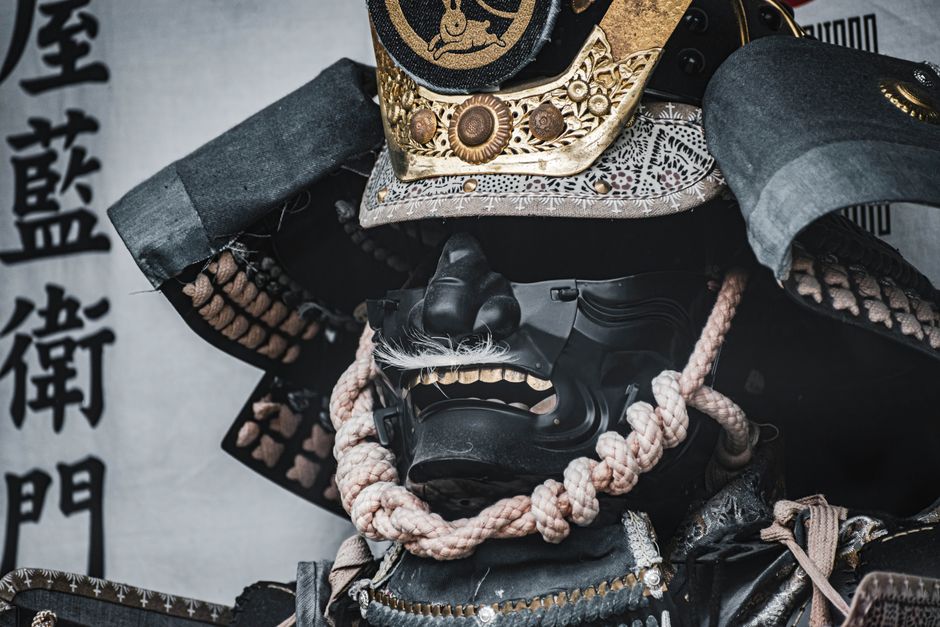
Table of Contents
- Key Takeaways
- When the Samurai Era Actually Ended
- The Surprising History of Fax Technology
- Other Timeline Overlaps That Defy Expectations
- Why Our Historical Intuitions Fail
- The Meiji Transformation and Technological Leapfrogging
- Frequently Asked Questions
- Sources
The samurai sent class is one of history’s most mind-bending timeline overlaps. When we think of samurai, we picture ancient warriors from feudal Japan, katanas gleaming in the mist of centuries past. Yet the samurai class didn’t officially end until 1876—and fax machines became commercially available in the 1960s. This means that for nearly a century, samurai and fax technology existed in the same world, though on opposite sides of the globe and separated by vast technological differences.
The timeline collision reveals something fascinating about how we organize history in our minds. We tend to place civilizations and technologies into neat mental boxes, imagining clear separations between eras. But the past is messier and more interconnected than our simplified narratives suggest. The samurai era overlapped not just with fax machines in theory, but with photographs, telegraphs, and even early machine guns—technologies that seem to belong to completely different historical epochs.
Key Takeaways
- The samurai class was officially abolished in 1876 during Japan’s Meiji Restoration, when the empire modernized rapidly.
- Scottish inventor Alexander Bain patented the first fax machine concept in 1843, decades before samurai ceased to exist as a social class.
- Commercial fax technology became widely available in the 1960s, but earlier versions existed throughout the late 19th and early 20th century.
- Several photographs of actual samurai exist, documenting warriors who lived during the transition from feudal Japan to the modern era.
- The overlap challenges common assumptions about when ancient civilizations ended and modern technology began.
- Japan’s rapid modernization meant some former samurai themselves adopted Western technology and customs during their lifetimes.
When the Samurai Era Actually Ended
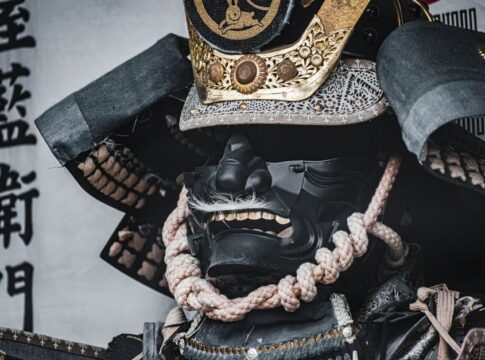
The samurai class dominated Japanese society for roughly seven centuries. These warrior-nobles served feudal lords called daimyo and lived by the strict code of bushido. They weren’t just fighters—they were administrators, scholars, and the cultural elite of Japan.
Everything changed during the Meiji Restoration starting in 1868. Emperor Meiji took direct control, ending the shogunate system that had ruled Japan for over 250 years. The new government wanted to modernize Japan rapidly to compete with Western powers. The samurai represented the old feudal system, and they had to go.
In 1876, the Haitorei Edict banned the wearing of swords in public—the ultimate symbol of samurai status. That same year, the government abolished the samurai class entirely, converting their traditional rice stipends into government bonds. Some samurai rebelled. The Satsuma Rebellion of 1877 was the last stand, a doomed uprising that ended with traditional warriors charging modern artillery. After that, the samurai existed only in memory and cultural legacy.
The Surprising History of Fax Technology
Most people assume fax machines are recent inventions. They’re wrong by more than a century and a half.
Alexander Bain, a Scottish inventor, patented a device called the “recording telegraph” in 1843. His machine could transmit images over wires using a pendulum mechanism and electrochemically sensitive paper. It was primitive, but it was functionally a fax machine. This happened when samurai still ruled Japan, long before Commodore Perry’s black ships forced the country to open to the West in 1853.
Italian inventor Giovanni Caselli improved the design, creating the pantelegraph in the 1860s. French authorities actually used his system commercially, transmitting signatures and drawings between cities. Meanwhile, in Japan, samurai were fighting in civil wars that would determine the country’s future. The technologies existed simultaneously, in parallel historical streams that rarely touched.
Commercial fax machines as we know them didn’t become common until the 1960s and 1970s, when businesses adopted them widely. But the core technology—transmitting images electrically over distance—predated the end of the samurai class by decades.
Other Timeline Overlaps That Defy Expectations
The samurai-fax overlap isn’t unique. History is full of these chronological collisions that challenge our mental models of the past.
| Historical Overlap | Explanation |
|---|---|
| Pyramids and Mammoths | The Great Pyramid of Giza was built around 2560 BCE, but small populations of woolly mammoths survived on Wrangel Island until roughly 2000 BCE. |
| Oxford and Aztecs | Oxford University began teaching in approximately 1096, while the Aztec Empire wasn’t founded until 1428—more than three centuries later. |
| Nintendo and Jack the Ripper | Nintendo was founded as a playing card company in 1889, the year after the Jack the Ripper murders terrorized London in 1888. |
| Last Guillotine and Star Wars | France conducted its last execution by guillotine in 1977, the same year the first Star Wars film was released. |
These overlaps reveal how we unconsciously compartmentalize history. We imagine clear boundaries between ancient and modern, between East and West, between different civilizations. Reality doesn’t respect those boundaries.
Why Our Historical Intuitions Fail
Our brains struggle with historical timelines for several reasons. First, we learn history in themed units—Ancient Rome, Medieval Europe, Feudal Japan—that emphasize differences rather than connections. Second, technological progress hasn’t been uniform across the globe. Japan deliberately isolated itself for over two centuries during the Edo period, creating a technological time gap with the West.
Third, we underestimate how recent many “ancient” institutions really were. The samurai class seems impossibly old because it’s associated with medieval aesthetics—castles, swords, armor. But some former samurai lived long enough to see automobiles, airplanes, and radio. A few even appear in early films.
The human lifespan creates unexpected bridges across eras. Someone born in 1850 could have known people who remembered Napoleon and lived to see World War I. These personal connections link supposedly separate historical epochs in ways that statistics and dates cannot.
The Meiji Transformation and Technological Leapfrogging
Japan’s rapid modernization during the Meiji era represents one of history’s most dramatic transformations. Within a single generation, Japan went from a feudal society to an industrial power that could defeat Russia in war (1904-1905). Former samurai became businessmen, military officers in Western-style armies, and government bureaucrats.
This wasn’t a smooth transition. Many samurai resented losing their privileges and status. Some adapted successfully, using their education and administrative skills in the new economy. Others struggled in a world that no longer valued their traditional expertise. The psychological whiplash must have been extraordinary—growing up in a world of swords and honor codes, then dying in a world of factories and telegraphs.
Japan didn’t just adopt Western technology; it improved upon it. By the early 20th century, Japanese engineering and manufacturing competed with European and American industries. The same culture that had produced samurai warriors now produced modern battleships and precision instruments. The continuity of Japanese identity persisted through radical technological change.
Frequently Asked Questions
Could a samurai have actually sent a fax?
Theoretically, yes, though it would have been extremely unlikely. Early fax technology existed before 1876, but it was rare and experimental. A samurai would have needed access to cutting-edge European technology and the technical knowledge to operate it—possible for a well-connected individual during Japan’s opening to the West, but highly improbable in practice.
When were the first photographs of samurai taken?
Photography reached Japan in the 1850s, and numerous photographs of samurai exist from the 1860s and 1870s. These images document real warriors during the final years of their class, showing men who lived in the transition between feudal and modern Japan. Some photos show samurai in traditional armor, while others depict them in Western clothing.
Did any samurai live into the 20th century?
Yes, many former samurai lived well into the 20th century. Someone who was a young samurai in 1876 could easily have lived into the 1920s or 1930s, experiencing both the feudal era and the modern industrial age. These individuals witnessed transformations that normally take centuries compressed into a single lifetime.
Why does this timeline overlap surprise so many people?
We mentally categorize samurai as “ancient” because of their association with medieval technology and feudal social structures. We similarly categorize fax machines as “modern” office technology. Our educational system teaches these topics in completely separate contexts, so we never consider that they might have coexisted chronologically, even if they never actually intersected in practice.