
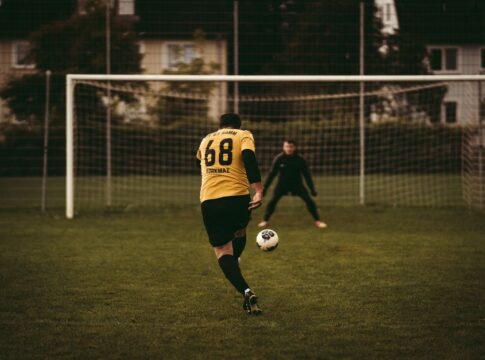
7 Surprising Facts About Soccer Penalty Kicks and Success
By Trivia Daily, Staff Writer — Published August 8, 2026
Table of Contents
- Key Takeaways
- Understanding Soccer Penalty Kicks and Their Surprising Success Rates
- The Psychology Behind Penalty Kick Success
- Training and Technique Considerations
- Frequently Asked Questions
The penalty kick represents one of soccer’s most dramatic moments—a one-on-one duel between shooter and goalkeeper that can decide championships in seconds. Yet behind this seemingly simple act lies a wealth of surprising psychology, physics, and statistical patterns that even devoted fans rarely discover. These soccer penalty kicks involve far more complexity than most people realize, from the science of decision-making to unexpected patterns that challenge everything you thought you knew about the beautiful game.
What makes a penalty successful? The answer involves reaction times faster than human reflexes, psychological warfare, and strategies that sound counterintuitive until you explore the data. These fascinating facts reveal the hidden mechanics behind one of sport’s most tension-filled moments.
Key Takeaways
- Goalkeepers who stay in the center of the goal have surprisingly high success rates, yet almost never choose this strategy
- Professional players score penalty kicks approximately 75-80% of the time across major competitions
- The physics of a penalty kick means goalkeepers must commit to a direction before the ball is struck to have any chance of saving it
- Shooters who take longer run-ups tend to have lower conversion rates than those with shorter approaches
- Penalty shootouts in major tournaments favor teams that shoot first by a measurable margin
- The color of a goalkeeper’s jersey may influence shooter accuracy through subtle psychological effects
Understanding Soccer Penalty Kicks and Their Surprising Success Rates
Professional soccer players convert penalty kicks at rates between 75% and 80% in competitive matches. This might seem high, but it’s actually lower than many casual observers expect for what appears to be an easy opportunity. The distance from the penalty spot to the goal line measures exactly 12 yards (11 meters), and the ball can reach speeds exceeding 70 miles per hour.
Here’s where physics enters the picture. A well-struck penalty takes roughly 0.3 to 0.4 seconds to reach the goal. Human reaction time averages around 0.2 to 0.3 seconds—meaning even the quickest goalkeeper cannot wait to see where the ball is going and then react. They must guess and commit to a direction before or during the kick itself. This fundamental truth shapes everything else about penalty kick strategy and explains why even world-class goalkeepers often dive the wrong way.
1. Staying Central Works Better Than Diving—But Keepers Almost Never Do It
Research into thousands of penalty kicks reveals a fascinating paradox. Goalkeepers who remain in the center of the goal without diving left or right save approximately 33% of penalties. By contrast, keepers who dive to either side save only about 13% of shots. Why? Many shooters aim for mid-height or closer to center than you’d think, trying to avoid the posts and crossbar. A keeper staying put has a reasonable chance against these attempts.
Yet goalkeepers dive to one side on more than 95% of penalty kicks. The reason isn’t stupidity—it’s psychology. A goalkeeper who dives and fails feels they made an effort. One who stands still and watches the ball sail past feels foolish and inactive. The social and emotional cost of looking like you didn’t try outweighs the statistical advantage of staying central. This creates one of soccer’s most interesting examples of how human psychology trumps pure mathematics.
2. The Run-Up Length Correlates With Failure Rates
Players who take long, dramatic run-ups to penalty kicks actually convert at lower rates than those who use shorter approaches. The optimal run-up involves just three to five steps. Longer run-ups introduce more variables—more time for doubt to creep in, more opportunities for slight missteps, and more telegraphing of intentions to observant goalkeepers.
Short run-ups also make it harder for keepers to read body language. With fewer steps, shooters maintain more ambiguity about their target until the final moment. Some of the most reliable penalty takers in soccer history have used compact, efficient approaches that prioritize accuracy over power. The lesson? Sometimes less really is more.
3. Shooting First in a Shootout Provides a Measurable Advantage
When matches go to penalty shootouts, the team that shoots first wins approximately 60% of the time. This edge persists across thousands of shootouts in professional competitions worldwide. The advantage stems from psychological pressure: the team shooting second constantly plays catch-up. Miss one penalty, and you’re immediately facing elimination if your opponent converts theirs.
The leading team experiences less pressure on each kick. They can take the initiative, force the trailing team into must-score situations, and generally control the emotional tenor of the shootout. This is why winning the coin toss before a shootout matters more than many people realize. Smart captains almost always choose to shoot first when given the option.
4. The Physics of Ball Spin Creates Deceptive Trajectories
Top penalty takers often use side-foot technique to apply spin to the ball, creating curved flight paths that move away from diving goalkeepers. The Magnus effect—the same physics principle that makes curveballs in baseball possible—causes spinning soccer balls to deviate from straight-line trajectories. A ball spinning at high revolutions per minute can curve several feet during its brief flight to goal.
This technique requires precision. Too much curve and the ball bends wide of the post. Too little and the keeper can reach it. The best practitioners strike a balance, placing the ball where it starts toward one part of the goal but curves into a different area by the time it arrives. Goalkeepers must predict not just direction but also the degree of curve, adding another layer of difficulty to an already nearly impossible task.
5. Goalkeeper Jersey Color May Influence Shooting Accuracy
Studies examining penalty kick data have found intriguing correlations between goalkeeper jersey colors and shooter success rates. Goalkeepers wearing red jerseys appear to face slightly fewer successful conversions than those in other colors. The effect is small but measurable across large datasets. Red has well-documented psychological associations with danger, dominance, and aggression across many cultures.
Whether shooters consciously perceive red-clad keepers as more threatening remains debated. The effect might operate subconsciously, creating tiny hesitations or adjustments that reduce accuracy by small margins. In a sport where millimeters determine success or failure, even subtle psychological factors can influence outcomes. Some teams have reportedly chosen goalkeeper kit colors with this research in mind, though the practice remains controversial.
6. Players Actually Perform Better Under Maximum Pressure
Contrary to popular belief about “choking” in high-pressure situations, data from major tournaments shows that penalty conversion rates in championship finals and crucial knockout matches are roughly equal to—or sometimes slightly higher than—rates in less important games. Elite athletes often perform at their peak when stakes are highest, not worse. The players who reach World Cup finals or Champions League title matches are precisely those who’ve demonstrated ability to handle pressure throughout their careers.
What changes isn’t necessarily performance but perception. A missed penalty in a friendly match is quickly forgotten. The same miss in a final is replayed forever. This creates a memory bias where high-pressure failures seem more common than they actually are. The truth? Top professionals are remarkably consistent regardless of circumstances.
7. The “Panenka” Chip Shot Succeeds More Often Than You’d Think
The Panenka—a delicate chip down the middle while the goalkeeper dives to one side—seems impossibly risky. Yet players who attempt this audacious technique convert at rates exceeding 80% when executed properly. The success rate reflects the same principle discussed earlier: goalkeepers almost always dive to one side, leaving the center vulnerable.
The psychological courage required to attempt a Panenka is immense. Miss or mishit the chip, and you become a laughingstock. Succeed, and you’re a genius. This risk-reward calculation means Panenkas remain relatively rare, preserving their effectiveness. Goalkeepers know the possibility exists but cannot stay central on the chance they might face one, because doing so sacrifices their already-slim chances against standard powerful shots to either corner.
The Psychology Behind Penalty Kick Success
Mental preparation separates good penalty takers from great ones. Many top players develop pre-kick routines—specific numbers of steps, breathing patterns, or focal points—that create consistency and calm nerves. These rituals serve a practical purpose: they occupy the conscious mind with procedural details, preventing overthinking that can disrupt muscle memory and technique.
Goalkeepers employ psychological tactics too. Some engage in gamesmanship—delaying, talking to the shooter, or using body language to suggest they know where the ball is going. Others research opponents’ penalty-taking histories, looking for patterns in placement or tells in approach angles. This mental chess match adds depth to what looks like a simple physical contest.
Training and Technique Considerations
Professional teams practice penalties regularly, but not always in ways you’d expect. Some coaches argue that practicing penalties in calm training environments doesn’t replicate match pressure, so they create artificial stress—making players run sprints before shooting, or imposing consequences for misses. Others believe in building perfect technique through repetition, trusting that well-drilled mechanics will hold up when adrenaline surges.
Placement beats power in most analyses. Shots struck to the corners at moderate pace succeed more reliably than maximum-power attempts that risk sailing over the bar or missing the target entirely. The corners of the goal—particularly low to either side—represent the highest-percentage targets. A ball placed six inches inside the post and a foot off the ground is essentially unsaveable, even if the goalkeeper guesses correctly.
Frequently Asked Questions
What percentage of penalty kicks are successful in professional soccer?
Professional players convert approximately 75-80% of penalty kicks in competitive matches. This rate remains fairly consistent across different leagues and competitions, though individual players’ success rates vary based on technique and mental strength.
Can goalkeepers legally move before a penalty kick?
Under current rules, goalkeepers must have at least part of one foot on or in line with the goal line when the penalty is struck. They cannot move forward off the line early, though they may move laterally. Referees monitor this closely and can order retakes if keepers violate the rule.
Why do some players miss penalty kicks in important matches?
Misses occur due to various factors including technique errors, overthinking, goalkeeper skill, and sometimes just bad luck. Contrary to popular belief, pressure doesn’t significantly reduce conversion rates among elite players—the misses that happen in big matches simply receive more attention and are remembered longer.
What is the fastest recorded penalty kick?
Penalty kicks have been recorded at speeds exceeding 80 miles per hour, though most successful penalties travel between 60-75 mph. Excessive power often sacrifices accuracy, which explains why the fastest shots aren’t necessarily the most effective.
The penalty kick distills soccer to its essence—skill, psychology, and split-second decisions under intense scrutiny. Next time you watch a crucial penalty, you’ll see not just a simple shot but a fascinating collision of physics, probability, and human nature playing out in real time.