
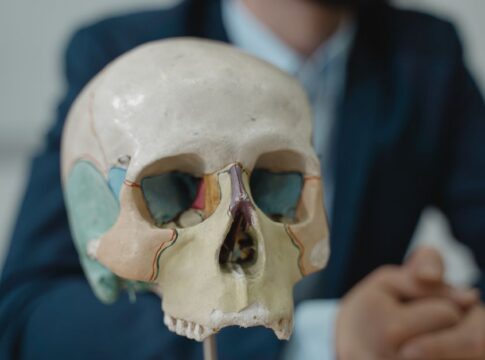
7 Surprising Facts About Human Bones You Never Learned
By Trivia Daily, Staff Writer — Published August 1, 2026
Table of Contents
- Key Takeaways
- Facts About Human Bones You Never Learned in School
- Why Bone Density Matters Throughout Life
- How Bones Heal Themselves
- Frequently Asked Questions
Your skeleton is far stranger than you ever imagined. While most people know that human bones provide structure and protect vital organs, the truly astonishing capabilities of these living tissues rarely make it into classroom lessons. From self-repair mechanisms that work silently while you sleep to the unexpected ways bones communicate with distant organs, the skeletal system holds secrets that will make you appreciate every step you take.
These amazing facts about human bones reveal a dynamic, adaptable framework that’s constantly rebuilding itself. Discover the surprising truths that transform bones from static scaffolding into one of the body’s most fascinating and active systems.
Key Takeaways
- Babies are born with approximately 270 bones, but adults have only 206 because many fuse together during growth
- Bone tissue is stronger than steel when compared pound-for-pound, yet remains lightweight enough for movement
- Your skeleton completely replaces itself roughly every ten years through continuous remodeling
- The smallest bone in the human body, the stapes in the ear, is only about 3 millimeters long
- Bones function as an endocrine organ, releasing hormones that affect blood sugar, fat storage, and brain function
- More than half of your bones are located in your hands and feet
Facts About Human Bones You Never Learned in School
The standard biology curriculum covers the basics: bones give us shape, protect our organs, and anchor our muscles. But the skeletal system does so much more than provide a framework. Recent research has revealed that bones actively participate in whole-body metabolism, immune function, and even memory formation. These discoveries transform our understanding of what it means to have a skeleton.
What makes these facts particularly interesting is how they challenge common assumptions. Most people think of bones as inert, unchanging structures—essentially rocks inside the body. The reality is far more dynamic and, frankly, more impressive.
1. Babies Have Significantly More Bones Than Adults
Newborns enter the world with approximately 270 bones, while adults walk around with only 206. This isn’t because bones disappear or get lost along the way. Instead, many of the bones that exist separately in infants gradually fuse together as a child grows. The skull provides the most dramatic example: a baby’s skull consists of several separate plates connected by soft spots called fontanelles, allowing the head to compress slightly during birth and accommodate rapid brain growth. These plates eventually merge into the solid cranium adults possess. Similarly, the sacrum at the base of the spine starts as five separate vertebrae in children but fuses into a single bone by early adulthood.
2. Your Bones Are Stronger Than Steel (Pound for Pound)
When engineers compare materials by weight, bone tissue outperforms steel in tensile strength. A cubic inch of bone can theoretically bear loads of up to 19,000 pounds—roughly the weight of five pickup trucks. This incredible strength comes from bone’s composite structure: a mineral matrix of calcium and phosphate crystals reinforces flexible collagen fibers, creating a material that resists both compression and bending. Steel, while harder, is also denser and heavier. Evolution optimized bone to provide maximum strength with minimum weight, allowing humans to move efficiently while maintaining structural integrity. This engineering marvel explains why skeletons can support bodies in motion for decades without collapsing.
3. Your Entire Skeleton Replaces Itself Every Decade
Bones aren’t permanent fixtures—they’re living organs in constant flux. Specialized cells called osteoclasts continuously break down old bone tissue, while osteoblasts build new bone to replace it. This remodeling process means that the skeleton you have today contains very little of the actual bone material you had ten years ago. The body replaces approximately 10 percent of your skeleton each year through this turnover. This constant renewal serves multiple purposes: it repairs microfractures before they become serious injuries, adapts bone density to match physical demands, and releases stored minerals when the body needs them. Young people remodel bone faster than older adults, which partly explains why children’s fractures heal more quickly and why bone density tends to decrease with age.
4. The Femur Can Support Extraordinary Weight
The thigh bone, or femur, ranks as the longest and strongest bone in the human body. Standing vertically, a healthy femur can support approximately 30 times an average person’s body weight before fracturing. This means a femur could theoretically hold up a small car. The bone achieves this strength through its tubular design: hollow in the middle with thick walls, it maximizes strength while minimizing weight. The femoral head, where the bone connects to the hip, distributes force across a broad surface area, preventing concentrated stress. This design allows humans to run, jump, and perform athletic feats that generate forces many times greater than body weight with each landing.
5. Most of Your Bones Are in Your Hands and Feet
Of the 206 bones in the adult human body, 106 of them—more than half—are located in the hands and feet. Each hand contains 27 bones, and each foot contains 26 bones. This concentration of bones in the extremities provides the fine motor control and balance humans need for complex tasks. The hands require numerous small bones to achieve the precise movements needed for tool use, writing, and delicate manipulation. Feet need their intricate bone structure to distribute weight, absorb impact, and adapt to uneven surfaces while walking. The architecture of these bones, connected by ligaments and moved by tendons, creates the remarkable dexterity and stability that distinguishes human capabilities.
6. Bones Function as Endocrine Organs
Scientists once viewed bones purely as structural elements, but research over the past two decades has revealed that bones actively secrete hormones affecting the entire body. Bone cells produce osteocalcin, a hormone that influences blood sugar regulation, fat metabolism, testosterone production, and even cognitive function. This discovery repositioned the skeleton as an integral part of the endocrine system, not just a passive framework. The skeleton also serves as the body’s primary calcium reservoir, carefully regulating calcium release into the bloodstream to maintain the precise levels needed for nerve transmission, muscle contraction, and heart rhythm. This dual role as structural support and metabolic regulator makes bones far more sophisticated than their appearance suggests.
7. The Smallest Bone Is Tinier Than a Grain of Rice
Hidden deep inside the middle ear, the stapes bone measures only about 3 millimeters in length—smaller than a single grain of rice. Despite its tiny size, this stirrup-shaped bone plays a critical role in hearing. The stapes connects to the oval window of the cochlea, transmitting sound vibrations from the eardrum through two other tiny bones (the malleus and incus) into the fluid-filled inner ear. These three bones, collectively called the ossicles, amplify sound vibrations by a factor of about 20, allowing humans to detect faint sounds that would otherwise go unheard. The stapes is also the only bone in the human body that reaches full adult size before birth and never grows larger.
Why Bone Density Matters Throughout Life
Bone strength depends not just on size but on density—how tightly packed the mineral crystals are within the bone matrix. Peak bone density typically occurs in the late twenties, after which gradual loss begins. This process accelerates in women after menopause due to decreased estrogen levels. Weight-bearing exercise, adequate calcium and vitamin D intake, and resistance training help maintain bone density throughout adulthood. Understanding this timeline helps explain why childhood and adolescence are critical periods for building strong bones that will last a lifetime.
Osteoporosis, a condition characterized by dangerously low bone density, affects millions of older adults worldwide. Bones become porous and brittle, increasing fracture risk from even minor falls. The condition often develops silently over years without symptoms until a fracture occurs. Prevention strategies focus on maximizing peak bone density during youth and minimizing loss during aging.
How Bones Heal Themselves
When a bone breaks, the body initiates a remarkable repair process. Blood vessels at the fracture site rupture, forming a hematoma—a blood clot that stabilizes the area. Within days, cells begin forming a soft callus of cartilage around the break. Over subsequent weeks, this cartilage gradually transforms into hard bone through mineralization. Finally, remodeling cells reshape the new bone to match the original structure. The entire process typically takes six to twelve weeks for most fractures, though complete remodeling may continue for months or years.
The healing process requires adequate nutrition, proper alignment of bone fragments, and sufficient immobilization. Factors like age, overall health, smoking status, and the specific bone involved all influence healing speed. Young children often heal fractures in half the time it takes adults, thanks to their faster bone remodeling rates.
Frequently Asked Questions
Which bone in the human body is the hardest to break?
The femur, or thigh bone, is the hardest bone to break due to its size, density, and tubular structure. It typically requires tremendous force, such as from a high-speed car accident or a fall from significant height, to fracture a healthy femur.
Do bones really get stronger when you exercise?
Yes, bones respond to mechanical stress by increasing density and strength. Weight-bearing exercises and resistance training stimulate osteoblasts to build more bone tissue, making bones denser and more resistant to fracture over time.
Why do bones make cracking sounds?
The popping sound when you crack your knuckles comes from gas bubbles collapsing in the synovial fluid surrounding joints, not from bones actually cracking. This phenomenon, called cavitation, is generally harmless and doesn’t damage the joints or bones.
Can you live without certain bones?
Humans can survive without several bones, including ribs, the coccyx (tailbone), and the fibula. Surgeons sometimes remove ribs to access organs during surgery or harvest sections of fibula for bone grafts elsewhere in the body without significantly impacting mobility or function.
Your skeleton is a living archive of your life—recording every jump, every climb, every dance step through subtle changes in density and structure. The next time you feel your bones supporting you through a long walk or a challenging workout, remember that they’re not just holding you up. They’re actively rebuilding themselves, releasing hormones, and adapting to your demands in ways science is only beginning to fully understand.