
By TrivBits, Staff Writer — Published September 16, 2026
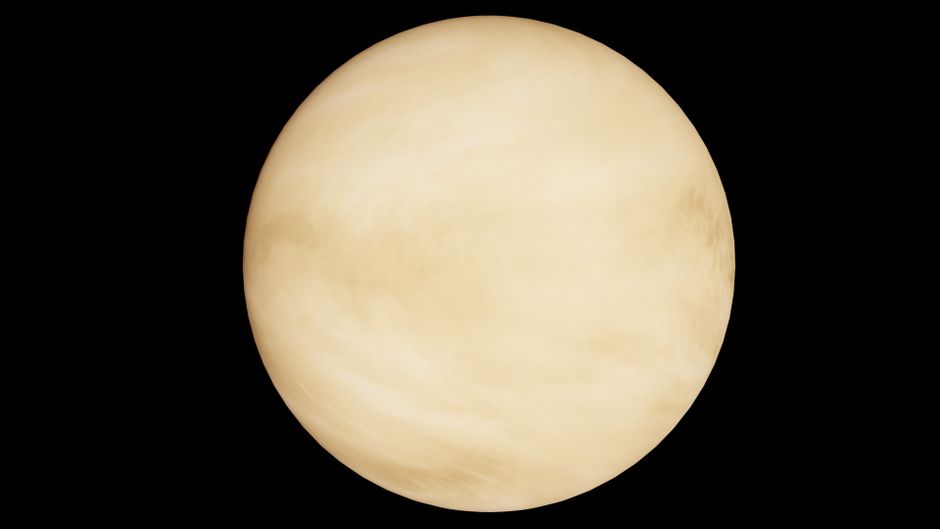
Table of Contents
- Key Takeaways
- Understanding Venus Longer Year Compared to Its Day
- Why Does Venus Rotate So Slowly?
- The Backwards Spin: Retrograde Rotation
- Comparing Planetary Days and Years
- What Would Life Be Like on Venus?
- Separating Trivia From Truth
- Frequently Asked Questions
- Sources
Did you know that if you celebrated your birthday on Venus, you’d age faster than the planet completes a single day? This surprising fact about our neighboring planet defies our everyday experience with time. On Earth, we’re accustomed to days being much shorter than years, but Venus breaks this rule in spectacular fashion. A complete rotation on its axis—what we call a day—takes longer than its entire orbit around the Sun. This isn’t science fiction or myth; it’s one of the most interesting truths about planetary motion in our solar system.
Venus has captivated astronomers for centuries, and this peculiar relationship between its day and year remains one of its most fascinating characteristics. Understanding why this happens reveals the complex dance of gravity, rotation, and orbital mechanics that govern celestial bodies.
Key Takeaways
- Venus takes approximately 243 Earth days to complete one full rotation on its axis (one Venusian day)
- A Venusian year—one complete orbit around the Sun—takes only about 225 Earth days
- Venus rotates backwards compared to most planets in our solar system, a phenomenon called retrograde rotation
- This means a day on Venus is roughly 18 Earth days longer than its year
- The Sun rises in the west and sets in the east on Venus due to its backward spin
- Scientists believe a massive collision in Venus’s past may have caused its unusual rotation
Understanding Venus Longer Year Compared to Its Day
Let’s break down the numbers. Venus orbits the Sun at an average distance of about 67 million miles. This relatively close proximity means it completes its journey around our star in roughly 225 Earth days. That’s its year.
But here’s where things get weird. While Venus races around the Sun, it rotates on its axis incredibly slowly. One full spin takes approximately 243 Earth days. That’s its day. The math is simple but mind-bending: 243 minus 225 equals 18. Venus’s day exceeds its year by about 18 Earth days.
This creates an unusual situation for any hypothetical observer standing on the Venusian surface. If you could survive the crushing atmospheric pressure and scorching temperatures, you’d notice something strange. The time between one sunrise and the next—what astronomers call a solar day—would actually be about 117 Earth days. This happens because Venus’s orbital motion partially counteracts its slow rotation.
Why Does Venus Rotate So Slowly?
The mystery of Venus’s sluggish rotation has puzzled scientists for decades. Several theories attempt to explain this phenomenon. The most widely accepted hypothesis involves a catastrophic collision early in the planet’s history. A massive object, perhaps the size of a small planet, may have struck Venus with enough force to dramatically alter its rotational speed and direction.
Another factor might be atmospheric tides. Venus possesses an incredibly dense atmosphere, roughly 90 times thicker than Earth’s. This thick blanket of carbon dioxide creates powerful atmospheric tides that could have gradually slowed the planet’s rotation over billions of years. Think of it as atmospheric drag on a cosmic scale.
Gravitational interactions with the Sun might also play a role. Some researchers suggest that solar tides could have contributed to Venus’s current rotational state, though this remains debated within the scientific community.
The Backwards Spin: Retrograde Rotation
Venus doesn’t just rotate slowly—it rotates backwards. Most planets in our solar system spin counterclockwise when viewed from above the Sun’s north pole. Venus spins clockwise. This retrograde rotation means the Sun rises in the west and sets in the east, the opposite of what we experience on Earth.
Only Venus and Uranus exhibit this backward rotation among the major planets. Uranus, however, is tilted so far on its side that it essentially rolls along its orbital path. Venus stands nearly upright with an axial tilt of just 3 degrees, making its retrograde rotation all the more peculiar.
The collision theory mentioned earlier could explain both the slow rotation and the backwards spin. If an impacting body hit Venus at just the right angle, it could have reversed the planet’s original rotation entirely.
Comparing Planetary Days and Years
| Planet | Length of Day (Earth days) | Length of Year (Earth days) | Day/Year Ratio |
|---|---|---|---|
| Mercury | 59 | 88 | Day shorter than year |
| Venus | 243 | 225 | Day longer than year |
| Earth | 1 | 365 | Day much shorter than year |
| Mars | 1.03 | 687 | Day much shorter than year |
This comparison highlights just how unusual Venus truly is. Every other planet in the inner solar system follows the expected pattern where days are significantly shorter than years. Venus stands alone in this regard, making it a unique laboratory for understanding planetary dynamics.
What Would Life Be Like on Venus?
Imagine living through a Venusian day. You’d experience incredibly long periods of daylight and darkness. The Sun would creep across the sky at a glacial pace, taking nearly two months to travel from horizon to horizon. Seasons wouldn’t exist in any meaningful way since Venus’s minimal axial tilt means no significant variation in sunlight throughout its year.
The extreme slowness of Venus’s rotation also affects its magnetic field—or rather, the lack thereof. Earth’s relatively rapid rotation helps generate our protective magnetic field through the dynamo effect in our planet’s liquid iron core. Venus’s sluggish spin fails to create this dynamo, leaving the planet without a global magnetic field to shield it from solar radiation.
Separating Trivia From Truth
Some myths have emerged around Venus’s unusual rotation. One common misconception suggests that Venus’s day is exactly longer than its year by a precise mathematical relationship. The reality is messier. The numbers are close but not perfectly aligned, and both measurements involve some uncertainty.
Another unknown fact to many: Venus wasn’t always rotating this slowly. Evidence suggests that early in its history, Venus may have rotated much faster. The planet’s current state is likely the result of billions of years of evolutionary changes, not its original configuration.
Frequently Asked Questions
How long is a day on Venus in hours?
A single rotation of Venus takes approximately 5,832 hours, or about 243 Earth days. However, the time from one sunrise to the next sunrise (a solar day) is about 2,808 hours, or roughly 117 Earth days, due to the planet’s orbital motion around the Sun.
Could Venus’s rotation speed up in the future?
Theoretically, yes, though it would require a significant event like another massive collision. Under current conditions, Venus’s rotation is relatively stable. Atmospheric tides might continue to influence it slightly, but dramatic changes are unlikely without external intervention.
Are there any other planets where a day is longer than a year?
Venus is the only planet in our solar system where a sidereal day (one complete rotation) exceeds its orbital period. This makes it genuinely unique among the eight major planets, though some moons and dwarf planets have unusual rotational characteristics of their own.
Why don’t we feel Earth’s rotation if it’s so much faster?
We don’t feel Earth’s rotation because we’re moving with it at a constant speed, along with the atmosphere around us. There’s no acceleration or deceleration to sense. It’s similar to riding in a smoothly moving car—you only feel changes in speed, not constant motion.
Venus reminds us that the universe rarely follows our expectations. This scorching, backwards-spinning world challenges our assumptions about how planets should behave. Next time you watch the Sun rise in the east, spare a thought for our neighboring planet where the Sun takes a different path across the sky—and takes its sweet time doing it.