
By TrivBits, Staff Writer — Published November 27, 2026
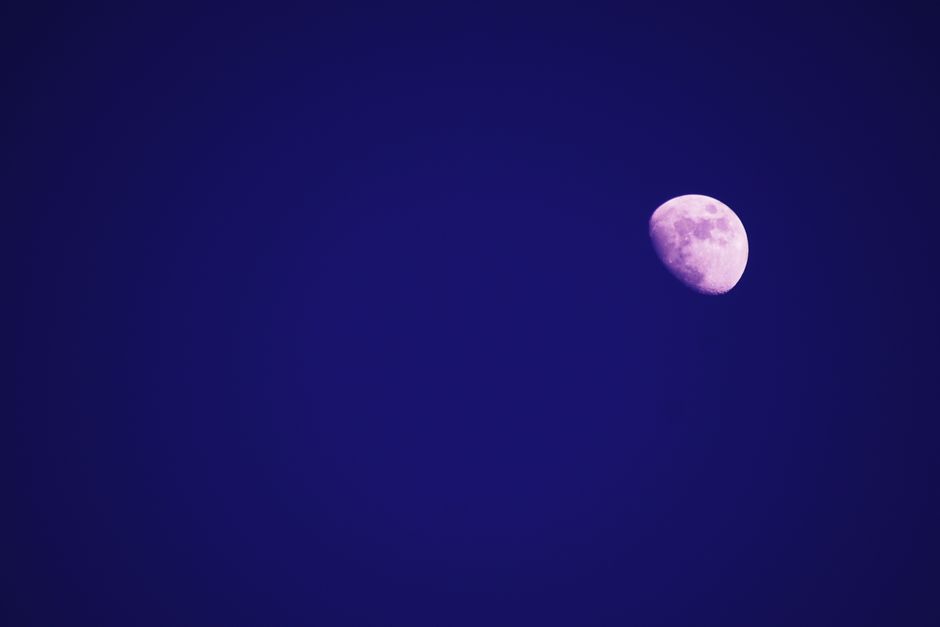
Table of Contents
- Key Takeaways
- The Moon Drifting Away Is Changing Our Planet
- How We Discovered These Cosmic Truths
- Why These Facts Matter Beyond Trivia
- Frequently Asked Questions
- Sources
Did you know our Moon is slowly abandoning us? Every year, Earth’s faithful companion drifts roughly 1.5 inches farther into space. This surprising truth is just one of many cosmic facts that challenge what we think we know about our celestial neighborhood. The moon drifting away isn’t science fiction—it’s measurable reality, confirmed by laser experiments and ancient eclipse records.
Space holds countless mysteries that sound like myths but are absolutely true. From planets raining diamonds to stars that could swallow our entire solar system, the universe operates on scales and principles that defy everyday intuition. These seven facts reveal just how strange, violent, and beautiful the cosmos really is.
Key Takeaways
- The Moon recedes from Earth approximately 1.5 inches annually due to tidal friction
- Venus rotates so slowly that its day is longer than its year
- Neutron stars are so dense that a teaspoon of their material weighs billions of tons
- There are more stars in the universe than grains of sand on all Earth’s beaches
- Space is completely silent because sound needs a medium to travel through
- The footprints left on the Moon will remain visible for millions of years
The Moon Drifting Away Is Changing Our Planet
The moon drifting away from Earth is one of the most interesting unknown facts about our planet’s future. Scientists measure this recession using laser reflectors placed on the lunar surface by Apollo astronauts. They bounce light off these mirrors and calculate the distance with extraordinary precision.
Why is this happening? Tidal forces are the culprit. The Moon’s gravity creates bulges in Earth’s oceans—what we call tides. But Earth rotates faster than the Moon orbits, so these tidal bulges get dragged ahead of the Moon’s position. This creates a gravitational tug that gradually pushes the Moon into a higher orbit while simultaneously slowing Earth’s rotation.
The consequences reach far into the future. Billions of years ago, the Moon loomed much larger in the sky, and Earth’s days lasted only about five hours. As the Moon continues its slow escape, our days will keep getting longer. Eventually, in the distant future, Earth’s rotation will slow enough that one side will permanently face the Moon—though this won’t happen for billions of years, long after the Sun becomes a red giant.
1. Venus Spins Backward and Incredibly Slowly
Venus holds the strange distinction of being the only planet in our solar system that rotates clockwise when viewed from above its north pole. Every other planet spins counterclockwise, making Venus the cosmic contrarian. Even more bizarre: a single day on Venus (one complete rotation) takes about 243 Earth days, while its year (one orbit around the Sun) takes only 225 Earth days. Yes, a Venusian day is longer than its year.
Scientists believe a massive collision early in Venus’s history may have knocked it into this backward spin. The planet’s thick atmosphere, which creates crushing surface pressure and temperatures hot enough to melt lead, likely also plays a role in its extremely slow rotation through atmospheric tidal effects with the Sun.
2. A Neutron Star’s Teaspoon Weighs as Much as Mount Everest
When massive stars explode as supernovae, their cores can collapse into neutron stars—objects so dense they redefine our understanding of matter. A neutron star packs more mass than our Sun into a sphere only about 12 miles across. The density is almost incomprehensible: a single teaspoon of neutron star material would weigh approximately 10 million tons, or roughly the mass of Mount Everest.
This extreme density creates equally extreme gravity. If you could somehow stand on a neutron star’s surface, you’d be flattened instantly. The escape velocity exceeds half the speed of light. Neutron stars also spin incredibly fast—some complete hundreds of rotations per second, making them cosmic lighthouses as they beam radiation across space.
3. There Are More Stars Than All the Sand on Earth
This comparison sounds like hyperbole, but astronomers have done the math. The observable universe contains an estimated 200 billion trillion stars (that’s a 2 followed by 23 zeros). Meanwhile, researchers estimate that all the beaches and deserts on Earth contain roughly 7.5 quintillion grains of sand (7.5 followed by 18 zeros).
Stars outnumber sand grains by a factor of several thousand. Every galaxy contains billions or even trillions of stars, and the observable universe holds at least 100 billion galaxies. These numbers challenge our ability to comprehend scale, revealing just how vast and populated the cosmos truly is.
4. Space Is Completely Silent
Every explosion in science fiction movies gets this wrong. In space, no one can hear you scream—or hear anything at all. Sound requires a medium like air or water to propagate. Sound waves are mechanical vibrations that travel by pushing molecules into each other. In the vacuum of space, there are no molecules to push.
This doesn’t mean space lacks energy or activity. Electromagnetic radiation—light, radio waves, X-rays—travels perfectly well through the vacuum. Astronomers convert these signals into sound for analysis, but the actual events happen in complete silence. That supernova exploding? Silent. That asteroid impact? Silent. The universe’s most violent events unfold without making a sound.
5. Footprints on the Moon Will Last Millions of Years
When Neil Armstrong took his famous first steps in 1969, he left marks that will outlast human civilization. The Moon has no atmosphere, which means no wind or weather to erode the surface. No rain falls, no streams flow, and no plants grow to disturb the regolith.
The only thing that might eventually erase those footprints is micrometeorite bombardment—tiny space rocks constantly peppering the lunar surface. But this process happens so slowly that scientists estimate the Apollo footprints, boot prints, and rover tracks will remain visible for at least 10 to 100 million years. They’re among the most permanent marks humanity has ever made.
6. A Year on Neptune Takes 165 Earth Years
Neptune orbits so far from the Sun that it takes an extraordinarily long time to complete one trip around our star. Since its discovery in 1846, Neptune has completed only one full orbit—that milestone occurred in 2011. Anyone born on Neptune would need to wait more than a human lifetime just to celebrate their first birthday.
Distance creates this temporal distortion. Neptune orbits roughly 2.8 billion miles from the Sun, about 30 times Earth’s distance. At that range, the planet crawls through space at about 3.4 miles per second—fast by human standards, but sluggish compared to Mercury’s 29 miles per second. The outer solar system operates on timescales that dwarf human experience.
7. The Sun Accounts for 99.86% of Our Solar System’s Mass
When we picture the solar system, we often imagine planets as significant objects orbiting the Sun. The reality is far more lopsided. The Sun contains 99.86% of all the mass in our solar system. Jupiter, the largest planet, accounts for most of the remaining 0.14%, while all the other planets, moons, asteroids, and comets combined barely register.
This extreme mass concentration explains why the Sun’s gravity dominates everything for billions of miles. Every planet, comet, and speck of dust moves in response to the Sun’s gravitational command. We don’t orbit “around” the Sun so much as fall toward it continuously, with our sideways velocity keeping us in orbit rather than crashing inward.
| Celestial Object | Approximate Mass (% of Solar System) | Interesting Fact |
|---|---|---|
| The Sun | 99.86% | Could fit 1.3 million Earths inside |
| Jupiter | 0.10% | More massive than all other planets combined |
| All Other Planets | 0.04% | Saturn contributes most of this fraction |
| Everything Else | 0.0001% | Includes all moons, asteroids, and comets |
How We Discovered These Cosmic Truths
Many of these facts emerged from recent scientific advances. The moon drifting away became measurable only after Apollo astronauts installed laser reflectors in the 1960s and 70s. Before then, scientists suspected tidal recession but couldn’t confirm it with precision.
Neutron stars remained theoretical until 1967, when astronomers discovered pulsars—rapidly spinning neutron stars whose radiation sweeps across Earth like a lighthouse beam. Venus’s slow, backward rotation was confirmed through radar observations in the 1960s, overturning earlier assumptions about the shrouded planet.
Modern astronomy relies on instruments that detect light far beyond human vision. Radio telescopes, X-ray satellites, and infrared observatories reveal phenomena invisible to the naked eye. Each technological advance peels back another layer of cosmic mystery, often revealing truths stranger than anyone imagined.
Why These Facts Matter Beyond Trivia
Understanding that the Moon is drifting away helps us comprehend planetary evolution and the long-term future of Earth. The same tidal forces affecting Earth and Moon operate throughout the universe, shaping planetary systems everywhere.
These facts also humble us. The universe operates on scales of size, density, and time that challenge human intuition. A teaspoon of neutron star material weighing millions of tons forces us to reconsider what we mean by “heavy.” A planet where days last longer than years reminds us that Earth’s familiar rhythms aren’t universal.
Science literacy matters because it changes how we see our place in the cosmos. We’re not just living on a static ball of rock—we’re riding a dynamic planet whose Moon is slowly escaping, whose day is gradually lengthening, and whose star contains almost all the mass in our neighborhood of space.
Frequently Asked Questions
Will the Moon eventually leave Earth completely?
No, the Moon will not escape Earth’s gravity entirely. The recession will eventually slow and stop as Earth’s rotation becomes tidally locked with the Moon’s orbit. Both will then keep the same face toward each other, much like the Moon already does with Earth. This equilibrium won’t occur for billions of years, and the Sun will likely become a red giant and engulf both bodies long before then.
Can we hear anything at all in space?
Astronauts inside spacecraft or space stations can hear sounds because air fills those environments. They can also hear each other through radio communication. However, outside in the vacuum, no sound propagates. If two astronauts stood next to each other in space without radios, they couldn’t hear each other speak, even if they removed their helmets (which would be fatal for other reasons).
How do scientists know how many stars exist?
Astronomers estimate star numbers by counting stars in representative regions of space, then multiplying by the number of similar regions in the observable universe. They survey small patches of sky in great detail, catalog the galaxies, estimate stars per galaxy based on mass and brightness, then extrapolate. These are educated estimates with significant uncertainty, but the scale—hundreds of billions of trillions—is well-established.
Why does Venus rotate backward?
The most widely accepted explanation involves a massive collision early in Venus’s history that knocked the planet into a retrograde spin. Another theory suggests that atmospheric tides caused by the Sun gradually reversed an initially normal rotation. Venus’s thick atmosphere creates strong thermal tides that exert torque on the planet’s rotation over billions of years. The true cause may involve both factors.
The cosmos refuses to be boring. Every answer leads to new questions, every fact reveals deeper mysteries. That the Moon is drifting away at a pace we can measure with lasers and mirrors is just one thread in a vast tapestry of cosmic wonder—and we’ve only begun to pull at the edges.